The Hyundai Ioniq 5 has been one of the most compelling electric crossovers since its debut, and the 2025 model year brings meaningful updates — most notably the addition of the North American Charging Standard (NACS) port on select trims, expanded battery options, and the high-performance Ioniq 5 N. For buyers weighing purchase against leasing, the math gets interesting fast: aggressive lease deals, federal tax-credit passthrough, and Hyundai's strong residual values all compete for attention. This review dissects the 2025 Ioniq 5 lineup with exact numbers on range, charging, pricing, and ownership economics so you can decide whether a lease or purchase makes more financial sense.
2025 Hyundai Ioniq 5 at a Glance: Key Specs
| Specification | SE/SEL RWD | SEL/Limited AWD | Ioniq 5 N |
|---|---|---|---|
| EPA Range | 318 mi (77.4 kWh) | 290 mi (77.4 kWh) | 221 mi (84 kWh) |
| Battery Capacity | 77.4 kWh usable (NMC) | 77.4 kWh usable (NMC) | 84 kWh usable (NMC) |
| Max DC Fast Charge | ~235 kW peak | ~235 kW peak | ~235 kW peak |
| 10–80% DC Charge Time | ~18 min (ideal conditions) | ~18 min (ideal conditions) | ~18 min (ideal conditions) |
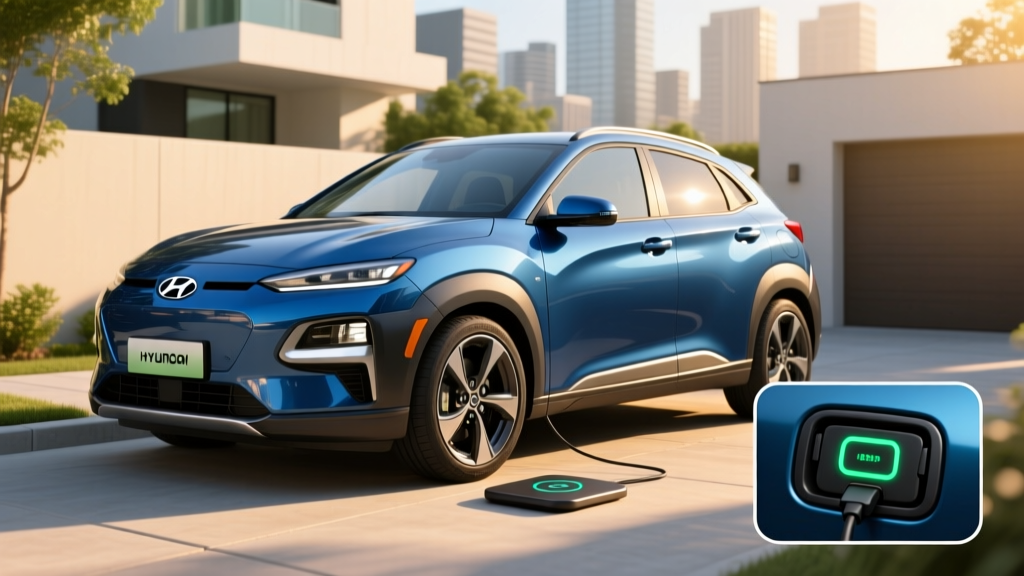
| Level 2 Home Charge Rate | 10.9 kW (~44 mi/hr) | 10.9 kW (~44 mi/hr) | 10.9 kW (~44 mi/hr) |
| 0–60 mph | 7.0 sec | 4.5 sec | 3.25 sec (N Grin Boost) |
| Horsepower | 168 hp | 320 hp | 640 hp (N Grin Boost) |
| Drivetrain | RWD single motor | AWD dual motor | AWD dual motor |
| Combined MPGe | 132 MPGe | 110 MPGe | 93 MPGe |
| Base MSRP | $42,600 | $49,850 | $66,100 |
Source: fueleconomy.gov, Hyundai USA specifications. Prices reflect 2025 model year MSRP before destination charges.
Real-World Range: What the EPA Number Doesn't Tell You
SE/SEL RWD (77.4 kWh): EPA 318 mi — expect ~260–285 mi on highway-heavy trips at 70+ mph; ~220–250 mi in sub-30°F cold weather.
AWD trims (77.4 kWh): EPA 290 mi — expect ~240–260 mi highway; ~200–225 mi in cold conditions.
Ioniq 5 N (84 kWh): EPA 221 mi — expect ~170–190 mi under spirited driving; significantly less if using N Grin Boost frequently.
The Ioniq 5 RWD's 318-mile EPA rating is genuinely competitive among electric crossovers, but real-world efficiency depends heavily on driving style and ambient conditions. The 800V architecture and heat pump (standard on most trims) help the Ioniq 5 retain more range in cold weather than some competitors, but physics still applies: expect a 15–25% reduction in freezing temperatures without preconditioning.
On a 75-mph highway loop in moderate conditions, independent testing consistently shows the RWD model achieving around 3.0–3.3 mi/kWh, translating to roughly 240–270 miles before needing a charge. City driving with regenerative braking engaged pushes efficiency closer to the EPA sticker. For daily commuters covering under 60 miles round-trip, even the AWD variant requires only 2–3 home charges per week.
Charging Speed: The 800V Advantage in Practice
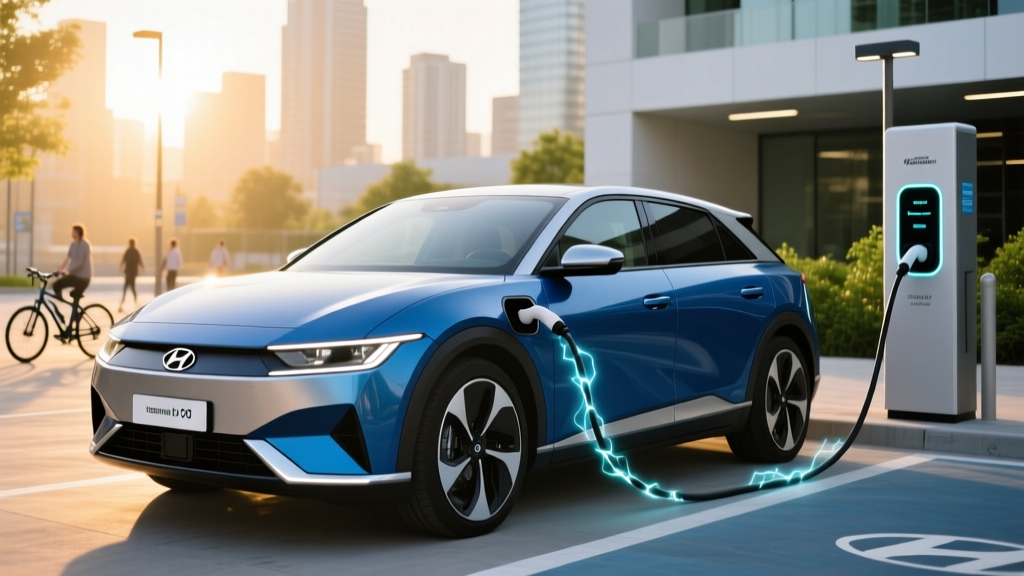
Hyundai's E-GMP platform runs on an 800V electrical architecture, which is the Ioniq 5's biggest practical differentiator in the charging-department. While most mainstream EVs use 400V systems, the higher voltage allows the Ioniq 5 to accept DC fast-charge rates up to ~235 kW — meaning shorter stops on road trips.
| Charging Level | Power (kW) | Speed (Miles Added per Hour) | Typical Use Case |
|---|---|---|---|
| Level 1 (120V household) | ~1.4 kW | ~4–5 mi/hr | Emergency / overnight trickle |
| Level 2 (240V home) | 10.9 kW | ~44 mi/hr | Daily home charging |
| DC Fast Charge (800V station) | Up to ~235 kW peak | ~600+ mi/hr (peak) | Road trips; 10–80% in ~18 min |
| DC Fast Charge (400V station) | ~50–150 kW | ~150–350 mi/hr | Older public chargers |
Charging-curve reality check: The 235 kW peak only sustains briefly between roughly 10–40% state of charge. Above 60%, the rate tapers significantly — by 80% you're looking at under 60 kW. The quoted 18-minute 10–80% time assumes a 350 kW-capable station with battery preconditioning active. On a 150 kW Electrify America or Tesla Supercharger (via NACS adapter), expect 10–80% in roughly 25–30 minutes.
For 2025, Hyundai has begun equipping some Ioniq 5 trims with the native NACS port, enabling direct access to Tesla's Supercharger network without an adapter. Trims still fitted with CCS1 can use a Hyundai-provided adapter. Verify the connector on your specific trim before signing a lease.
Pricing, Lease Economics, and Federal Tax Credit Eligibility
The 2025 Ioniq 5 lineup spans from the $42,600 SE Standard Range to the $66,100 Ioniq 5 N. Here's how the numbers work for both purchase and lease scenarios.
| Trim | Base MSRP | Est. Monthly Lease (36 mo, 10k mi/yr) | §30D Credit Eligible (Purchase) |
|---|---|---|---|
| SE RWD (77.4 kWh) | $42,600 | ~$299–$399/mo | Up to $7,500* |
| SEL RWD | $45,200 | ~$349–$449/mo | Up to $7,500* |
| SEL AWD | $49,850 | ~$399–$499/mo | Up to $7,500* |
| Limited AWD | $54,600 | ~$449–$569/mo | Up to $7,500* |
| Ioniq 5 N | $66,100 | ~$599–$749/mo | Up to $7,500* |
*Lease estimates vary by region, dealer, credit tier, and current incentives. Consult IRS §30D guidelines for purchase credit eligibility.
Federal Tax Credit: Key Rules for 2025
The Ioniq 5 is assembled in Savannah, Georgia (at Hyundai's Metaplant), which satisfies the North American final-assembly requirement for the §30D New Clean Vehicle Credit. However, qualifying for the full $7,500 is not guaranteed and depends on several factors:
- MSRP Cap: The Ioniq 5 is classified as an SUV for §30D purposes, so the MSRP cap is $80,000 — all trims clear this threshold.
- Buyer Income Limits: Modified AGI must not exceed $150,000 (single), $225,000 (head of household), or $300,000 (joint filers).
- Critical Minerals & Battery Sourcing: The credit is split into two $3,750 halves — one for critical-minerals sourcing and one for battery-component manufacturing. Hyundai has been working to shift supply chains, but the exact credit amount (either $3,750 or $7,500) can change based on current sourcing percentages. Verify with your dealer and tax professional at time of purchase.
- Point-of-Sale Transfer: As of 2024, eligible buyers can transfer the credit to the dealer at purchase, reducing the sale price directly rather than waiting for a tax refund.
Lease loophole: Vehicles leased (rather than purchased) fall under §45W commercial credit rules, which do not have the same MSRP, income, or battery-sourcing restrictions. Many Hyundai dealerships pass the $7,500 lease credit through as a capitalized-cost reduction, effectively lowering your monthly payment. This is why 2025 Ioniq 5 lease deals can sometimes offer better economics than purchasing — even for buyers who would otherwise qualify for the full purchase credit.
Interior, Cargo, and Everyday Livability
The Ioniq 5's dedicated EV platform delivers a flat floor and a stretched 118.1-inch wheelbase, creating interior volume that punches above its compact-crossover class.
- Front legroom: 41.7 inches
- Rear legroom: 39.4 inches
- Cargo behind rear seats: 27.2 cu ft
- Cargo with rear seats folded: 59.3 cu ft
- Front trunk (frunk): 0.85 cu ft (RWD) / 0.42 cu ft (AWD) — enough for a charging cable bag, not a suitcase
The cabin materials on SEL and Limited trims are solid for the segment, with vegan leather seats, dual 12.3-inch displays, and a floating center console that slides fore and aft. The Limited adds a panoramic fixed glass roof, ventilated front seats, and a premium Bose audio system. One recurring complaint: the Ioniq 5 lacks a rear wiper, which is a real annoyance in rain and snow.
Driver Assistance and Tech
Hyundai's Highway Driving Assist 2 (HDA2) is standard on all trims and includes adaptive cruise control with stop-and-go, lane-centering, and automatic lane-change assist. This is an SAE Level 2 system — the driver must keep hands on the wheel and remain fully engaged at all times. It is not self-driving.
The infotainment system supports wireless Apple CarPlay and Android Auto, over-the-air updates, and Hyundai's Digital Key 2 (using your phone as a key). Navigation-based preconditioning for the battery is included, which warms the pack before you arrive at a DC fast charger — critical for achieving the advertised 18-minute charge time in cold weather.
Warranty and Long-Term Ownership
Hyundai backs the Ioniq 5 with one of the strongest warranty packages in the EV market:
- Basic vehicle warranty: 5 years / 60,000 miles
- Powertrain warranty: 10 years / 100,000 miles
- Battery warranty: 10 years / 100,000 miles (covers capacity loss below 70% of original)
- Roadside assistance: 5 years / unlimited miles
- Complimentary maintenance: 3 years / 36,000 miles
The 70% capacity-retention threshold is industry-standard, though some competitors offer an 8-year/100,000-mile battery warranty. Hyundai's 10-year powertrain coverage is a genuine differentiator for buyers planning to keep the vehicle long-term — though if you're leasing, the 36-month term means you'll never touch most of these coverage periods.
How the Ioniq 5 Stacks Up Against Key Rivals
| Category | 2025 Ioniq 5 AWD | Tesla Model Y LR AWD | Ford Mustang Mach-E ER AWD | Kia EV6 GT-Line AWD |
|---|---|---|---|---|
| EPA Range | 290 mi | 308 mi | 290 mi | 282 mi |
| 10–80% DC Charge | ~18 min | ~27 min | ~38 min | ~18 min |
| 0–60 mph | 4.5 sec | 4.8 sec | 5.1 sec | 4.5 sec |
| Base MSRP (AWD) | $49,850 | $48,590 | $51,875 | $52,900 |
| NACS Native Port | Select trims (2025+) | Yes | No (adapter avail.) | Select trims (2025+) |
The Ioniq 5's 800V charging advantage is clear against the Model Y and Mach-E, which both charge noticeably slower on DC fast chargers. The Kia EV6 shares the same E-GMP platform and charging speed but carries a slight price premium at equivalent trims. The Model Y still leads on range and Supercharger-network convenience, though the gap is closing as NACS adoption spreads.
Pros, Cons, and Who Should Lease the 2025 Ioniq 5
- Class-leading 800V DC fast charging (~18 min 10–80%)
- Spacious interior with flat floor and generous rear legroom
- Strong 10-year/100,000-mi powertrain & battery warranty
- Competitive lease pricing with potential §45W credit passthrough
- Heat pump standard on most trims for cold-weather efficiency
- V2L (vehicle-to-load) capability for powering devices
- Small frunk (under 1 cu ft on AWD models)
- No rear wiper — a real problem in inclement weather
- Touch-capacitive climate controls can be distracting while driving
- RWD range drops noticeably on sustained highway driving
- Ioniq 5 N is thrilling but expensive and range-compromised
- NACS availability varies by trim and production batch
Who the Ioniq 5 Suits Best
Commuters and suburban families: The RWD SE/SEL offers the best range-to-price ratio in the segment, with enough cargo space for strollers and groceries. Home Level 2 charging covers daily needs effortlessly.
Road-trip enthusiasts: The 800V architecture makes the Ioniq 5 one of the fastest-charging EVs in its class, shaving 10–15 minutes off stops compared to 400V competitors. Plan routes around 350 kW-capable stations for best results.
Performance seekers: The Ioniq 5 N is a legitimate track-capable EV hot rod, but its 221-mile range and $66,100 price make it a niche proposition. Consider it only if driving enjoyment outweighs efficiency concerns.
Lease-focused buyers: If you want to avoid long-term battery-degradation risk and take advantage of the §45W commercial credit loophole (bypassing purchase-credit sourcing restrictions), leasing the Ioniq 5 is one of the smartest paths into a premium electric crossover in 2025.
Frequently Asked Questions
What is the real-world range of the 2025 Ioniq 5?
The RWD model's 318-mile EPA rating translates to roughly 260–285 miles on highway trips and 220–250 miles in freezing weather. AWD trims see 240–260 highway miles. For mixed commuting under 60 miles daily, range is rarely a concern.
How fast does the Ioniq 5 charge at home and on the road?
On a 240V Level 2 home charger, the Ioniq 5 accepts up to 10.9 kW, adding roughly 44 miles of range per hour — a full charge from 10% takes about 7 hours overnight. On a 350 kW DC fast charger, it peaks at ~235 kW and can go from 10–80% in approximately 18 minutes with battery preconditioning active.
Does the 2025 Ioniq 5 qualify for the federal EV tax credit?
For purchases, the Ioniq 5 meets the North American assembly requirement and clears the $80,000 MSRP cap. However, the exact credit amount ($3,750 or $7,500) depends on current battery-sourcing compliance and your income. For leases, the §45W commercial credit often provides a full $7,500 passthrough with fewer restrictions. Always verify with your dealer and consult IRS guidelines.
Is leasing the Ioniq 5 better than buying in 2025?
Leasing often wins on monthly cost because dealers can apply the $7,500 commercial credit as a cap-cost reduction regardless of your income or the battery-sourcing rules. You also avoid long-term depreciation risk. Buying makes more sense if you plan to keep the car 5+ years, drive under 12,000 miles annually, and qualify for the full §30D purchase credit.
Is the Ioniq 5 worth it over the Tesla Model Y or Kia EV6?
If charging speed matters to you, the Ioniq 5's 800V platform is a tangible advantage over the Model Y on road trips. Against the EV6, it comes down to styling preference and pricing — the Ioniq 5 is typically $1,000–$3,000 less at equivalent trims. The Model Y still offers the best range and Supercharger access, though the gap narrows as NACS-equipped Ioniq 5 trims gain Supercharger compatibility.
Always verify current pricing, trim availability, and tax-credit eligibility with your local Hyundai dealer and a qualified tax professional before committing to a purchase or lease. Specifications and incentive rules are subject to change.