Quick Verdict: The Aero Sedan That Punches Above Its Efficiency Class
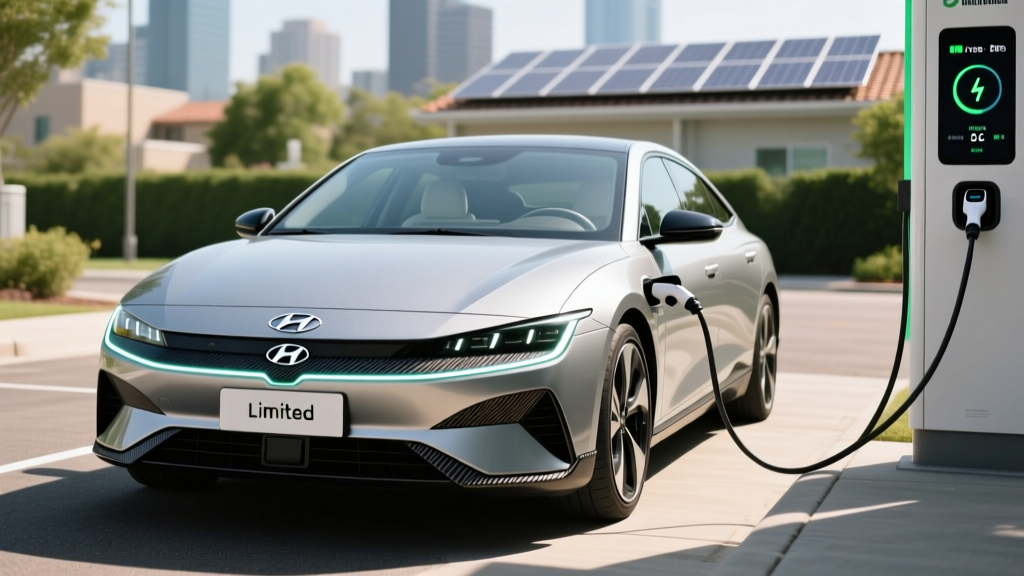
The 2025 Hyundai Ioniq 6 Limited is one of the most aerodynamically efficient electric sedans on the market, and that slippery 0.21 drag coefficient translates directly into real-world range that rivals cars costing $15,000 more. The Limited trim tops the range with a full suite of premium features, dual-motor all-wheel drive, and a 77.4 kWh battery that delivers an EPA-estimated 290 miles of range (the RWD SE trim peaks at 361 miles). If you prioritize highway efficiency, fast DC charging, and a distinctive design over SUV practicality, the Ioniq 6 Limited earns a serious spot on your shortlist.
| Spec | Value |
|---|---|
| EPA Range (AWD Limited) | 290 miles |
| EPA Range (RWD SE Long Range) | 361 miles |
| Battery Capacity | 77.4 kWh usable (NMC lithium-ion) |
| Drivetrain | Dual-motor AWD (Limited) / RWD (SE, SEL) |
| Horsepower | 320 hp (AWD) / 225 hp (RWD Long Range) |
| 0–60 mph | 5.1 seconds (AWD) |
| Max DC Fast Charge | ~239 kW (peak, 800V architecture) |
| 10–80% DC Charge Time | ~18 minutes (optimal conditions) |
| Level 2 Charge Rate | 10.9 kW (approx. 44 mi/hr) |
| MPGe (AWD Limited) | 111 / 94 / 103 (city / hwy / combined) |
| Energy Consumption | 30 kWh/100 mi (AWD combined) |
| Cargo Volume | 12.3 cu ft (trunk) + 0.7 cu ft (frunk) |
| Rear Legroom | 35.7 inches |
| Base MSRP (Limited AWD) | $52,600 (incl. destination) |
| Battery Warranty | 10 years / 100,000 miles |
Real-World Range: What the EPA Sticker Doesn't Tell You
EPA estimate: 290 miles
Real-world highway (70–80 mph): ~245–265 miles
Cold weather (below 32°F, mixed driving): ~210–240 miles
City / moderate climate: ~280–300+ miles
The Ioniq 6 Limited's AWD powertrain and larger 20-inch wheels on the Limited trim cost you 71 miles of EPA range compared to the RWD SE Long Range (361 miles). In our experience and consistent with third-party testing, the real-world highway range for the Limited AWD settles around 245–265 miles at sustained 70–80 mph speeds. EVs lose efficiency at highway velocity because there's no regenerative braking to recapture energy — it's all aero drag and rolling resistance.
Cold weather compounds the loss. Lithium-ion batteries operate less efficiently at low temperatures, and the cabin heater (resistance-based on the Ioniq 6, not a heat pump on all trims — the Limited includes a heat pump for 2025) draws significant energy. Expect a 15–25% range reduction in sustained sub-freezing conditions, putting winter range around 210–240 miles for the Limited AWD. Preconditioning the battery while plugged in mitigates this substantially.
For context, the average American drives roughly 37 miles per day according to FHWA data. Even with winter degradation, the Ioniq 6 Limited offers enough range for a full week of commuting between charges.
Charging Speed: 800V Architecture That Actually Delivers
Hyundai's E-GMP platform uses an 800-volt electrical architecture — the same found in the Porsche Taycan and Kia EV6 — enabling DC fast-charge rates that most 400V competitors simply cannot match. Here's what that means across charging levels:
| Charging Level | Power (kW) | Miles Added per Hour | Typical Use Case |
|---|---|---|---|
| Level 1 (120V household) | ~1.4 kW | ~4–5 mi/hr | Emergency / overnight trickle |
| Level 2 (240V home) | 10.9 kW | ~44 mi/hr | Daily home charging (full in ~7.5 hrs) |
| DC Fast Charge (350 kW station) | ~239 kW peak | ~900+ mi/hr equivalent | Road trips; 10–80% in ~18 min |
| DC Fast Charge (150 kW station) | ~150 kW (capped) | ~600 mi/hr equivalent | Common public stations; 10–80% in ~25 min |
Understanding the charge curve: The ~239 kW peak rate is not sustained across the entire session. Like all EVs, the Ioniq 6 charges fastest between roughly 10–55% state of charge, then progressively tapers to protect battery health. Above 80%, charging slows dramatically — expect 80–100% to take nearly as long as 10–80%. On road trips, the practical strategy is to charge to 80% and go, which takes approximately 18 minutes at a 350 kW-capable station.
At home on a Level 2 charger (10.9 kW), you'll add roughly 44 miles of range per hour. A full charge from near-empty takes about 7.5 hours — plug in when you get home, and you'll wake up with a full battery. Note that kW (kilowatts) measures power — the rate of energy delivery — while kWh (kilowatt-hours) measures total energy capacity. The Ioniq 6's battery holds 77.4 kWh of usable energy.
The Ioniq 6 uses the CCS1 connector for DC fast charging. With the broader industry shift toward NACS (Tesla's connector), Hyundai has confirmed that newer models will adopt NACS, and adapters will be available for access to Tesla Superchargers. As of 2025, the Ioniq 6 relies on CCS networks like Electrify America, EVgo, and ChargePoint.
Performance and Driving Dynamics
The Limited trim comes exclusively with dual-motor all-wheel drive: a front and rear motor combining for 320 horsepower and 446 lb-ft of torque. The result is a 0–60 mph time of approximately 5.1 seconds — quick enough to merge confidently and pass without hesitation, though not in Tesla Model 3 Performance territory (3.1 seconds).
What stands out in daily driving is the instant torque delivery and the quiet, composed ride. The Ioniq 6's low center of gravity (battery pack mounted under the floor) keeps body roll minimal through corners. The steering is precise if slightly numb, and the regenerative braking offers multiple levels adjustable via steering-wheel paddles — from a mild coast to near one-pedal driving. Hyundai's i-Pedal mode enables full one-pedal operation, bringing the car to a complete stop without touching the brake.
The Limited trim adds an adaptive suspension with electronically controlled dampers, which smooths out rough pavement noticeably compared to the SE and SEL. Road noise is well-suppressed thanks to active noise control and acoustic laminated glass on the front windows.
Interior, Tech, and the Cargo Compromise
The Ioniq 6's cabin leans into a "mindful mobility" concept with ambient lighting (64 colors, dual-zone), recycled materials on select surfaces, and a minimalist dual-screen layout. The Limited trim includes:
- 12.3-inch digital cluster + 12.3-inch infotainment touchscreen (curved, integrated)
- Navigation with over-the-air map updates
- Bose 8-speaker premium audio
- Heated and ventilated front seats, heated rear seats, heated steering wheel
- Head-up display with augmented-reality navigation prompts
- Digital side mirrors (camera-based, where permitted by state law)
- Wireless Apple CarPlay and Android Auto
- Hyundai Digital Key 2 (use your phone as the key fob via NFC/UWB)
The cargo trade-off: The Ioniq 6's swooping fastback roofline looks stunning but cuts into practicality. You get 12.3 cubic feet of trunk space — tight for a car in this price range and significantly less than the Ioniq 5's 27.2 cu ft behind the rear seats. A Model 3 offers 23 cu ft. The trunk opening is also relatively narrow, making it harder to load bulky items. The small 0.7 cu ft frunk barely holds a charging cable. If you regularly haul cargo or a family with strollers, this is the Ioniq 6's most significant drawback.
Passenger space is more generous: 42.9 inches of front legroom and 35.7 inches of rear legroom. The floor is flat (no transmission tunnel), so the middle rear seat is more usable than in most gas sedans. Headroom in the rear is adequate for adults under 6 feet, though the sloping roofline may brush the hair of taller passengers.
Pricing, Trims, and Federal Tax Credit Eligibility
| Trim | Drivetrain | MSRP (incl. destination) | Est. After §30D Credit* |
|---|---|---|---|
| SE Standard Range | RWD | $38,650 | Varies by eligibility |
| SE Long Range | RWD | $43,500 | Varies by eligibility |
| SEL | AWD | $48,100 | Varies by eligibility |
| Limited | AWD | $52,600 | Varies by eligibility |
*Federal tax credit eligibility under IRS §30D is subject to multiple requirements that change periodically:
- MSRP cap: Sedans must be at or below $55,000. The Ioniq 6 Limited at $52,600 clears this cap.
- Buyer income limits: AGI must not exceed $150,000 (single), $225,000 (head of household), or $300,000 (joint filers).
- Battery sourcing: Critical minerals and battery components must meet escalating domestic-sourcing thresholds that tighten each year. Check current-year fueleconomy.gov listings for the Ioniq 6's exact credit amount — it may be $7,500, $3,750, or $0 depending on when you buy and the latest sourcing compliance.
- Point-of-sale transfer: As of 2024, you can transfer the credit to the dealer at purchase, reducing your out-of-pocket cost immediately rather than waiting for tax filing.
Important: Tax credit rules are in flux. Always verify eligibility on irs.gov or with a qualified tax professional before purchasing. State and local incentives may also apply — check the AFDC state incentive database for your area.
Driver Assistance and Safety
The Ioniq 6 Limited comes equipped with Hyundai SmartSense, a comprehensive Level 2 (per SAE J3016) driver-assistance suite. This means the system can handle steering, acceleration, and braking in certain conditions — but you must remain fully engaged and attentive at all times. This is not self-driving.
The Ioniq 6's Highway Driving Assist 2 (HDA 2) is a Level 2 system. It requires continuous driver supervision, hands on or near the wheel, and does not handle construction zones, stopped traffic in complex scenarios, or adverse weather autonomously. You are legally and operationally responsible for the vehicle at all times.
Standard SmartSense features on the Limited include:
- Highway Driving Assist 2 (HDA 2) — lane centering + adaptive cruise with navigation-based speed adjustment
- Forward Collision-Avoidance Assist with pedestrian, cyclist, and junction-turning detection
- Blind-Spot Collision-Avoidance Assist
- Rear Cross-Traffic Collision-Avoidance Assist
- Safe Exit Assist (warns if a door opens into traffic)
- Remote Smart Parking Assist (the car can park itself while you stand outside)
- Surround-view monitor with 3D perspective
The Ioniq 6 earned a TOP SAFETY PICK+ rating from the IIHS and a 5-star overall rating from NHTSA, placing it among the safest vehicles in its class.
Warranty and Long-Term Ownership
Hyundai backs the Ioniq 6 with one of the strongest warranty packages in the EV segment:
- Battery: 10 years / 100,000 miles (capacity retention guaranteed above 70% during the warranty period)
- Powertrain (motors, reduction gear): 10 years / 100,000 miles
- New vehicle limited: 5 years / 60,000 miles
- Roadside assistance: 5 years / unlimited miles
- Complimentary maintenance: 3 years / 36,000 miles
The 10-year battery warranty is a significant confidence signal. Hyundai's NMC battery pack has shown strong durability in early fleet data, with typical degradation of 5–8% over the first 50,000 miles — well within the 70% retention threshold. Real-world long-term data for the Ioniq 6 specifically is still maturing (the model launched for 2023), but the E-GMP platform's thermal management system actively cools and heats the battery to optimize longevity.
Pros and Cons: The Honest Summary
- Class-leading highway efficiency (103 MPGe combined for AWD)
- Ultra-fast 800V DC charging (~18 min, 10–80%)
- Premium Limited trim features rival luxury brands at half the price
- Strong safety ratings (IIHS TSP+, NHTSA 5-star)
- 10-year/100,000-mile battery warranty
- Distinctive, head-turning design
- Limited cargo space (12.3 cu ft trunk, tiny frunk)
- Rear headroom tight for passengers over 6 feet
- AWD Limited range drops to 290 miles EPA (vs. 361 for RWD SE)
- CCS connector (NACS adapter needed for Supercharger access)
- Infotainment learning curve — no physical volume knob
- Rear visibility compromised by fastback design
Who Should Buy the Ioniq 6 Limited?
Best for: Commuters and road-trippers who value efficiency and charging speed over cargo space. The Ioniq 6 Limited is ideal if you drive mostly highway miles, have access to DC fast charging (or a home Level 2 setup), and don't regularly haul more than two passengers with luggage. Its aero efficiency means fewer charging stops on long trips, and the 18-minute fast-charge capability makes those stops painless.
Consider instead if: You need family-hauler cargo capacity (look at the Ioniq 5, Kia EV6, or Model Y), you want maximum range regardless of features (the RWD SE Long Range gives you 361 miles for $9,100 less), or you require NACS-native Supercharger access without an adapter.
Frequently Asked Questions
What is the real-world range of the 2025 Hyundai Ioniq 6 Limited?
The EPA rates the Limited AWD at 290 miles. In real-world highway driving at 70–80 mph, expect approximately 245–265 miles. In cold weather below freezing, plan for 210–240 miles. City driving in moderate temperatures can match or slightly exceed the EPA estimate thanks to regenerative braking.
How fast does the Ioniq 6 charge at home and on the road?
At home on a 240V Level 2 charger (10.9 kW), the Ioniq 6 adds about 44 miles of range per hour and fully charges in roughly 7.5 hours. On a 350 kW DC fast charger, it peaks at ~239 kW and charges from 10–80% in approximately 18 minutes. At more common 150 kW public stations, 10–80% takes about 25 minutes.
Does the 2025 Hyundai Ioniq 6 qualify for the federal EV tax credit?
The Ioniq 6 Limited ($52,600 MSRP) falls under the $55,000 sedan cap for §30D. However, the actual credit amount ($7,500, $3,750, or $0) depends on current-year battery-sourcing and critical-mineral requirements, which tighten annually. Buyer income must also fall below IRS thresholds ($150K single / $300K joint). Always verify on fueleconomy.gov before purchasing.
How does the Ioniq 6 Limited compare to the Tesla Model 3 Long Range?
The Model 3 Long Range AWD offers 341 miles of EPA range (vs. 290 for the Ioniq 6 Limited), more cargo space (23 cu ft vs. 12.3), and native NACS/Supercharger access. The Ioniq 6 counters with faster peak DC charging (239 kW vs. ~170 kW), a more distinctive design, a longer battery warranty (10 yr vs. 8 yr), and a more traditional dealership purchase experience. Both start in the low $50K range for top trims.
Is the Ioniq 6 a good car for road trips?
Yes, with caveats. The 800V fast-charging architecture means short stops — 18 minutes for 10–80% at a 350 kW station. Highway efficiency is excellent for an AWD EV. However, you'll need to plan around CCS-compatible stations (Electrify America, EVgo) rather than the Tesla Supercharger network, and the limited trunk space means packing light for longer trips.
What battery chemistry does the Ioniq 6 use?
The Ioniq 6 uses NMC (nickel manganese cobalt) lithium-ion cells, which offer higher energy density than LFP (lithium iron phosphate) chemistry. This translates to more range in a lighter, more compact pack. The trade-off is that NMC cells benefit more from keeping daily charge levels between 20–80% rather than regularly charging to 100%, whereas LFP batteries tolerate 100% daily charges more gracefully.