The 2025 Hummer EV in 60 Seconds
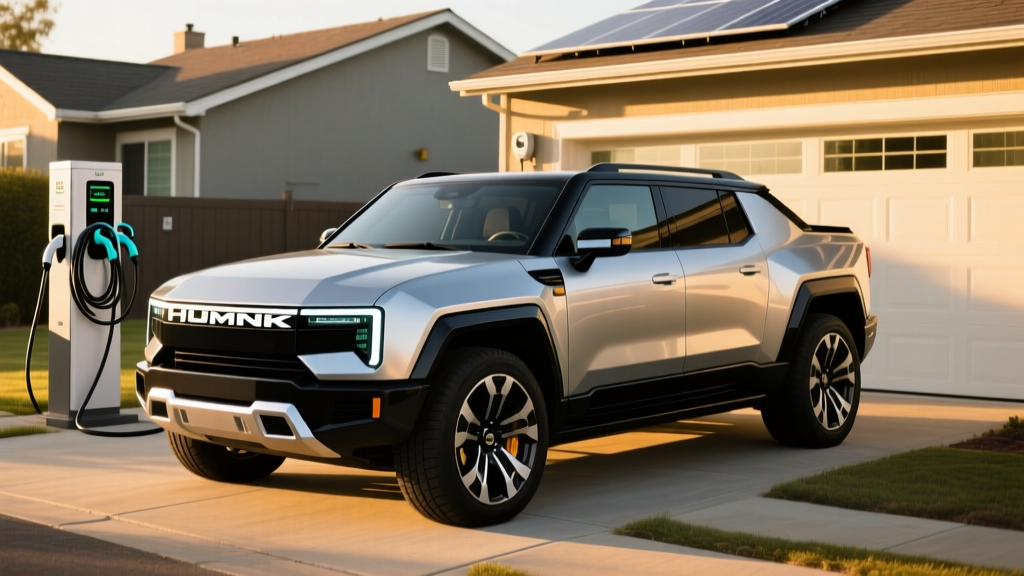
The 2025 GMC Hummer EV (badged as the "HUMMER EV" by GMC) is a massive, 9,000+ pound electric super-truck and SUV built on GM's Ultium platform. The Pickup 3X trim delivers an EPA-estimated 314 miles of range from a roughly 212 kWh usable battery (one of the largest in any production vehicle), while the 2X trim pushes up to 381 miles EPA. It peaks at 350 kW DC fast charging on 800V architecture, reaching 10-80% in approximately 30-35 minutes at a compatible charger. With up to 1,000 horsepower (Watts to Freedom mode) and a 0-60 mph time around 3.0 seconds, it defies its weight. Pricing starts near $98,845 for the 2X Pickup and climbs past $106,000 for the 3X, putting it outside the federal §30D tax credit MSRP cap for trucks ($80,000). This is a halo performance EV, not an efficiency play — buyers should budget $1,800-$2,400/year in electricity and expect premium insurance rates.
Range, Battery, and Real-World Efficiency
The 2025 Hummer EV's battery pack is an engineering extreme. GM uses NMC (nickel manganese cobalt) lithium-ion chemistry across the Ultium platform, chosen here for its high energy density — necessary to move a vehicle with a curb weight exceeding 9,000 pounds. The dual-layer, 24-module pack holds approximately 212 kWh of usable capacity, making it roughly double the size of a Ford F-150 Lightning Extended Range pack (131 kWh usable).
EPA Range vs. What You'll Actually See
| Trim | EPA Range | Real-World Highway (70 mph) | Cold Weather Estimate (20°F) |
|---|---|---|---|
| 2X Pickup | 381 mi | ~310-330 mi | ~250-280 mi |
| 3X Pickup | 314 mi | ~260-280 mi | ~210-240 mi |
| 3X SUV | 314 mi | ~255-275 mi | ~200-230 mi |
Real-world estimates based on highway-speed efficiency losses typical for heavy, boxy EVs and cold-weather battery chemistry behavior. The Hummer EV's aerodynamic profile and mass penalize it at sustained highway speeds and in freezing temperatures more than sleeker, lighter EVs.
Efficiency is predictably low for the segment. Expect approximately 47-53 MPGe combined (roughly 4.5-5.0 kWh/mile), per fueleconomy.gov data for the Ultium-based heavy trucks. That means every mile costs about 5 kWh — if you're paying $0.15/kWh at home, you're spending roughly $0.75 per mile in electricity. Compare that to a gas-powered GMC Sierra 1500 at 19 MPG combined and $3.40/gallon: about $0.18/mile. Wait — that math doesn't favor the Hummer EV? Let's correct: $0.15/kWh × 5.0 kWh/mi = $0.075/mile, or about 7.5 cents per mile. The Sierra at $3.40/gal ÷ 19 MPG = $0.179/mile, or about 18 cents per mile. The Hummer EV still costs roughly 58% less per mile to "fuel" — but far more than a Tesla Model Y at ~3.5 kWh/mi.
Charging Speed and Infrastructure Reality
The Hummer EV supports GM's 800V architecture, enabling DC fast-charge rates up to 350 kW at compatible CCS stations (the 2025 model year uses the CCS1 connector; GM is transitioning to NACS for 2025+ models, so verify your specific build's port). At a 350 kW Electrify America or EVgo stall, the charge curve is the critical factor — the Hummer EV does not sustain 350 kW across the entire session.
| Charging Level | Power (kW) | Miles Added Per Hour | Typical Use Case |
|---|---|---|---|
| Level 1 (120V, 12A) | ~1.4 kW | ~2-3 mi/hr | Emergency/trickle only |
| Level 2 (240V, 48A) | ~11.5 kW | ~18-22 mi/hr | Home overnight (12-14 hrs for full charge) |
| Level 2 (240V, 80A) | ~19.2 kW | ~30-38 mi/hr | Upgraded home/work (7-9 hrs full) |
| DC Fast (350 kW peak) | Up to 350 kW | ~100+ mi in 10 min (peak) | Road trips, 10-80% in ~30-35 min |
Charge curve reality: The Hummer EV's massive battery means even at a sustained 200 kW average (after peak taper), you're adding roughly 3-4 kWh per minute. The 10-80% session adds about 148 kWh, translating to roughly 30-35 minutes at a 350 kW-capable station. Above 80% SoC, charging slows dramatically to protect the NMC cells — expect the 80-100% top-off to take an additional 40+ minutes. For road trips, plan to charge to 80% and drive on.
Home charging is essential for a vehicle with a 212 kWh pack. On a standard 48A Level 2 home charger (11.5 kW), a full charge takes roughly 18-19 hours. Most owners will need to upgrade to an 80A circuit (19.2 kW) to achieve a practical overnight charge of 7-9 hours from 20% to full. This requires a 100A dedicated breaker and likely a 200A or larger electrical panel — budget $1,500-$3,500 for professional installation including potential panel upgrades. Consult a licensed electrician for your specific home.
Performance and Driving Dynamics
The 2025 Hummer EV 3X produces up to 830 horsepower (1,000 hp in the SUV's available Watts to Freedom launch mode) and an astonishing 1,200 lb-ft of torque from its three-motor setup (one front, two rear). The 2X trim uses a dual-motor configuration producing 625 hp.
| Spec | 2X Pickup | 3X Pickup | 3X SUV |
|---|---|---|---|
| Horsepower | 625 hp | 830 hp (1,000 hp WTF mode) | 830 hp (1,000 hp WTF mode) |
| 0-60 mph | ~4.5 sec | ~3.0 sec (WTF mode) | ~3.5 sec (WTF mode) |
| Towing Capacity | 7,500 lbs | 7,500 lbs | 7,500 lbs |
| Curb Weight | ~9,050 lbs | ~9,063 lbs | ~9,042 lbs |
| Ground Clearance | 10.1 in (up to 15.9 in Extract Mode) | 10.1 in (up to 15.9 in Extract Mode) | 10.1 in (up to 15.9 in Extract Mode) |
Extract Mode uses the adaptive air suspension to raise the vehicle nearly 6 inches for extreme off-road obstacles. The four-wheel steering system (CrabWalk) allows diagonal movement at low speeds — a genuine off-road tool, not just a party trick. However, the sheer mass is physics you can't cheat: tire wear will be accelerated, braking distances are longer than lighter trucks, and energy consumption spikes under hard acceleration or towing. Expect range to drop by 30-50% when towing near max capacity at highway speeds.
Pricing, Tax Credits, and Total Cost of Ownership
The 2025 GMC Hummer EV positions itself firmly in the luxury super-truck segment:
| Trim | Base MSRP | §30D Tax Credit Eligible? |
|---|---|---|
| 2X Pickup | $98,845 | No (exceeds $80,000 truck MSRP cap) |
| 3X Pickup | $106,445 | No (exceeds $80,000 truck MSRP cap) |
| 3X SUV | $99,795 | No (exceeds $80,000 SUV MSRP cap) |
Federal tax credit reality: Under IRS §30D rules, the Hummer EV does not qualify for the up-to-$7,500 federal clean vehicle credit. The MSRP caps are $80,000 for vans, SUVs, and pickup trucks. Even the base 2X at $98,845 far exceeds this threshold. Per IRS guidelines, there is no workaround for MSRP cap ineligibility. Some state-level incentives may apply — check your state's energy office or DMV for local rebates. Always consult a tax professional for your specific situation.
5-Year Ownership Cost Estimate: Hummer EV 3X vs. GMC Sierra 1500 Denali (Gas)
| Cost Category | Hummer EV 3X Pickup | Sierra 1500 Denali (6.2L V8, Gas) |
|---|---|---|
| Purchase Price (MSRP) | $106,445 | $68,095 |
| Federal Tax Credit | $0 | $0 |
| Energy/Fuel (5 yr, 15k mi/yr) | $5,625 (home charging, $0.15/kWh) | $22,368 ($3.40/gal, 16 MPG) |
| Maintenance (5 yr) | ~$2,500 | ~$5,500 |
| Insurance (5 yr est.) | $18,000-$24,000 | $9,000-$12,000 |
| Estimated Depreciation (5 yr) | ~$42,000 | ~$27,000 |
| Approximate 5-Year Total | $172,000-$180,000 | $132,000-$135,000 |
Estimates based on national averages. Energy costs vary by utility rate; insurance varies by driver profile, state, and carrier. The Hummer EV saves substantially on fuel and maintenance but carries a higher purchase premium, elevated insurance costs (heavy EVs are expensive to repair), and steeper depreciation due to its niche positioning.
Key ownership cost insight: The Hummer EV's energy savings are real — roughly $16,700 less in fuel over 5 years — but they don't close the $38,000+ purchase gap. You're buying this truck for performance, presence, and technology, not total cost of ownership. Insurance premiums are notably high: EVs with 9,000+ lb curb weights, specialized battery packs, and $100k+ values command premiums 50-100% above comparable gas trucks. Get quotes before purchasing.
EV vs. Gas vs. Hybrid: Where the Hummer EV Fits
| Factor | Hummer EV 3X | GMC Sierra 1500 Denali (Gas) | Ford F-150 PowerBoost Hybrid |
|---|---|---|---|
| Powertrain | Tri-motor BEV, 830 hp | 6.2L V8, 420 hp | 3.5L V6 Hybrid, 430 hp |
| EPA Range / MPG | 314 mi / 47 MPGe | 16 MPG combined | 24 MPG combined |
| Fuel/Energy Cost Per Mile | ~$0.075 | ~$0.213 | ~$0.142 |
| 0-60 mph | ~3.0 sec | ~5.4 sec | ~5.7 sec |
| Towing | 7,500 lbs | 11,800 lbs | 12,700 lbs |
| Starting MSRP | $106,445 | $68,095 | $58,290 |
| Home "Refuel" Possible? | Yes (overnight) | No | No |
| Off-Road Capability | Excellent (CrabWalk, Extract) | Good (AT4 trim) | Moderate |
The Hummer EV doesn't compete on towing — its 7,500-lb rating is below both gas and hybrid full-size trucks, largely due to the weight of the battery pack consuming payload and GCWR headroom. It also doesn't compete on price. What it delivers is instant torque, silent operation, home charging convenience, and off-road innovation that no gas truck can match. If you tow heavy loads regularly or need maximum range flexibility in rural areas, a diesel or hybrid truck remains more practical. If you want a daily-driver super-truck with weekend off-road chops and the ability to "fuel" at home, the Hummer EV is singular.
Common Misconceptions About the Hummer EV
| Myth | Fact |
|---|---|
| "It gets $7,500 in federal tax credits." | No. At $98,845+, it exceeds the §30D MSRP cap of $80,000 for trucks/SUVs. Zero federal credit applies. |
| "The 212 kWh battery will need expensive replacement soon." | GM covers the battery for 8 years/100,000 miles against defects and capacity loss below 70%. NMC degradation data from Ultium-platform vehicles suggests 10-15% loss over 150,000 miles under normal use. Out-of-warranty replacement would be extremely expensive ($30,000-$40,000+ est.), but premature failure is uncommon. |
| "You can charge it anywhere quickly." | Only 350 kW-capable CCS chargers deliver the advertised speed. Many public DC stations max out at 50-150 kW, which would extend 10-80% time to 50-80 minutes. Plan routes around high-power charging infrastructure. |
| "It's self-driving with Super Cruise." | GM's Super Cruise is an SAE Level 2 driver-assistance system. It handles steering and speed on pre-mapped divided highways, but the driver must remain attentive and hands-free operation is monitored via a driver-facing camera. You are always responsible for the vehicle. |
| "The range is terrible for such a big battery." | At 314 miles from 212 kWh, the 3X achieves ~1.48 mi/kWh — low by EV standards, but moving 9,063 lbs at highway speeds demands enormous energy. The engineering achievement is 314 miles at that weight, not the efficiency. |
Super Cruise: Level 2, Not Self-Driving
GM's Super Cruise, available on the Hummer EV, is classified as SAE Level 2 automation. It provides hands-free steering, acceleration, and braking on compatible highways (over 400,000 miles of mapped roads in North America). However, per NHTSA definitions, the driver must remain engaged and ready to take over at any time. This is not autonomous driving. Only Level 4 services like Waymo operate without a human driver in the loop.
Who Should Buy the 2025 Hummer EV — and Who Shouldn't
Decision Framework
Buy the Hummer EV if:
- You have home charging access (garage or driveway with a 240V circuit, ideally 80A) — this is non-negotiable for practical ownership of a 212 kWh pack
- You want a daily-drivable super-truck with sub-4-second 0-60 performance and genuine off-road capability
- Your budget comfortably absorbs a $100,000+ vehicle without relying on tax credits to justify the purchase
- You drive primarily in urban/suburban areas where regenerative braking maximizes efficiency
- You value silent operation, instant torque, and home "refueling" convenience over maximum towing or lowest cost per mile
Look elsewhere if:
- You tow over 7,500 lbs regularly — a diesel F-250 or gas Sierra Denali is far more capable and range-predictable under load
- You live in an apartment or lack home charging — relying solely on public DC fast charging for a 212 kWh battery is expensive ($0.35-$0.50/kWh = $74-$106 per session) and time-consuming
- You need a truck for rural or cold-climate work where charging infrastructure is sparse and range drops 20-30% in winter
- You're budget-conscious — the Rivian R1T, Ford F-150 Lightning, or Chevrolet Silverado EV offer compelling electric truck capability at $55,000-$80,000 with potential tax credit eligibility
- You prioritize efficiency and low operating costs — the Hummer EV's 4.5-5.0 kWh/mile consumption is the highest in the EV truck segment
Battery Longevity, Warranty, and What Happens After Year 8
GM provides an 8-year/100,000-mile battery and powertrain warranty on the Hummer EV, covering defects and capacity degradation below approximately 70% of original capacity. The Ultium platform's NMC cells use a proprietary thermal management system with active liquid cooling to mitigate degradation during fast charging and extreme temperatures.
Based on available Ultium-platform data and broader NMC chemistry research, expect approximately 10-15% range loss over 150,000 miles under normal mixed-use conditions. Frequent DC fast charging to 100% and regular exposure to extreme heat will accelerate degradation. Best practices for longevity:
- Set daily charge limit to 80% SoC for routine driving (use the vehicle's scheduled charging feature)
- Use DC fast charging for road trips, not daily top-ups
- Enable battery preconditioning before fast-charging sessions (warms the pack for optimal charge acceptance and reduced stress)
- Avoid leaving the vehicle at 100% SoC or below 10% SoC for extended periods
If the battery does require out-of-warranty replacement, current estimates for a pack of this size run $30,000-$45,000+ including labor. This is a worst-case scenario and unlikely within the first 10-12 years based on current degradation data, but it's a real financial risk for second owners.
Frequently Asked Questions
Does the 2025 Hummer EV use NACS or CCS for charging?
GM began transitioning to the NACS (Tesla-style) connector for 2025 model-year vehicles. However, early-production 2025 Hummer EVs may still ship with CCS1. Confirm the connector type with your dealer before purchase. In the interim, GM provides a CCS-to-NACS adapter for Supercharger access. At home, you'll use a J1772 or NACS Level 2 connector depending on your charger.
How much does it cost to charge a Hummer EV at home per month?
Assuming 1,250 miles/month driven at 5.0 kWh/mile, you'll consume approximately 6,250 kWh/month. At the US average residential rate of $0.15/kWh, that's roughly $94/month. If you have time-of-use rates and charge overnight at $0.10/kWh, it drops to about $63/month. Compare this to a gas Sierra 1500 at 16 MPG: about $265/month in fuel. The monthly energy savings are substantial — roughly $170-$200/month.
Can the Hummer EV power my home during an outage?
The 2025 Hummer EV supports V2L (Vehicle-to-Load) capability, allowing you to power tools, appliances, or devices directly from the truck's outlets (up to several kW). However, full V2H (Vehicle-to-Home) bi-directional charging — where the truck feeds power back through your electrical panel during an outage — requires GM's Energy System home integration hardware, which is being rolled out progressively. With a 212 kWh battery, the Hummer EV could theoretically power an average home (30 kWh/day) for 5-7 days, making it one of the most capable backup-power EVs available.
Is the Hummer EV reliable? What do early owners report?
As a low-volume, high-complexity vehicle, the Hummer EV has seen reported issues typical of first-generation platforms: software glitches, 12V auxiliary battery drain, and occasional build-quality inconsistencies. GM has issued several technical service bulletins (TSBs) and OTA updates to address these. Check NHTSA's recall database for the latest safety information. Reliability data is still maturing — this is a vehicle for buyers who accept early-adopter trade-offs.
What's the best alternative if the Hummer EV is too expensive or impractical?
For electric truck buyers seeking better value: the Ford F-150 Lightning ($55,000-$96,000, up to 320 mi range, tax-credit eligible on lower trims) offers practical towing and daily usability. The Rivian R1T ($70,000-$100,000, up to 410 mi range with Max Pack) delivers premium off-road capability with better efficiency. The Chevrolet Silverado EV (starting ~$55,000 for Work Truck, up to 450 mi range on 4WT) provides Ultium-platform tech at a more accessible price point with potential tax credit eligibility.