Quick Verdict: Honda's First EV Plays It Practical
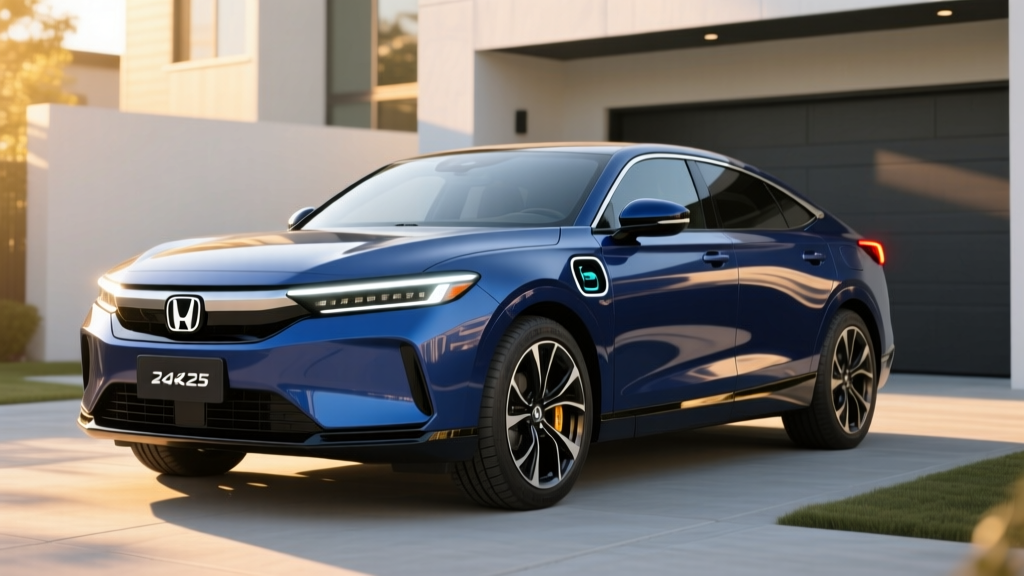
The 2025 Honda Prologue is Honda's first mass-market battery electric vehicle, and it arrives not as a technology showcase but as a pragmatic family crossover. Built on General Motors' Ultium platform and assembled alongside the Chevrolet Blazer EV, the Prologue offers a comfortable ride, competitive range, and Honda's signature packaging sensibility. For 2025, Honda added a new single-motor front-wheel-drive EX trim that undercuts the starting price significantly, broadening its appeal. If you're a current Honda loyalist ready to go electric without learning an entirely new ecosystem, the Prologue is designed for you — though it isn't without compromises that prospective buyers should weigh carefully.
| Specification | EX / EX-L (FWD) | Touring (AWD) |
|---|---|---|
| EPA Range | 296 miles | 283 miles |
| Usable Battery Capacity | 85 kWh (NMC lithium-ion) | |
| Drivetrain | Single-motor FWD | Dual-motor AWD |
| Horsepower | 212 hp | 288 hp |
| Torque | 236 lb-ft | 333 lb-ft |
| 0–60 mph (est.) | ~7.8 sec | ~6.2 sec |
| Max DC Fast Charge | 150 kW (peak) | |
| 10–80% DC Charge Time | ~35 minutes | |
| Level 2 Home Charging | 11.5 kW / ~34 mi/hr | |
| MPGe (Combined) | 95 MPGe | 87 MPGe |
| Efficiency | 35 kWh/100 mi | 39 kWh/100 mi |
| Cargo Volume (rear seats up) | 25.2 cu ft | |
| Cargo Volume (rear seats folded) | 57.7 cu ft | |
| Rear Legroom | 39.8 inches | |
| Battery/Powertrain Warranty | 8 years / 100,000 miles | |
| Base MSRP | $47,400 (EX) | $57,400 (Touring) |
Range and Efficiency: EPA Numbers vs. the Real World
The front-wheel-drive EX and EX-L trims earn an EPA-estimated 296 miles of range, while the dual-motor Touring drops to 283 miles. According to fueleconomy.gov, the FWD Prologue returns 95 MPGe combined (35 kWh per 100 miles), which is competitive with rivals like the Hyundai Ioniq 5 but trails the more aerodynamic Tesla Model Y. The AWD Touring dips to 87 MPGe combined at 39 kWh/100 mi — a noticeable efficiency penalty driven by the second motor's weight and rolling resistance.
EPA sticker: 296 miles (FWD) / 283 miles (AWD).
Expect ~250–270 miles in mixed highway driving at 70–75 mph.
In freezing weather (below 30°F), plan for ~210–235 miles — a 20–25% reduction typical of NMC chemistry without a dedicated heat pump on base trims.
City-heavy driving with regenerative braking engaged can approach or even match the EPA figure.
The Prologue uses an 85 kWh (usable) battery pack with NMC (nickel manganese cobalt) chemistry. Unlike LFP batteries found in some competitors, NMC offers higher energy density but is more sensitive to sustained 100% state-of-charge storage and extreme cold. Honda recommends keeping the pack between 20% and 80% for daily use to minimize long-term degradation. The Ultium platform's active thermal management system helps precondition the battery during navigation-routed DC charging sessions, though in our experience, cold-weather preconditioning isn't as aggressive as Tesla's system.
Charging Speed: Home, Public, and the 150 kW Ceiling
Charging speed is where the Prologue shows its platform-sharing roots — and where it falls slightly behind the latest dedicated EV architectures. Here's the complete charging picture:
| Charging Level | Power | Speed / Time | Best For |
|---|---|---|---|
| Level 1 (120V outlet) | ~1.4 kW | ~4 miles per hour | Emergency / overnight trickle |
| Level 2 (240V home) | 11.5 kW | ~34 miles per hour / full charge in ~9 hrs | Daily home charging |
| DC Fast Charge (CCS) | 150 kW peak | 10–80% in ~35 min | Road trips / public stations |
The 150 kW peak DC fast-charge rate is the Prologue's most significant spec limitation. Competitors like the Hyundai Ioniq 5 and Kia EV6 can accept up to 235–240 kW on 800V architectures, achieving 10–80% charges in roughly 18 minutes. The Prologue's 35-minute 10–80% window is adequate for road-trip breaks but noticeably slower on long drives with multiple charging stops.
The charging curve is fairly flat between 10% and 50% state-of-charge, sustaining close to 130–150 kW, then tapers progressively. Above 80%, expect charge speeds to drop below 40 kW — standard behavior for NMC packs, but it means charging past 80% at a public station is rarely worth the time.
For home Level 2 charging, the Prologue's onboard charger accepts up to 11.5 kW (48 amps), which is a strong spec. On a properly installed 240V/60A circuit, you'll recover roughly 34 miles of range per hour, meaning a depleted battery fully replenishes overnight in about 9 hours. Honda includes a dual-level portable charging cord with the vehicle that handles both 120V and 240V outlets, though most owners will want a dedicated wall-mounted Level 2 unit.
Connector note: The 2025 Prologue uses the CCS1 connector standard. Honda has confirmed that future models will adopt the NACS (Tesla) connector, and Honda owners will gain access to Tesla Supercharger stations via adapter beginning in 2025. Check with your dealer for adapter availability and compatibility details.
Performance and Drivetrain: Comfortable, Not Sporty
The Prologue is tuned for ride comfort, not canyon carving. The FWD single-motor setup produces 212 hp and 236 lb-ft of torque — adequate for highway merging and city driving, with a 0–60 mph time around 7.8 seconds. The AWD Touring bumps output to 288 hp and 333 lb-ft, dropping the sprint to approximately 6.2 seconds. Both configurations feel smooth and linear, with the instant torque delivery characteristic of electric motors.
The suspension tuning is decidedly comfort-oriented. The Prologue absorbs highway expansion joints and potholes with a maturity that outclasses many EV crossovers, which tend toward firmness to manage heavy battery packs. Steering is light and numb — acceptable for commuting, less inspiring on back roads. The low center of gravity from the under-floor battery pack keeps body roll well-controlled despite the soft damping.
Regenerative braking is adjustable via steering-wheel paddles, offering everything from mild coasting to near one-pedal driving. However, the Prologue doesn't quite achieve full one-pedal driving at the strongest regen setting — you'll still need the friction brake for a complete stop, a minor annoyance for EV veterans accustomed to true single-pedal operation.
Interior, Cargo, and Technology
Honda's packaging expertise shows inside the Prologue. Despite riding on a GM-sourced platform, the cabin feels distinctly Honda in layout and material quality. Rear legroom measures 39.8 inches — generous for the midsize crossover segment and comparable to the Honda CR-V. Cargo space behind the second row is 25.2 cubic feet, expanding to 57.7 cu ft with the 60/40 split rear seats folded. There's no front trunk (frunk); the space under the hood houses HVAC and power electronics.
The infotainment system uses an 11.3-inch touchscreen running Google Built-In on higher trims, with native Google Maps, Google Assistant, and Play Store access. Wireless Apple CarPlay and Android Auto are standard on all trims. The digital instrument cluster is an 11-inch display that provides range, efficiency, and navigation information clearly.
The Honda Sensing suite of driver-assistance features is standard across all trims, including adaptive cruise control, lane-keeping assist, collision mitigation braking, and traffic sign recognition. This is an SAE Level 2 driver-assist system — it does not drive the car autonomously. The driver must remain engaged, with hands on the wheel and eyes on the road at all times. Unlike GM's Super Cruise (available on the related Blazer EV), the Prologue does not offer hands-free highway driving.
The Honda Sensing system on the Prologue is an SAE Level 2 driver-assist feature. It provides steering and speed assistance but requires continuous driver supervision. It does not make the Prologue a self-driving vehicle. The driver is legally and operationally responsible for the vehicle at all times.
Notable drawbacks include the absence of a frunk, no hands-free driving capability, and a rear-window visibility compromise caused by the thick C-pillars. Some owners report that the Google Built-In infotainment can be sluggish on startup, and the lack of physical climate control knobs forces reliance on the touchscreen for temperature adjustments.
Pricing, Trims, and Federal Tax Credit Eligibility
The 2025 Prologue lineup spans three trims with a significant price spread:
- EX (FWD): $47,400 MSRP — the new-for-2025 entry point
- EX-L (FWD or AWD): $50,400 (FWD) / $52,400 (AWD)
- Touring (AWD only): $57,400
| Trim | Base MSRP | Est. After $7,500 Credit* | Destination |
|---|---|---|---|
| EX (FWD) | $47,400 | ~$39,900 | +$1,395 |
| EX-L (FWD) | $50,400 | ~$42,900 | +$1,395 |
| EX-L (AWD) | $52,400 | ~$44,900 | +$1,395 |
| Touring (AWD) | $57,400 | ~$49,900 | +$1,395 |
*Tax credit amounts shown assume full eligibility under IRS §30D rules. Actual credit varies based on battery sourcing, buyer income, and MSRP caps. See eligibility checklist below.
Federal EV tax credit eligibility under IRS §30D is complex and subject to change. The Prologue has qualified for up to $7,500 in prior periods, but eligibility depends on several factors that shift as battery sourcing requirements tighten. As of the 2025 tax year, here is what determines whether you qualify:
- MSRP cap: SUVs/vans/pickups must be under $80,000 MSRP — all Prologue trims qualify ✓
- Buyer income cap: Modified AGI must not exceed $150,000 (single), $225,000 (head of household), or $300,000 (joint filing)
- Battery component sourcing: Increasing percentages of battery components must be manufactured or assembled in North America (threshold rises annually)
- Critical minerals: A percentage of critical minerals must be sourced from the US or free-trade-agreement partners (threshold rises annually)
- Point-of-sale transfer: Eligible buyers can transfer the credit to the dealer at purchase for an immediate price reduction rather than claiming it on their tax return
- FEOC restriction: Vehicles with battery components from a "foreign entity of concern" (e.g., certain Chinese suppliers) may be disqualified
Always verify current eligibility on IRS.gov or consult a tax professional before relying on the credit in your purchase decision.
How It Compares: Prologue vs. Key Rivals
The Prologue competes in the crowded midsize electric crossover segment. Here's how it stacks up on the metrics buyers care about most:
| Spec | Honda Prologue (FWD) | Hyundai Ioniq 5 (RWD) | Tesla Model Y (LR) | Ford Mustang Mach-E (RWD) |
|---|---|---|---|---|
| EPA Range | 296 mi | 303 mi | 320 mi | 250 mi |
| Battery (usable) | 85 kWh | 77.4 kWh | ~75 kWh | 70 kWh |
| Max DC Charge | 150 kW | 240 kW | 250 kW | 150 kW |
| 10–80% Time | ~35 min | ~18 min | ~22 min | ~35 min |
| Starting MSRP | $47,400 | $42,450 | $44,990 | $39,995 |
| MPGe (Combined) | 95 | 117 | 122 | 101 |
The Prologue's advantages are ride comfort, rear-seat space, and Honda brand loyalty. Its disadvantages are clear: slower DC charging, lower efficiency (MPGe), and a higher starting price than several competitors. The Ioniq 5 charges dramatically faster, the Model Y offers the longest range and best efficiency, and the Mach-E undercuts on price. The Prologue's sweet spot is buyers who prioritize a familiar dealership experience, a supple ride, and Honda's reputation for reliability over bleeding-edge EV performance metrics.
Warranty and Long-Term Ownership
Honda backs the Prologue's battery and electric powertrain components with an 8-year / 100,000-mile warranty, which aligns with the industry standard for EV battery coverage. The warranty guarantees that the battery will retain a minimum capacity threshold (typically 60–70% of original capacity, though Honda has not published an exact percentage for the Prologue). The limited vehicle warranty covers 3 years / 36,000 miles.
Long-term battery degradation data for the Prologue specifically is still limited given its recent launch. However, the Ultium platform's active liquid thermal management system is designed to keep cell temperatures within an optimal range, which historically correlates with slower degradation. Based on NMC pack behavior in similar GM EVs, owners can reasonably expect 8–12% total capacity loss over the first 100,000 miles under normal use patterns.
Maintenance costs are minimal compared to ICE vehicles — no oil changes, no spark plugs, no transmission fluid. Expect to replace cabin air filters, wiper blades, brake fluid (every 3 years), and tires (EVs tend to wear tires 20–30% faster due to weight and instant torque). Insurance premiums for the Prologue are in line with midsize electric crossovers; get quotes from your provider before purchasing, as EV insurance can run 10–20% higher than equivalent gas vehicles.
Who Should Buy the 2025 Honda Prologue?
- You're a current Honda/Acura owner who values dealership familiarity and brand loyalty
- Ride comfort and a quiet cabin matter more than sporty handling
- You need generous rear-seat legroom for car seats or adult passengers
- Your daily commute is under 80 miles round-trip and you charge at home
- You want a no-drama EV transition without learning a new brand ecosystem
- Fast DC charging is critical for your frequent road trips (consider Ioniq 5 or Model Y)
- You want maximum efficiency and the lowest cost per mile (Tesla Model Y wins)
- You prioritize the lowest purchase price in the segment (Mach-E or Ioniq 5)
- You want hands-free highway driving (Blazer EV with Super Cruise, or Ford with BlueCruise)
- You need a frunk for additional cargo flexibility
- Comfortable, compliant ride quality that outclasses most EV crossovers
- Spacious rear seat (39.8" legroom) and practical cargo area
- Strong Level 2 home charging (11.5 kW)
- Honda Sensing safety suite standard on all trims
- Google Built-In infotainment with native maps
- Competitive 296-mile EPA range on FWD trims
- DC fast charging limited to 150 kW — 35 min for 10–80%
- Higher starting price than key competitors
- No front trunk (frunk)
- No hands-free driving option (unlike GM Super Cruise on Blazer EV)
- Efficiency (MPGe) trails segment leaders
- Thick C-pillars compromise rear visibility
Frequently Asked Questions
What is the real-world range of the 2025 Honda Prologue?
In mixed driving at moderate speeds and temperatures, expect 250–270 miles from the FWD model (EPA-rated 296 mi). Highway-only driving at 75 mph reduces this to roughly 240–255 miles. In freezing winter conditions, plan for 210–235 miles — a 20–25% cold-weather penalty typical of NMC battery chemistry. The AWD Touring model will deliver approximately 10–15 fewer miles in each scenario due to its lower 283-mile EPA rating.
How fast does the Prologue charge at home and on the road?
At home on a 240V Level 2 charger, the Prologue accepts up to 11.5 kW, adding about 34 miles of range per hour and fully charging from empty in roughly 9 hours. On DC fast chargers, it peaks at 150 kW and charges from 10% to 80% in approximately 35 minutes. This is slower than 800V competitors like the Ioniq 5 (18 minutes) but typical for 400V architecture vehicles.
Does the 2025 Honda Prologue qualify for the federal EV tax credit?
The Prologue has been eligible for up to $7,500 under IRS §30D, but eligibility depends on your income (AGI caps apply), the vehicle's battery sourcing compliance (which changes annually), and the MSRP cap ($80,000 for SUVs — all Prologue trims qualify). Point-of-sale transfer is available, letting you apply the credit as an immediate discount at the dealership. Always check the latest status on fueleconomy.gov and consult a tax professional.
Is the Honda Prologue worth buying over the Tesla Model Y or Hyundai Ioniq 5?
It depends on your priorities. If you value ride comfort, rear-seat space, and Honda's dealership network, the Prologue is compelling. If you prioritize charging speed, efficiency, range, or price, the Ioniq 5 and Model Y are objectively stronger on those metrics. The Prologue is a comfort-first family hauler, not a technology benchmark.
What are the biggest drawbacks of the Prologue?
The 150 kW DC charging cap is the most consequential limitation — it adds 10–15 minutes to road-trip charging stops versus faster-charging rivals. The lack of a frunk, absence of hands-free driving, and higher base price than competitors are also notable. Efficiency (kWh/100 mi) trails the best in class, meaning slightly higher electricity costs over the vehicle's lifetime.
Does the Prologue use CCS or NACS (Tesla) charging connector?
The 2025 Prologue ships with the CCS1 connector. Honda has announced that future EVs will adopt NACS, and Honda is providing adapters for existing EV owners to access the Tesla Supercharger network. Confirm adapter availability and any firmware requirements with your dealer at purchase.
How does the Prologue's battery warranty compare?
Honda provides 8 years / 100,000 miles of battery and powertrain coverage, matching the standard set by most EV manufacturers. This warranty covers defects and excessive capacity loss. The general vehicle warranty is 3 years / 36,000 miles, which is shorter than Hyundai/Kia's 5-year / 60,000-mile bumper-to-bumper coverage.