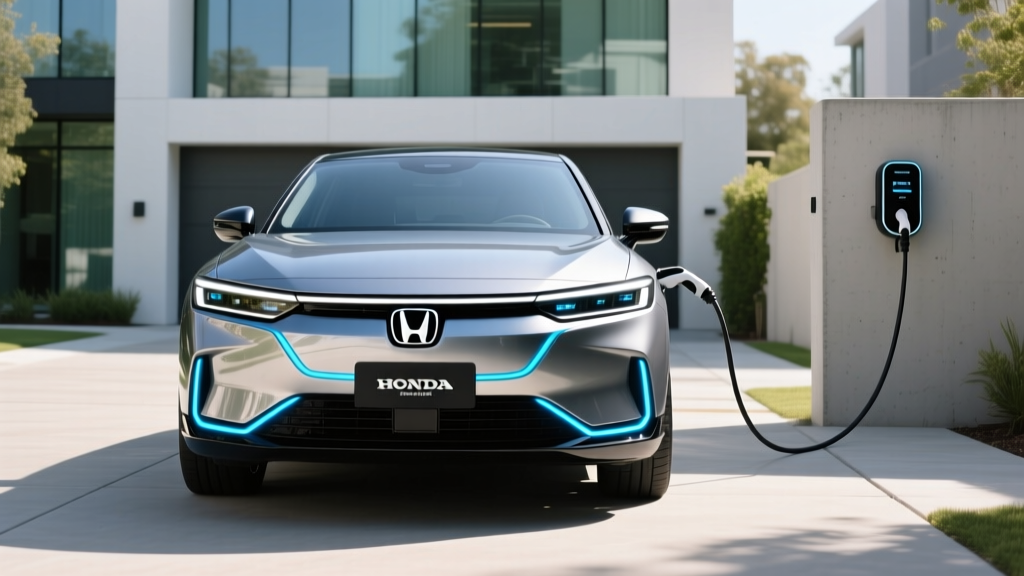
If you have been browsing dealer websites or EV forums lately, you have likely noticed a surge of interest in 2025 Honda Prologue EV lease deals. Honda's first mass-market electric SUV, built on General Motors' Ultium platform, has aggressively priced lease offers that stack federal incentives, dealer discounts, and manufacturer support into monthly payments that undercut many gas-powered compact SUVs. But a low monthly payment only tells part of the story.
As an EV analyst who has tracked Prologue pricing since its 2024 launch and driven the vehicle across multiple charging networks, I want to unpack what these lease deals actually cost you over five years — including the expenses that brochures leave out: insurance premiums, home charger installation, real-world electricity rates, and depreciation risk. Let's run the numbers.
2025 Honda Prologue: The Numbers That Matter
Before evaluating any lease, you need the baseline specs. The 2025 Prologue comes in EX, Touring, and Elite trims, all sharing GM's Ultium battery architecture with an 85 kWh usable lithium-ion (NMC chemistry) pack.
| Spec | EX (FWD) | Touring (FWD) | Elite (AWD) |
|---|---|---|---|
| EPA Range | 308 mi | 296 mi | 273 mi |
| Battery (usable) | 85 kWh, NMC | ||
| Peak DC Fast Charge | 155 kW (10–80% in ~32 min) | ||
| Level 2 AC Charge | 11.5 kW (~7.5 hrs 0–100%) | ||
| Horsepower | 212 hp | 212 hp | 288 hp |
| 0–60 mph | ~7.8 sec | ~7.8 sec | ~6.2 sec |
| MPGe (combined) | 95 MPGe | 93 MPGe | 89 MPGe |
| Base MSRP | $47,400 | $53,400 | $57,400 |
| Battery Warranty | 8 yr / 100,000 mi | ||
Why 2025 Honda Prologue EV Lease Deals Are Trending
The Prologue's lease attractiveness stems from a specific incentive structure. Under current IRS rules, the Prologue qualifies for the $7,500 federal EV tax credit under §30D when purchased — but here is the lease loophole that matters: under IRS guidance treating leases as commercial fleet purchases by the lessor, the $7,500 credit flows to the leasing company (typically Honda's finance arm), which can then pass it through as a capitalized-cost reduction on your lease. This is often called the "lease loophole" and it works regardless of your personal income or the vehicle's MSRP cap — constraints that apply to direct purchases.
Many 2025 Prologue lease deals in early 2026 have combined this $7,500 lease cash with dealer discounts of $3,000–$5,000 and Honda's own promotional lease cash, pushing effective monthly payments on the EX trim into the $299–$399 range with $3,000–$4,500 due at signing for 36-month terms. That is genuinely competitive with a leased Toyota RAV4 or Honda CR-V when you factor in fuel savings.
Federal Tax Credit Eligibility: The Fine Print
Whether you buy or lease, understanding the §30D credit mechanics is essential for comparing Prologue deals against competitors.
- Credit Amount: Up to $7,500 ($3,750 for critical minerals + $3,750 for battery component sourcing)
- MSRP Caps (purchase only): SUVs, vans, pickups ≤ $80,000; sedans ≤ $55,000 — Prologue qualifies at all trims
- Buyer Income Caps (purchase only): AGI ≤ $300,000 joint / $225,000 head of household / $150,000 single
- Battery Sourcing Rules: Critical minerals and battery components must meet escalating domestic/free-trade-partner thresholds — the GM-sourced Ultium pack currently qualifies for the full $7,500
- Point-of-Sale Transfer: Buyers can transfer the credit to the dealer for an immediate price reduction rather than waiting for tax filing
- Lease Exception: The lessor claims the commercial clean vehicle credit (§45W), passing savings through the lease — no buyer income or MSRP caps apply to the lessee
This lease structure is why a $57,400 Prologue Elite can be leased by someone earning $400,000/year — a buyer who would be income-capped out of the credit on a direct purchase. Always confirm with the dealer that the lease cash reflects the full $7,500 pass-through, as this is not automatic at every dealership. For the latest rules, consult IRS.gov's clean vehicle credit page.
5-Year Total Cost of Ownership: Prologue vs. Gas SUV Baseline
A lease is typically 36 months, but understanding the 5-year ownership picture helps you evaluate whether to buy out the lease, lease again, or switch vehicles. Here is a realistic breakdown comparing the Prologue EX (FWD) to a comparably priced gas compact SUV (think Honda CR-V AWD at ~$35,000 MSRP).
| Cost Category | 2025 Prologue EX | Gas Compact SUV (AWD) |
|---|---|---|
| Purchase/Lease Cost (5 yr) | $24,500 (lease equivalent) | $22,800 (lease equivalent) |
| Fuel/Energy (60,000 mi) | $3,600 ($0.14/kWh home avg) | $7,500 ($3.50/gal, 28 MPG) |
| Home Charger Install (L2) | $1,200 (one-time) | $0 |
| Maintenance | $900 | $2,800 |
| Insurance (5 yr total) | $9,500 | $7,200 |
| Depreciation (if purchased) | ~50–55% | ~35–40% |
| 5-Year Total (est.) | ~$39,700 | ~$40,300 |
The Prologue breaks roughly even with a gas SUV over five years when you include the lease cash incentive. The fuel and maintenance savings are substantial — roughly $5,800 combined — but they are largely offset by higher insurance costs and the home charger investment. Without the $7,500 lease credit, the Prologue would cost approximately $7,000 more over the same period.
Charging vs. Gas: The Per-Mile Math
This is where the Prologue shines — but only if you charge primarily at home.
| Scenario | Cost/Mile | Annual Cost (12,000 mi) |
|---|---|---|
| Prologue — Home charging ($0.14/kWh, 3.0 mi/kWh) | $0.047 | $560 |
| Prologue — Public DCFC ($0.40/kWh avg) | $0.133 | $1,600 |
| Prologue — Blended 80/20 home/public | $0.064 | $770 |
| Gas SUV (28 MPG combined, $3.50/gal) | $0.125 | $1,500 |
Home charging delivers a 62% per-mile cost advantage over gasoline. But if you rely entirely on public DC fast chargers — at current national averages around $0.35–$0.48/kWh on networks like Electrify America or EVgo — your "fuel" cost actually exceeds gasoline. This is the single biggest variable in Prologue ownership economics. Before signing any lease, confirm you have reliable access to Level 2 home charging or a workplace charger.
The Prologue's 155 kW peak DC charge rate means a 10–80% session takes roughly 32 minutes at a capable station. However, the charge curve tapers significantly above 80% — a full 10–100% session can stretch to 50+ minutes. For road trips, plan stops around the 10–80% sweet spot to minimize dwell time.
Maintenance Savings: Fewer Parts, Real Dollars
EV maintenance advantages are well-documented, but let's quantify them for the Prologue specifically.
| Service Item | Prologue (5 yr / 60k mi) | Gas SUV (5 yr / 60k mi) |
|---|---|---|
| Oil Changes | $0 (none required) | $450 (6 changes at $75) |
| Brake Pads/Rotors | $0–$200 (regen extends life 2–3x) | $600–$900 |
| Transmission Fluid | $0 (single-speed reducer) | $150–$250 |
| Engine Air Filter | $0 (no intake) | $100–$150 |
| Coolant Flush | $0 (sealed battery thermal system) | $150–$200 |
| Tire Rotation/Replacement | $800–$1,200 (heavier vehicle, more tire wear) | $600–$900 |
| Cabin Air Filter + Wipers | $200 | $200 |
| Total Estimated | ~$1,000–$1,400 | ~$2,250–$3,050 |
You save roughly $1,400–$1,800 on maintenance over five years. The one area where EVs cost more is tires — the Prologue's 4,700+ lb curb weight and instant torque accelerate tire wear by 15–25% compared to a lighter gas SUV. Budget for a tire replacement around 35,000–45,000 miles. Honda's 8-year/100,000-mile battery and powertrain warranty covers the Ultium pack against defects and excessive degradation (typically defined as falling below 60–70% capacity retention, though Honda's exact threshold should be confirmed in your warranty booklet).
The Insurance Reality: Expect to Pay More
This is the cost category that catches new EV lessees off guard. According to industry data, EV insurance premiums run 15–25% higher than equivalent gas vehicles. For the Prologue, expect annual premiums in the $1,700–$2,100 range depending on your state, driving record, and coverage levels — compared to $1,300–$1,600 for a gas compact SUV.
The reasons are structural: EVs have higher repair costs after collisions (specialized high-voltage safety protocols, expensive battery modules, limited body-shop certification), higher total-loss thresholds (a damaged battery pack can total a vehicle that would be repairable with a gas engine), and elevated parts costs. The Prologue benefits somewhat from sharing the Ultium platform with the Chevrolet Blazer EV and Cadillac Lyriq, which means a growing parts supply and more certified repair facilities — but the premium persists.
Before committing to a lease, get an insurance quote for the exact Prologue trim you are considering. The difference between a $1,600/year and a $2,200/year premium adds $3,000 over five years — enough to erase a meaningful chunk of your fuel savings.
Depreciation and Resale: The EV Wild Card
EV depreciation has been volatile. Early-adopting EVs from 2020–2022 saw steep value drops as battery technology advanced rapidly, Tesla cut prices aggressively, and the used-EV market flooded with off-lease vehicles. The Prologue faces a specific depreciation risk: as a rebadged GM Ultium product, its long-term desirability depends on Honda's commitment to the platform and GM's own pricing strategy for the mechanically similar Blazer EV.
Current projections suggest the Prologue will retain 45–50% of its MSRP after five years — below the 55–65% retention of a Toyota RAV4 Hybrid but competitive with other mainstream EVs. If you lease, depreciation is the leasing company's problem, not yours — which is actually a strong argument for leasing the Prologue rather than buying. You lock in the residual value risk at signing and walk away at lease end regardless of where the used-EV market lands.
One positive: the EPA's EV data shows that battery degradation on modern liquid-cooled packs like the Ultium system averages 1–2% per year under normal use, meaning a 5-year-old Prologue should still retain 90–95% of its original range — a selling point for the next owner.
Decision Framework: Should You Lease the 2025 Prologue?
- You have reliable Level 2 home or workplace charging
- You want the $7,500 federal incentive without income-cap or MSRP-cap restrictions
- You drive 10,000–15,000 miles/year (maximizing fuel savings without hitting lease mileage penalties)
- You want to hedge against EV depreciation risk
- Your state offers additional rebates that stack on top
- You cannot install a home charger and rely solely on public DCFC (fuel cost parity with gas)
- Your insurance quote comes in above $2,200/year (erases most savings)
- You regularly drive 400+ mile trips in cold weather (real-world range drops require frequent stops)
- You plan to keep the vehicle 8+ years (a PHEV or HEV may offer better long-term economics)
Frequently Asked Questions
How much does it really cost to own a 2025 Honda Prologue over 5 years?
Based on a blended lease scenario with 12,000 miles/year, home charging, and average insurance, expect roughly $38,000–$42,000 over five years including the lease-equivalent cost, energy, insurance, maintenance, and home charger installation. This is roughly break-even with a gas compact SUV — the Prologue's fuel and maintenance savings offset its higher insurance and upfront charging infrastructure costs. The $7,500 lease credit is the key variable that makes the math work.
Do I qualify for the federal tax credit on a Prologue lease?
On a lease, the federal credit goes to the leasing company under the commercial clean vehicle credit (§45W), not directly to you. This means the buyer income caps ($150,000 single / $300,000 joint) and MSRP caps ($80,000 for SUVs) that apply to purchases do NOT apply to you as a lessee. However, the leasing company must pass the savings through as a cap-cost reduction — confirm this explicitly with the dealer before signing. Visit IRS.gov for the latest eligibility rules.
How much do I save on fuel and maintenance with the Prologue?
Combined fuel and maintenance savings total approximately $5,400–$6,200 over five years compared to a 28-MPG gas SUV, assuming 12,000 miles/year and primarily home charging at $0.14/kWh. Fuel alone saves $3,900+; maintenance saves $1,400–$1,800. These savings are real but depend heavily on your electricity rate and public charging usage.
Are EVs like the Prologue more expensive to insure?
Yes — typically 15–25% more than an equivalent gas SUV. For the Prologue, expect $1,700–$2,100/year depending on your profile. Higher repair costs, specialized safety protocols for high-voltage systems, and elevated battery replacement costs drive the premium. Always get a pre-lease insurance quote to factor this into your budget.
How well does the Honda Prologue hold its value?
Current projections estimate 45–50% value retention after five years — below top gas/hybrid SUVs but typical for mainstream EVs in a rapidly evolving market. This depreciation risk is a strong argument for leasing rather than purchasing, as the residual value risk stays with the lessor. Honda's 8-year/100,000-mile battery warranty provides some long-term value support.
What happens if I exceed my lease mileage on the Prologue?
Most Prologue leases come with 10,000 or 12,000 miles/year, with excess mileage penalties of $0.20–$0.25 per mile. If you drive 15,000 miles/year, that is 9,000 excess miles over a 36-month/36,000-mile lease — costing $1,800–$2,250 at turn-in. Negotiate a higher-mileage lease upfront (typically adding $15–$30/month) if you anticipate heavy driving.