The Short Answer on the 2025 GMC Electric Truck
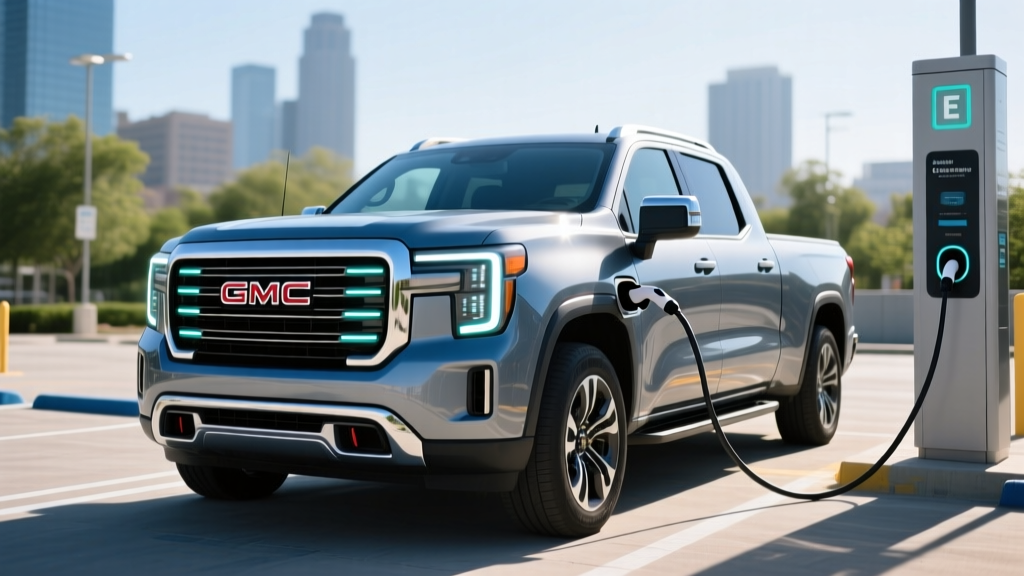
The 2025 GMC Sierra EV is a full-size, battery-electric pickup built on GM's Ultium platform. The launch Edition 1 trim delivers an EPA-estimated 440 miles of range from a ~200 kWh (usable) battery, with an MSRP of $99,495 including destination. The more accessible Elevation trim starts at $59,200 with approximately 390 miles of EPA range. All trims support 800V DC fast charging at up to 350 kW peak, enabling a 10–80% charge in roughly 30 minutes on compatible stations. The Sierra EV qualifies for the full $7,500 federal tax credit under current IRS §30D rules (subject to buyer income caps and battery-sourcing requirements), which can be transferred at the point of sale to reduce the purchase price immediately.
Real-World Range vs. EPA Estimates: What to Actually Expect
The EPA sticker is a starting point, not a guarantee. The Sierra EV's massive Ultium battery gives it one of the longest rated ranges of any production electric truck, but real-world conditions compress that number. Based on highway testing, cold-weather physics, and payload/towing loads, here is what buyers should plan for:
| Condition | Edition 1 (EPA 440 mi) | Elevation (EPA ~390 mi) |
|---|---|---|
| City / mixed driving (ideal) | ~400–430 mi | ~350–380 mi |
| Sustained highway (70–75 mph) | ~320–360 mi | ~280–320 mi |
| Cold weather (below 30°F) | ~300–350 mi | ~260–310 mi |
| Towing (~7,000 lb trailer) | ~180–240 mi | ~160–210 mi |
Sources: EPA fueleconomy.gov, manufacturer specifications, and real-world highway efficiency testing. Towing range is highly variable based on trailer aerodynamics, weight, and terrain.
The Sierra EV's efficiency hovers around 2.0–2.3 kWh/mile in mixed driving — typical for a full-size electric truck. Highway speeds above 70 mph push consumption higher due to aerodynamic drag on a vehicle this large. Cold weather reduces lithium-ion cell efficiency and increases cabin heating demand; the Sierra EV uses a heat pump to mitigate this, but expect a 20–30% range reduction in sustained sub-freezing temperatures.
Charging Speed, Connectors, and Infrastructure Reality
The Sierra EV uses GM's transition to the NACS (North American Charging Standard) connector, giving it native access to Tesla's Supercharger network via the Supercharger Access plan. This is a significant infrastructure advantage over CCS-only trucks from competitors.
| Charging Level | Power (kW) | Connector | Approx. Range Added | Use Case |
|---|---|---|---|---|
| Level 1 (120V) | ~1.4 kW | NACS / J1772 adapter | ~3–4 mi/hr | Emergency / overnight trickle |
| Level 2 (240V home) | 11.5–19.2 kW | NACS / J1772 | ~25–55 mi/hr | Daily home charging |
| DC Fast Charge | Up to 350 kW peak | NACS (native) | ~100 mi in ~10 min | Road trips, highway stops |
Charging curve reality: The Sierra EV peaks at 350 kW only briefly at low state of charge (SoC). Sustained charging from 10–80% averages closer to 180–220 kW, yielding a 10–80% time of approximately 30–35 minutes on a 350 kW-capable station. On more common 150 kW Electrify America or EVgo stations, expect 10–80% in roughly 45–55 minutes. The 800V architecture means the Sierra EV charges faster on high-power stations than 400V competitors like the Ford F-150 Lightning.
Home charging setup: The Sierra EV's onboard charger supports up to 19.2 kW on Level 2 (with the available upgrade; standard is 11.5 kW). At 19.2 kW, a depleted 200 kWh battery refills in roughly 10–11 hours — practical for overnight charging if you drive 100+ miles daily. A 240V/60-amp circuit with a hardwired Wall Connector or GM-approved EVSE is recommended. Installation costs typically range from $800–$2,500 depending on panel proximity and local permitting; a 200-amp panel upgrade (if your home has an older 100-amp service) can add $1,500–$3,500.
Sierra EV vs. Gas Trucks: Cost and Capability Comparison
The Sierra EV competes against internal-combustion full-size trucks — primarily the GMC Sierra 1500 gas/diesel, Ford F-150, and Ram 1500 — as well as the Ford F-150 Lightning and Rivian R1T. Here is how the numbers stack up against a comparably equipped gas Sierra 1500:
| Metric | 2025 GMC Sierra EV Elevation | 2025 GMC Sierra 1500 AT4 (5.3L V8) |
|---|---|---|
| Base MSRP | $59,200 | ~$62,600 |
| Federal Tax Credit (§30D) | Up to $7,500 | $0 |
| Effective Starting Price | ~$51,700 | ~$62,600 |
| EPA Range / Fuel Economy | ~390 mi / 62 MPGe | ~520 mi / 17 MPG combined |
| Energy Cost per Mile | ~$0.06–0.10 (home charging) | ~$0.18–0.22 (gas at $3.40/gal) |
| Annual Fuel/Energy (15k mi) | ~$900–$1,500 | ~$2,700–$3,300 |
| 0–60 mph | ~5.9 sec | ~6.8 sec |
| Max Towing | 10,000 lb (w/ max tow pkg) | 11,200 lb |
| Max Payload | ~1,800 lb | ~2,200 lb |
| Maintenance (annual avg) | ~$200–$400 | ~$800–$1,200 |
Energy costs based on national average electricity ($0.16/kWh) and gas ($3.40/gal) as of early 2026. EPA fueleconomy.gov for MPG/MPGe data. Actual costs vary by state and utility rate.
The towing tradeoff is real. The gas Sierra 1500 still wins on maximum towing (11,200 lb vs. 10,000 lb) and critically, on towing range. Towing a 7,000-lb trailer cuts the Sierra EV's range roughly in half — to around 180–240 miles. For frequent heavy towing on long routes, the gas truck's refueling speed and range advantage remain significant. For daily driving, commuting, and light-to-moderate towing, the Sierra EV delivers substantial operating-cost savings.
Total Cost of Ownership: 5-Year Breakdown
Below is a projected 5-year / 75,000-mile ownership cost comparison. The Sierra EV's lower energy and maintenance costs offset its higher insurance premiums over time.
| Cost Category | Sierra EV Elevation ($59,200) | Sierra 1500 AT4 Gas (~$62,600) |
|---|---|---|
| Purchase (after tax credit) | ~$51,700 | ~$62,600 |
| Fuel / Energy (5 yrs) | ~$5,500 | ~$14,500 |
| Maintenance (5 yrs) | ~$1,500 | ~$5,000 |
| Insurance (5 yrs) | ~$12,000 | ~$9,500 |
| Depreciation (est.) | ~$22,000 | ~$20,000 |
| Total 5-Year Cost | ~$92,700 | ~$111,600 |
| Cost per Mile | ~$1.24 | ~$1.49 |
Depreciation estimates based on current EV resale trends. Insurance costs reflect national averages for full-size trucks — EV premiums run 15–25% higher due to repair costs and battery replacement exposure. Your actual costs will vary by state, driving record, and utility rates.
Tax Credit Eligibility: What the §30D Rules Actually Require
The Sierra EV currently qualifies for the full $7,500 federal tax credit under IRS §30D, but eligibility is not automatic. Buyers must meet all of the following:
- Income caps: Modified adjusted gross income (MAGI) must not exceed $150,000 (single), $225,000 (head of household), or $300,000 (joint filers).
- MSRP cap: The vehicle MSRP (including destination, before options) must not exceed $80,000 for trucks/vans/SUVs. The Elevation trim qualifies; the Edition 1 at $99,495 does not qualify for the credit.
- Battery sourcing: Critical minerals and battery components must meet phased-in domestic/free-trade sourcing thresholds. GM has confirmed Sierra EV battery packs are assembled in the U.S. with qualifying sourcing as of the 2025 model year.
- Point-of-sale transfer: Eligible buyers can transfer the credit to the dealer at purchase, reducing the out-of-pocket price by $7,500 at the time of sale — no need to wait for a tax refund.
- New vehicle only: The §30D credit applies to new vehicles. A separate §25E credit (up to $4,000) exists for used EVs under $25,000.
Critical caveat: The Edition 1's MSRP exceeds the $80,000 truck cap, so buyers of that trim receive no federal tax credit. The Elevation trim at $59,200 qualifies fully. Always confirm current-year eligibility with your tax professional and verify the VIN on the IRS clean vehicle credit lookup tool before purchase. Rules are subject to legislative change.
Battery Technology, Warranty, and Long-Term Durability
The Sierra EV uses GM's Ultium battery platform with NMC (nickel manganese cobalt) chemistry in a structural pack. The usable capacity is approximately 200 kWh for the Edition 1 and a smaller pack (estimated ~150 kWh usable) for the Elevation trim.
| Factor | NMC (Sierra EV) | LFP (for reference) |
|---|---|---|
| Energy Density | Higher — enables 440-mi range | Lower — heavier for same kWh |
| Cycle Life | ~1,500–2,000 full cycles | ~3,000–5,000 full cycles |
| Cold-Weather Performance | Better low-temp output | More range loss in cold |
| Cost per kWh | Higher | Lower |
| Recommended Charging | Daily charge to 80% | Can charge to 100% daily |
Warranty: GM covers the Sierra EV battery with an 8-year / 100,000-mile warranty guaranteeing at least 70% capacity retention. This is standard for the segment. If the battery degrades below 70% within the warranty period, GM will repair or replace it at no cost.
Long-term outlook: A 200 kWh NMC battery at 1,500 full cycles represents roughly 600,000+ miles of theoretical throughput before reaching end-of-life capacity. In practice, most owners will never approach this. Real-world degradation data from GM's Bolt EV and Cadillac Lyriq (both Ultium-derived platforms) suggests 8–12% capacity loss over the first 100,000 miles, with the curve flattening thereafter.
Common Misconceptions About the Sierra EV
| Myth | Fact |
|---|---|
| "Electric trucks can't tow." | The Sierra EV tows up to 10,000 lb. However, towing cuts range by ~40–50%. It's capable, but plan charging stops on long hauls. |
| "You can't charge in bad weather." | NACS and CCS connectors are weather-sealed. Charging in rain, snow, or cold is safe and routine. Cold slows charge speed slightly — preconditioning helps. |
| "The battery will need replacing in 5 years." | GM's 8-year/100,000-mile warranty covers capacity below 70%. Modern NMC packs are designed for 15+ years of service before reaching end-of-life thresholds. |
| "The $7,500 credit applies to all trims." | The §30D MSRP cap for trucks is $80,000. The Edition 1 ($99,495) does not qualify. Only the Elevation and select mid-range trims are eligible. |
| "Superchargers only work with Teslas." | Since 2024, GM EVs with NACS connectors have had access to Tesla Superchargers via the Supercharger Access program. Over 17,000 stalls are available. |
Decision Framework: Should You Buy the Sierra EV?
Choose the 2025 GMC Sierra EV if:
- You have home Level 2 charging (or can install it) and most daily driving is under 200 miles.
- You want a full-size truck for daily commuting, job-site visits, and light-to-moderate towing — and want to eliminate gas costs.
- You value Supercharger network access via NACS for road trips.
- You qualify for the §30D tax credit (income under cap, buying an MSRP-eligible trim).
- You plan to own the truck for 5+ years to recoup the EV premium through fuel and maintenance savings.
Stick with a gas Sierra 1500 or consider a PHEV alternative if:
- You frequently tow over 7,000 lb on routes longer than 200 miles — the range penalty and charging time make EV impractical for this use case today.
- You live in an apartment or lack access to any form of home or workplace charging. Reliance on public DC fast charging alone is expensive and inconvenient for daily use.
- You need maximum payload capacity (the gas Sierra 1500 offers ~400 lb more).
- Your budget requires the lowest possible upfront cost and you drive fewer than 10,000 miles/year — the fuel savings won't offset the EV premium quickly enough.
- You live in an area with extremely cold winters and limited charging infrastructure — the combined range loss and sparse stations create real trip-planning friction.
Frequently Asked Questions
What is the real-world range of the 2025 GMC Sierra EV?
The EPA rates the Edition 1 at 440 miles and the Elevation at approximately 390 miles. In real-world highway driving at 70–75 mph, expect 320–360 miles (Edition 1) or 280–320 miles (Elevation). Cold weather and towing reduce these figures further — plan for 260–310 miles in winter and under 240 miles when towing a heavy trailer.
How long does it take to charge the Sierra EV at home?
On a 240V Level 2 charger at 19.2 kW (the maximum onboard rate), a full charge from empty takes approximately 10–11 hours for the Edition 1's ~200 kWh battery. At the standard 11.5 kW rate, expect 17–18 hours from empty. Most owners charge nightly and rarely deplete below 20%, so a typical overnight session (8 hours at 11.5 kW) adds roughly 200 miles of range.
Does the Sierra EV qualify for the $7,500 federal tax credit?
The Elevation trim ($59,200 MSRP) qualifies for the full $7,500 credit, provided the buyer meets income caps ($300k joint / $150k single). The Edition 1 ($99,495 MSRP) does not qualify because it exceeds the $80,000 MSRP cap for trucks under §30D. Always verify eligibility via the IRS clean vehicle credit page and consult a tax professional.
Can the Sierra EV use Tesla Superchargers?
Yes. The 2025 Sierra EV comes equipped with a native NACS charge port, granting access to Tesla's Supercharger network. GM EV owners use the Tesla app or GM's in-vehicle navigation to locate, activate, and pay for Supercharger sessions. Over 17,000 V3 and V4 Supercharger stalls are accessible across North America.
What is the Sierra EV's towing capacity and how does it affect range?
The Sierra EV is rated to tow up to 10,000 lb with the available Max Trailering Package. When towing a 5,000–7,000 lb trailer, expect range to drop by approximately 40–50% — reducing the Edition 1 from 440 to roughly 200–240 miles. This makes long-distance towing feasible but requires careful route planning around DC fast chargers.
How does the Sierra EV compare to the Ford F-150 Lightning?
The Sierra EV offers more range (390–440 mi vs. 230–320 mi for the Lightning), faster peak charging (350 kW vs. ~150 kW), and NACS Supercharger access. The F-150 Lightning starts at a lower price (~$55,000), has a slightly higher max payload, and benefits from a more established production track record. Both are capable trucks — the Sierra EV is the better choice for range and road-trip charging; the Lightning wins on value and proven availability.
What maintenance does the Sierra EV require?
EV maintenance is minimal compared to gas trucks: no oil changes, no transmission fluid, no spark plugs, no exhaust system. Expect to replace cabin air filters (~$50–80/year), wiper blades, tire rotations (every 7,500 miles — EVs wear tires slightly faster due to instant torque and higher weight), and brake fluid checks. Regenerative braking significantly extends brake pad life — many EV owners go 80,000+ miles before needing pad replacement. Total annual maintenance averages $200–$400 vs. $800–$1,200 for a gas truck.