Quick Verdict: The Electric Supertruck That Defies Physics
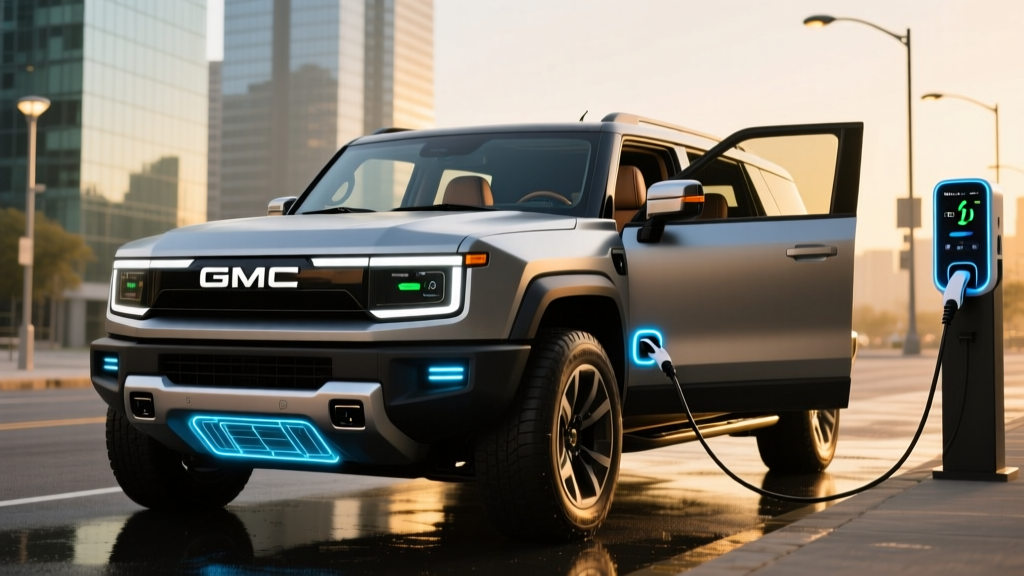
The 2025 GMC Hummer EV SUV is an engineering paradox — a 9,000-pound electric fortress that sprints to 60 mph in 3.5 seconds while offering the most advanced off-road capability in its class. Built on GM's Ultium platform, it pairs a massive 246 kWh battery pack with up to 830 horsepower in the Edition 1 and 3X trims. But the real question for buyers isn't whether it can crabwalk diagonally — it's whether the real-world range, charging practicality, and six-figure price tag make sense for daily ownership.
We've analyzed the full spec sheet, cross-referenced EPA data from fueleconomy.gov, and applied real-world ownership context to every number. Here's what you actually need to know before putting down a deposit.
Range & Efficiency: What the EPA Sticker Doesn't Tell You
Real-World Expectation: Highway driving at 70+ mph yields approximately 250–280 miles. In cold weather (below 30°F), expect a 20–30% reduction, dropping effective range to roughly 220–250 miles on the 3X trim. City/regenerative driving can approach or slightly exceed EPA estimates.
The Hummer EV SUV's efficiency is where physics asserts itself. At over 9,000 pounds curb weight, it consumes energy at a rate that makes efficiency nerds wince: approximately 47–58 MPGe combined depending on trim, translating to roughly 56–72 kWh per 100 miles. For context, a Tesla Model X uses about 38 kWh/100mi. You're paying for mass, width, and off-road capability — not efficiency.
The 246 kWh Ultium battery pack uses NMC (nickel manganese cobalt) chemistry, which prioritizes energy density over the cycle-life longevity of LFP. GM's battery management system includes a substantial buffer — usable capacity is estimated at around 212–220 kWh — to protect long-term degradation. Active thermal management keeps cells in their optimal temperature window during both fast charging and sustained high-load driving.
| Specification | 2X (Dual-Motor) | 3X (Tri-Motor) | Edition 1 |
|---|---|---|---|
| EPA Range | 314 mi | 314 mi | 381 mi (est. w/ 22" wheels) |
| Battery (Total / Usable) | ~246 kWh / ~212 kWh | ~246 kWh / ~212 kWh | ~246 kWh / ~212 kWh |
| Chemistry | NMC (Ultium) | NMC (Ultium) | NMC (Ultium) |
| Horsepower | 625 hp | 830 hp | 830 hp |
| Torque | 7,400 lb-ft* | 11,500 lb-ft* | 11,500 lb-ft* |
| 0–60 mph | ~4.5 sec | ~3.5 sec | ~3.5 sec |
| Drivetrain | AWD (Dual-Motor) | AWD (Tri-Motor) | AWD (Tri-Motor) |
| Max DC Charge Rate | 350 kW | 350 kW | 350 kW |
| 10–80% DC Charge | ~35 min | ~35 min | ~35 min |
| Level 2 Charge Rate | 11.5 kW | 11.5 kW | 11.5 kW |
| Towing Capacity | 7,500 lbs | 7,500 lbs | 7,500 lbs |
| Base MSRP | $99,995 | $106,695 | $112,595 |
*Wheel torque at the axle, not motor torque — GM's published figure includes gear reduction multiplication.
Charging: 350 kW Peak, But Mind the Curve
The Hummer EV SUV supports up to 350 kW DC fast charging on 800-volt architecture — theoretically among the fastest-charging EVs available. But peak rate and sustained rate are very different things, and this is where the 246 kWh battery's sheer size becomes a double-edged sword.
| Charging Level | Power | Speed / Time | Notes |
|---|---|---|---|
| Level 1 (120V) | ~1.4 kW | ~3 mi/hr added | Emergency/trickle only — full charge takes 7+ days |
| Level 2 (240V) | 11.5 kW | ~24 mi/hr added | Full charge in ~20 hours; overnight won't fully replenish |
| DC Fast Charge | Up to 350 kW peak | 10–80% in ~35 min | Sustained rate tapers significantly above 60% SoC |
Charging-curve reality: On a 350 kW CCS-compatible station, the Hummer EV SUV pulls close to peak rate between 10–35% SoC, then begins a stepped taper. By 60% SoC, you're likely seeing 150–180 kW; above 80%, speeds drop below 80 kW to protect the cells. The 10–80% time of roughly 35 minutes is respectable for a pack this enormous, but don't expect to charge from 20–90% in under an hour.
Home charging practicality: At 11.5 kW on a Level 2 home charger (requiring a 60-amp dedicated circuit), you'll add roughly 24 miles of range per hour. If you arrive home with 100 miles of range remaining, expect a full overnight charge to take approximately 10 hours. Most owners will need to adopt a "top up nightly" habit rather than running the battery low. Budget $800–$2,500 for Level 2 home charger installation depending on panel capacity and run length — and if you're on a 100-amp service panel, a $2,000–$4,000 panel upgrade may be necessary.
The Hummer EV SUV uses the CCS1 connector for DC fast charging. With GM's adoption of NACS (Tesla's connector) beginning in 2025 for new models, verify whether your specific build date includes a native NACS port or ships with a CCS-to-NACS adapter for Supercharger access.
Performance & Capability: Watts to Freedom
The tri-motor 3X and Edition 1 trims deliver 830 horsepower and a 0–60 mph time of approximately 3.5 seconds in Watts to Freedom (WTF) mode — a launch-control feature that lowers the air suspension, preconditions the battery, and stiffens the adaptive dampers for maximum acceleration. For a vehicle that weighs as much as two Chevy Tahoes, the acceleration is genuinely startling.
The dual-motor 2X trim produces 625 hp with a 0–60 time around 4.5 seconds — still firmly in sports-car territory for a full-size SUV.
Off-road and specialty features:
- CrabWalk: Rear wheels steer up to 10° in the same direction as the front, allowing diagonal movement — invaluable on tight trail obstacles
- Extract Mode: Air suspension raises the ride height by approximately 6 inches for maximum ground clearance (up to ~16 inches)
- Adaptive Air Ride: Four-corner air suspension with automatic load leveling and entry/exit lowering
- Rear-wheel steering: Up to 10° for a tighter turning circle despite the 135.6-inch wheelbase
- Underbody armor: Steel skid plates protecting battery and drivetrain components
Towing capacity is rated at 7,500 pounds across all trims. Note that towing at or near max capacity will slash range by 40–50%, meaning effective range drops to roughly 150–180 miles. Plan charging stops accordingly if you're hauling a trailer.
Interior, Tech & Cargo Space
The Hummer EV SUV seats five adults with generous proportions. Rear legroom measures approximately 38.5 inches, and the flat floor (no transmission tunnel) makes the middle seat usable for short trips. The cabin materials are upscale but utilitarian — this is a luxury truck, not a Mercedes EQS.
Cargo volume:
- Behind second row: ~35.9 cu ft
- Second row folded: ~81.8 cu ft
- Front trunk (e-trunk): ~11.3 cu ft — lockable, weather-sealed, with available power-operated hood
Infotainment & tech:
- 13.4-inch diagonal center touchscreen with Google Built-In (Maps, Assistant, Play Store)
- 12.3-inch digital instrument cluster
- Available head-up display with off-road inclinometer and navigation overlay
- 18-camera UltraView system including underbody cameras for trail visibility
- Super Cruise (SAE Level 2) hands-free driving on 400,000+ miles of compatible roads — driver attention monitoring remains active; this is not autonomous driving
Pricing, Trims & Federal Tax Credit Eligibility
| Trim | Base MSRP | As-Tested (Typical) | §30D Credit Eligible? |
|---|---|---|---|
| 2X | $99,995 | $105,000–$110,000 | No (MSRP exceeds $80,000 SUV cap) |
| 3X | $106,695 | $115,000–$125,000 | No (MSRP exceeds $80,000 SUV cap) |
| Edition 1 | $112,595 | $120,000–$135,000 | No (MSRP exceeds $80,000 SUV cap) |
The tax credit reality: Under IRS §30D rules, new clean vehicle credits are capped at an MSRP of $80,000 for SUVs, pickups, and vans. Every 2025 Hummer EV SUV trim starts well above that threshold, making none of them eligible for the $7,500 federal tax credit. There is no workaround — even the base 2X at $99,995 exceeds the cap by nearly $20,000.
Buyers may still qualify for state-level EV incentives (which vary significantly by jurisdiction — check your state energy office or AFDC's state incentive database) and utility company rebates for home charger installation. Additionally, if you lease rather than purchase, the leasing entity may capture the commercial clean vehicle credit (§45W) and pass savings through as a reduced lease payment — though this is at the lessor's discretion.
- Vehicle MSRP must not exceed $80,000 (SUVs/pickups/vans) or $55,000 (sedans)
- Buyer AGI must not exceed $150K (single) / $300K (joint) / $225K (head of household)
- Battery components and critical minerals must meet escalating domestic-sourcing thresholds
- Credit can be transferred to the dealer at point of sale for an immediate price reduction
- Hummer EV SUV fails the MSRP cap — ineligible regardless of income or sourcing
Warranty & Long-Term Battery Outlook
GMC backs the Hummer EV SUV with a competitive warranty package:
- Battery & Powertrain: 8 years / 100,000 miles (whichever comes first)
- Bumper-to-Bumper: 3 years / 36,000 miles
- Battery capacity retention: GM warrants that the Ultium pack will retain at least 60% of original capacity during the 8-year/100,000-mile coverage period, though real-world NMC degradation at this pack size with active thermal management is expected to be well above that threshold
Given the 246 kWh total capacity and the substantial buffer GM engineers into the Ultium platform, most owners should see minimal perceptible degradation in the first 5–7 years of typical use. Avoid routinely charging to 100% and letting the battery sit at full SoC in hot weather to maximize longevity.
Pros, Cons & Competitor Comparison
- 830 hp tri-motor performance defies the vehicle's mass
- 350 kW DC fast-charging capability on 800V architecture
- Class-leading off-road tech: CrabWalk, Extract Mode, underbody armor
- Super Cruise hands-free highway driving (Level 2)
- 7,500-lb towing capacity
- Distinctive presence — nothing else looks or drives like it
- No federal tax credit — MSRP exceeds $80K cap on all trims
- Heavy energy consumption: 47–58 MPGe, ~56–72 kWh/100mi
- Real-world highway range falls well short of EPA in cold weather
- Level 2 home charging takes ~20 hours for a full charge
- Base price near $100K; as-tested often $120K+
- Enormous size (226" long, 96.5" wide with mirrors) challenges garages and parking
Key competitors:
- Rivian R1S: Lighter, more efficient (~75 MPGe), starts ~$79,900 (may qualify for tax credit on lower trims), strong off-road capability, quad-motor option. Trades some raw power and towing for better daily usability and lower price.
- Tesla Model X: Superior efficiency (~100+ MPGe), extensive Supercharger network, faster 10–80% charging. Less off-road focused, lower ground clearance, polarizing styling.
- Cadillac Escalade IQ: Shares the Ultium platform, similar luxury positioning, comparable price. More traditional luxury focus, less off-road hardware.
Choose the Rivian R1S if: You want a more efficient, garage-friendly electric SUV with genuine off-road chops, a lower entry price, and potential tax-credit eligibility on base trims.
Choose the Tesla Model X if: Efficiency, charging-network convenience, and daily practicality outweigh off-road ambitions.
Who Should Buy the 2025 GMC Hummer EV SUV?
This EV is purpose-built for a specific buyer: someone who wants uncompromising off-road capability and head-turning presence, has access to Level 2 home charging (ideally with a 200-amp panel), and views the six-figure price as the cost of exclusivity. It's a capable tow rig for boat or camper trailers (within its range-reduced reality), a surprisingly quick daily driver, and a genuine trail machine thanks to CrabWalk and Extract Mode.
It is not ideal for: budget-conscious buyers, apartment dwellers without home charging, efficiency-focused commuters, or anyone expecting the federal tax credit to soften the financial blow. The Hummer EV SUV is an unapologetic excess — and that's precisely its appeal to the right owner.
Frequently Asked Questions
What is the real-world range of the 2025 GMC Hummer EV SUV?
The EPA rates the 3X trim at 314 miles and the Edition 1 at approximately 381 miles. In real-world highway driving at 70+ mph, expect 250–280 miles. Cold weather (below 30°F) can reduce range by 20–30%, yielding roughly 220–250 miles on the 3X. City driving with regenerative braking can approach or exceed EPA estimates.
How fast does the Hummer EV SUV charge at home and on the road?
On a DC fast charger, it peaks at 350 kW and charges from 10–80% in approximately 35 minutes, though the charge curve tapers significantly above 60% SoC. At home on a Level 2 charger (11.5 kW, 240V/60A), it adds roughly 24 miles of range per hour, meaning a full charge from near-empty takes about 20 hours.
Does the 2025 Hummer EV SUV qualify for the $7,500 federal tax credit?
No. Under IRS §30D rules, new SUVs must have an MSRP at or below $80,000 to qualify. The base 2X trim starts at $99,995, exceeding the cap by nearly $20,000. No trim is eligible regardless of buyer income or battery sourcing. Check your state's incentive database for potential local rebates.
How much does it cost to charge a Hummer EV SUV at home?
At the national average residential electricity rate of ~$0.16/kWh, charging the usable ~212 kWh battery from 10% to 90% costs approximately $27. That buys roughly 250–280 real-world highway miles — equivalent to about $0.10–$0.11 per mile, compared to $0.18–$0.22/mi in a gas-powered full-size SUV at $3.50/gallon and 16 MPG.
Is the Hummer EV SUV worth buying over the Rivian R1S?
It depends on priorities. The Hummer wins on raw power (830 hp vs. R1S quad-motor's 836 hp but in a lighter package), off-road hardware (CrabWalk, Extract Mode), and presence. The Rivian R1S wins on efficiency, lower starting price (~$79,900), potential tax-credit eligibility, smaller footprint, and faster real-world charging relative to battery size. For most daily-driver buyers, the R1S is the more practical choice. For maximum capability and exclusivity, the Hummer stands alone.
What is the battery warranty?
GMC covers the Ultium battery pack and electric powertrain for 8 years or 100,000 miles, whichever comes first. The warranty guarantees the battery will retain at least 60% of its original capacity during the coverage period.