Quick Verdict: The GT That Commutes and Carves
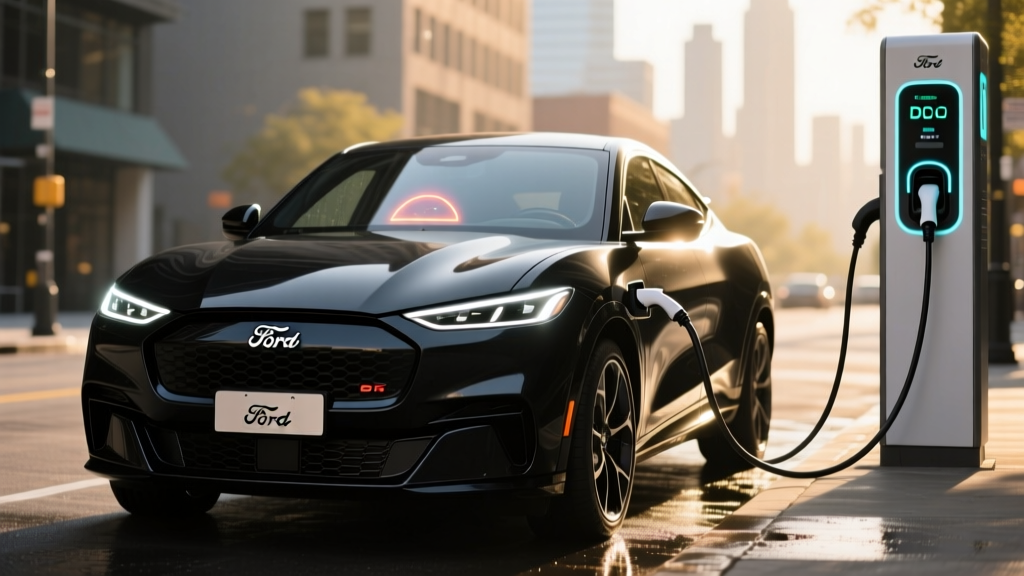
The 2025 Ford Mustang Mach-E GT occupies a rare niche in the electric crossover segment: it delivers supercar-adjacent acceleration (3.3 seconds to 60 mph with the Performance Upgrade) while retaining enough EPA-rated range and cargo practicality to serve as a daily driver. For 2025, Ford has refined the battery pack, bumped DC fast-charging speeds, and kept pricing competitive against the Tesla Model Y Performance, Hyundai Ioniq 5 N, and BMW iX M60. But with a starting MSRP above $54,000 and federal tax credit eligibility that depends on battery sourcing and buyer income, the Mach-E GT demands careful shopping.
This review covers every number that matters — from real-world highway range to the exact §30D tax credit rules — so you can decide whether Ford's electric muscle crossover earns a spot in your garage.
Range & Efficiency: EPA vs. Real-World Reality
Real-World Expectation: ~240–260 miles at sustained 70 mph highway speeds; ~210–230 miles in cold weather (below 32°F) with cabin heating active.
The 2025 Mach-E GT pairs exclusively with Ford's Extended Range battery — a 91 kWh gross / 88 kWh usable lithium-ion pack using NMC (nickel manganese cobalt) chemistry. On the EPA test cycle, the GT achieves 292 miles of combined range, translating to approximately 89 MPGe combined (38 kWh/100 miles).
However, EPA testing favors low-speed urban driving with generous regenerative braking. In sustained 70–75 mph highway testing — the scenario most relevant to road-trippers — expect the GT to deliver between 240 and 260 miles before the battery buffer forces a charge stop. Cold weather compounds the loss: NMC batteries experience increased internal resistance below freezing, and cabin heating (resistance-based in the Mach-E, not heat-pump equipped) further draws from the pack. Plan for 210–230 miles of usable range on a winter highway run.
The GT's efficiency rating of 38–41 kWh/100 mi (depending on drive mode and wheel selection) places it behind the more aerodynamic Tesla Model Y Performance (~28 kWh/100 mi) but in line with other performance-oriented electric crossovers like the Ioniq 5 N.
| Spec | Value |
|---|---|
| EPA Range | 292 miles |
| Battery (gross / usable) | 91 kWh / 88 kWh |
| Battery Chemistry | NMC (Nickel Manganese Cobalt) |
| Drivetrain | Dual-motor AWD |
| Horsepower | 480 hp (std) / 500 hp (Perf. Upgrade) |
| Torque | 600 lb-ft (std) / 634 lb-ft (Perf. Upgrade) |
| 0–60 mph | 3.8s (std) / 3.3s (Perf. Upgrade) |
| Top Speed | 130 mph (electronically limited) |
| Max DC Fast Charge | 150 kW (peak) |
| 10–80% DC Charge Time | ~36 minutes |
| Level 2 Home Charge Rate | 10.5 kW (~30 mi/hr) |
| EPA Efficiency | 89 MPGe / 38 kWh/100 mi |
| Cargo (behind rear seats) | 29.7 cu ft |
| Cargo (rear seats folded) | 59.7 cu ft |
| Front Trunk (frunk) | 4.7 cu ft |
| Rear Legroom | 38.1 inches |
| Battery Warranty | 8 years / 100,000 miles |
| Base MSRP (GT) | $54,995 |
Charging Speed: DC Fast, Level 2, and the Curve
The 2025 Mach-E GT uses the CCS1 connector for DC fast charging (NACS adapter access to Tesla Superchargers is available through Ford's BlueOval Charge Network partnership). Peak DC charge rate is 150 kW, which Ford quotes as a 10–80% session time of approximately 36 minutes.
Understanding the charge curve matters here. The 150 kW figure is a peak, not a sustained rate. The Mach-E GT pulls maximum power between roughly 10–30% State of Charge (SoC), then tapers progressively. Above 50% SoC, expect rates closer to 90–100 kW; above 80%, charging slows dramatically to protect battery longevity — typically under 40 kW. This is standard behavior for NMC packs and is managed by the vehicle's thermal management system.
| Charge Level | Power (kW) | Speed | Use Case |
|---|---|---|---|
| Level 1 (120V) | ~1.4 kW | ~4 miles/hour | Emergency / overnight trickle |
| Level 2 (240V, 48A) | 10.5 kW | ~30 miles/hour | Home / workplace daily charging |
| DC Fast (CCS1) | 150 kW (peak) | ~10–80% in 36 min | Road trips, rapid top-ups |
For home Level 2 charging, the Mach-E GT's onboard charger accepts up to 10.5 kW on a 240V / 48-amp circuit. A full 10–100% charge takes roughly 9.5 hours — easily manageable overnight. Ford includes a Mobile Power Cord with every Mach-E, which handles both Level 1 (120V) and Level 2 (240V, at reduced amperage). For full 10.5 kW Level 2 speeds, budget $600–$1,200 for a dedicated hardwired wall connector and electrician installation, plus potential panel-upgrade costs if your home has a 100-amp or older service.
One practical note: preconditioning the battery before arriving at a DC fast charger is essential. The Mach-E's navigation system will automatically warm the pack when a charger is set as your destination, enabling faster charge rates upon arrival. Skip preconditioning on a cold day, and your peak rate may drop to 80–90 kW until the battery warms.
Performance: 500 HP and the MagneRide Difference
The GT badge isn't cosmetic. The 2025 Mach-E GT comes standard with a dual-motor AWD powertrain producing 480 horsepower and 600 lb-ft of torque, delivering a 3.8-second 0–60 mph time. Opt for the GT Performance Upgrade ($5,000), and output climbs to 500 hp and 634 lb-ft, dropping the 0–60 sprint to 3.3 seconds — territory that embarrasses most gas-powered sports cars costing twice as much.
The Performance Upgrade also adds Ford's MagneRide adaptive dampers, which continuously adjust damping force based on road conditions and drive mode. The result is a crossover that can stiffen for canyon carving and soften for highway cruising — a genuine advantage over the fixed-damper setups in competitors like the Tesla Model Y Performance. Ford also equips the Performance Upgrade with Brembo front brakes (larger rotors, red calipers) and a unique Unbridled Extend drive mode that adjusts power delivery for track-like use.
Drive modes include Whisper (efficiency-oriented), Engage (balanced), and Unbridled (maximum performance). Each mode alters throttle mapping, steering weight, regenerative braking intensity, and ambient lighting. The one-pedal driving mode (activated in Engage or Unbridled) provides strong enough regen to bring the GT to a complete stop without touching the brake pedal in most city driving.
Pricing, Trims & Federal Tax Credit Eligibility
The 2025 Mach-E GT starts at $54,995 (including destination), positioning it $2,000–$8,000 above key rivals depending on configuration. The GT Performance Upgrade adds $5,000, bringing a fully equipped GT Performance to approximately $60,000 before options. The GT Premium package (standard on all GTs) includes a panoramic glass roof, B&O sound system, ActiveX seating surfaces, and Ford's BlueCruise hands-free driving hardware.
| Trim / Config | MSRP | Est. §30D Credit | Effective Price |
|---|---|---|---|
| GT Extended Range AWD | $54,995 | Up to $7,500* | ~$47,495* |
| GT Performance Upgrade | $59,995 | Up to $7,500* | ~$52,495* |
*Federal tax credit eligibility under IRS §30D depends on multiple requirements that change frequently:
- MSRP cap: SUVs/crossovers must be below $80,000 — the Mach-E GT qualifies.
- Buyer income cap: Modified AGI must not exceed $150,000 (single), $225,000 (head of household), or $300,000 (joint filers).
- Battery sourcing: Critical minerals and battery components must meet phased-in percentages from US/free-trade-agreement sources. Ford has worked to qualify the Mach-E, but component-sourcing rules tighten annually — verify current-year eligibility on the IRS clean vehicle credit page or with your tax professional before purchase.
- Point-of-sale transfer: As of 2024, qualified buyers can transfer the credit to the dealer as an immediate discount at purchase rather than waiting to claim it on their tax return.
§30D Checklist for the Mach-E GT:
- ✅ MSRP under $80,000 SUV cap
- ✅ Final assembly in North America (Cuautitlán, Mexico — qualifies)
- ⚠️ Battery sourcing requirements: verify current-year compliance on IRS.gov
- ⚠️ Buyer income limits apply — consult a tax professional
Interior, Tech & Driver Assistance
The Mach-E GT's cabin centers on a 15.5-inch vertically oriented touchscreen running Ford's SYNC 4A operating system. The interface supports wireless Apple CarPlay and Android Auto, over-the-air (OTA) updates, and integrated navigation with real-time charger availability. Physical controls are minimal — climate settings and drive modes are touchscreen-dependent, which some drivers find distracting.
BlueCruise, Ford's SAE Level 2 driver-assistance system, is standard on the GT. It enables hands-free driving on approximately 130,000+ miles of pre-mapped divided highways in the US and Canada. An infrared driver-monitoring camera ensures your eyes remain on the road — BlueCruise will issue warnings and eventually bring the vehicle to a stop if attention lapses.
Additional standard tech includes a 10.2-inch digital instrument cluster, wireless phone charging, Ford Co-Pilot360 Assist 2.0 (adaptive cruise, lane centering, evasive steering assist, intersection brake assist), and a 360-degree camera system. The GT's B&O 10-speaker audio system delivers solid sound quality, though audiophiles may prefer the optional 14-speaker B&O Unleashed upgrade.
Cargo capacity is practical for a performance crossover: 29.7 cubic feet behind the rear seats and 59.7 cu ft with the 60/40 split rear seats folded. The 4.7 cu ft front trunk (frunk) includes a drain plug — useful for tailgate ice storage. Rear legroom measures 38.1 inches, adequate for adults on longer trips.
Ownership: Warranty, Depreciation & Running Costs
Ford covers the Mach-E's battery and electric drivetrain components with an 8-year / 100,000-mile warranty, with a capacity retention threshold of 70% — if the battery degrades below 70% of its original capacity within that window, Ford will repair or replace it. The limited vehicle warranty runs 3 years / 36,000 miles.
Charging costs significantly undercut gasoline. At the US average residential electricity rate of ~$0.16/kWh, a full home charge of the 88 kWh usable pack costs roughly $14, yielding a per-mile fuel cost of about $0.05. By comparison, a gas-powered Mustang EcoBoost (26 MPG combined, $3.40/gallon) costs approximately $0.13 per mile — the Mach-E GT saves roughly $1,200–$1,500 in fuel over 15,000 annual miles when charging primarily at home.
Insurance is a different story. The Mach-E GT's performance profile and repair costs push premiums higher than mainstream EVs. Expect quotes in the $2,000–$2,800/year range depending on your state, driving record, and coverage level — shop multiple insurers, as EV-specific discounts vary widely.
Depreciation remains a wildcard for all EVs given rapid market shifts and battery-chemistry improvements. Ford's strong dealer network and brand recognition provide some resale support, but performance EVs historically depreciate faster than economy models in the first two years.
Pros, Cons & Who Should Buy
Pros
- 3.3s 0–60 mph with Performance Upgrade — genuine sports-car acceleration
- MagneRide adaptive suspension (Perf. Upgrade) balances comfort and handling
- 292-mile EPA range sufficient for most daily use and moderate road trips
- BlueCruise hands-free highway driving included standard
- Tesla Supercharger network access via NACS adapter
- Under $80K MSRP — qualifies for potential $7,500 federal credit
- Practical cargo space (29.7 cu ft) with usable frunk
Cons
- 150 kW peak DC charging lags Hyundai/Kia's 240 kW (E-GMP platform)
- No heat pump — cold-weather range loss is significant
- Touchscreen-heavy climate controls lack physical buttons
- Insurance premiums run $300–$600/year above average EVs
- Rear visibility compromised by thick C-pillars and small rear window
- Base MSRP of $54,995 requires tax credit to compete on value
Who the 2025 Mach-E GT Suits Best
Choose the Mach-E GT if: You want a single vehicle that delivers sub-3.5s acceleration, AWD all-weather capability, BlueCruise highway assist, and enough range for 250+ mile road-trip legs — all from a mainstream dealer network with straightforward service access.
Look elsewhere if: Maximum DC charging speed is a priority (consider the Hyundai Ioniq 5 N or Kia EV6 GT at 240 kW), you need three rows of seats, or you frequently drive in extreme cold where a heat-pump-equipped EV (like the Tesla Model Y) retains range more effectively.
Frequently Asked Questions
What is the real-world range of the 2025 Ford Mustang Mach-E GT?
The EPA rates the Mach-E GT at 292 miles. In real-world highway driving at 70–75 mph, expect 240–260 miles. In cold weather (below 32°F), plan for 210–230 miles due to battery resistance and cabin heating demand.
How fast does the Mach-E GT charge at home and on the road?
At home on a 240V Level 2 charger (48A), the GT charges at 10.5 kW — adding roughly 30 miles of range per hour, or a full charge in about 9.5 hours. On DC fast chargers, it peaks at 150 kW, reaching 10–80% in approximately 36 minutes.
Does the 2025 Mach-E GT qualify for the $7,500 federal EV tax credit?
The Mach-E GT meets the MSRP cap (under $80,000) and final-assembly requirements. However, battery critical-mineral and component sourcing rules tighten each year, and buyer income caps apply ($150K single / $300K joint). Verify current-year eligibility at IRS.gov before purchasing.
Is the Mach-E GT worth it vs. the Tesla Model Y Performance or Ioniq 5 N?
The GT offers superior ride quality (with MagneRide), BlueCruise, and a traditional dealer service experience. The Model Y Performance wins on efficiency, Supercharger-native access, and cargo space. The Ioniq 5 N charges faster (240 kW) and offers track-focused features but sacrifices some range. Your priority — ride comfort vs. charging speed vs. efficiency — should drive the choice.
What is the battery warranty on the Mach-E GT?
Ford provides an 8-year / 100,000-mile battery and electric component warranty with a 70% capacity retention guarantee. If the battery degrades below 70% of original capacity within the warranty period, Ford covers repair or replacement.