Quick Verdict: The Muscle Car That Went Electric
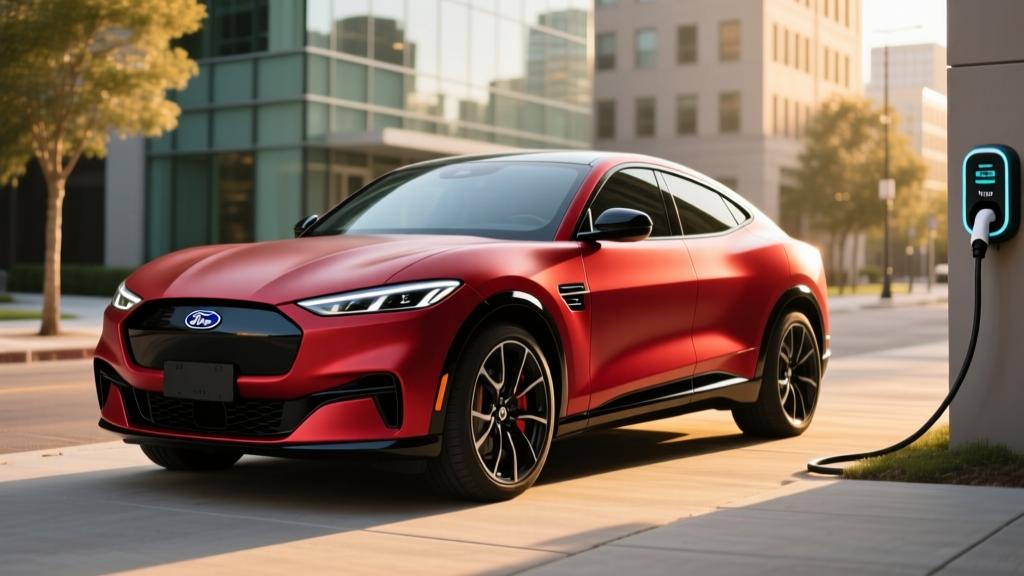
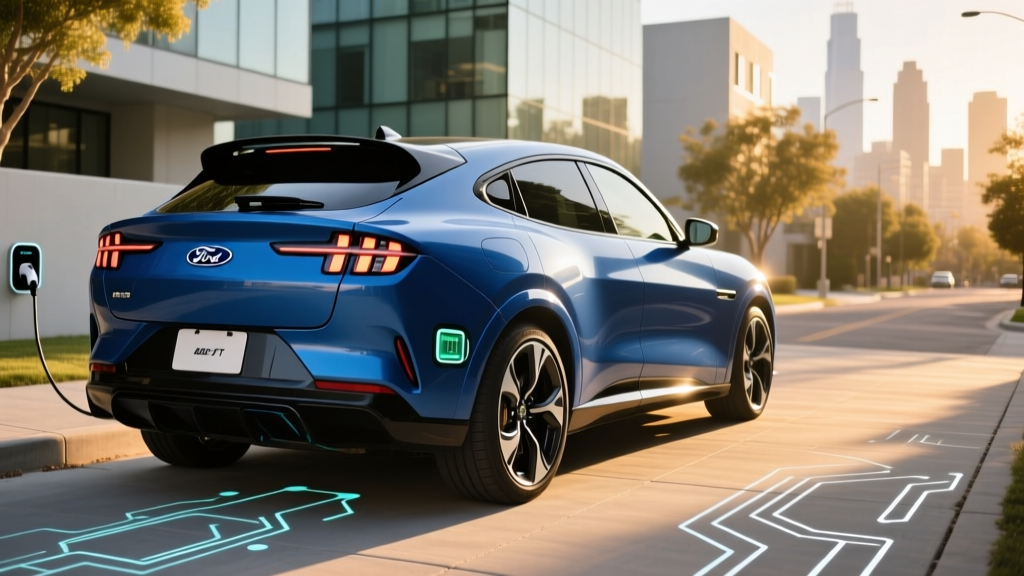
The 2025 Ford Mustang Mach-E GT occupies a specific niche: it's the performance flagship of Ford's electric crossover lineup, targeting buyers who want sports-car acceleration in a practical, daily-drivable package. With the Rally trim now fully established for the 2025 model year and an extended-range battery pushing past 91 kWh usable, the GT variant delivers genuine thrills without abandoning utility. But at a starting MSRP hovering near $55,000 before incentives, and with real-world highway range dropping below its EPA sticker, it demands a careful look at whether the performance premium is worth the range trade-off.
This review breaks down every number that matters — from the exact DC fast-charge curve to cold-weather range loss — so you can decide if the Mach-E GT earns a spot in your garage.
Range, Battery, and Real-World Efficiency
| Specification | Value |
|---|---|
| EPA Estimated Range | 280 miles (Extended Range AWD) |
| Battery Capacity (Usable) | 91 kWh |
| Battery Chemistry | NMC (Nickel Manganese Cobalt) |
| Drivetrain | Dual-motor AWD |
| Horsepower | 480 hp (GT); 480 hp / 700 lb-ft (GT w/ Performance Upgrade) |
| 0–60 mph | 3.3 seconds (GT Performance Upgrade) |
| EPA Efficiency | 84 MPGe combined / 40 kWh/100 mi |
| Cargo Volume (behind rear seats) | 29.7 cu ft |
| Front Trunk (Frunk) | 4.7 cu ft |
| Rear Legroom | 38.1 inches |
| Battery Warranty | 8 years / 100,000 miles |
The Mach-E GT's 91 kWh usable NMC pack is one of the larger batteries in the mid-size electric crossover segment. Ford uses a liquid-cooled thermal management system that actively preconditions the battery during navigation-routed charging — a critical feature for sustaining peak DC charge rates.
EPA Sticker: 280 miles (GT Extended Range AWD).
What to Expect: In mixed city/highway driving at moderate temperatures, plan for roughly 245–260 miles. On a sustained 75 mph highway run, expect closer to 225–240 miles. In freezing conditions (below 30°F), range can drop 20–30%, bringing the effective range down to approximately 195–220 miles. The Mach-E's heat pump (standard on 2025 models) helps mitigate cold-weather cabin energy draw, but battery chemistry still limits cold-range performance.
Source: fueleconomy.gov
The GT trim sacrifices some efficiency compared to the Select or Premium trims. The standard-range Premium RWD, for instance, achieves up to 250 miles on a smaller 72 kWh pack with a lighter single-motor setup. If maximum range is your priority over acceleration, the GT is not the optimal Mach-E configuration.
Charging Speed: DC Fast Charge and Home Level 2
| Charging Level | Power / Rate | Miles Added per Hour | Notes |
|---|---|---|---|
| Level 1 (120V household) | ~1.4 kW | ~3–4 mi/hr | Emergency/trickle only |
| Level 2 (240V home, 48A) | 11.5 kW | ~27 mi/hr | Full charge in ~8–9 hours |
| DC Fast Charge (peak) | 230 kW (peak) | N/A | 10–80% in approximately 36 minutes |
The 2025 Mach-E GT supports up to 230 kW peak DC fast charging via its CCS1 connector (a NACS adapter is available from Ford for Tesla Supercharger access). That peak rate is competitive with rivals like the Hyundai Ioniq 5 (240 kW peak) and slightly behind the Kia EV6 GT (240 kW), but real-world charging behavior tells a more nuanced story.
Charging Curve Reality: The Mach-E GT does not sustain 230 kW for the entire 10–80% session. Peak power is typically available between approximately 15–40% state of charge (SoC), after which the rate tapers progressively. By 70% SoC, expect rates to drop to around 100–120 kW, and above 80% the taper becomes aggressive — often below 50 kW. This is standard NMC behavior, but it means the advertised 36-minute 10–80% time assumes ideal battery preconditioning and a charger capable of delivering sustained high power.
Home Charging Setup: Ford's Connected Charge Station (a rebranded Wallbox unit) delivers up to 11.5 kW on a 48-amp, 240V circuit. Most buyers will need a 60-amp breaker and likely a panel evaluation from a licensed electrician. Expect home installation costs between $800–$2,000 depending on panel proximity and local permitting, on top of the $500–$700 charge station hardware cost. A full overnight charge from 10% to 100% takes roughly 8–9 hours — adequate for daily replenishment.
Performance: What 480 Horsepower Feels Like
The GT Performance Upgrade package unlocks the full 480 hp and 700 lb-ft of torque across both axles, launching the Mach-E GT from 0–60 mph in a quoted 3.3 seconds. That puts it in the territory of a Porsche Macan GTS or a base Tesla Model Y Performance — genuinely quick for a 4,900-pound crossover.
Ford's MagneRide adaptive dampers (standard on the GT) adjust suspension firmness in real time, and the GT's Unbridled Extend drive mode is specifically tuned for track use, managing battery thermal load to sustain lap performance. In practice, the Mach-E GT delivers exhilarating straight-line speed and competent handling, though its weight is noticeable during aggressive cornering compared to lower, lighter EVs like the BMW i4 M50.
The GT also includes Ford's BlueCruise hands-free driving system on pre-qualified divided highways. BlueCruise is an SAE Level 2 driver-assistance system — it controls steering, acceleration, and braking but requires continuous driver attention. A driver-facing camera monitors eye gaze and will issue warnings if you look away. It is not autonomous driving.
Pricing, Trim Levels, and Federal Tax Credit Eligibility
| Trim / Configuration | Base MSRP | Est. After §30D Credit* |
|---|---|---|
| GT Extended Range AWD | $54,995 | Varies (see below) |
| GT w/ Performance Upgrade | $59,995 | Varies (see below) |
| GT Rally | $61,995 | Varies (see below) |
*Destination charge (~$1,500) not included. Prices reflect Ford's published MSRP at launch; dealer markups or discounts may apply.
The IRS §30D federal tax credit offers up to $7,500 for qualifying new EVs, but eligibility is not automatic. The 2025 Mach-E GT must satisfy several requirements:
- MSRP Cap: The vehicle must have an MSRP at or below $80,000 for SUVs/trucks/vans. The Mach-E is classified as an SUV, so all GT trims clear this threshold.
- Buyer Income Cap: Modified adjusted gross income (MAGI) must not exceed $150,000 (single), $225,000 (head of household), or $300,000 (married filing jointly).
- Battery Component Sourcing: At least 60% of battery component value must be manufactured or assembled in North America (for 2025 model year). Ford has worked to localize Mach-E battery assembly at its Michigan and Kentucky plants, but specific cell sourcing varies by build date.
- Critical Minerals: At least 50% of critical mineral value must be extracted or processed in the U.S. or a free-trade-agreement country. This is the most volatile requirement and can shift mid-year.
- Point-of-Sale Transfer: As of 2024, buyers can elect to transfer the credit to the dealer at purchase, reducing the sale price upfront rather than waiting to claim it on their tax return.
Critical Note: Battery sourcing requirements tighten annually. The Mach-E GT's eligibility for the full $7,500, a partial $3,750, or zero credit depends on the exact build date and Ford's supply chain at that moment. Always verify current eligibility on fueleconomy.gov or with your tax professional before committing to a purchase.
Interior, Cargo, and Daily Livability
The Mach-E GT's cabin is a step above the lower trims, featuring standard ActiveX synthetic leather seats with GT-specific bolstering, a 15.5-inch vertical touchscreen running Ford's SYNC 4A infotainment system, and a 10.2-inch digital instrument cluster. The panoramic fixed glass roof (standard on GT) floods the cabin with light but does not open — a deliberate weight and cost decision.
Cargo Practicality:
- Behind rear seats: 29.7 cu ft — competitive with the Hyundai Ioniq 5 (27.2 cu ft) and slightly less than the Tesla Model Y (30.2 cu ft).
- With rear seats folded: 59.7 cu ft — adequate for large grocery runs or camping gear, though not class-leading.
- Frunk: 4.7 cu ft with a drain plug — useful for wet items, charging cables, or a small cooler.
Rear-seat legroom of 38.1 inches comfortably fits adults, and the flat floor (no transmission tunnel) makes the middle seat usable for shorter trips. However, the sloping roofline cuts into rear headroom for taller passengers — a trade-off for the coupe-like styling.
How It Stacks Up Against Key Competitors
| Spec | Ford Mach-E GT | Tesla Model Y Perf. | Hyundai Ioniq 5 N | BMW i4 M50 |
|---|---|---|---|---|
| EPA Range | 280 mi | 285 mi | 221 mi | 227 mi |
| Battery (Usable) | 91 kWh (NMC) | ~75 kWh (NMC) | 84 kWh (NMC) | 81.5 kWh (NMC) |
| Peak DC Charge | 230 kW | 250 kW | 240 kW | 205 kW |
| 0–60 mph | 3.3 sec | 3.5 sec | 3.25 sec | 3.7 sec |
| HP | 480 | 456 | 641 (N Active) | 536 |
| Base MSRP | $54,995 | $54,990 | $66,100 | $69,700 |
| Body Style | Crossover SUV | Crossover SUV | Crossover SUV | Gran Coupe |
- You want sub-3.5-second acceleration with crossover practicality and SUV ride height.
- You value a traditional dealership experience with Ford's service network.
- You want BlueCruise for hands-free highway commuting.
- You prefer physical buttons and knobs alongside the touchscreen.
- Maximum range is your top priority (consider the Mach-E Premium RWD at 320 mi, or a Model Y Long Range at 320+ mi).
- You want access to Tesla's Supercharger network without an adapter (Model Y is native NACS).
- Track-focused performance matters more than daily comfort (Ioniq 5 N's thermal management is purpose-built for repeated hot laps).
- You want luxury badge prestige and a lower, sportier driving position (BMW i4 M50).
Pros, Cons, and Ownership Costs
- 3.3-second 0–60 mph is genuinely thrilling for a family crossover
- MagneRide adaptive suspension balances comfort and sportiness
- 91 kWh battery provides usable 240+ mile real-world range in fair conditions
- BlueCruise is one of the smoother Level 2 highway assists available
- Ford's dealer network is extensive for service and warranty work
- Frunk with drain plug adds practical utility
- 280-mile EPA range trails segment leaders (Model Y, Ioniq 5 non-GT)
- Charging curve tapers noticeably above 70% SoC
- GT premium pricing pushes well above $55K before options
- Rear headroom limited by coupe-style roofline
- No native NACS port — requires adapter for Tesla Superchargers
- Tax credit eligibility is not guaranteed and depends on build-date sourcing
5-Year Ownership Cost Estimate: Assuming 15,000 miles/year, $0.13/kWh average electricity cost, and no major repairs under warranty, the Mach-E GT costs roughly $2,925 in electricity over five years (40 kWh/100 mi × 75,000 mi × $0.13). Compare that to a gas-powered Mustang EcoBoost getting 25 MPG combined at $3.50/gallon: $10,500 in fuel. The EV saves approximately $7,575 in energy costs alone, partially offsetting its higher purchase price. Insurance premiums for the GT trim tend to run 10–15% higher than the base Mach-E due to the performance classification — get quotes before buying.
Frequently Asked Questions
What is the real-world range of the 2025 Ford Mustang Mach-E GT?
The EPA rates the GT Extended Range AWD at 280 miles. In real-world mixed driving, expect 245–260 miles. Highway-only driving at 75 mph drops this to roughly 225–240 miles, and cold weather (below 30°F) can reduce range by 20–30%, yielding approximately 195–220 miles.
How fast does the Mach-E GT charge at home and on the road?
On a 48-amp Level 2 home charger, it replenishes at 11.5 kW, adding about 27 miles per hour — a full charge takes 8–9 hours. On DC fast chargers, it peaks at 230 kW and charges from 10–80% in approximately 36 minutes under ideal conditions (preconditioned battery, capable charger). Expect longer times if the battery is cold or the charger is power-limited.
Does the 2025 Mach-E GT qualify for the $7,500 federal EV tax credit?
It can, but eligibility is conditional. The MSRP clears the $80,000 SUV cap. You must meet income thresholds ($150K single / $300K joint). Battery component and critical mineral sourcing requirements must be satisfied at the time of manufacture — this varies by build date. The credit can be transferred to the dealer at point of sale. Always check fueleconomy.gov and consult a tax professional before purchasing.
Is the Mach-E GT worth buying over a Tesla Model Y Performance?
It depends on your priorities. The Mach-E GT offers a more traditional dealership experience, BlueCruise highway assist, adaptive MagneRide suspension, and a physical button layout some buyers prefer. The Model Y Performance has native NACS Supercharger access, a slightly longer EPA range, and Tesla's software ecosystem. If charging network convenience is paramount, Tesla has an edge. If you want Ford's service network and a more conventional ownership experience, the Mach-E GT is compelling.
What is the battery warranty on the Mach-E GT?
Ford covers the high-voltage battery and electric powertrain components for 8 years or 100,000 miles (whichever comes first), with a capacity retention threshold — if the battery drops below approximately 70% of original capacity within that period, Ford will repair or replace it. The bumper-to-bumper limited warranty is 3 years / 36,000 miles.
Can the Mach-E GT use Tesla Superchargers?
Yes, but not natively. The 2025 Mach-E GT uses a CCS1 charge port. Ford offers a NACS adapter that enables access to Tesla's Supercharger network (V3 stalls with CCS compatibility). Ford's FordPass app integrates Supercharger locations into route planning. Native NACS ports are expected on future model years.
How does the Mach-E GT handle towing?
The Mach-E GT is rated to tow up to 2,700 pounds when properly equipped — adequate for a small utility trailer or a pair of dirt bikes, but not for a boat or camper. Towing significantly reduces range; expect a 30–50% range reduction depending on trailer weight and aerodynamics.