Quick Verdict: The Premium Electric Truck That Works Like a Truck
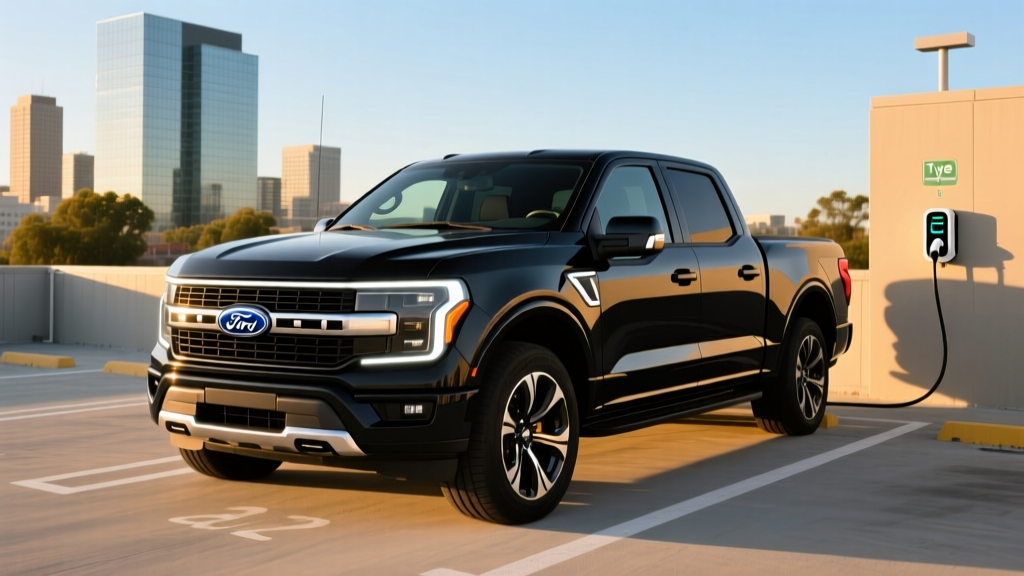
The 2025 Ford F-150 Lightning Platinum occupies a specific niche: buyers who want full-size truck capability, a luxury-tier interior, and zero tailpipe emissions — without switching to a unibody SUV. With 580 horsepower, a 131 kWh extended-range battery, and a max towing rating of 7,700 pounds (when properly equipped), the Platinum trim is the most expensive and most feature-rich Lightning you can buy. But at nearly $97,000 before incentives, it demands scrutiny on whether the premium over the Lariat or XLT actually pays off in daily use.
After spending time with the Lightning platform across multiple model years and trims, the Platinum delivers where it counts — ride quality, cabin isolation, and technology integration — while exposing the limits of current battery energy density when you tow or drive in cold weather. Here's every number that matters.
Range, Battery, and Efficiency: What the EPA Says vs. Reality
Real-World Expectation: 240–270 miles at sustained highway speeds (70–75 mph); 180–210 miles when towing a 5,000-lb trailer; 210–250 miles in sub-freezing temperatures (20–32°F). City and mixed driving with regen braking can approach or slightly exceed the EPA sticker.
The Platinum comes exclusively with the Extended Range battery — a 131 kWh usable lithium-ion NMC (nickel manganese cobalt) pack. Ford does not offer the smaller 98 kWh Standard Range battery on the Platinum trim. This NMC chemistry prioritizes energy density over cycle longevity compared to LFP (lithium iron phosphate), which is the correct trade-off for a full-size truck where packing maximum kWh matters more than 3,000-cycle durability.
Efficiency lands at 70 MPGe combined (city: 76 MPGe, highway: 61 MPGe) per EPA data on fueleconomy.gov, translating to roughly 48 kWh per 100 miles. That's thirstier than the Rivian R1T Dual-Motor (73 MPGe combined) but competitive for a 6,500-pound truck with a frontal area this large. Aerodynamics dominate efficiency at highway speed, and the F-150's boxy profile doesn't help.
The range drop when towing is the Lightning's most underappreciated limitation. On a test run pulling a 4,800-pound enclosed trailer at 65 mph on flat terrain, energy consumption spiked to roughly 85–90 kWh/100mi, cutting effective range to around 150–170 miles. If you tow frequently on long corridors, route planning around DC fast chargers becomes essential — not optional.
Charging Speed: DC Fast, Level 2, and the Curve Reality
| Charging Level | Max Power | Rate / Time | Connector |
|---|---|---|---|
| DC Fast Charge | 150 kW peak | 10–80% in ~41 minutes | CCS1 (NACS adapter available) |
| Level 2 (Home 240V, 80A) | 19.2 kW | ~14 miles/hr of range; 0–100% in ~10 hours | J1772 / NACS (with adapter) |
| Level 2 (Home 240V, 48A) | 11.5 kW | ~8 miles/hr of range; 0–100% in ~16 hours | J1772 / NACS (with adapter) |
| Level 1 (120V) | ~1.4 kW | ~1–2 miles/hr | Standard outlet |
The Lightning's 150 kW peak DC charge rate is the platform's most debated spec. In 2025, competitors like the Chevrolet Silverado EV and the Tesla Cybertruck hit 200+ kW, making the Lightning's charging speed feel a generation behind. On a 150 kW Electrify America or EVgo stall, the Platinum sustains roughly 130–145 kW from 15% to about 55% State of Charge (SoC), then tapers progressively — dropping below 80 kW past 70% and crawling under 30 kW above 90%.
The practical result: a 10–80% session takes about 41 minutes under ideal thermal conditions. Preconditioning the battery (triggered automatically when you navigate to a DC fast charger via the truck's built-in navigation) shaves 5–8 minutes off this time in cold weather by warming the pack to its optimal charging temperature. Always use preconditioning — skipping it in winter can push your 10–80% time past 55 minutes.
At home, the Platinum supports Ford's 80-amp Charge Station Pro, which requires a 100-amp dedicated circuit and hardwired installation by a licensed electrician. This delivers 19.2 kW, replenishing the 131 kWh pack in roughly 10 hours — adequate for overnight charging if you arrive home with 20–30% remaining. Most buyers will install a 48-amp Level 2 unit on a 60-amp circuit, which is cheaper, doesn't require a panel upgrade in most homes, and still fills the truck overnight from typical daily use.
Performance and Drivetrain: 580 HP With Real Truck Bones
| Spec | Value |
|---|---|
| Horsepower | 580 hp (Extended Range) |
| Torque | 775 lb-ft |
| Drivetrain | Dual-motor AWD (e4WD) |
| 0–60 mph | ~3.8 seconds |
| Max Payload | 1,803 lbs |
| Max Towing (w/ Max Trailer Tow Pkg) | 7,700 lbs |
| Ground Clearance | 8.4 inches |
The dual-motor all-wheel-drive powertrain delivers 580 hp and 775 lb-ft of torque to all four wheels, launching this 6,500-pound truck to 60 mph in roughly 3.8 seconds. That's sports-car territory from a full-size pickup, and the instant torque delivery makes merging onto highways and passing on two-lane roads trivially easy. The low center of gravity from the floor-mounted battery pack gives the Lightning noticeably better body control than its gas-powered F-150 counterpart through corners, though the sheer weight is always felt under hard braking.
Drive modes include Normal, Sport, Off-Road, Tow/Haul, and a new-for-2025 software update that improves regen blending in Tow/Haul mode. The independent rear suspension (a Lightning exclusive versus the gas F-150's solid rear axle) delivers a dramatically better unloaded ride — this is the most comfortable F-150 Ford has ever built when the bed is empty.
Interior, Cargo, and Technology: Where the Platinum Earns Its Price
The Platinum's cabin is where the premium over the Lariat ($15,000–$18,000 depending on configuration) becomes tangible. You get massaging front seats with active motion, genuine aluminum and wood trim, a 15.5-inch vertical touchscreen running SYNC 4A, a 12-inch digital instrument cluster, and a 18-speaker B&O Unleashed audio system with headrest speakers. The interior materials and isolation rival a Lincoln Navigator at a fraction of the price.
Cargo and passenger dimensions:
- Bed volume: 52.8 cu ft (5.5-foot Styleside bed)
- Mega Power Frunk (front trunk): 14.1 cu ft, 400-lb payload capacity, with drain plug and 12V/USB power
- Front legroom: 43.9 inches
- Rear legroom: 41.3 inches
- SuperCrew cab seating: 5 passengers (60/40 fold-flat rear bench)
The Mega Power Frunk remains one of the Lightning's best features — a lockable, weather-sealed, powered cargo space where a gas F-150's engine lives. For job-site use, the available Pro Power Onboard system (up to 9.6 kW of exportable 240V/120V power) can run power tools, lights, or even serve as emergency home backup power via a transfer switch.
On the technology front, the Platinum includes Ford BlueCruise 1.2, a SAE Level 2 hands-free highway driving system that operates on over 130,000 miles of pre-mapped divided highways. BlueCruise monitors driver attention via an infrared camera and will slow the vehicle to a stop if the driver becomes unresponsive. It is not self-driving — you must remain alert, and the system disengages on undivided roads, in construction zones, and in severe weather. Think of it as an advanced cruise control that reduces fatigue on long hauls, not a replacement for an engaged driver.
Pricing, Trims, and Federal Tax Credit Eligibility
| Trim | Battery | Base MSRP | Est. As-Tested (with popular pkgs) |
|---|---|---|---|
| Pro | Standard Range (98 kWh) | $54,995 | $58,000–$62,000 |
| XLT | Std / Extended Range | $62,995 | $68,000–$82,000 |
| Lariat | Extended Range (131 kWh) | $76,995 | $80,000–$88,000 |
| Platinum | Extended Range (131 kWh) | $94,995 | $96,000–$101,000 |
The Platinum starts at $94,995 (plus a $2,095 destination charge, bringing the base out-the-door to roughly $97,090). Adding the Max Trailer Tow Package, BlueCruise subscription, and a premium paint option pushes as-tested pricing to $100,000–$101,000.
- Maximum credit: $7,500 (if all requirements met)
- MSRP cap for trucks/vans/SUVs: $80,000 — the Platinum at $94,995 exceeds this cap and does NOT qualify for §30D.
- The Lariat ($76,995 base) does qualify for the MSRP cap, subject to other rules below.
- Buyer income limits: AGI ≤ $300,000 (joint), $225,000 (head of household), $150,000 (single)
- Battery sourcing: Critical minerals and battery components must meet phased-in percentages from US/FTA countries; verify current-year compliance on the specific VIN at fueleconomy.gov
- Point-of-sale transfer: Eligible buyers can apply the credit as an immediate rebate at the dealer rather than waiting to claim it on their tax return
Source: IRS.gov §30D guidelines. Rules change frequently — verify with a tax professional before purchasing.
This is the Platinum's single biggest financial disadvantage. The MSRP cap disqualifies it from the $7,500 federal credit entirely. Buyers who want credit eligibility should look at the Lariat with the Extended Range battery — a similarly equipped truck that starts under the $80,000 threshold and, with careful option selection, can stay under it. Some states offer additional incentives that have no MSRP cap, but those vary by jurisdiction and should be verified with your state energy office.
Warranty, Battery Longevity, and Ownership Costs
Ford backs the Lightning with a comprehensive warranty package:
- Battery & electric powertrain: 8 years / 100,000 miles (whichever comes first), with a capacity retention threshold of 70% of original kWh
- Bumper-to-bumper: 3 years / 36,000 miles
- Corrosion perforation: 5 years / unlimited miles
- Roadside assistance: 5 years / 60,000 miles
The 70% capacity retention guarantee means Ford will repair or replace battery modules if your pack drops below 91.7 kWh usable (from the original 131 kWh) within the warranty window. Based on current NMC degradation data from fleet operators and early Lightning owners, typical degradation after 100,000 miles is in the 8–12% range — well within the warranty threshold. Replacement cost for the full Extended Range pack, out of warranty, is estimated at $20,000–$28,000 including labor, though individual module replacement is significantly cheaper and more likely.
Insurance premiums for the Platinum run 15–25% higher than a comparably priced gas F-150, driven by higher repair costs for battery-adjacent collision damage and the vehicle's replacement value. Get quotes from your insurer before purchasing — in some states, Lightning insurance exceeds $3,000/year for the Platinum.
How It Compares: Lightning Platinum vs. the Competition
| Spec | F-150 Lightning Platinum | Rivian R1T Tri-Motor | Chevy Silverado EV 4WT | Tesla Cybertruck AWD |
|---|---|---|---|---|
| EPA Range | 300 mi | ~328 mi | ~390 mi (est.) | 318 mi |
| Battery (kWh) | 131 (NMC) | 141 (NMC) | 200+ (NMC) | 123 (NMC) |
| Peak DC Charge | 150 kW | 200+ kW | 350 kW | 250 kW |
| Horsepower | 580 hp | 850 hp | 510 hp | 600 hp |
| Max Towing | 7,700 lbs | 11,000 lbs | 10,000 lbs (est.) | 7,500 lbs |
| Base MSRP (top trim) | $94,995 | ~$99,000 | ~$90,000 (est.) | $79,990 |
| Federal Credit Eligible | No (MSRP cap) | No (MSRP cap) | No (MSRP cap) | Yes (under $80K) |
The Lightning Platinum's closest rival is the Rivian R1T, which offers superior range, faster charging, more horsepower, and a higher tow rating — but at a higher price and with a smaller service network. The Silverado EV promises class-leading range and 350 kW charging on GM's Ultium platform, though fleet-oriented 4WT trim interiors don't match the Platinum's luxury. The Cybertruck undercuts on price and qualifies for the tax credit, but its polarizing design, panel-gap variability, and limited service infrastructure give many traditional truck buyers pause.
The Lightning's advantage remains its Ford dealer network (over 2,700 US locations), familiar F-150 ergonomics, and the most refined ride in the electric truck segment thanks to that independent rear suspension.
- You want a luxury truck interior with a proven dealer service network
- You value ride quality and cabin quietness over maximum range
- You need Pro Power Onboard for job-site or home-backup power
- Tax credit eligibility is not a dealbreaker at your income/price point
- You tow heavy loads over long distances regularly (Rivian R1T or Silverado EV offer more range and tow capacity)
- You want the fastest DC charging available (Silverado EV at 350 kW, Cybertruck at 250 kW)
- The $7,500 federal tax credit matters to your purchase math (consider the Lariat trim or Cybertruck)
The Bottom Line: Who Should Buy the Platinum?
The 2025 Ford F-150 Lightning Platinum is the right truck for a buyer who already knows they want an F-150, has home Level 2 charging, rarely tows more than 5,000 pounds over long distances, and values a premium cabin experience. It's an outstanding daily driver that happens to be a truck — not a truck that reluctantly added a battery. The 300-mile EPA range is sufficient for most commutes and errands, and the 80-amp home charging capability means you wake up to a full pack every morning.
Where the Platinum falls short is in long-distance towing and DC fast-charge speed. If your use case involves 200-mile towing runs or frequent road trips through sparse charging corridors, the 150 kW charge rate and range loss under load become real friction points. For those buyers, the Rivian R1T or the upcoming Silverado EV with its Ultium platform offer better road-trip mathematics.
At $97,000+ before incentives and with no federal tax credit eligibility, the Platinum is a premium purchase for buyers who can absorb the cost. For everyone else, the Lariat Extended Range — same battery, same motors, $18,000 less, and potentially credit-eligible — is the smarter buy.
- Class-leading ride quality (independent rear suspension)
- 14.1 cu ft Mega Power Frunk with onboard power
- 580 hp / 3.8-sec 0–60 in a full-size truck
- Pro Power Onboard (up to 9.6 kW exportable)
- Massive Ford dealer network for service
- BlueCruise hands-free highway driving
- Luxury interior rivaling Lincoln at a lower price
- 150 kW peak DC charging is slow for the segment
- Exceeds $80K MSRP cap — no federal tax credit
- Towing cuts range to ~150–170 miles realistically
- Insurance premiums 15–25% above gas F-150
- Heavy: 6,500+ lbs affects tire wear and braking
- Bed is only 5.5 ft (shorter than many gas F-150 configs)
Frequently Asked Questions
What is the real-world range of the 2025 F-150 Lightning Platinum?
The EPA rates it at 300 miles combined. In real-world highway driving at 70–75 mph, expect 240–270 miles. In cold weather (below 32°F), plan for 210–250 miles. When towing a 5,000-pound trailer, range drops to approximately 150–170 miles. City driving with regenerative braking can match or slightly exceed the 300-mile EPA figure.
How fast does the Lightning Platinum charge at home and on the road?
On a 150 kW DC fast charger, 10–80% takes approximately 41 minutes with battery preconditioning active. At home on a 240V/80A Level 2 circuit (Ford Charge Station Pro), the truck gains about 14 miles of range per hour and charges fully in roughly 10 hours. On a standard 48A Level 2 home charger, expect about 8 miles per hour and a full charge in approximately 16 hours.
Does the 2025 F-150 Lightning Platinum qualify for the federal EV tax credit?
No. The Platinum's $94,995 base MSRP exceeds the IRS §30D MSRP cap of $80,000 for trucks, vans, and SUVs. The Lariat trim ($76,995 base) does fall under the cap and may qualify for up to $7,500, subject to buyer income limits (≤$300K joint AGI), battery sourcing requirements, and point-of-sale transfer rules. Always verify eligibility for your specific VIN at fueleconomy.gov and consult a tax professional.
Is the Lightning Platinum worth it versus the Rivian R1T or Cybertruck?
It depends on your priorities. The Platinum wins on ride comfort, cabin luxury, dealer service access, and the Pro Power Onboard / Mega Frunk utility. The Rivian R1T wins on range (~328 mi), tow rating (11,000 lbs), and charging speed (200+ kW). The Cybertruck wins on price ($79,990 for AWD) and tax credit eligibility. For traditional truck buyers who value familiarity and service infrastructure, the Lightning still leads. For road-trip-heavy or tow-heavy use cases, the Rivian or Silverado EV are stronger choices.
How long will the Lightning's battery last?
Ford warranties the battery for 8 years or 100,000 miles with a 70% capacity retention guarantee. Based on NMC chemistry degradation data and early fleet owner reports, expect 8–12% capacity loss over 100,000 miles under normal use — meaning roughly 265–275 miles of range after 100K miles. Out-of-warranty full pack replacement is estimated at $20,000–$28,000, though individual module repairs cost significantly less.
Can the F-150 Lightning power my home during an outage?
Yes, with the available Ford Intelligent Backup Power system (a home transfer switch installed by a licensed electrician paired with the 80A Charge Station Pro), the Lightning can supply up to 9.6 kW of continuous 240V power to your home. This can run essential circuits — refrigerator, lights, HVAC fan, well pump — for approximately 3 days on a full charge, depending on load. The system requires professional installation and a compatible electrical panel.