The Bottom Line on the 2025 Escalade IQ
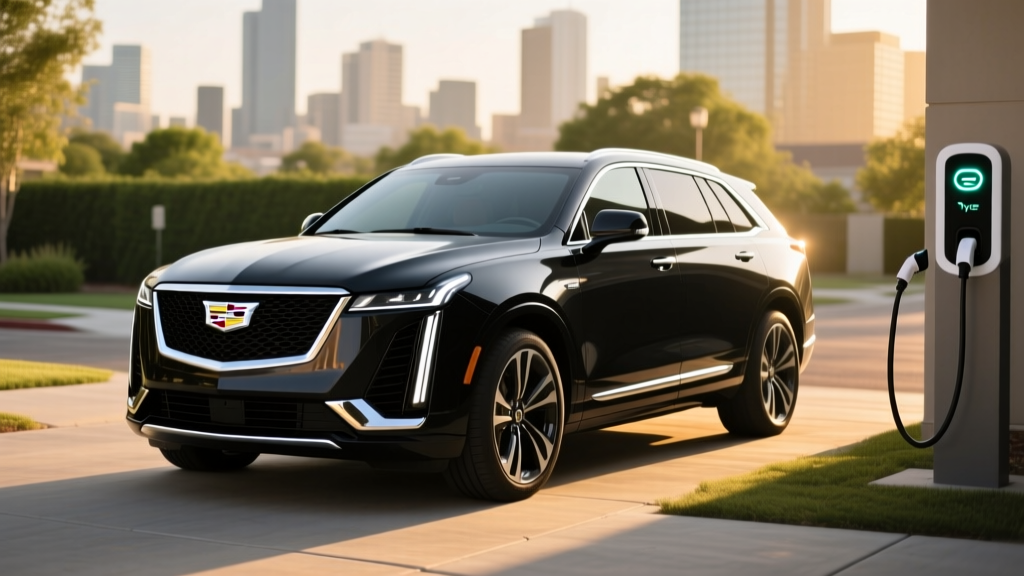
The 2025 Cadillac Escalade IQ (Cadillac's all-electric Escalade) delivers an EPA-estimated 460 miles of range from a massive 200+ kWh Ultium battery, peaks at 200 kW DC fast charging (roughly 10–80% in ~45 minutes), and starts at $129,990 for the Luxury trim. It does not qualify for the federal §30D tax credit due to its MSRP exceeding the $80,000 SUV cap. Compared to the gas Escalade, you'll save roughly $2,500–$3,500 annually on fuel if you charge mostly at home, but face higher insurance premiums and a steep entry price. This is a luxury statement EV for buyers who want three rows, 750 horsepower, and zero tailpipe emissions — not a budget-conscious electrification play.
Range and Efficiency: 460 Miles on Paper, What About Reality?
The Escalade IQ carries one of the largest battery packs ever fitted to a production vehicle — a 200+ kWh usable Ultium (NMC chemistry) module. That enormous capacity is what enables Cadillac's EPA-estimated 460-mile range figure, which tops nearly every three-row SUV on the market.
Real-World Range Expectations
EPA sticker: 460 miles
Highway cruising (70–75 mph): Expect ~370–400 miles. The Escalade IQ's brick-like aerodynamics (large frontal area, boxy profile) hit efficiency hard at sustained speed.
Cold weather (below 32°F): Plan for 310–350 miles. The massive battery helps buffer losses, but cabin heating and battery conditioning draw significant energy.
Mountain/towing: Heavy loads or steep grades can drop effective range to 280–320 miles.
Source: fueleconomy.gov EPA estimates; real-world figures based on large-battery EV testing patterns.
Efficiency lands around 59 MPGe combined (approximately 56–60 kWh/100mi). That's thirsty by EV standards — for context, a Tesla Model X achieves roughly 100 MPGe — but expected for a 7,500+ lb luxury flagship. The trade-off is clear: you're carrying an enormous battery to offset the vehicle's weight and aerodynamic penalty, which works for range but hurts efficiency per mile.
Charging Speed: 200 kW Peak, but Mind the Curve
The Escalade IQ supports 200 kW peak DC fast charging via its NACS connector, giving it native access to the Tesla Supercharger network alongside Electrify America and other providers. Cadillac estimates a 10–80% charge in approximately 45 minutes at a capable station.
| Level | Power | Miles Added per Hour | Typical Use Case |
|---|---|---|---|
| Level 1 (120V) | ~1.4 kW | ~3–4 mi/hr | Emergency top-off only |
| Level 2 (240V, 48A) | ~11.5 kW | ~27–30 mi/hr | Overnight home charging (~16 hrs for full) |
| Level 2 (240V, 80A) | ~19.2 kW | ~45–50 mi/hr | High-power home or depot charging (~10 hrs full) |
| DC Fast Charge | 200 kW peak | N/A (session-based) | 10–80% in ~45 min; tapers significantly above 80% |
Charging-curve reality check: The 200 kW peak only holds in a narrow state-of-charge window (roughly 10–30%). Above 50% SoC, expect rates to taper to 120–150 kW, and above 80%, charging slows dramatically to protect battery health — often below 50 kW. On a road trip, plan your stops around the 10–80% sweet spot and don't expect linear charging speed.
At home, the 200+ kWh battery is a double-edged sword. A standard 48-amp Level 2 charger (11.5 kW) needs roughly 16–18 hours for a full charge — fine if you plug in nightly and rarely drain the pack fully, but slow if you arrive home nearly empty. Buyers should strongly consider an 80-amp hardwired Level 2 station (like a ChargePoint Home Flex or Tesla Wall Connector) to cut that to ~10 hours. Installation for an 80A circuit typically runs $1,200–$2,800 depending on panel proximity and whether your home's electrical service needs a 200A upgrade.
Performance and Powertrain: 750 HP and Super Cruise
The Escalade IQ's dual-motor all-wheel-drive powertrain produces 750 horsepower and 785 lb-ft of torque in Velocity mode, launching this luxury behemoth to 0–60 mph in approximately 4.7 seconds. That's sports-sedan acceleration in a vehicle with three rows of seating and a available 23-inch wheels.
On the driver-assistance front, the Escalade IQ comes equipped with Super Cruise, GM's hands-on-wheel-off highway driving system. Super Cruise operates on over 750,000 miles of mapped divided highways in the US and Canada, using LiDAR-mapped data, GPS, cameras, and radar.
SAE Automation Level: Level 2
Super Cruise is a Level 2 driver-assistance system — it handles steering, acceleration, and braking on compatible highways, but the driver must remain attentive at all times. An infrared camera monitors your eyes and will issue escalating alerts (and eventually slow the vehicle) if you look away too long. This is not self-driving. You are the responsible operator.
Escalade IQ vs. Gas Escalade: The Ownership Cost Breakdown
The most common question from luxury SUV shoppers: does going electric actually save money on a vehicle at this price point? Let's run the numbers over five years and 75,000 miles, assuming 15,000 miles/year.
| Category | Escalade IQ (EV) | Gas Escalade 4WD |
|---|---|---|
| Base MSRP | $129,990 (Luxury) | $83,895 (Luxury) |
| Federal Tax Credit (§30D) | $0 (exceeds $80K SUV cap) | $0 |
| Fuel/Energy (75K mi) | $5,200–$7,500 (home + public mix) | $14,000–$17,500 (14 MPG, $3.50–$4.00/gal) |
| Maintenance (5 yr) | $1,800–$2,500 (tires, cabin filter, fluid top-offs) | $4,500–$6,000 (oil, trans, brakes, belts) |
| Insurance (5 yr avg) | $18,000–$24,000 | $14,000–$18,000 |
| Estimated Depreciation | ~$52,000–$65,000 | ~$35,000–$42,000 |
| Total 5-Yr Cost (approx.) | $207,000–$229,000 | $151,000–$169,000 |
The verdict: You'll save $7,000–$10,000 on fuel and $2,000–$3,500 on maintenance over five years. But the Escalade IQ's $46,000+ price premium over a similarly trimmed gas Escalade, combined with higher insurance and steeper projected depreciation (luxury EVs depreciate faster than their ICE counterparts in the current market), means the EV costs more overall. The financial case for the IQ rests on intangibles: silent operation, instant torque, home fueling convenience, HOV lane access in some states, and zero tailpipe emissions.
Pricing, Trims, and Tax Credit Reality
The 2025 Escalade IQ launches in two primary trim levels:
- Luxury: $129,990 MSRP (including destination)
- Sport: $130,490 MSRP
Higher-content variants (Premium Luxury, Sport Touring) push the price well above $140,000 with options.
Federal §30D Tax Credit: Not Eligible
The Escalade IQ does not qualify for the federal EV tax credit. Here's why, per current IRS §30D rules:
- ❌ MSRP cap exceeded: SUVs must be under $80,000 MSRP. The IQ starts at $129,990.
- ❌ Income caps may apply: Even if the price qualified, buyers must have MAGI ≤ $300,000 (joint) / $225,000 (head of household) / $150,000 (individual).
- ⚠️ Battery sourcing: The Ultium pack uses globally sourced cells; critical-mineral and battery-component requirements add further complexity.
Some states offer their own EV rebates or tax credits that are not bound by the federal MSRP cap — check your state's energy office or DMV for current programs.
Common Misconceptions About the Escalade IQ
| Myth | Fact |
|---|---|
| "460 miles means I'll never need to charge on road trips." | Highway driving at 75 mph realistically yields ~370–400 miles. In winter or with cargo, plan for stops every 300–340 miles. You'll still use DC fast chargers on long trips. |
| "I can charge it on a regular outlet overnight." | Level 1 (120V) adds roughly 3–4 miles per hour — about 40 miles in a 12-hour session. That covers a short commute but won't replenish a depleted battery in any practical timeframe. Level 2 home charging is essentially mandatory. |
| "The battery will need replacing in 5–8 years." | GM warranties the Ultium battery for 8 years / 100,000 miles against defects and excessive degradation (typically below 60–70% capacity retention). Real-world data from Ultium and similar NMC packs suggests 10–15% degradation over 150,000+ miles under normal use. Replacement, if ever needed out of warranty, is estimated at $25,000–$40,000 for a pack this size. |
| "Super Cruise means the car drives itself." | Super Cruise is SAE Level 2 — you must remain alert and ready to take over. It's an excellent highway assistant, not autonomous driving. |
| "It'll tow just like the gas Escalade." | The IQ is rated for up to 8,000 lbs towing, competitive with the gas model. But towing cuts range by 30–50%. A 460-mile range becomes roughly 250–320 miles with a heavy trailer. |
Who Should Buy the Escalade IQ? A Decision Framework
Choose the Escalade IQ If:
- You have reliable Level 2 home charging (garage or driveway with a 240V circuit). This is non-negotiable for a 200+ kWh battery.
- Your daily driving is under 200 miles round-trip, meaning you'll rarely need public charging for routine use.
- You value silence, instant acceleration, and the prestige of an all-electric luxury flagship — and the $46,000+ premium over gas is acceptable.
- You want three rows with genuine adult-sized third-row space and a premium cabin.
- You live in a region with decent DC fast-charging infrastructure (Tesla Superchargers, Electrify America) for the road trips you do take.
Stick with the Gas Escalade (or Consider a PHEV Alternative) If:
- You live in an apartment or lack home charging access. Relying entirely on public charging for a 200+ kWh battery is expensive ($0.30–$0.50/kWh = $60–$100 per session) and time-consuming.
- You regularly tow heavy trailers over long distances. Range drops dramatically, and DC fast-charging stops add significant trip time.
- You're in a very cold climate (consistent sub-20°F winters) where range loss compounds with heating demands.
- Total cost of ownership matters — the gas Escalade costs substantially less to buy, insure, and (eventually) resell.
First-Time EV Buyer Checklist for the Escalade IQ
If this is your first electric vehicle, here's what to prepare before delivery day:
- Electrical panel assessment: Hire a licensed electrician to evaluate whether your panel can support a 48A or 80A Level 2 circuit. A 200-amp home service is usually sufficient; older 100-amp panels may need an upgrade ($1,500–$3,500).
- Install Level 2 before the car arrives: A 200+ kWh battery on Level 1 is impractical. Budget $800–$2,800 for a quality Level 2 station plus installation.
- Download and set up charging apps: PlugShare, EVgo, ChargePoint, and the Tesla app (for Supercharger access via NACS). Familiarize yourself with locating and initiating sessions.
- Understand preconditioning: The Escalade IQ can precondition its battery before you arrive at a DC fast charger (set a navigation waypoint to the charger). This warms the pack for faster charging — critical in cold weather.
- Adjust your insurance: Get quotes before purchasing. Luxury EVs carry premiums 20–40% higher than their gas equivalents due to repair costs and battery replacement risk.
- Learn one-pedal driving: The IQ's regenerative braking can handle most deceleration without touching the brake pedal. It extends range and reduces brake wear, but takes a week or two to internalize.
Frequently Asked Questions
Does the 2025 Escalade IQ qualify for any tax credits?
Not the federal §30D credit — its MSRP far exceeds the $80,000 SUV cap. Some state-level incentives (California, Colorado, New York, among others) may offer rebates or credits without MSRP caps. Check your state's energy office and consult a tax professional for eligibility.
How long does it take to charge the Escalade IQ at home?
On a 48-amp Level 2 charger (11.5 kW), expect roughly 16–18 hours from empty to full. On an 80-amp circuit (19.2 kW), approximately 10–11 hours. Most owners charge incrementally overnight and rarely need a 0–100% session.
Is the Escalade IQ good for road trips?
Yes, with planning. The 460-mile EPA range (realistically 370–400 highway) means fewer stops than most EVs, but the 200 kW peak charge rate and large battery mean each stop takes ~45 minutes for a 10–80% session. For a 600-mile trip, budget one 45-minute charging stop. The Super Cruise system reduces highway fatigue significantly.
What's the battery warranty?
GM covers the Ultium battery for 8 years or 100,000 miles (whichever comes first) against defects and excessive capacity loss. The powertrain (motors, power electronics) carries the same coverage. Verify specific terms with your dealer at purchase.
Can the Escalade IQ use Tesla Superchargers?
Yes. The Escalade IQ uses the NACS (North American Charging Standard) connector natively, giving it direct access to Tesla's Supercharger network — over 25,000 stalls across North America — without an adapter. It also supports CCS-compatible networks via the NACS standard's DC protocol.
How does cold weather affect the Escalade IQ?
Expect a 20–30% range reduction in sustained below-freezing temperatures. The massive battery provides a buffer — you'll still likely see 310–350 real-world miles in winter — but cabin heating and battery thermal management draw significant energy. Preconditioning while plugged in mitigates this substantially.