The 2025 Chevrolet Equinox EV arrived with a straightforward promise: an affordable, long-range electric crossover for mainstream buyers who don't want to pay Tesla or Hyundai Ioniq 5 premiums. After spending time with the specs, the charging curves, and the real-world ownership equation, it's clear Chevy has built a compelling daily driver — but one with specific trade-offs you need to understand before signing paperwork.
This review covers the 2025 Equinox EV lineup in detail: the 2LT and 3LT trims, front-wheel drive and all-wheel drive configurations, exact range and charging figures, and how the federal tax credit actually applies under current IRS §30D rules. If you're cross-shopping the Equinox EV against the Hyundai Ioniq 5, Ford Mustang Mach-E, or Volkswagen ID.4, this is the data-driven breakdown you need.
Quick Verdict: Who the 2025 Equinox EV Is For
The Equinox EV is best understood as an electric compact crossover optimized for commuting and daily errands, not a road-trip performance machine. Its strengths are straightforward: a usable 319-mile EPA range on FWD models, a spacious cabin, a massive 17.7-inch infotainment screen, and a starting price that — when the federal tax credit applies — undercuts nearly every competitor in the segment.
Where it falls short is DC fast-charging speed. At a peak of 150 kW, the Equinox EV charges noticeably slower than the Ioniq 5's 800-volt architecture (which peaks at roughly 240 kW). If you take frequent long road trips and rely on public fast charging, that 10–80% difference adds up. For home-charging commuters, though, it's a non-issue.
Range, Efficiency, and Real-World Expectations
Chevrolet equips the 2025 Equinox EV with an 85 kWh (usable) lithium-ion battery pack using NMC (nickel manganese cobalt) chemistry. Here's how the EPA rates each configuration:
| Trim / Drivetrain | EPA Range | MPGe (City/Hwy/Combined) | kWh/100 mi |
|---|---|---|---|
| 2LT FWD | 319 mi | 117 / 100 / 109 MPGe | 31 |
| 3LT FWD | 315 mi | 115 / 98 / 107 MPGe | 31 |
| 2LT AWD (Launch Edition) | 285 mi | 104 / 90 / 97 MPGe | 35 |
| 3LT AWD | 280 mi | 102 / 88 / 95 MPGe | 35 |
Data sourced from fueleconomy.gov.
Real-World Range: What to Actually Expect
EPA sticker (2LT FWD): 319 miles
Real-world highway (70–75 mph, moderate climate): ~260–280 miles
Real-world mixed city/highway: ~280–300 miles
Cold weather (below 30°F, highway): ~210–240 miles (expect 20–30% reduction)
The Equinox EV's efficiency is respectable but not class-leading. At roughly 31 kWh/100 mi (FWD), it consumes more energy per mile than a Tesla Model Y RWD (~28 kWh/100 mi). Highway speeds above 70 mph and cold temperatures hit range noticeably. If you live in the Upper Midwest or Northeast and commute long distances in winter, budget for that 25% cold-weather loss — preconditioning the battery while plugged in helps, but the Equinox EV does not have a dedicated heat pump on all trims, which can increase cabin-heating energy draw.
Charging Speeds: DC Fast, Level 2, and Level 1
Charging is where the Equinox EV's mainstream positioning shows most clearly. It's competent for home charging but unremarkable on the road.
| Charging Level | Max Power (kW) | Connector | Speed / Time |
|---|---|---|---|
| Level 1 (120V household) | ~1.4 kW | NACS (Tesla-compatible, J1772 adapter included) | ~3–4 mi/hr |
| Level 2 (240V home/public) | 11.5 kW | NACS (J1772 adapter included) | ~34 mi/hr; full charge in ~8.5 hrs |
| DC Fast Charging | 150 kW (peak) | NACS (CCS adapter available) | 10–80% in ~42 min |
A few things to unpack here. First, GM has adopted the NACS (North American Charging Standard) connector — the Tesla plug — across its EV lineup. This means native access to Tesla Superchargers (via adapter initially, with native NACS ports on later production runs). That's a significant infrastructure advantage over CCS-only vehicles.
Second, the 150 kW peak DC fast-charge rate is the Equinox EV's most debated spec. On a 150 kW or higher charger, you'll see peak speeds briefly in the 20–50% state-of-charge window, then the charge curve tapers. The 10–80% time of roughly 42 minutes is about 10–15 minutes slower than an Ioniq 5 or Kia EV6 on a 350 kW charger. For road trips, plan your stops accordingly: a 20-minute restroom-and-snack break won't get you to 80%. You'll want a full sit-down meal stop.
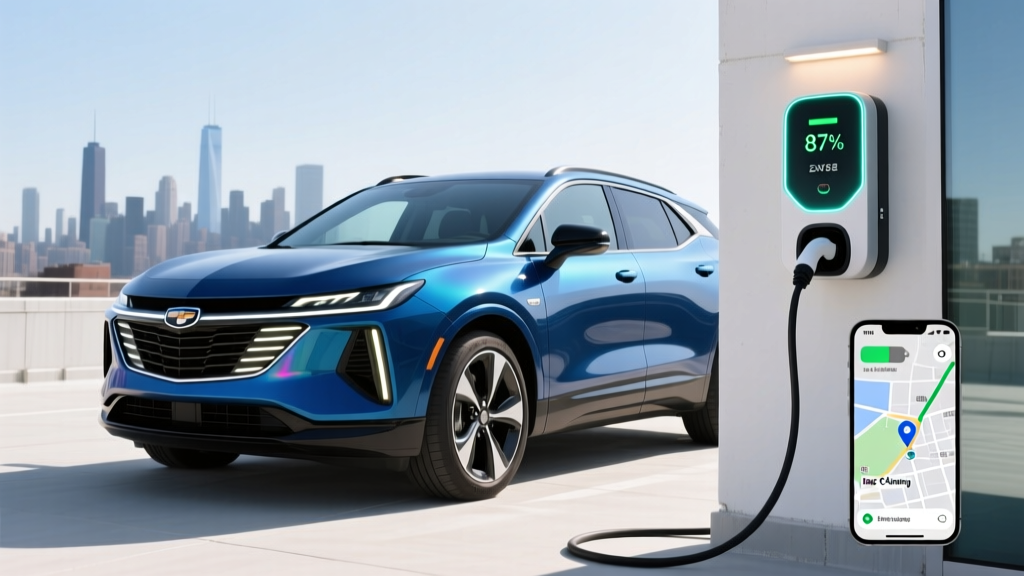
At home on a 48-amp Level 2 charger (hardwired, requiring a 60-amp circuit), the 11.5 kW onboard charger replenishes about 34 miles of range per hour. A full overnight charge from 10% to 100% takes roughly 8–9 hours, which is perfectly adequate for daily use. Most owners will set a charge limit of 80–90% for daily driving to preserve long-term battery health, only charging to 100% before longer trips.
Performance: Adequate Power, Not a Thrill Ride
| Configuration | Horsepower | Torque (lb-ft) | 0–60 mph | Drivetrain |
|---|---|---|---|---|
| FWD (2LT / 3LT) | 213 hp | 236 | ~8.0 sec | Single-motor, front-wheel drive |
| AWD (2LT / 3LT) | 288 hp | 355 | ~6.3 sec | Dual-motor, all-wheel drive |
The FWD model's 213 horsepower is adequate for merging and passing but won't surprise anyone coming from a performance EV. The AWD dual-motor setup is the one to choose if you want confident acceleration — 288 hp and 355 lb-ft of torque deliver the instant electric thrust that makes highway on-ramps effortless. The 6.3-second 0–60 time puts it in line with the Volkswagen ID.4 AWD and slightly behind the Mach-E Select AWD.
Ride quality is tuned for comfort rather than sportiness. The Equinox EV rides on GM's Ultium platform, and the low center of gravity from the under-floor battery pack gives it planted handling. Regenerative braking offers a one-pedal driving mode with adjustable levels, though the regen strength doesn't quite match the aggressive deceleration you'll find in a Tesla or Hyundai.
Interior Space, Cargo, and Technology
The Equinox EV's cabin is where mainstream buyers will feel most at home. It's spacious, practical, and packed with tech that punches above its price class.
| Measurement | Specification |
|---|---|
| Front headroom | 40.9 in |
| Rear headroom | 38.7 in |
| Front legroom | 43.5 in |
| Rear legroom | 37.8 in |
| Cargo volume (rear seats up) | 26.4 cu ft |
| Cargo volume (rear seats folded) | 57.2 cu ft |
| Frunk (front trunk) | Not available |
The 17.7-inch diagonal infotainment touchscreen is the centerpiece — it's one of the largest in the segment and runs GM's latest Google Built-in interface, which includes native Google Maps, Google Assistant, and access to the Play Store for apps. An 11-inch digital driver display sits behind the steering wheel. Wireless Apple CarPlay and Android Auto are standard, along with wireless phone charging on 3LT trims.
On the driver-assistance front, Chevy Safety Assist comes standard: automatic emergency braking, forward collision alert, lane keep assist, following distance indicator, and IntelliBeam auto high beams. Super Cruise — GM's hands-free highway driving system — is available on the 3LT trim. Note that Super Cruise is an SAE Level 2 system: it handles steering, acceleration, and braking on mapped divided highways, but you must remain attentive and keep your eyes on the road. A driver-monitoring camera ensures compliance. It's not self-driving; it's a highly capable highway assist that reduces fatigue on long trips.
One notable omission: there is no frunk (front trunk). The space under the hood is occupied by power electronics, so all cargo goes in the rear. For a family crossover, the 26.4 cu ft behind the second row is competitive with the ID.4 (30.3 cu ft) and slightly less than the Ioniq 5 (27.2 cu ft), though the Equinox EV's boxier shape makes loading bulkier items easier in practice.
Pricing, Trims, and Federal Tax Credit Eligibility
| Trim | Base MSRP | Est. Federal Credit (§30D) | Effective Price* |
|---|---|---|---|
| 2LT FWD | $33,600 | Up to $7,500 | ~$26,100 |
| 3LT FWD | $39,300 | Up to $7,500 | ~$31,800 |
| 2LT AWD (Launch) | $41,900 | Up to $7,500 | ~$34,400 |
| 3LT AWD | $43,400 | Up to $7,500 | ~$35,900 |
*Effective price assumes full $7,500 federal tax credit eligibility. Destination charge (~$1,395) not included. State/local incentives may apply additionally.
The 2025 Equinox EV qualifies for the IRS §30D New Clean Vehicle Credit, but eligibility depends on several factors that change periodically:
- MSRP cap: The Equinox EV is classified as an SUV/crossover, so the MSRP cap is $80,000. All trims clear this easily.
- Buyer income limits: Modified AGI must not exceed $150,000 (single), $225,000 (head of household), or $300,000 (joint filing). These are the current thresholds — verify against your tax situation.
- Battery component & critical mineral sourcing: The §30D credit is split into two halves — $3,750 for battery components manufactured in North America, and $3,750 for critical minerals sourced from the U.S. or free-trade-agreement countries. GM has stated the Equinox EV's Ultium battery cells are manufactured in the U.S. (at the Ultium Cells plant in Ohio), but critical-mineral sourcing requirements tighten each year. Check the latest fueleconomy.gov eligibility list before purchasing.
- Point-of-sale transfer: As of 2024, you can transfer the credit to the dealer at purchase, effectively reducing your out-of-pocket cost immediately rather than waiting to claim it on your tax return. The dealer handles the IRS registration.
Critical caveat: Tax credit rules are subject to change. Battery sourcing requirements have phased in progressively, and some vehicles that qualified in early 2024 lost partial eligibility as critical-mineral thresholds increased. Always confirm current eligibility on fueleconomy.gov and consult a tax professional before relying on the credit in your purchase budget.
Warranty and Long-Term Battery Outlook
| Coverage | Term |
|---|---|
| Battery & propulsion (powertrain) | 8 years / 100,000 miles |
| Bumper-to-bumper (limited) | 3 years / 36,000 miles |
| Corrosion protection | 6 years / 100,000 miles |
| Roadside assistance | 5 years / 100,000 miles |
The 8-year/100,000-mile battery warranty is industry-standard and covers the battery pack against defects and excessive capacity loss (GM defines the threshold at approximately 60% retention, though most Ultium packs are tracking significantly better than that in early fleet data). The NMC chemistry in the Equinox EV offers higher energy density than LFP, giving it the range advantage, though LFP batteries generally tolerate frequent 100% charging better. For daily driving, keeping charge between 20–80% will maximize long-term battery health.
Replacement cost for the full battery pack is not yet published for the Equinox EV specifically, but Ultium platform packs in similar GM vehicles are estimated in the $12,000–$18,000 range out of warranty — a figure worth knowing, even if most owners will never need a replacement within the warranty period.
How It Stacks Up Against Key Competitors
| Spec | Chevy Equinox EV 2LT | Hyundai Ioniq 5 SE | VW ID.4 Standard | Ford Mustang Mach-E Select |
|---|---|---|---|---|
| EPA Range | 319 mi | 303 mi (RWD) | 275 mi (RWD) | 250 mi (RWD) |
| Battery (usable kWh) | 85 kWh | 77.4 kWh | 77 kWh | 75.7 kWh |
| Peak DC Fast Charge | 150 kW | ~240 kW | ~175 kW | ~150 kW |
| 10–80% DCFC Time | ~42 min | ~18 min | ~30 min | ~38 min |
| Base MSRP | $33,600 | $42,600 | $40,295 | $39,995 |
| Horsepower | 213 hp | 170 hp | 282 hp | 266 hp |
| Cargo (seats up) | 26.4 cu ft | 27.2 cu ft | 30.3 cu ft | 29.7 cu ft |
The Equinox EV's price advantage is stark: it undercuts the Ioniq 5 by roughly $9,000 and the ID.4 by about $7,000 at the base trim, while offering the longest EPA range in this comparison. That's the headline.
The trade-off is charging speed. The Ioniq 5's 800-volt architecture charges from 10–80% in about 18 minutes on a 350 kW charger — less than half the Equinox EV's time. If your lifestyle involves regular road trips of 300+ miles, that charging-speed gap is meaningful. If you charge at home 90% of the time and take a handful of road trips per year, the Equinox EV's price-to-range ratio is hard to beat.
Decision Framework
Choose the Equinox EV if: You prioritize lowest purchase price, longest EPA range per dollar, home charging convenience, and a comfortable, tech-forward daily commuter with Super Cruise availability.
Choose the Ioniq 5 if: You road-trip frequently and need the fastest DC charging available, or you prefer a more distinctive design and slightly more cargo space.
Choose the ID.4 if: You want a softer, more traditional crossover feel with good cargo volume and don't mind a shorter range.
Choose the Mach-E if: Driving dynamics and performance are priorities, and you're willing to pay more for a sportier experience.
Pros, Cons, and the Bottom Line
Pros
- Lowest starting MSRP in the segment ($33,600)
- Class-leading 319-mile EPA range on FWD
- Massive 17.7-inch infotainment with Google Built-in
- Super Cruise hands-free driving available (3LT)
- NACS connector — native Tesla Supercharger access
- Spacious rear seat with 37.8 inches of legroom
- Strong federal tax credit eligibility (§30D)
Cons
- DC fast charging peaks at 150 kW — slow for road trips
- No frunk (front trunk) for additional cargo
- FWD performance is merely adequate (8.0 sec 0–60)
- Cargo volume trails ID.4 and Mach-E
- No heat pump standard on all trims (cold-weather efficiency hit)
- Real-world highway range drops to ~260–280 mi
Frequently Asked Questions
What is the real-world range of the 2025 Equinox EV?
The EPA rates the 2LT FWD at 319 miles, but real-world highway driving at 70–75 mph typically yields 260–280 miles. In cold weather (below 30°F), expect 210–240 miles. City driving with regenerative braking recovers more energy, getting closer to the EPA figure — around 290–310 miles in mixed use.
How fast does the Equinox EV charge at home and on the road?
At home on a 240V Level 2 charger, it charges at up to 11.5 kW, adding roughly 34 miles of range per hour — a full charge takes about 8.5 hours. On a DC fast charger, it peaks at 150 kW and charges from 10–80% in approximately 42 minutes. That's adequate but slower than rivals like the Ioniq 5 (~18 min).
Does the 2025 Equinox EV qualify for the $7,500 federal tax credit?
It is eligible for up to $7,500 under IRS §30D, provided you meet the income caps ($150K single / $300K joint), the MSRP is under $80,000 (all trims qualify), and the battery meets current critical-mineral and component sourcing requirements. The credit can be transferred to the dealer at point of sale. Always verify current eligibility at fueleconomy.gov before purchasing, as sourcing rules tighten over time.
Is the Equinox EV worth buying over the Hyundai Ioniq 5 or Tesla Model Y?
If your priority is the lowest cost per mile of EPA range, the Equinox EV is arguably the best value in the segment — especially after the tax credit. If you take frequent road trips and need the fastest charging, the Ioniq 5 is superior. The Tesla Model Y offers better efficiency and the most mature Supercharger network, but at a higher starting price. It depends on your driving pattern.
What are the biggest drawbacks of the Equinox EV?
The three main compromises are: (1) relatively slow DC fast charging at 150 kW peak, (2) no front trunk, and (3) FWD performance that's adequate rather than exciting. None are deal-breakers for a daily commuter, but they matter for road-trip-heavy or performance-oriented buyers.
Can the Equinox EV use Tesla Superchargers?
Yes. The Equinox EV uses the NACS connector, giving it access to Tesla's Supercharger network (initially via an included adapter, with native NACS ports on newer production). This is a major infrastructure advantage, as Tesla's network remains the largest and most reliable DC fast-charging network in the U.S.
How long will the Equinox EV battery last?
GM covers the battery for 8 years or 100,000 miles against defects and excessive degradation. Based on Ultium platform fleet data and industry averages for NMC chemistry, you can expect roughly 85–90% capacity retention after 100,000 miles with normal charging habits (avoiding frequent 100% charges and deep discharges). Full battery replacement, if ever needed out of warranty, is estimated at $12,000–$18,000.