Quick Answer: Is the 2025 Electric Mustang Worth It?
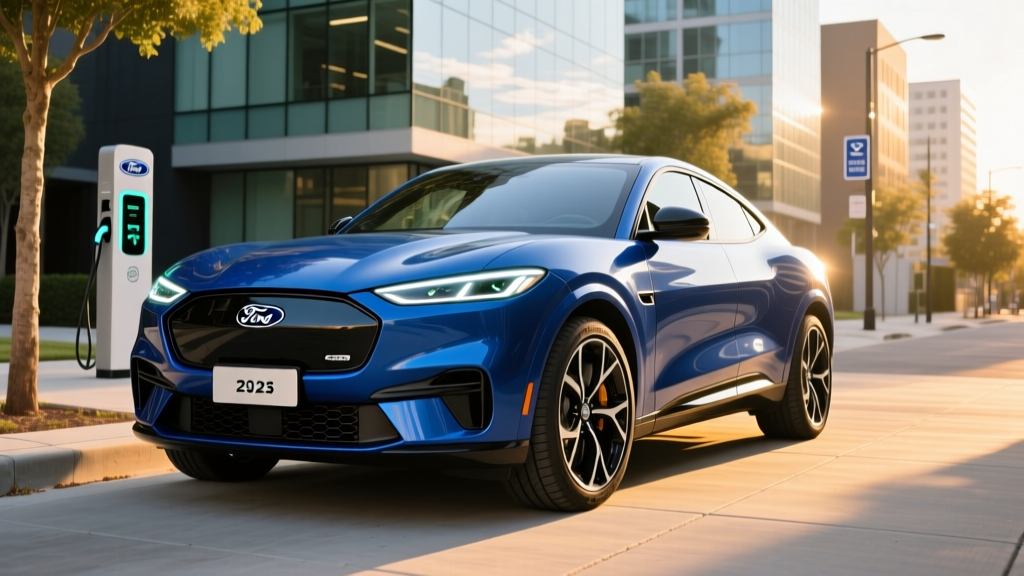
The 2025 Ford Mustang Mach-E — the vehicle most buyers mean when they search for a 2025 electric Mustang — is a compelling all-electric SUV starting around $39,995 with an EPA range of up to 320 miles (Extended RWD). It charges from 10–80% in roughly 36 minutes at a 150 kW DC fast charger, seats five, and qualifies for partial or full federal tax credits depending on battery sourcing and your income. Compared to a gas Mustang EcoBoost, the Mach-E costs more upfront but saves an estimated $1,200–$1,800 per year in fuel and maintenance for a typical driver. It makes sense if you have access to home or workplace Level 2 charging and drive under 250 miles daily.
What Exactly Is the 2025 Electric Mustang?
Ford does not sell a two-door electric Mustang coupe. The 2025 electric Mustang is the Mustang Mach-E, a five-passenger battery-electric crossover that borrows the Mustang name, styling cues, and performance DNA. For 2025, Ford streamlined the lineup into Select, Premium, GT, and Rally trims, with standard-range (72 kWh usable) and extended-range (91 kWh usable) battery options. The extended-range battery uses NMC (nickel manganese cobalt) chemistry, which offers higher energy density but requires more careful charge management than LFP alternatives.
| Spec | Select SR RWD | Premium ER RWD | GT ER AWD | Rally ER AWD |
|---|---|---|---|---|
| Base MSRP | $39,995 | $45,995 | $54,995 | $59,995 |
| EPA Range | 250 mi | 320 mi | 290 mi | 265 mi |
| Battery (usable kWh) | 72 kWh (NMC) | 91 kWh (NMC) | 91 kWh (NMC) | 91 kWh (NMC) |
| Horsepower | 266 hp | 290 hp | 480 hp | 480 hp |
| 0–60 mph | 6.3 sec | 5.8 sec | 3.8 sec | 3.9 sec |
| Peak DC Charge Rate | 115 kW | 150 kW | 150 kW | 150 kW |
| 10–80% DC Fast Charge | ~35 min | ~36 min | ~36 min | ~36 min |
| Level 2 (240V) Rate | 10.5 kW | 10.5 kW | 10.5 kW | 10.5 kW |
| MPGe (combined) | 101 MPGe | 98 MPGe | 84 MPGe | 80 MPGe |
| Drivetrain | RWD | RWD | AWD | AWD |
| Battery Warranty | 8 yr / 100k mi | 8 yr / 100k mi | 8 yr / 100k mi | 8 yr / 100k mi |
Source: fueleconomy.gov and Ford Motor Company 2025 spec sheets. Prices exclude $1,595 destination charge.
Real-World Range vs. EPA Sticker
The 320-mile EPA figure on the Premium ER RWD assumes a mix of city and highway driving at moderate temperatures. In real-world conditions:
- Highway-only at 75 mph: expect ~265–280 miles
- Cold weather (below 30°F): expect ~220–250 miles (30–35% loss without preconditioning, ~20% with heat-pump preconditioning)
- City/suburban mixed: 300–315 miles is achievable
- DC fast charging taper: the Mach-E charges fastest between 10–55% SoC; above 80%, speed drops sharply to protect the NMC cells — plan to unplug at 80% on road trips rather than waiting for a full charge
2025 Electric Mustang vs. Gas Mustang: The Cost Reality
Buyers cross-shopping the Mach-E against the gas Mustang EcoBoost face a classic EV-vs-ICE tradeoff: higher sticker price, lower running costs. Here is a five-year cost comparison assuming 15,000 miles per year, $3.50/gallon regular fuel, and $0.14/kWh home electricity (national average).
| Cost Category (5 Years) | 2025 Mach-E Premium ER RWD | 2025 Mustang EcoBoost Coupe |
|---|---|---|
| Base MSRP | $45,995 | $32,515 |
| Fed. Tax Credit (§30D est.) | −$3,750 to −$7,500* | $0 |
| Effective Purchase Price | $38,495–$42,245 | $32,515 |
| Fuel / Electricity (75k mi) | $3,675 (home L2) | $9,375 (26 MPG comb.) |
| Maintenance (5 yr) | ~$1,200 | ~$3,500 |
| Insurance (avg.) | ~$9,500 | ~$8,200 |
| 5-Year Total Cost | $52,870–$56,620 | $53,590 |
*Federal tax credit amount depends on battery component and critical-mineral sourcing requirements under IRS §30D rules. Income caps apply: $150k single / $300k joint. Verify current eligibility on IRS.gov before purchase. Point-of-sale transfer is available through registered dealers.
The Mach-E reaches cost parity with the EcoBoost within roughly 3–4 years for most buyers who charge primarily at home. If you rely exclusively on public DC fast charging at $0.35–$0.50/kWh, your five-year fuel cost rises to $9,200–$13,100, eliminating most of the savings advantage.
Charging the 2025 Electric Mustang at Home and on the Road
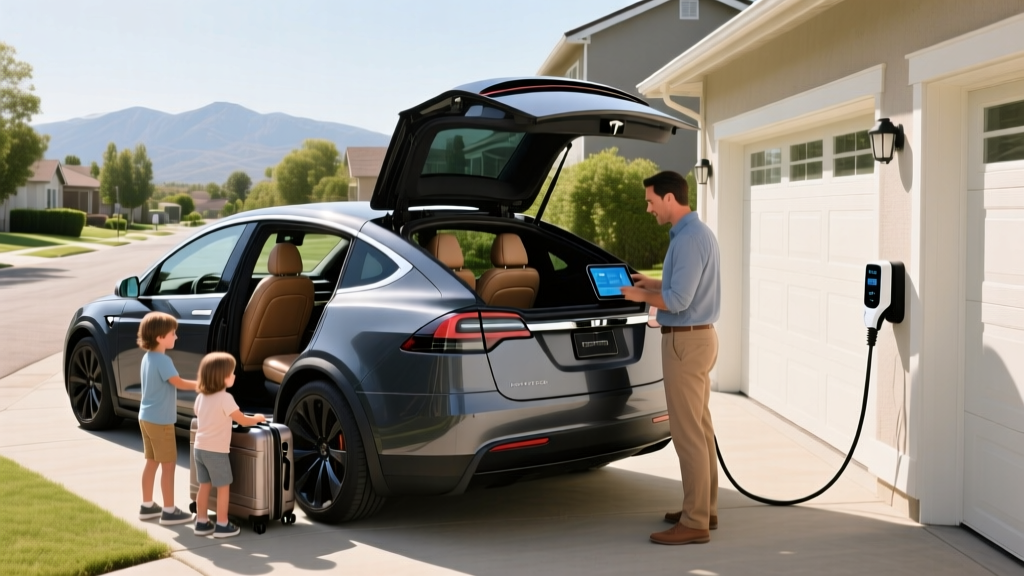
Home charging access is the single biggest variable in Mach-E ownership satisfaction. Here is what each charging level delivers:
| Level | Power (kW) | Miles Added per Hour | Full Charge Time (91 kWh) | Where |
|---|---|---|---|---|
| Level 1 (120V outlet) | 1.4 kW | ~3 mi/hr | ~65 hours | Any standard outlet |
| Level 2 (240V, 48A) | 10.5 kW | ~28 mi/hr | ~9 hours | Home garage, workplace |
| DC Fast (150 kW peak) | 150 kW | ~240 mi/hr (peak) | 10–80% in ~36 min | Public stations (EA, etc.) |
Home Level 2 installation cost breakdown:
| Item | Typical Cost Range |
|---|---|
| Level 2 charger (Ford Mobile Power Cord or ChargePoint Home Flex) | $400–$700 |
| Electrician labor (240V/50A circuit, 20–40 ft run) | $800–$2,000 |
| Electrical permit | $50–$200 |
| Panel upgrade (if 100A service needs 200A) | $1,500–$3,500 |
| Total (no panel upgrade) | $1,250–$2,900 |
| Total (with panel upgrade) | $2,750–$6,400 |
Always hire a licensed electrician for a site assessment before purchasing equipment. Your home's existing panel capacity determines whether an upgrade is necessary.
Connector note: The 2025 Mach-E ships with a CCS1 charge port. Ford provides a complimentary NACS adapter for Tesla Supercharger access, which expands the usable fast-charging network significantly. On Electrify America and other CCS-native networks, the Mach-E's 150 kW peak rate is modest compared to Hyundai/Kia's 800V architecture (which peaks at 240+ kW), but adequate for most road trips with 20–30 minute stops every 200 miles.
Tax Credit Eligibility: What You Actually Qualify For
The federal EV tax credit under IRS §30D is not a blanket $7,500. For the 2025 Mach-E, eligibility depends on several moving targets:
- MSRP cap: The Mach-E qualifies as an SUV, so the cap is $80,000 — all trims clear this
- Buyer income cap: AGI must not exceed $150,000 (single), $225,000 (head of household), or $300,000 (joint)
- Battery sourcing: The credit splits into two halves — $3,750 for battery components manufactured in North America, and $3,750 for critical minerals sourced from FTA partners. The Mach-E's final assembly in Cuautitlán, Mexico, and evolving battery supply chain mean the exact credit amount fluctuates by production batch
- Point-of-sale transfer: You can transfer the credit to the dealer at purchase, reducing your out-of-pocket cost immediately rather than waiting for a tax refund
- Lease loophole: Leased Mach-E vehicles may qualify for the full $7,500 commercial credit (§45W) regardless of sourcing rules, passed through as a lease discount
Verify your specific eligibility at IRS.gov and confirm the current credit amount with your Ford dealer before signing.
Myths vs. Facts: The 2025 Electric Mustang
| Myth | Fact |
|---|---|
| "The battery will need replacing in 5 years" | Ford warranties the battery for 8 years/100,000 miles with a 70% capacity retention threshold. Real-world NMC degradation data from similar packs shows ~8–12% loss over 8 years with normal use. Full replacement costs $12,000–$18,000 if out of warranty. |
| "You can't road-trip an EV" | With 290+ miles of range and CCS/NACS adapter access to 5,000+ DC fast chargers nationally, a Mach-E road trip requires a 25-minute stop every 3 hours — comparable to gas-car rest breaks. |
| "EVs are worse in winter" | Range drops 20–35% in sub-freezing temps, but the Mach-E's available heat pump and battery preconditioning mitigate this. Remote cabin preheating while plugged in uses grid power, not battery. |
| "Charging takes too long" | Home Level 2 charging overnight (9 hours for a full charge) is faster than any gas station visit when measured against your sleep. DC fast charging adds ~200 miles in 30 minutes on road trips. |
| "It's not a real Mustang" | Subjective, but the GT trim does 0–60 in 3.8 seconds (faster than a Mustang GT V8) and has a lower center of gravity. It's a different interpretation of performance, not a lesser one. |
Ownership Realities: What First-Time EV Buyers Should Know
Buying your first EV involves adjustments that no spec sheet fully captures:
Charging deserts are real. If you live in a rural area or apartment without charging access, the Mach-E's 320-mile range still requires planning. Map your regular routes against public charging infrastructure before committing. Relying on Level 1 (120V) alone means adding only ~30 miles overnight — insufficient for most daily drivers.
Insurance costs more. EV insurance premiums run 10–20% higher than comparable gas vehicles due to higher repair costs and battery replacement risk. Get quotes from multiple carriers before purchasing.
Tire wear accelerates. The Mach-E's instant torque and heavier weight (4,500–5,000 lbs depending on trim) wear tires 20–30% faster than a gas crossover. Budget for replacement every 25,000–35,000 miles. Ford specifies EV-rated tires with higher load ratings.
Depreciation is steeper. EVs have depreciated faster than gas vehicles in recent years, partly due to Tesla-initiated price cuts and rapid technology improvements. The Mach-E holds approximately 45–50% of its value at three years, compared to 55–60% for a gas Mustang. If you plan to sell within three years, leasing may be financially smarter.
Software updates change the car. Ford's SYNC 4A system receives over-the-air updates that can add features, improve efficiency, or alter the driving experience. This is an advantage over gas vehicles, but also means the interface you test-drive may evolve.
Decision Framework: Should You Buy the 2025 Electric Mustang?
Buy the 2025 Mach-E if:
- You have home or workplace Level 2 charging access
- Your daily driving is under 250 miles (covering 95%+ of American drivers)
- You want a sporty EV SUV with genuine performance (3.8s GT) and room for a family
- You qualify for at least $3,750 in federal tax credits
- You value low running costs and plan to keep the vehicle 4+ years
- You want Tesla Supercharger access via the included NACS adapter
Consider a gas Mustang, hybrid, or different EV if:
- You live in an apartment or area without reliable charging (consider a PHEV like the Ford Escape PHEV instead)
- You regularly tow more than 1,500 lbs (the Mach-E is rated for only 1,500 lbs max; look at the F-150 Lightning or Rivian R1S)
- You take frequent 500+ mile road trips through areas with sparse charging infrastructure
- You want a two-door coupe with traditional Mustang styling and exhaust sound
- You plan to sell within 2–3 years (steeper EV depreciation hurts short-term ownership)
- Your budget is under $35,000 (consider a used Mach-E, which may qualify for the separate $4,000 used-EV credit under §25E)
Frequently Asked Questions
Is the 2025 electric Mustang actually called the Mach-E?
Yes. Ford officially names it the Mustang Mach-E. There is no two-door electric Mustang coupe in the 2025 lineup. The Mach-E is a five-door electric crossover that shares the Mustang brand but not the body style of the gas Mustang.
How long does the Mach-E battery last?
Ford warranties the high-voltage battery for 8 years or 100,000 miles, whichever comes first, guaranteeing at least 70% of original capacity. Industry data from similar NMC packs suggests 85–92% capacity retention at 100,000 miles under normal use. Full battery replacement, if needed out of warranty, costs approximately $12,000–$18,000 including labor.
Can I charge the 2025 Mach-E at Tesla Superchargers?
Yes. Ford provides a NACS adapter that allows the CCS-equipped Mach-E to charge at Tesla Supercharger stalls. This adds roughly 20,000+ additional fast-charging locations to your network. Charging speed remains limited to the Mach-E's 150 kW peak rate.
What is the real-world range of the 2025 electric Mustang?
The EPA rates the Premium ER RWD at 320 miles. In real-world highway driving at 75 mph, expect 265–280 miles. In cold weather below 30°F, expect 220–250 miles. City and suburban driving with regenerative braking can approach or match the EPA number. The GT AWD trim's 290-mile EPA rating drops to roughly 230–250 miles on the highway.
Is the Mach-E cheaper to own than a gas Mustang?
Over five years and 75,000 miles, the Mach-E Premium ER RWD and Mustang EcoBoost Coupe reach approximate cost parity ($53,000–$56,000 total), with the Mach-E saving on fuel and maintenance but costing more in insurance and initial purchase. The Mach-E pulls ahead significantly in years 6–10 as maintenance savings compound and fuel savings accumulate.
Does the 2025 Mach-E qualify for the $7,500 federal tax credit?
Possibly, but it depends on the specific vehicle's battery sourcing and your income. Under current IRS §30D rules, the credit splits into two $3,750 halves based on battery component manufacturing and critical-mineral sourcing. Many 2025 Mach-E vehicles qualify for at least $3,750. Leasing may unlock the full $7,500 through the commercial clean vehicle credit. Always verify with your dealer and a tax professional before relying on the credit.