The 2025 Electric Challenger: What Buyers Actually Need to Know
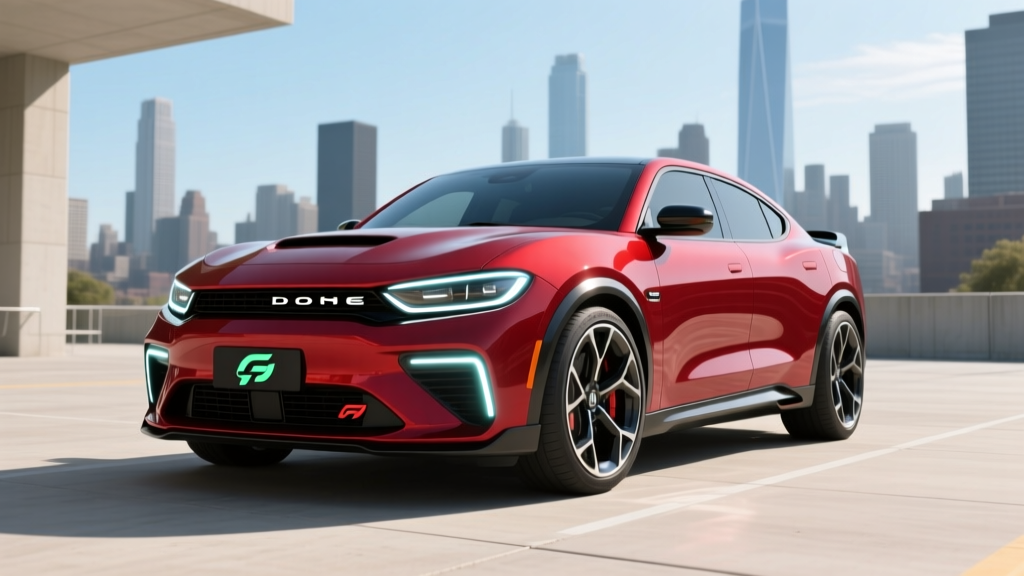
There is no production "2025 Electric Challenger" you can buy today. Dodge retired the Challenger nameplate after the 2023 model year and replaced its two-door muscle lineup with the Dodge Charger Daytona EV, which began customer deliveries in early 2025 as a 2025 model-year vehicle. If you searched for a "2025 electric challenger," you're looking for the Charger Daytona — the spiritual successor built on Stellantis' STLA Large platform. The R/T trim starts around $51,990 (before incentives), delivers an EPA-estimated ~317 miles of range, and produces 496 hp. The Scat Pack bumps output to 670 hp with a 3.3-second 0–60 mph time but sacrifices range to roughly 260 miles. Below, we break down the real ownership math, charging logistics, and how this electric muscle car stacks up against the gas V8 Challengers it replaces.
Specs That Matter: Dodge Charger Daytona EV at a Glance
Before we get into ownership costs, here are the hard numbers for the two trims currently available. All figures reflect the 2025 model year as delivered to US customers.
| Specification | Charger Daytona R/T | Charger Daytona Scat Pack |
|---|---|---|
| Base MSRP | $51,990 | $61,990 |
| Drivetrain | Dual-motor AWD | Dual-motor AWD |
| Horsepower | 496 hp (with Direct Connection Stage 1) | 670 hp (with Direct Connection Stage 2) |
| 0–60 mph | 4.7 seconds | 3.3 seconds |
| Battery (usable) | ~92 kWh, NMC chemistry | ~92 kWh, NMC chemistry |
| EPA Range (est.) | ~317 miles | ~260 miles |
| Max DC Fast Charge | ~175 kW peak | ~175 kW peak |
| 10–80% DC Charge | ~27 minutes | ~27 minutes |
| Level 2 (240V) Charge Rate | ~11 kW | ~11 kW |
| Battery/Powertrain Warranty | 8 years / 100,000 miles | 8 years / 100,000 miles |
Real-world range caveat: The 317-mile EPA figure for the R/T assumes mixed driving. Expect ~250–275 miles on sustained highway trips at 70+ mph, and potentially ~200–230 miles in sub-freezing winter conditions. The Scat Pack's 260-mile EPA estimate drops more aggressively — plan for ~190–210 miles on a cold highway run. Aggressive acceleration (tempting with 670 hp) will compress range further.
EV vs. Gas Challenger: The Honest Comparison
The Charger Daytona replaces the Challenger R/T (5.7L Hemi V8) and Challenger Scat Pack (6.4L Hemi V8). Here's how the old and new stack up on the metrics buyers actually care about.
| Metric | 2023 Challenger R/T (Gas) | 2025 Charger Daytona R/T (EV) | 2023 Challenger Scat Pack (Gas) | 2025 Charger Daytona Scat Pack (EV) |
|---|---|---|---|---|
| MSRP (base) | ~$43,000 | $51,990 | ~$49,000 | $61,990 |
| Horsepower | 375 hp | 496 hp | 485 hp | 670 hp |
| 0–60 mph | ~5.0 sec | 4.7 sec | ~4.2 sec | 3.3 sec |
| Fuel/Energy Cost per Mile | ~$0.18 (gas, $3.50/gal, 19 MPG combined) | ~$0.05 (home charging, $0.14/kWh) | ~$0.20 (gas, $3.50/gal, 17 MPG combined) | ~$0.06 (home charging, $0.14/kWh) |
| Annual Fuel/Energy (12K mi) | ~$2,160 | ~$600 | ~$2,400 | ~$720 |
| Annual Maintenance (est.) | ~$600 | ~$200 | ~$650 | ~$200 |
| Range / Tank | ~370 mi (18.5-gal tank) | ~317 mi (EPA) | ~330 mi (18.5-gal tank) | ~260 mi (EPA) |
| "Refuel" Time | ~5 minutes | ~27 min (10–80% DC) | ~5 minutes | ~27 min (10–80% DC) |
The EV Charger Daytona wins on acceleration, per-mile cost, and maintenance. The gas Challenger wins on range per fill-up, refueling speed, and lower upfront price. Neither is universally better — your driving patterns decide.
Real Ownership Costs: 5-Year Breakdown
Sticker price is only the opening bid. Here's what five years and 60,000 miles actually costs, comparing the Charger Daytona R/T EV against the last gas Challenger R/T. Assumes 12,000 miles/year, $0.14/kWh home electricity, $3.50/gallon gas, and no major battery issues under warranty.
| Cost Category | Charger Daytona R/T (EV) | 2023 Challenger R/T (Gas) |
|---|---|---|
| Purchase Price (MSRP) | $51,990 | $43,000 |
| Federal Tax Credit (§30D) | Up to $7,500 (eligibility varies) | $0 |
| Effective Purchase Price | ~$44,490 | $43,000 |
| Fuel/Energy (5 yr) | ~$3,000 | ~$10,800 |
| Maintenance (5 yr) | ~$1,000 | ~$3,000 |
| Insurance (5 yr, est.) | ~$12,000 | ~$9,500 |
| Home Charger Install (L2) | ~$1,200 | $0 |
| 5-Year Total | ~$61,690 | ~$66,300 |
Key takeaway: The EV breaks even or pulls slightly ahead over five years, primarily because of the massive fuel savings ($7,800 less in energy) and reduced maintenance (no oil changes, fewer brake replacements due to regenerative braking). However, this assumes you qualify for the full §30D credit and charge primarily at home. Without the credit, or if you rely on DC fast charging at $0.35–$0.50/kWh, the math shifts back toward gas.
§30D Federal Tax Credit: Current Eligibility Rules
The Charger Daytona EV may qualify for up to $7,500, but you must meet ALL of the following (per IRS §30D guidelines):
- Income caps: AGI ≤ $150,000 (single), $225,000 (head of household), $300,000 (joint)
- MSRP cap: Vehicle MSRP must not exceed $55,000 for sedans (the R/T qualifies; the Scat Pack at $61,990 likely does NOT unless reclassified)
- Battery sourcing: Critical minerals and battery components must meet phased domestic-content thresholds (check the specific VIN on fueleconomy.gov)
- Point-of-sale transfer: You can apply the credit as a down-payment reduction at the dealer instead of waiting for tax filing
- Assembly: Final assembly must be in North America (the Charger Daytona is assembled in Brampton, Ontario — qualifies)
Always confirm your specific eligibility with a tax professional and verify the VIN's credit status before purchase. Rules change and vary by build date.
Charging at Home and on the Road: What to Expect
The Charger Daytona's ~175 kW peak DC fast-charge rate is competent but not class-leading. Here's what charging actually looks like in practice.
| Charging Level | Power (kW) | Miles Added per Hour | Typical Use Case |
|---|---|---|---|
| Level 1 (120V outlet) | ~1.4 kW | ~4–5 mi/hr | Emergency/overnight trickle; adds ~50 mi in 12 hours |
| Level 2 (240V, 48A home charger) | ~11 kW | ~35–40 mi/hr | Daily home charging; full charge in ~9 hours |
| DC Fast Charge (peak) | ~175 kW | ~500+ mi/hr (at peak) | Road trips; 10–80% in ~27 minutes |
Charging curve reality: The 175 kW peak only holds between roughly 10–40% state of charge. From 40–60%, expect ~120–140 kW. From 60–80%, the rate drops to ~80–100 kW. Above 80%, it tapers sharply to protect the NMC battery — charging from 80–100% can take as long as 10–80%. This is standard behavior for NMC chemistry, but it means your "27-minute" charge is really a 10–80% stop, not a full fill.
Home charging setup: Most Charger Daytona owners will want a Level 2 home charger (240V, 48-amp circuit on a 60-amp breaker). Budget $800–$2,000 for the charger unit and professional installation, assuming your electrical panel has capacity. If you need a panel upgrade (common in older homes), add $1,500–$3,000. A licensed electrician should assess your setup before purchase.
Public charging costs: Networks like Electrify America and EVgo typically charge $0.35–$0.50/kWh for DC fast charging. A 10–80% charge (~65 kWh) at $0.45/kWh costs roughly $29 — comparable to filling a gas tank but slower. Frequent DC fast charging also accelerates battery degradation slightly, so home Level 2 should be your primary routine.
Common Misconceptions About the Electric Muscle Car
| Myth | Fact |
|---|---|
| "It's not a real muscle car without a V8 rumble." | Dodge includes a "Fratzonic" exhaust sound system that generates synthetic engine-like sounds through external speakers. It's divisive — some owners love it, others turn it off. The 670-hp Scat Pack's 3.3-second 0–60 time is undeniably muscle-car performance, regardless of powertrain. |
| "The battery will need replacing in 5 years." | Modern NMC batteries with active thermal management (like the Charger Daytona's) typically retain 85–90% capacity after 100,000 miles. Stellantis warranties the battery for 8 years/100,000 miles with a capacity retention threshold. Real-world degradation data from similar platforms shows ~1–2% loss per year under normal use. |
| "I can't take road trips — charging takes too long." | A 27-minute 10–80% stop every ~200 miles (Scat Pack) or ~250 miles (R/T) is manageable with route planning. Apps like A Better Routeplanner let you pre-plan DC fast stops. It's more time than a gas fill-up, but most drivers combine it with food/restroom breaks. |
| "EVs are worse in cold weather." | Range drops 20–35% in sub-freezing temperatures due to battery chemistry and cabin heating demands. The Charger Daytona includes a heat pump to mitigate this. Preconditioning the battery while plugged in (using the Dodge app) recovers significant range and improves charging speed. |
| "I'll save money no matter what." | Savings depend on your electricity rate, driving patterns, tax credit eligibility, and insurance costs. EV insurance premiums run 15–25% higher than comparable gas cars. If you can't charge at home and pay premium DC fast-charging rates, your per-mile cost advantage narrows substantially. |
Decision Framework: Is the Charger Daytona EV Right for You?
Choose the Charger Daytona R/T (EV) if:
- You have reliable Level 2 home charging access (garage or driveway with 240V)
- Your daily commute is under 80 miles round-trip (easily covered by the 317-mile range)
- You take road trips 4 or fewer times per year and can plan DC fast-charge stops
- You qualify for the §30D tax credit (income under caps, R/T under $55K MSRP)
- You want muscle-car acceleration with lower per-mile operating costs
- You live in a moderate or warm climate (cold-weather range loss is less punishing with 317 mi to start)
Choose a used gas Challenger or a different vehicle if:
- You lack home charging access and your area has sparse public DC fast chargers
- You regularly drive 300+ miles between stops in rural areas (charging infrastructure gaps exist)
- You live in a consistently cold climate and need maximum range reliability (consider a PHEV instead)
- The Scat Pack is your target trim and you need the §30D credit (MSRP likely exceeds the $55K sedan cap)
- You prioritize lowest upfront cost above all else (a used V8 Challenger is $25K–$35K)
Consider a plug-in hybrid alternative if:
- You want electric daily commuting but gas-powered road trip freedom
- You're not ready to commit to full EV charging logistics
- Look at the upcoming Charger Daytona inline-six turbo (gas) variant, expected for the 2026 model year, as a bridge option
What First-Time EV Buyers Must Know Before Ordering
If the Charger Daytona is your first electric vehicle, these ownership realities aren't always obvious at the dealership:
- Install your home charger BEFORE delivery. Scheduling an electrician can take 2–6 weeks depending on your area. A 48-amp Level 2 charger on a dedicated 60-amp circuit is ideal. Verify your panel has 60 amps of spare capacity first.
- Download the Dodge app and learn preconditioning. Scheduling your Charger Daytona to warm its battery while plugged in before a DC fast charge or a cold morning commute significantly improves charging speed and range.
- Understand the 80% daily charge recommendation. NMC batteries last longest when daily charging is limited to 80% state of charge. Charge to 100% only before long trips. The infotainment system lets you set a charge limit.
- Budget for higher insurance. Get quotes before ordering. EV insurance for performance vehicles like the Charger Daytona can run $2,200–$3,000/year depending on your profile — significantly more than the gas Challenger.
- Plan your first road trip with a charging app. Use A Better Routeplanner or PlugShare to identify reliable DC fast chargers along your route. Not all chargers deliver their advertised kW — read user reviews for real-world reliability data.
- Verify §30D eligibility for your specific VIN. Battery sourcing requirements change throughout the year. Confirm on fueleconomy.gov that the exact vehicle you're ordering qualifies before signing.
Frequently Asked Questions
Is there a 2025 Dodge Challenger EV?
No. Dodge discontinued the Challenger nameplate after 2023. The electric muscle car successor is the 2025 Dodge Charger Daytona EV, which began deliveries in early 2025. It's available in R/T (496 hp, ~317 mi range) and Scat Pack (670 hp, ~260 mi range) trims.
How much does the 2025 Charger Daytona EV cost after tax credits?
The R/T starts at $51,990 and may qualify for up to $7,500 under §30D, bringing the effective price to ~$44,490 — if you meet income caps and the vehicle's battery sourcing qualifies. The Scat Pack at $61,990 likely exceeds the $55,000 MSRP cap for sedans, making it ineligible for the federal credit. Always verify with the IRS and your dealer.
What is the real-world range of the Charger Daytona EV?
The R/T's EPA estimate is ~317 miles. Real-world highway driving at 70+ mph yields approximately 250–275 miles. In cold weather (below 32°F), expect 200–230 miles. The Scat Pack's ~260-mile EPA estimate drops to ~190–210 miles in similar cold/highway conditions.
How long does it take to charge the Charger Daytona at home?
On a Level 2 home charger (240V, ~11 kW), a full charge from near-empty takes approximately 9 hours. Most owners plug in overnight and wake up to a full battery. On a standard 120V outlet (Level 1), a full charge takes 60+ hours — practical only for emergencies or very low daily mileage.
Is the Charger Daytona faster than a gas Challenger Scat Pack?
Yes, significantly. The electric Scat Pack's 3.3-second 0–60 mph time beats the gas 6.4L Scat Pack's ~4.2-second time by nearly a full second. Electric motors deliver instant torque with no gear shifts. However, the gas Scat Pack offers greater range per fill-up (~330 miles vs. ~260 miles EPA) and faster refueling.
Will the Charger Daytona battery need to be replaced?
Under normal use, the NMC battery should retain 85–90% of its original capacity at 100,000 miles. Stellantis covers the battery for 8 years/100,000 miles. Full battery replacement (if needed out of warranty) is estimated at $15,000–$22,000 based on current NMC pack pricing, though costs are trending downward. Most owners will never need a replacement.
Can I tow with the Charger Daytona EV?
Dodge has not published an official towing rating for the Charger Daytona EV at launch. The STLA Large platform is engineered for towing capability, but until Stellantis certifies a rating, owners should not assume towing capacity comparable to the gas Challenger (which was not a tow-rated vehicle either).