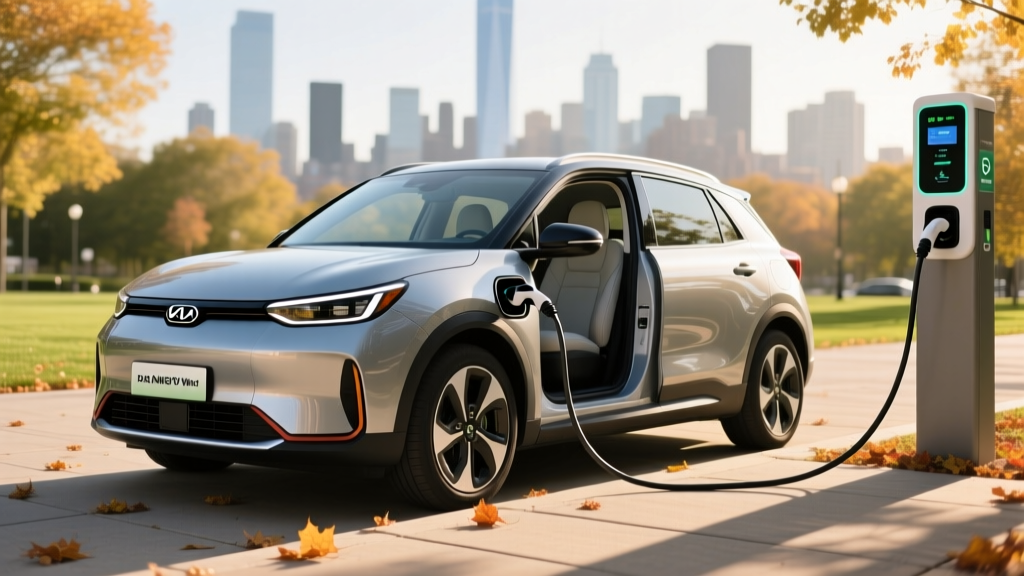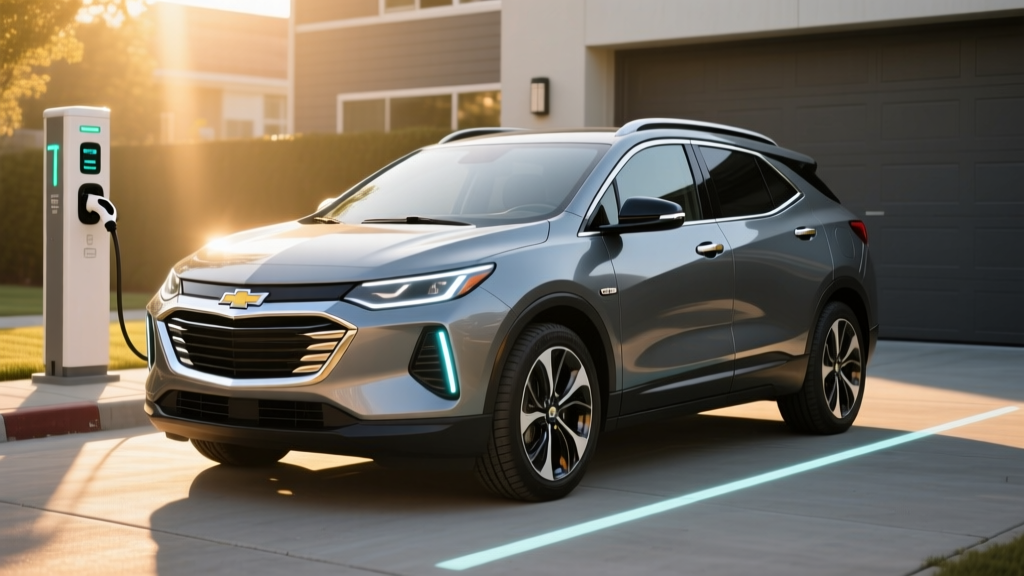
The 2025 Chevrolet Equinox EV is the affordable electric SUV that mainstream buyers have been waiting for. Starting near $33,000 before incentives, it undercuts rivals like the Hyundai Ioniq 5 and Tesla Model Y while delivering an EPA-estimated 319 miles of range in its longest-range configuration. But does it hold up under real-world conditions, and how does its charging performance stack up when you're actually on the road? We break down every spec that matters.
Range and Efficiency: EPA Numbers vs. Reality
Real-World Expectation: ~270–290 miles in mixed highway driving at 70 mph; ~220–240 miles in sub-freezing winter conditions with cabin heat. City driving with regen braking can exceed EPA estimates.
The Equinox EV's range advantage comes from its large 85 kWh usable battery pack and relatively efficient powertrain. The front-wheel-drive 3LT model achieves an EPA-rated 97 MPGe combined (34 kWh/100 mi), which is competitive for the segment though not class-leading — the Ioniq 5 RWD manages 114 MPGe combined thanks to lighter weight and a more aerodynamic profile.
On a 200-mile highway loop at sustained 70–75 mph speeds, expect to consume roughly 38–42 kWh/100 mi, which translates to around 270 miles of practical range before you'd want to stop. In cold weather (below 32°F), battery chemistry and cabin heating draw reduce usable range by 15–25%, a reality that applies to every NMC-based EV in this price class. The Equinox EV comes equipped with a heat pump on all trims, which helps mitigate winter losses compared to resistance heating.
Battery, Platform, and Chemistry
| Specification | Details |
|---|---|
| Platform | GM Ultium (BEV3) |
| Usable Battery Capacity | ~85 kWh |
| Gross Battery Capacity | ~89 kWh |
| Chemistry | NMC (Nickel Manganese Cobalt) |
| Thermal Management | Active liquid cooling/heating with heat pump |
| Drivetrain Options | FWD (single motor) or AWD (dual motor) |
The Equinox EV rides on GM's Ultium platform, sharing its fundamental battery architecture with the larger Blazer EV and GMC Sierra EV. The NMC chemistry provides higher energy density than LFP alternatives, enabling the 319-mile range from a pack that fits within a compact SUV footprint. The trade-off is that NMC cells degrade slightly faster over hundreds of charge cycles compared to LFP, though GM's battery management system maintains a top/bottom buffer to protect long-term health.
GM recommends charging to 80% for daily use and reserving 100% charges for road trips — standard practice for NMC packs. The roughly 4 kWh buffer between gross and usable capacity protects the cells from deep discharge and overcharge stress.
Charging Speed: DC Fast Charge and Home Level 2
| Charging Level | Power | Speed / Time |
|---|---|---|
| Level 1 (120V household) | ~1.4 kW | ~3–4 miles per hour |
| Level 2 (240V home) | 11.5 kW (48A) | ~34 miles per hour; full charge in ~9 hours |
| DC Fast Charge (peak) | 150 kW | 10–80% in ~42 minutes |
| DC Fast Charge (sustained) | ~95 kW avg (10–80%) | ~180 miles added in 30 minutes |
The Equinox EV's 150 kW peak DC fast-charge rate is the area where budget-minded engineering shows. Competitors like the Hyundai Ioniq 5 (240 kW peak with 800V architecture) and Tesla Model Y (~250 kW) replenish significantly faster on road trips. The Equinox EV's charge curve peaks briefly near 150 kW between roughly 10–25% state of charge, then tapers steadily — averaging around 95 kW through the 10–80% window. That translates to roughly 42 minutes at a 150+ kW stall to go from 10% to 80%.
For daily use, home Level 2 charging is where most owners will spend 95% of their charging time. The Equinox EV's 11.5 kW onboard charger is solid for the segment, adding about 34 miles of range per hour of charging. A full overnight session from 20% to full takes roughly 7–9 hours. The vehicle ships with a dual-level charging cord capable of Level 1 (120V) and Level 2 (240V) with the appropriate outlet, though a dedicated wall-mounted Level 2 station (like a ChargePoint Home Flex or Emporia Level 2) will deliver more reliable daily service.
The Equinox EV uses the CCS1 connector for DC fast charging. GM has committed to transitioning to the NACS (Tesla) connector for future models, and 2025 Equinox EV owners will have access to Tesla Superchargers via a GM-approved adapter (sold separately, ~$225) — a significant network expansion that adds over 15,000 Supercharger stalls to your charging map.
Performance and Driving Dynamics
| Trim / Config | Horsepower | Torque | 0–60 mph | Drivetrain |
|---|---|---|---|---|
| 3LT FWD | 213 hp | 236 lb-ft | ~8.2 sec | Single motor, front |
| 3LT AWD | 288 hp | 343 lb-ft | ~6.5 sec | Dual motor |
| RS Launch Edition AWD | 288 hp | 343 lb-ft | ~6.5 sec | Dual motor |
The Equinox EV is not a performance SUV, and it doesn't pretend to be. The FWD model's 213 hp and 8.2-second 0–60 time are adequate for merging and passing but won't excite anyone coming from a Tesla Model Y Performance. The dual-motor AWD variant is the sweet spot: 288 hp and a 6.5-second sprint provide confident highway acceleration and all-weather traction.
Ride quality is a genuine strength. The Ultium platform's low center of gravity and fully independent suspension deliver composed, quiet highway cruising. Road noise is well-suppressed, and the steering is light and predictable — ideal for commuting rather than canyon carving. Regenerative braking offers multiple levels selectable via steering-wheel paddles, including a one-pedal driving mode that can bring the vehicle to a complete stop without touching the brake pedal.
Towing capacity is rated at 1,500 lbs — sufficient for a small utility trailer but not for boats or campers. This is typical for compact electric SUVs.
Interior, Cargo, and Technology
The Equinox EV's cabin is dominated by a 17.7-inch diagonal infotainment touchscreen — one of the largest standard displays in the segment — paired with an 11-inch digital instrument cluster. The system runs GM's latest Google Built-in infotainment, which integrates Google Maps navigation, Google Assistant voice control, and access to the Google Play Store for apps. Wireless Apple CarPlay and Android Auto are standard across all trims.
Interior space is generous for the compact SUV class:
| Dimension | Equinox EV |
|---|---|
| Front Legroom | 43.1 inches |
| Rear Legroom | 37.7 inches |
| Cargo Volume (rear seats up) | 26.4 cu ft |
| Cargo Volume (rear seats folded) | 57.2 cu ft |
| Front Trunk (Frunk) | Not available |
The lack of a frunk is a notable omission — the Ultium platform packaging in this vehicle does not include front storage. Cargo space behind the rear seats (26.4 cu ft) trails the Tesla Model Y (30.2 cu ft) but beats the Hyundai Ioniq 5 (27.2 cu ft is close). With seats folded, the 57.2 cu ft total is practical for furniture runs and camping gear.
The NHTSA has awarded the Equinox EV a 5-Star Overall Safety Rating. Standard driver-assistance features include Chevy Safety Assist: automatic emergency braking, forward collision alert, lane keep assist, following distance indicator, and IntelliBeam auto high beams. Super Cruise — GM's hands-free Level 2 highway driving system — is available as an option on 3LT trims and standard on the RS. Note that Super Cruise is an SAE Level 2 system requiring driver attention and operates only on pre-mapped divided highways (over 400,000 miles of coverage in the US and Canada).
Pricing, Trims, and Federal Tax Credit
| Trim | Base MSRP | Est. Price After §30D Credit* |
|---|---|---|
| 3LT FWD | $33,600 | ~$26,100 |
| 3LT AWD | $36,600 | ~$29,100 |
| RS FWD | $38,900 | ~$31,400 |
| RS AWD | $41,900 | ~$34,400 |
| Launch Edition AWD | $41,900 | ~$34,400 |
*Federal tax credit estimate. Actual eligibility depends on current-year IRS §30D rules including buyer income caps ($150K single / $300K joint), MSRP caps ($80K for SUVs), battery critical-mineral sourcing, and North American assembly requirements. The credit can be transferred to the dealer at point of sale as an instant rebate. Always verify current eligibility with your tax professional.
The Equinox EV is assembled at GM's Spring Hill, Tennessee plant, and GM has confirmed that qualifying trims meet the North American assembly requirement. Battery sourcing and critical-mineral compliance have been met for the full $7,500 credit on multiple trims as of the 2025 model year, though these requirements tighten annually. Check fueleconomy.gov for the latest IRS-qualified vehicle list before purchasing.
Destination charges add approximately $1,395. Popular options include the Super Cruise package (~$2,500), panoramic sunroof, and upgraded wheels. A well-equipped 3LT AWD with Super Cruise will land around $42,000–$44,000 before the credit.
Warranty and Ownership Costs
GM backs the Equinox EV's battery pack with an 8-year/100,000-mile limited warranty, guaranteeing the pack will retain at least 70% of its original capacity during the coverage period. The powertrain warranty mirrors this at 8 years/100,000 miles, and the basic bumper-to-bumper coverage is 3 years/36,000 miles. These terms are standard for the segment and align with Hyundai, Tesla, and Ford EV warranties.
Long-term ownership economics favor the Equinox EV over a comparable gas-powered Equinox. At a national average electricity cost of ~$0.16/kWh, charging costs approximately $0.054 per mile (based on 34 kWh/100 mi). A gas Equinox AWD at 26 MPG combined and $3.40/gallon costs ~$0.131 per mile. Over 15,000 annual miles, that's roughly $1,155 in annual fuel savings. Over five years, combined fuel and maintenance savings (no oil changes, reduced brake wear from regen) can total $7,000–$9,000 depending on local electricity and gas prices.
Insurance premiums for the Equinox EV tend to run 10–18% higher than the gas Equinox, reflecting higher repair costs for EV-specific components. Get quotes before purchasing to budget accurately.
How It Compares: Equinox EV vs. Key Rivals
✅ Choose the Equinox EV If:
- You want 300+ miles of range under $35,000 (after credit)
- You prefer a traditional SUV driving position and ride comfort
- Super Cruise hands-free highway driving matters to you
- You value the largest infotainment screen in the segment
- You want access to Tesla Superchargers via adapter
❌ Look Elsewhere If:
- Fast DC charging is your top priority (Ioniq 5 charges in ~18 min)
- You need a frunk or maximum cargo volume (Model Y wins)
- You want sporty, engaging handling (Ioniq 5 or Model Y)
- You frequently tow heavy loads (1,500 lb limit)
- You prefer LFP battery chemistry for 100% daily charging
Against the Hyundai Ioniq 5, the Equinox EV trades charging speed for range and price. The Ioniq 5 SE RWD starts at ~$42,400 and offers 303 miles of range, but its 800V architecture delivers a 10–80% charge in roughly 18 minutes at a 350 kW charger — more than twice as fast as the Equinox EV.
Against the Tesla Model Y, the Equinox EV is cheaper after incentives and offers a more conventional interior with physical controls and a familiar SUV layout. The Model Y counters with superior Supercharger integration (no adapter needed), more cargo space, a frunk, faster charging, and better performance — but at a higher starting price and with Tesla's minimalist interior that polarizes buyers.
The Ford Mustang Mach-E is sportier to drive and offers BlueCruise hands-free capability, but its base range (250 miles on Select RWD) and higher starting price make the Equinox EV a more practical value play for range-focused buyers.
Verdict: Who Should Buy the 2025 Equinox EV?
The 2025 Chevrolet Equinox EV is the value-oriented electric SUV for pragmatic buyers. If your daily routine involves a commute under 80 miles round-trip with home Level 2 charging, and you take road trips a few times a year where 40-minute charge stops are acceptable, this vehicle checks every box at a price that's hard to match.
It's best suited for: suburban families upgrading from a gas compact SUV, commuters who want low running costs without range anxiety, and buyers who want to go electric but find the Model Y too expensive or too unconventional. It's less ideal for high-mileage road warriors who prioritize charging speed, or anyone who needs maximum cargo utility.
At an effective price of ~$26,000 after the federal credit for the base 3LT FWD, the Equinox EV makes electrification accessible without compromise on range. That's the headline number, and it's a compelling one.
Frequently Asked Questions
What is the real-world range of the 2025 Equinox EV?
Expect approximately 270–290 miles in mixed highway driving at moderate speeds and temperatures. In winter conditions below freezing, plan for 220–240 miles. City driving with frequent regenerative braking can push range above the 319-mile EPA estimate.
How fast does the Equinox EV charge at home and on the road?
At home on a 240V Level 2 charger, the Equinox EV adds about 34 miles of range per hour (11.5 kW), fully recharging overnight in roughly 9 hours. On DC fast chargers, it peaks at 150 kW and charges from 10–80% in approximately 42 minutes.
Does the 2025 Equinox EV qualify for the $7,500 federal tax credit?
Yes, qualifying trims currently meet IRS §30D requirements for the full $7,500 credit, including North American assembly (Spring Hill, TN). Buyer income must not exceed $150,000 (single) or $300,000 (joint), and the MSRP must be under $80,000 (all trims qualify). The credit can be applied as a point-of-sale rebate at the dealer. Verify current-year eligibility at fueleconomy.gov and consult a tax professional.
Is the Equinox EV worth it compared to the Tesla Model Y or Ioniq 5?
If your priorities are lowest cost after incentives, 300+ mile range, and traditional SUV comfort, the Equinox EV wins on value. If fast charging speed, maximum cargo space, or sporty handling matter more, the Ioniq 5 or Model Y are stronger choices at a higher price point.
What is the Equinox EV's battery warranty?
GM provides an 8-year/100,000-mile battery and powertrain warranty, guaranteeing at least 70% capacity retention during the coverage period.
Can the Equinox EV use Tesla Superchargers?
Yes, with a GM-approved NACS adapter (sold separately, ~$225), the Equinox EV can access the Tesla Supercharger network, adding over 15,000 fast-charging stalls nationwide to your route planning.
Does the Equinox EV have a front trunk (frunk)?
No. The Equinox EV does not include a front trunk. All storage is in the rear cargo area (26.4 cu ft behind rear seats, 57.2 cu ft with seats folded).