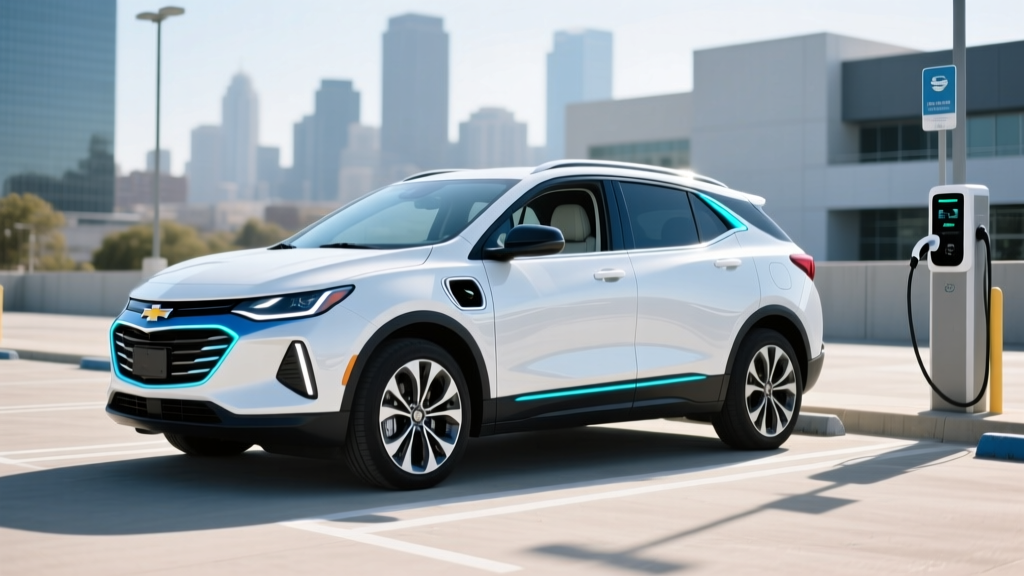
Quick Verdict: Is the 2025 Chevy Equinox EV Worth It?
The 2025 Chevy Equinox electric vehicle is the most affordable long-range electric crossover on the US market. Starting at $33,600 (before incentives), it delivers an EPA-estimated 319 miles of range on FWD trims, DC fast charging up to 150 kW, and qualifies for the full $7,500 federal tax credit under current IRS §30D rules — bringing the effective price below $27,000 for eligible buyers. It's a compelling choice for first-time EV buyers who need practicality over performance. But real-world highway range drops to roughly 250–270 miles, and AWD trims sacrifice about 40 miles of range. Let's break down the exact numbers you need to decide.
Range, Battery, and Efficiency: The Real Numbers
The 2025 Equinox EV uses an 85 kWh usable Ultium battery pack with NMC (nickel manganese cobalt) chemistry, shared across GM's electric lineup. Here's what the EPA says versus what you'll actually experience:
| Spec | FWD (2LT/3LT) | AWD (Launch/RS) |
|---|---|---|
| EPA Range | 319 mi | 285 mi |
| Real-World Highway (70 mph) | ~255–275 mi | ~230–245 mi |
| Cold Weather (20°F, mixed) | ~220–250 mi | ~195–215 mi |
| Efficiency (EPA Combined) | 114 MPGe (29 kWh/100mi) | 105 MPGe (32 kWh/100mi) |
| Battery Capacity (Usable) | 85 kWh (NMC) | |
| Motor Output | 213 hp / 236 lb-ft | 288 hp / 348 lb-ft |
| 0–60 mph | ~8.2 sec | ~6.5 sec |
Charging Speed: Home and DC Fast Charging
Understanding the difference between kW (power — how fast energy flows) and kWh (energy — how much the battery holds) is essential. The Equinox EV's 85 kWh battery holds the energy; the charge rate in kW determines how quickly you refill it.
| Charging Level | Power | Speed (mi/hr added) | Use Case |
|---|---|---|---|
| Level 1 (120V outlet) | ~1.4 kW | ~4 mi/hr | Emergency / overnight trickle |
| Level 2 (240V home) | 11.5 kW (max onboard) | ~34 mi/hr | Daily home charging |
| DC Fast Charge | Up to 150 kW peak | ~170 mi/hr (peak) | Road trips |
DC Fast Charging Reality: Chevrolet rates the Equinox EV at a peak of 150 kW, but like all EVs, it doesn't sustain that rate for the entire session. The charge curve peaks around 20–40% state of charge (SoC) and tapers significantly above 80%. Expect a 10–80% charge in approximately 30–35 minutes at a capable 150+ kW station. Charging from 80–100% can add another 20+ minutes — plan your road trips around 10–80% top-ups for efficiency.
Home Charging Setup: The onboard charger accepts up to 11.5 kW on Level 2, meaning a full 0–100% charge takes roughly 7.5 hours. This requires a 48-amp dedicated circuit (60-amp breaker). A standard Level 2 home charger installation runs $800–$2,000 total (equipment + electrician), depending on panel proximity and local permit costs. If your home has a 100-amp electrical panel, you may need a $1,500–$3,000 panel upgrade to 200 amps — get a quote from a licensed electrician before committing.
EV vs. Gas Equinox: 5-Year Cost Breakdown
The 2025 gas-powered Chevy Equinox starts around $28,600 and gets roughly 26 MPG combined. Let's compare the real ownership costs over 5 years and 75,000 miles, assuming $3.40/gallon gas and $0.14/kWh electricity (national averages).
| Cost Category | 2025 Equinox EV (2LT FWD) | 2025 Equinox Gas (LT FWD) |
|---|---|---|
| Base MSRP | $33,600 | $28,600 |
| Federal Tax Credit (§30D) | –$7,500 (if eligible) | $0 |
| Effective Purchase Price | $26,100 | $28,600 |
| Fuel/Energy (75k mi) | $2,925 (electricity) | $9,808 (gasoline) |
| Maintenance (5 yr) | ~$1,200 | ~$3,800 |
| Insurance (5 yr avg.) | ~$9,500 | ~$7,800 |
| Estimated Depreciation | ~$11,000 | ~$10,500 |
| 5-Year Total Cost | ~$50,725 | ~$60,508 |
Key takeaways: The Equinox EV saves roughly $9,800 over 5 years when the buyer qualifies for the full federal credit and charges primarily at home. The biggest savings come from energy ($6,883 less) and maintenance ($2,600 less — no oil changes, fewer brake replacements thanks to regenerative braking, no transmission fluid). Insurance is typically $300–$400/year higher on EVs due to repair costs and battery replacement risk. Depreciation remains uncertain for newer EVs; GM's Ultium platform is still establishing its resale-value track record.
If you don't qualify for the federal credit (due to income caps or tax liability limitations), the 5-year savings shrink to about $2,300 — still positive, but much tighter. In that case, the EV makes the most financial sense if you drive 15,000+ miles/year and have cheap home electricity (under $0.12/kWh).
Federal Tax Credit: Do You Qualify?
The 2025 Equinox EV is assembled in Spring Hill, Tennessee, and currently qualifies for the full $7,500 federal tax credit under IRS §30D rules. But eligibility isn't automatic — you must meet all of the following:
- Income cap: Modified AGI ≤ $150,000 (single), $225,000 (head of household), or $300,000 (joint) — based on the year of purchase or the prior year, whichever is lower
- MSRP cap: The Equinox EV's MSRP is well under the $80,000 SUV cap — no issue here
- Battery sourcing: Must meet critical minerals and battery component requirements, which shift annually. GM has confirmed 2025 Equinox EV compliance as of early 2025
- Tax liability: The credit is non-refundable — you must owe at least $7,500 in federal income tax to claim the full amount (or use the point-of-sale transfer option introduced in 2024)
Point-of-sale transfer: Since January 2024, you can transfer the credit to the dealer at purchase, reducing your out-of-pocket cost by $7,500 regardless of your tax liability. This effectively turns the credit into an instant rebate. Confirm with your dealer that they're registered for the IRS transfer program before signing.
Note: State and local incentives vary by jurisdiction. Check your state's energy office or the Alternative Fuels Data Center for additional rebates.
Pricing, Trims, and What's Included
The 2025 Equinox EV lineup spans four trims. Here's the pricing and what distinguishes each:
| Trim | MSRP | Drivetrain | EPA Range | Key Features |
|---|---|---|---|---|
| 2LT | $33,600 | FWD | 319 mi | 17.7" touchscreen, Super Cruise ready, heated seats |
| 3LT | $36,400 | FWD | 319 mi | Adds panoramic roof, power liftgate, 360° cameras |
| Launch Edition | $41,900 | AWD | 285 mi | Loaded with tech, unique styling, limited availability |
| RS | $43,400 | AWD | 285 mi | Sport styling, black accents, 21" wheels |
The 2LT FWD at $33,600 is the value play — it delivers the maximum 319-mile range and comes well-equipped. The AWD trims cost $8,000–$10,000 more and give up roughly 34 miles of range for the added traction and 288-hp dual-motor powertrain. For most buyers in mild climates, the FWD 2LT with the tax credit is the clear financial winner.
All trims include GM's 8-year/100,000-mile battery warranty (covering degradation below 70% capacity) and a 3-year/36,000-mile bumper-to-bumper warranty. The Ultium battery is expected to last well beyond the warranty period based on GM's testing data, though long-term real-world degradation figures are still accumulating.
Myths vs. Facts: Common Misconceptions
| Myth | Fact |
|---|---|
| "EV batteries need replacing every few years" | The Ultium battery is warrantied for 8 years/100,000 miles at 70% capacity. Real-world data from similar GM EVs shows ~8–10% degradation over 100k miles. Full replacement (rare) runs $10,000–$15,000 out of warranty. |
| "You can't road-trip an EV" | With 319 miles of range and 150 kW DC fast charging, the Equinox EV can cover 200+ miles between 30-minute charge stops on the growing Supercharger and Electrify America networks. Planning apps like A Better Routeplanner make this straightforward. |
| "EVs are worse in winter" | Range drops 20–30% in freezing temps — real and significant. But preconditioning (warming the battery and cabin while plugged in) mitigates this. The Equinox EV starts reliably in cold weather (no cold-crank issues like gas engines), and regenerative braking performs well on icy roads. |
| "Home charging is too expensive to install" | A basic Level 2 install averages $800–$2,000. Many utilities offer $300–$500 rebates. Over 5 years, home charging at $0.14/kWh costs roughly $2,925 vs. $9,808 for gas — the installation pays for itself in the first year of fuel savings. |
| "The Equinox EV charges as fast as a Tesla" | It doesn't. Tesla's V4 Superchargers deliver 250+ kW to compatible vehicles. The Equinox EV peaks at 150 kW, making 10–80% take ~30–35 minutes vs. ~18 minutes on a Tesla Model Y at a V3 Supercharger. |
Decision Framework: Is the 2025 Equinox EV Right for You?
Choose the 2025 Equinox EV if:
- You have access to home Level 2 charging (garage or driveway with a 240V circuit)
- Your daily commute is under 80 miles round-trip (covers 95%+ of US drivers)
- You qualify for the $7,500 federal tax credit or can use the point-of-sale transfer
- You want an affordable EV with 300+ mile range and don't need sports-car acceleration
- You drive 12,000+ miles/year, where fuel savings compound fastest
- You live in a region with moderate winters or have garage parking for preconditioning
Look elsewhere (gas, hybrid, or a different EV) if:
- You have no access to home or workplace charging and rely solely on public infrastructure — public charging costs $0.30–$0.50/kWh, erasing most fuel savings, and reliability remains inconsistent in many areas
- You regularly drive 300+ miles in a single day in winter conditions — the real-world range drops to ~220 miles, requiring multiple stops
- You need maximum towing — the Equinox EV is rated for 1,500 lbs, less than many gas crossovers
- You want the fastest DC charging in the segment — consider the Hyundai Ioniq 5 (800V architecture, 240 kW peak, 10–80% in ~18 min) at a higher starting price
- Your household income exceeds the §30D caps and you can't benefit from the credit — the price premium over the gas Equinox takes much longer to recoup
Frequently Asked Questions
Does the 2025 Chevy Equinox EV qualify for the full $7,500 tax credit?
Yes, as of early 2025, the Equinox EV qualifies for the full $7,500 federal tax credit under IRS §30D. You must meet income caps ($150k single / $300k joint), and the vehicle must meet battery sourcing requirements, which GM has confirmed for 2025 models. The point-of-sale transfer option lets you apply the credit as an instant discount at the dealer. Always verify current eligibility at fueleconomy.gov before purchasing, as sourcing rules can change.
How long does it take to charge the Equinox EV at home?
On a Level 2 home charger (240V, 48 amps), a full 0–100% charge takes approximately 7.5 hours. Most owners plug in overnight and wake up to a full battery every morning. On a standard 120V outlet (Level 1), expect roughly 4 miles of range per hour of charging — sufficient only for emergency use or very low daily mileage.
Is the Equinox EV good for road trips?
It's capable but not class-leading. With 319 miles of EPA range (FWD) and 150 kW DC fast charging, you can drive 200–240 highway miles, then add ~170 miles of range in 30 minutes. That's adequate for most road trips with planned stops. However, if you frequently drive long distances, a vehicle with faster charging (like the Ioniq 5 or Tesla Model Y) reduces total trip time noticeably.
What happens if the battery degrades significantly?
GM warranties the Ultium battery for 8 years or 100,000 miles against capacity loss below 70%. If degradation exceeds that threshold within the warranty period, GM will repair or replace the battery at no cost. Outside of warranty, a full Ultium battery replacement is estimated at $10,000–$15,000, though module-level repairs may cost significantly less. Real-world degradation data from GM's existing Ultium vehicles (Lyriq, Blazer EV) suggests roughly 8–12% loss over the first 100,000 miles under normal use.
Can I charge a Chevy Equinox EV at a Tesla Supercharger?
GM has been transitioning to the NACS (North American Charging Standard) connector. For 2025, Equinox EV models come with a NACS charge port, granting direct access to Tesla's Supercharger network (now open to non-Tesla EVs at many locations). If you encounter a CCS-only public charger, GM provides a CCS-to-NACS adapter. This dual-network access is a significant practical advantage for road-trip charging.
How does the Equinox EV compare to the gas Equinox in daily driving?
The EV is quieter, smoother, and has instant torque for confident merging. The FWD model makes 213 hp (adequate, not thrilling), while AWD bumps that to 288 hp. Regenerative braking enables one-pedal driving in most city conditions, reducing brake wear. The trade-off: the EV is roughly 500 lbs heavier, which you'll notice on tight corners, and winter range requires more planning than a gas car's 400-mile tank.