Quick Verdict: The Performance SUV That Charges Like a Daily Driver
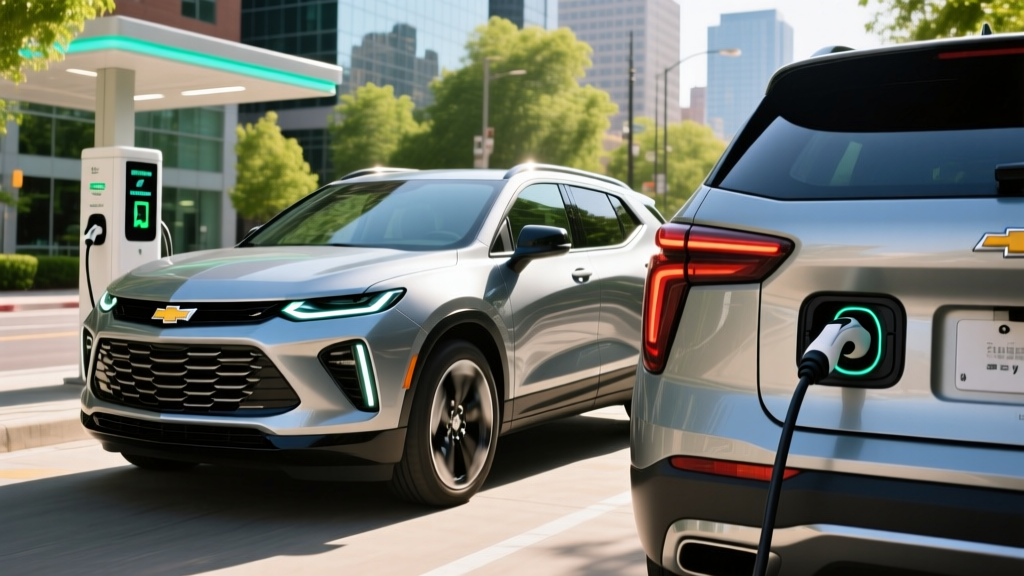
The 2025 Chevy Blazer EV SS is the range-topping trim in Chevrolet's Ultium-based midsize electric SUV lineup, and it makes a compelling case for buyers who want muscle-car acceleration without sacrificing everyday practicality. With 615 horsepower, a dual-motor AWD layout, and a 102 kWh usable battery pack, the SS trim delivers a 0-60 mph time of under 4.0 seconds while still offering an EPA-estimated 290 miles of range. But how does it hold up once you leave the spec sheet and hit the highway in January? We break down every number that matters — from real-world range and charging curves to tax credit math — so you can decide if the Blazer EV SS earns a spot in your garage.
Range, Battery, and Efficiency: What the EPA Number Doesn't Tell You
The 2025 Blazer EV SS carries a 102 kWh usable lithium-ion battery pack built on GM's Ultium platform using NMC (nickel manganese cobalt) chemistry. This is the same pack architecture found across the Blazer EV lineup and the Cadillac Lyriq, optimized for energy density and sustained power delivery rather than the ultra-long cycle life you'd get from LFP cells.
The EPA rates the Blazer EV SS at 290 miles of combined range. Efficiency comes in at approximately 79 MPGe combined, translating to roughly 42 kWh per 100 miles — a reasonable figure for a 5,800-pound performance SUV, though noticeably thirstier than lighter competitors like the Hyundai Ioniq 5 N or Tesla Model Y Performance.
- EPA sticker: 290 miles combined
- Highway cruising (70-75 mph, mild weather): ~240-260 miles
- City/suburban mixed driving: ~270-285 miles (regen recovers more energy in stop-and-go)
- Cold weather (below 32°F, highway): ~200-230 miles — expect 20-30% range loss without preconditioning
- Towing (max 1,500 lbs rated): ~160-180 miles — not a tow-focused platform
The Blazer EV SS includes a heat pump for cabin climate efficiency, which helps mitigate cold-weather range loss compared to resistive heating systems. However, the large frontal area and performance-tire rolling resistance work against highway efficiency. Plan charging stops accordingly on road trips exceeding 200 miles in winter conditions.
| Spec | Value |
|---|---|
| EPA Range | 290 miles (combined) |
| Battery (usable) | 102 kWh, NMC chemistry |
| Efficiency | 79 MPGe / ~42 kWh/100 mi |
| Drivetrain | Dual-motor AWD |
| Horsepower | 615 hp (555 hp standard, WOW mode unlocks 615) |
| 0-60 mph | ~3.9 seconds (WOW mode) |
| Max DC Fast Charge | 190 kW peak |
| 10-80% DC Charge Time | ~32 minutes |
| Level 2 Home Charge Rate | 11.5 kW (~31 miles/hr) |
| Cargo Volume | 27.5 cu ft (rear seats up) / 56.5 cu ft (seats folded) |
| Rear Legroom | 38.4 inches |
| Towing Capacity | 1,500 lbs |
| Battery Warranty | 8 years / 100,000 miles |
| Base MSRP | $65,900 (SS 2LT AWD) |
Charging Speed: DC Fast Charging and Home Setup
The Blazer EV SS uses the CCS1 (Combined Charging System) connector for DC fast charging — though GM has confirmed that 2025 models will transition to the NACS (Tesla Supercharger) port on vehicles built later in the model year. If you're ordering now, confirm with your dealer which port your build will receive. A CCS-to-NACS adapter is available for accessing Tesla Superchargers on CCS-equipped vehicles.
On DC fast charging, the SS peaks at 190 kW. In real-world testing, expect the following charge curve behavior:
| Charging Level | Power / Rate | Speed |
|---|---|---|
| Level 1 (120V household) | ~1.4 kW | ~3-4 miles per hour |
| Level 2 (240V home, 48A) | 11.5 kW | ~31 miles per hour (full charge in ~9 hrs) |
| DC Fast (50 kW station) | 50 kW | ~130 miles per hour |
| DC Fast (150 kW station) | ~150 kW sustained | ~380 miles per hour (to ~60% SoC) |
| DC Fast (350 kW station) | 190 kW peak | 10-80% in ~32 minutes |
Charging curve reality check: The 190 kW peak is only sustained between roughly 10-40% State of Charge. Above 60% SoC, the rate tapers to ~100 kW, and above 80% it drops further to ~50 kW to protect battery longevity. This is standard behavior for NMC packs but means a 10-90% session will take closer to 45 minutes — plan road-trip stops around the 10-80% sweet spot for maximum time efficiency.
For home charging, the onboard charger accepts up to 11.5 kW on Level 2. With a properly installed 240V/60A circuit and a hardwired Level 2 station (such as the ChargePoint Home Flex or Emporia Vue), you'll recover the full 290-mile range overnight in approximately 9 hours. Most owners who charge nightly from 30-80% SoC will need only 4-5 hours on the plug.
Performance and Driving Dynamics
The Blazer EV SS is positioned as the performance flagship of the lineup. Its dual-motor all-wheel-drive system produces 555 horsepower in standard driving, but activating Wide Open Watt (WOW) mode — Chevy's launch-control-style feature — temporarily unlocks 615 hp and drops the 0-60 mph time to approximately 3.9 seconds. That puts it in the same acceleration bracket as the Tesla Model Y Performance (3.5s) and the Ford Mustang Mach-E GT (3.8s), though the Blazer carries more weight.
Ride quality benefits from GM's multilink rear suspension and standard adaptive dampers on the SS trim. The steering is communicative for an electric SUV, and the regenerative braking system offers adjustable levels including a one-pedal driving mode that can bring the vehicle to a complete stop without touching the brake pedal. Brake feel — a common complaint in early Ultium vehicles — has been improved for the 2025 model year with a more linear pedal transition between regen and friction braking.
On the ADAS front, the Blazer EV SS comes equipped with Chevy Super Cruise availability (standard on SS 2LT, with a 3-year connected services trial). Super Cruise is an SAE Level 2 driver-assistance system — it handles steering, acceleration, and braking on mapped divided highways, but the driver must remain attentive with eyes on the road, monitored by an infrared camera on the steering column. This is not autonomous driving; it's a hands-off, eyes-on system covering over 750,000 miles of compatible roads in North America.
- Only operates on pre-mapped divided highways — not city streets or unmapped roads
- Requires driver attention at all times (SAE Level 2 — not self-driving)
- Automatic lane changes require driver confirmation
- System disengages in construction zones, severe weather, or when sensors are obstructed
- After the 3-year trial, a paid subscription is required (~$25/month or $250/year)
Pricing, Trims, and Federal Tax Credit Eligibility
The 2025 Chevy Blazer EV SS starts at a base MSRP of $65,900 for the SS 2LT AWD trim. Fully loaded with the available RS appearance package, premium audio, and upgraded wheels, an as-tested SS can reach $69,000-$71,000 before destination charges.
| Item | Amount |
|---|---|
| Base MSRP (SS 2LT AWD) | $65,900 |
| Destination charge | $1,395 |
| As-tested (loaded) | ~$69,000 - $71,000 |
| Federal §30D Tax Credit (max) | Up to $7,500 |
| Point-of-sale transfer | Available (reduces purchase price at dealer) |
| Effective price (with full credit) | ~$58,400 - $63,500 |
Federal tax credit eligibility (§30D): The Blazer EV SS qualifies for the full $7,500 federal EV tax credit for eligible buyers, and importantly, this credit can be transferred at the point of sale — meaning the $7,500 comes off your purchase price at the dealership rather than waiting until you file taxes. However, several rules apply per current IRS guidelines:
- Buyer income cap: Modified AGI must not exceed $150,000 (single), $225,000 (head of household), or $300,000 (married filing jointly)
- MSRP cap: SUVs/vans/pickups must have an MSRP at or below $80,000 — the Blazer EV SS at $65,900 qualifies
- Battery sourcing: A percentage of critical minerals and battery components must be sourced from the US or free-trade-agreement countries; GM has structured Ultium supply chains to meet 2025 thresholds, but verify with your dealer for your specific VIN
- Transferability: You can elect to transfer the credit to the dealer at purchase, reducing your out-of-pocket cost immediately — but if your tax liability is less than $7,500 and you don't transfer, the non-refundable credit is capped at your tax liability
Always confirm eligibility with a tax professional before relying on the credit. Rules can change, and your specific financial situation may affect qualification. State and local incentives (such as California's CVRP or Colorado's innovative motor vehicle credit) may stack on top — check your state's current programs.
Interior, Cargo, and Technology
The Blazer EV SS interior is dominated by a 17.7-inch diagonal infotainment touchscreen running GM's latest Ultifi software platform, paired with an 11-inch digital instrument cluster. Wireless Apple CarPlay and Android Auto are standard. The Google Built-in integration provides native access to Google Maps, Google Assistant, and the Play Store — though some owners report that the native navigation occasionally lags behind smartphone-based routing in traffic responsiveness.
Passenger space is generous for a two-row midsize SUV. Front headroom measures 40.2 inches, and rear legroom is 38.4 inches — enough for adults on longer trips without complaint. The flat floor (a benefit of the dedicated EV platform) improves middle-seat comfort compared to ICE-based crossovers.
Cargo volume is 27.5 cubic feet behind the second row and 56.5 cubic feet with the rear seats folded. There is no front trunk (frunk) on the Blazer EV — the space under the hood is occupied by power electronics and HVAC components. This is a notable omission versus the Ford Mustang Mach-E (4.7 cu ft frunk) and Hyundai Ioniq 5 (0.85 cu ft frunk), though the Blazer's rear cargo area is competitive in overall volume.
Notable tech features include:
- Vehicle-to-Load (V2L) capability via an available adapter — power small appliances or tools from the traction battery
- Over-the-air (OTA) updates for powertrain calibration, infotainment, and ADAS improvements
- Digital rearview camera mirror
- Head-up display with Super Cruise integration
- Available 19-speaker Bose premium audio system
Ownership Costs, Warranty, and Long-Term Outlook
Chevrolet backs the Blazer EV SS with a 3-year/36,000-mile bumper-to-bumper warranty and a 5-year/60,000-mile powertrain warranty. The battery pack carries an 8-year/100,000-mile warranty against defects and capacity loss below 60% of original capacity — which is the industry-standard threshold, though some competitors (like Hyundai at 70%) offer slightly more generous retention guarantees.
Charging costs for the Blazer EV SS depend heavily on your electricity rate. At the US average residential rate of ~$0.16/kWh (per EIA data), a full 102 kWh charge costs approximately $16.32, yielding a cost per mile of roughly $0.056. Compare that to a gas-powered Blazer RS (21 mpg combined) at $3.40/gallon, which costs about $0.162 per mile — nearly three times more per mile driven.
Insurance premiums for the Blazer EV SS tend to run 15-25% higher than equivalent gas SUVs due to the higher repair costs associated with EV battery packs and specialized body structures. Expect annual premiums in the $2,200-$2,800 range depending on your profile and state.
Depreciation data for the Blazer EV is still limited given the model's recent launch, but early indicators from GM's Ultium vehicles suggest moderate depreciation in line with the broader EV market — expect roughly 45-55% value retention at 3 years based on current market trends. Federal and state incentives at purchase help offset steeper initial depreciation compared to ICE vehicles.
Pros
- 615 hp WOW mode delivers genuine sports-sedan acceleration in an SUV package
- 290-mile EPA range is practical for daily commuting and moderate road trips
- Super Cruise is one of the best Level 2 highway systems available (750,000+ mapped miles)
- Qualifies for full $7,500 federal tax credit with point-of-sale transfer
- Spacious cabin with 38.4" rear legroom and flat floor
- V2L capability adds utility for camping, tailgating, or emergency power
- Heat pump standard — better cold-weather efficiency than resistive-only systems
Cons
- 190 kW peak DC charge rate trails competitors (Hyundai Ioniq 5 peaks at 240 kW, Tesla Model Y at 250 kW)
- No front trunk (frunk) — cargo space is rear-only
- 42 kWh/100 mi efficiency is thirstier than lighter performance EVs
- Towing capacity limited to 1,500 lbs — not suitable for boat or camper trailers
- Infotainment system can lag; no physical volume knob (touch-only)
- SS trim starts at $65,900 — significant premium over 2LT non-SS trims
- Super Cruise subscription required after 3-year trial period
Who Should Buy the 2025 Blazer EV SS?
Choose the Blazer EV SS if:
- You want sub-4-second acceleration in a family-friendly SUV and don't want a Tesla
- Your daily commute is under 80 miles round-trip and you can charge at home overnight
- You value Super Cruise for frequent highway travel on mapped routes
- You qualify for the full $7,500 federal tax credit, bringing the effective price below $60,000
- You prefer a traditional SUV design over the crossover-coupe styling of competitors
Look elsewhere if:
- Road trips are your primary use — the 190 kW charge rate adds time vs. Hyundai/Kia's 800V architecture
- You need to tow more than 1,500 lbs (consider the Ford F-150 Lightning or Rivian R1S)
- You want maximum cargo flexibility with a frunk (Hyundai Ioniq 5 or Ford Mustang Mach-E)
- Your budget is under $50,000 — the 2LT non-SS Blazer EV starts at $44,600 and still offers strong range
How It Stacks Up Against Key Competitors
| Spec | Chevy Blazer EV SS | Tesla Model Y Perf. | Ford Mach-E GT | Hyundai Ioniq 5 N |
|---|---|---|---|---|
| EPA Range | 290 mi | 285 mi | 280 mi | 221 mi |
| Battery | 102 kWh NMC | ~75 kWh NMC | 91 kWh NMC | 84 kWh NMC |
| Horsepower | 615 hp | 456 hp | 480 hp | 641 hp |
| 0-60 mph | 3.9s | 3.5s | 3.8s | 3.4s |
| Max DC Charge | 190 kW | 250 kW | 150 kW | 240 kW |
| 10-80% DC Time | ~32 min | ~20 min | ~38 min | ~18 min |
| Base MSRP | $65,900 | $54,990 | $59,995 | $66,100 |
| Federal Credit | $7,500 | $7,500 | $7,500 | $7,500 |
| Cargo (rear) | 27.5 cu ft | 30.2 cu ft | 29.7 cu ft | 27.2 cu ft |
The Blazer EV SS trades the fastest charge time for the longest range in this comparison, and its Super Cruise system covers more mapped highway miles than any competitor's Level 2 offering. The Tesla Model Y Performance charges significantly faster and costs less, but offers a firmer ride and no traditional dealership service network. The Ioniq 5 N is the track-day choice with its simulated gear shifts and 800V architecture, but sacrifices 70 miles of range to get there. The Mach-E GT sits in a middle ground but trails on both charging speed and tech features.
Frequently Asked Questions
What is the real-world range of the 2025 Chevy Blazer EV SS?
The EPA rates the Blazer EV SS at 290 miles combined. In real-world driving, expect 240-260 miles at highway speeds in mild weather, 270-285 miles in city/suburban mixed use, and 200-230 miles in cold weather (below freezing) without aggressive preconditioning. The heat pump helps, but the large battery and heavy curb weight mean cold-weather losses are meaningful on longer trips.
How fast does the Blazer EV SS charge at home and on DC fast chargers?
At home on a 240V Level 2 charger (11.5 kW), the Blazer EV SS gains approximately 31 miles of range per hour, fully charging from empty in about 9 hours. On DC fast chargers, it peaks at 190 kW and charges from 10-80% in approximately 32 minutes on a 350 kW-capable station. Charge speed tapers above 60% SoC to protect the NMC battery.
How much does the Blazer EV SS cost after the federal tax credit?
The base MSRP is $65,900 plus $1,395 destination. With the full $7,500 federal §30D tax credit applied at the point of sale, the effective purchase price drops to approximately $59,795. Eligibility depends on buyer income (under $150K single / $300K joint), the vehicle's MSRP being under the $80K SUV cap (it qualifies), and battery sourcing requirements being met. Always verify with a tax professional.
Is the Blazer EV SS worth buying over the Tesla Model Y Performance?
It depends on your priorities. The Blazer EV SS offers more range (290 vs 285 mi), a more compliant ride, Super Cruise on 750,000+ miles of highway, and a traditional dealership experience. The Model Y Performance charges faster (250 kW vs 190 kW), accelerates quicker (3.5s vs 3.9s), costs about $11,000 less before credits, and has access to the full Supercharger network natively. If charging speed and price dominate your decision, the Model Y wins. If ride comfort, range, and highway ADAS matter more, the Blazer EV SS is the stronger choice.
Does the 2025 Blazer EV SS qualify for the $7,500 federal EV tax credit?
Yes — the Blazer EV SS qualifies for the full $7,500 federal tax credit under IRS §30D rules, provided the buyer meets income thresholds (under $150K single / $300K joint AGI) and the vehicle's battery sourcing meets current-year critical mineral and component requirements. The credit can be transferred at the point of sale to reduce the purchase price directly. Confirm eligibility with your dealer and a tax professional, as sourcing rules and thresholds are subject to annual updates.
What connector does the Blazer EV SS use — CCS or NACS?
Early 2025 Blazer EV SS models ship with the CCS1 connector. GM began transitioning to the NACS (Tesla Supercharger) port during the 2025 model year, so later builds may have NACS. A CCS-to-NACS adapter is available for accessing Tesla Superchargers on CCS-equipped vehicles. Confirm with your dealer which connector your specific VIN will have before purchase.
How long will the Blazer EV SS battery last?
GM warranties the Ultium battery pack for 8 years or 100,000 miles against defects and capacity loss below 60% of original capacity. Based on degradation data from earlier Ultium vehicles and industry NMC chemistry averages, expect approximately 8-12% capacity loss over 100,000 miles under normal use. Proper care — avoiding frequent 100% charges, minimizing DC fast charging in extreme heat, and using preconditioning — can extend battery health well beyond the warranty period.