Quick Verdict: An Electric Truck Built for Range and Work
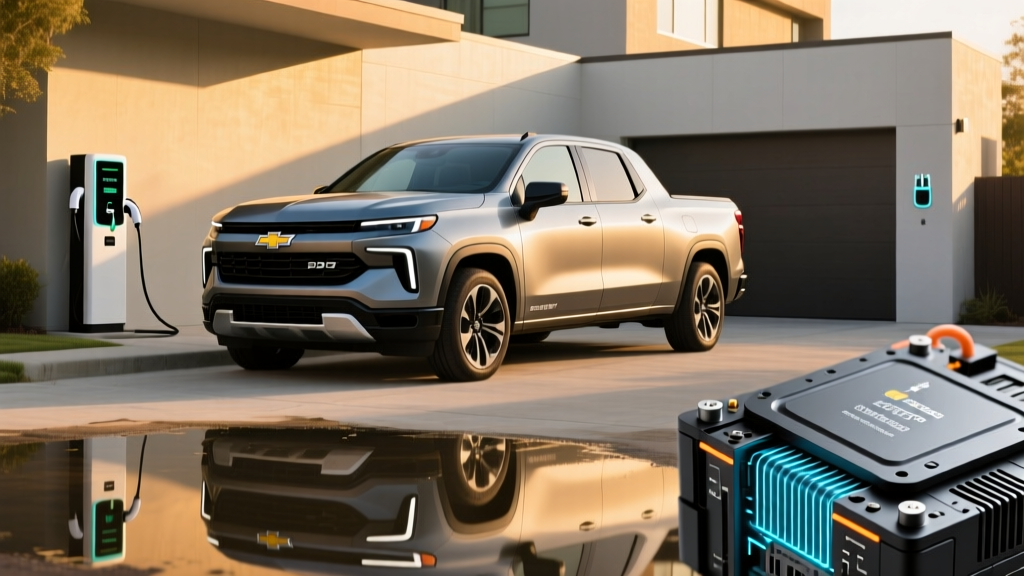
The 2025 Chevrolet Silverado EV is GM's answer to the Ford F-150 Lightning and Rivian R1T, but it takes a fundamentally different approach. Built on GM's dedicated Ultium platform rather than a converted gas-truck chassis, the Silverado EV prioritizes maximum range, class-leading DC fast-charging speeds, and a flexible mid-gate cargo system. The Work Truck (WT) trim targets fleet and commercial buyers, while the RST and Trail Boss trims aim squarely at retail customers who want a daily-drivable electric pickup that can still tow, haul, and handle a job site.
After spending time with the spec sheets, EPA data, and real-world driving reports, the Silverado EV emerges as the range king of electric pickups — but it's not without compromises. Its size makes urban parking a chore, pricing climbs quickly on higher trims, and its tax-credit eligibility depends on a web of sourcing and income rules that buyers need to verify before signing.
Range, Battery, and Real-World Efficiency
The Silverado EV's headline number is its available 492-mile EPA-estimated range on the RST trim with the Max Range battery. That figure makes it one of the longest-range EVs on the market in any category, let alone a full-size pickup. The WT trim with the standard battery pack achieves an EPA-estimated 393 miles, which is still highly competitive against the F-150 Lightning's 320-mile Extended Range variant.
| Specification | WT (Standard Battery) | RST (Max Range Battery) |
|---|---|---|
| Battery Capacity (Usable) | ~200 kWh (estimated) | ~230 kWh (estimated) |
| Battery Chemistry | NCMA (Ultium) | NCMA (Ultium) |
| EPA Range | 393 miles | 492 miles |
| Efficiency (Combined) | ~51 MPGe | ~52 MPGe |
| Energy Consumption | ~66 kWh/100 mi | ~65 kWh/100 mi |
GM's Ultium platform uses NCMA (nickel-cobalt-manganese-aluminum) chemistry, a variant of NMC that trades a small amount of energy density for improved thermal stability and longevity. This is not LFP chemistry — expect the battery to perform well in cold weather with preconditioning but to show gradual capacity loss over many years, which GM's warranty covers.
EPA estimates are measured under controlled conditions. On the Silverado EV RST with the 492-mile rating, expect approximately 370–410 miles on sustained highway driving at 70+ mph, where aerodynamic drag hits a full-size pickup hard. In cold weather (below 32°F), plan for a 20–30% reduction, bringing usable range to roughly 290–350 miles depending on cabin heating use and whether the heat pump is active. The WT's 393-mile EPA figure translates to roughly 300–330 miles in mixed real-world driving. For daily commuting under 80 miles round-trip, either pack offers enormous buffer.
Charging Speeds: DC Fast, Level 2, and Home Setup
Charging is where the Silverado EV's Ultium architecture shows its engineering depth. The truck supports up to 350 kW peak DC fast-charging on compatible CCS/NACS chargers, putting it among the fastest-charging EVs available. GM claims a 10–80% charge in approximately 30 minutes at a 350 kW station, though the actual charge curve means peak speed is sustained only in the lower state-of-charge window before tapering significantly above 80%.
| Charging Level | Power (kW) | Approx. Miles Added per Hour | Notes |
|---|---|---|---|
| Level 1 (120V household) | ~1.4 kW | ~3–4 mi/hr | Emergency/trickle only |
| Level 2 (240V home) | 11.5 kW (up to 19.2 kW capable) | ~34–57 mi/hr | Full overnight charge in 10–20 hrs |
| DC Fast Charge (CCS/NACS) | Up to 350 kW peak | N/A (10–80% in ~30 min) | Requires 350 kW-capable station |
For home charging, the Silverado EV comes with a dual-level portable charge cord, but serious owners will want a hardwired Level 2 wall connector installed on a 60-amp or higher circuit. At 19.2 kW (80-amp circuit), you can add roughly 57 miles of range per hour — enough to fully replenish the Max Range pack in about 12 hours. Most homeowners will install a 48-amp charger (11.5 kW), which adds about 34 miles per hour and fully charges overnight.
A critical detail: the Silverado EV launched with a CCS connector, but GM is transitioning its lineup to the NACS (Tesla-style) port. Check your model year's connector and confirm adapter availability if you plan to use the Tesla Supercharger network. GM has confirmed Supercharger access for its EVs, but adapter logistics and station compatibility vary.
Performance, Towing, and Drivetrain
The Silverado EV is no slouch despite its 8,500+ pound curb weight. The high-output RST trim produces up to 754 horsepower and 785 lb-ft of torque from its dual-motor all-wheel-drive powertrain, launching to 60 mph in approximately 4.5 seconds. That's sports-sedan acceleration in a full-size pickup — a number that never stops being surprising from behind the wheel.
| Specification | WT (Dual-Motor AWD) | RST (e4WD High Output) |
|---|---|---|
| Drivetrain | Dual-Motor AWD | Dual-Motor AWD (e4WD) |
| Horsepower | 510 hp | 754 hp |
| Torque | 615 lb-ft | 785 lb-ft |
| 0–60 mph | ~5.5 sec | ~4.5 sec |
| Max Towing Capacity | 10,000 lbs (up to 12,500 w/ max tow pkg) | 10,000 lbs |
| Payload Capacity | ~1,800 lbs | ~1,300 lbs |
Towing is a realistic use case here. The WT with the available Max Trailering package can pull up to 12,500 pounds, competitive with half-ton gas trucks. However, towing any heavy trailer will slash range dramatically — expect a 40–60% reduction depending on trailer weight and aerodynamics. A 492-mile truck towing a 7,000-pound boat might deliver only 200–250 miles between charges. Plan your trips accordingly.
The Silverado EV also features GM's Super Cruise hands-free driving system on compatible divided highways. This is an SAE Level 2 driver-assistance feature — it does not make the truck autonomous. You must remain attentive, and the system monitors your eyes via an infrared camera on the steering column. Super Cruise coverage spans over 750,000 miles of compatible roads in North America, and it's one of the smoothest Level 2 systems available, particularly for long highway hauls.
Interior, Cargo, and the Multi-Flex Midgate
The Silverado EV's cabin is spacious, leveraging its dedicated EV platform to offer a flat floor and generous legroom. Front-seat passengers enjoy approximately 44.5 inches of legroom, while rear-seat riders get roughly 43.4 inches — competitive with crew-cab gas trucks. The RST's 17.7-inch diagonal infotainment touchscreen dominates the dash and runs Google Built-In, including Google Maps navigation, Google Assistant, and access to the Play Store for apps like Spotify and YouTube (parked only).
Cargo versatility is a standout. The Silverado EV features the Multi-Flex Midgate, a partition between the cab and bed that can fold down to extend the effective bed length from the standard 5 feet 11 inches to over 9 feet with the tailgate down. Combined with the eTrunk (front trunk), which offers roughly 10.2 cubic feet of lockable storage, the Silverado EV provides cargo flexibility that neither the F-150 Lightning nor the Rivian R1T matches in exactly the same way.
The standard bed offers approximately 53.5 cubic feet of volume, and the truck includes a Multi-Flex Tailgate with six configurable positions. Payload capacity is solid for an EV, though the RST's heavier battery and luxury equipment reduce it to roughly 1,300 pounds compared to the WT's ~1,800 pounds.
Pricing, Trims, and Federal Tax Credit Eligibility
The Silverado EV lineup spans from commercial fleet pricing to luxury-truck territory. Here's where each trim lands for the 2025 model year:
| Trim | Base MSRP | Key Features |
|---|---|---|
| WT (Work Truck) 4WT | ~$55,000 | Standard range, fleet-oriented, vinyl/leatherette, basic infotainment |
| WT (Work Truck) e4WT Max Range | ~$63,000 | Max range battery, same work-truck feature set |
| LT (expected late 2025) | ~$60,000–$70,000 (est.) | Retail-oriented, more comfort features, mid-level tech |
| RST First Edition | ~$87,300 | Max range, 754 hp, Super Cruise, premium interior, fully loaded |
| Trail Boss (expected 2025–2026) | ~$70,000–$80,000 (est.) | Off-road suspension, skid plates, all-terrain tires |
Destination charges add approximately $1,995 across trims. Options like the Max Trailering package, premium paint, and bed accessories can push the WT above $70,000.
- MSRP Cap: The Silverado EV qualifies under the pickup truck MSRP cap of $80,000. The RST First Edition at ~$87,300 exceeds this cap and does not qualify. The WT trims and the upcoming LT are the credit-eligible models.
- Buyer Income Cap: Modified AGI must not exceed $150,000 (single), $225,000 (head of household), or $300,000 (joint filers).
- Battery Sourcing: The credit is split into two halves — $3,750 for critical-minerals sourcing and $3,750 for battery-component manufacturing. GM sources and assembles Ultium batteries in the US (Lordstown, OH, and Orion, MI), but the exact credit amount ($3,750 or $7,500) depends on current-year critical-minerals compliance. Verify on fueleconomy.gov before purchasing.
- Point-of-Sale Transfer: Eligible buyers can transfer the credit to the dealer at purchase, reducing the out-of-pocket price immediately rather than waiting for a tax refund.
Tax credit rules are complex and subject to change. Consult a tax professional and verify current eligibility at irs.gov before purchasing.
Ownership Costs, Warranty, and Long-Term Value
GM backs the Silverado EV's battery and electric powertrain with an 8-year/100,000-mile warranty, guaranteeing that the battery will retain at least 70% of its original capacity during that period. The bumper-to-bumper limited warranty covers 3 years/36,000 miles. These terms are standard for the segment and align with the F-150 Lightning and Rivian R1T.
Long-term battery degradation on the Ultium platform is still being observed in real-world fleets, but GM's NCMA chemistry and active thermal management system are designed for longevity. Early data from Ultium-based vehicles (Cadillac Lyriq, GMC Hummer EV) suggests degradation in the 5–8% range over the first 50,000 miles, which is acceptable. A full battery replacement, if needed out of warranty, would likely cost $15,000–$25,000+ based on pack size — a significant sum, but one that rarely materializes within the vehicle's practical lifespan.
Insurance costs for the Silverado EV run higher than comparable gas trucks, averaging $2,200–$2,800 annually depending on trim, location, and driving record. The RST's high value and repair costs push premiums to the upper end. Always get a personalized quote before committing.
On the savings side, home charging at the US average of $0.16/kWh costs roughly $35–$40 to fully charge the Max Range pack — equivalent to about $0.07–$0.08 per mile. A gas Silverado 1500 at 20 MPG combined and $3.50/gallon costs $0.175 per mile. Over 15,000 annual miles, that's a fuel savings of approximately $1,400–$1,600 per year, helping offset the higher purchase price within 4–5 years even without a tax credit.
How It Compares: Silverado EV vs. F-150 Lightning vs. Rivian R1T
| Specification | 2025 Silverado EV RST | 2025 F-150 Lightning Ext. Range | 2025 Rivian R1T Dual Max |
|---|---|---|---|
| EPA Range | 492 mi | 320 mi | 410 mi |
| Battery (Usable) | ~230 kWh | 131 kWh | 149 kWh |
| Peak DC Charge | 350 kW | 150 kW | 220 kW |
| 0–60 mph | ~4.5 sec | ~3.8 sec | ~3.5 sec |
| Max Towing | 10,000 lbs | 10,000 lbs | 11,000 lbs |
| Starting MSRP | ~$55,000 (WT) | ~$60,000 | ~$79,900 |
| Bed Length | 5'11" (9'+ w/ midgate) | 5'5" | 4'6" (w/ gear tunnel) |
| Front Trunk (Frunk) | 10.2 cu ft | 14.1 cu ft | 11.0 cu ft |
The Silverado EV wins on range and charging speed by a wide margin. The F-150 Lightning's advantage is its more familiar truck form factor and lower starting price on base trims. The Rivian R1T excels in off-road capability, build quality, and performance but costs significantly more and offers less range. Your choice depends on priority: maximum range and charging speed (Silverado), lowest entry price and familiarity (Lightning), or adventure and build quality (R1T).
- Class-leading 492-mile EPA range (RST)
- 350 kW DC fast-charging capability
- Multi-Flex Midgate extends bed to 9+ feet
- Up to 12,500-lb towing (WT w/ max trailering)
- Super Cruise Level 2 hands-free driving
- Spacious cabin with flat floor
- WT trim eligible for federal tax credit
- RST First Edition exceeds $80K tax-credit MSRP cap
- Massive curb weight reduces payload on RST
- Towing slashes range by 40–60%
- CCS-to-NACS transition creates adapter uncertainty
- Limited off-road capability (until Trail Boss arrives)
- Large footprint challenging in tight urban spaces
- LT and Trail Boss trims not yet available
Who Should Buy the 2025 Chevrolet Silverado EV?
- You need maximum electric range for long commutes or road trips without frequent charging stops
- You want the fastest DC charging in the electric truck segment
- You need a flexible cargo system (midgate + eTrunk) for work or recreation
- You're a fleet buyer looking at the WT trim with tax-credit eligibility
- You primarily drive on highways where Super Cruise adds real value
- You need serious off-road capability now (wait for Trail Boss or choose Rivian R1T)
- Your budget is under $55,000 and you need a truck immediately
- You tow heavy trailers over long distances regularly (range loss makes this impractical without careful route planning)
- You prefer a more conventional truck size and layout (F-150 Lightning is more familiar)
Frequently Asked Questions
What is the real-world range of the 2025 Silverado EV?
The EPA rates the RST Max Range at 492 miles and the WT at 393 miles. In real-world mixed driving, expect roughly 370–410 miles from the RST and 300–330 from the WT. Highway driving at high speeds and cold weather will reduce these figures by 15–30%.
How fast does the Silverado EV charge at home and on the road?
On a 350 kW DC fast charger, the Silverado EV can charge from 10–80% in approximately 30 minutes. At home on a 240V Level 2 charger (11.5 kW), expect roughly 34 miles of range added per hour, with a full charge taking 12–20 hours depending on battery size and charger amperage.
Does the 2025 Silverado EV qualify for the $7,500 federal tax credit?
The WT trims (priced under the $80,000 pickup MSRP cap) are potentially eligible for up to $7,500 under IRS §30D, subject to buyer income limits and battery-sourcing requirements. The RST First Edition at ~$87,300 exceeds the MSRP cap and does not qualify. Always verify current eligibility on fueleconomy.gov and consult a tax professional.
Is the Silverado EV worth buying over the F-150 Lightning?
If range and charging speed are your top priorities, the Silverado EV's 492-mile max range and 350 kW charging blow the Lightning's 320 miles and 150 kW out of the water. If you want a lower starting price, a more familiar truck layout, and a bigger frunk, the Lightning is the better pick. Both are capable trucks — the right choice depends on your use case.
Can the Silverado EV power my home during an outage?
GM has indicated that the Silverado EV will support vehicle-to-home (V2H) bidirectional charging with the proper home energy system, similar to Ford's Intelligent Backup Power on the F-150 Lightning. However, the required home hardware and availability timeline should be confirmed with your dealer before relying on this feature.
What is the battery warranty on the Silverado EV?
GM provides an 8-year/100,000-mile battery and powertrain warranty, guaranteeing the Ultium battery will retain at least 70% of its original capacity. The bumper-to-bumper warranty covers 3 years/36,000 miles.