Quick Verdict: The Affordable Long-Range Crossover
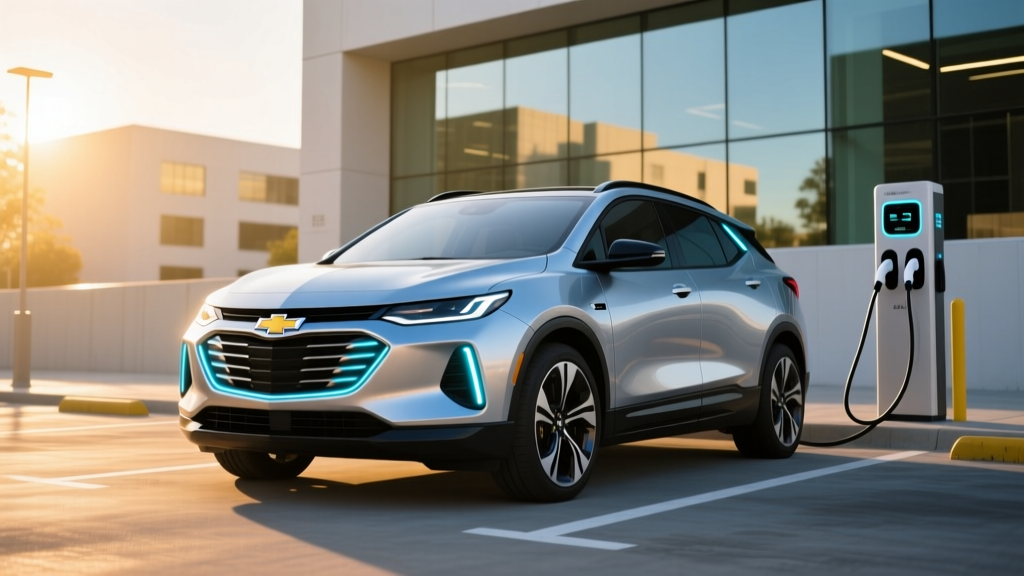
The 2025 Chevrolet Equinox EV occupies a rare position in the electric vehicle market: a mainstream compact crossover with over 300 miles of EPA-estimated range and a starting price that undercuts most rivals before incentives. With a base MSRP of $33,600 (plus destination), the Equinox EV 2LT FWD delivers 319 miles on a full charge — a figure that, even accounting for real-world highway and cold-weather losses, keeps range anxiety firmly at bay for most daily drivers and road-trippers alike.
Chevrolet built the Equinox EV on GM's Ultium platform, sharing architecture with the Blazer EV and Silverado EV but in a more accessible, family-friendly package. It's not the quickest EV in its segment, nor does it charge at the blistering speeds of an 800-voltage architecture vehicle like the Hyundai Ioniq 5. But for buyers whose priorities are range-per-dollar, practicality, and a straightforward ownership experience, the Equinox EV makes a compelling case.
| Spec | 2LT FWD | 3LT AWD | RS AWD |
|---|---|---|---|
| Base MSRP | $33,600 | $41,900 | $43,400 |
| EPA Range | 319 mi | 285 mi | 285 mi |
| Battery (usable) | ~85 kWh, NMC (Ultium) | ||
| Max DC Fast Charge | 150 kW peak | ||
| 10–80% DC Charge Time | ~41 minutes | ||
| Level 2 Home Charging | 11.5 kW (AC) / ~34 mi/hr | ||
| Motor Output | 213 hp / 236 lb-ft | 288 hp / 355 lb-ft | |
| 0–60 mph | ~8.4 sec | ~6.5 sec | |
| Drivetrain | FWD (single motor) | AWD (dual motor) | |
| EPA Efficiency | ~97 MPGe | ~90 MPGe | |
| Battery Warranty | 8 years / 100,000 miles | ||
Range and Efficiency: 319 Miles on Paper, What About Reality?
The headline number for the 2025 Equinox EV 2LT is its 319-mile EPA-estimated range, courtesy of an ~85 kWh usable Ultium battery pack using NMC (nickel manganese cobalt) chemistry. AWD trims (3LT and RS) drop to 285 miles EPA due to the added weight and friction of the second motor.
Real-World Range Expectations:
- Mixed city/suburban driving (65°F): Expect 290–310 miles — close to EPA thanks to regenerative braking in stop-and-go traffic.
- Sustained highway (70–75 mph, 75°F): Plan for 250–275 miles. Aerodynamic drag at speed reduces efficiency by roughly 15–20% versus the combined cycle.
- Cold weather (30°F or below, highway): Range can drop to 200–230 miles. NMC chemistry is less cold-resilient than LFP, and cabin heating draws significant energy without a standard heat pump on all trims.
Bottom line: On a summer road trip, you'll comfortably cover 260 miles between charges. In winter, budget for stops every 200 miles to stay above a 10% buffer.
Efficiency for the FWD 2LT is rated at approximately 97 MPGe combined (about 35 kWh/100 mi), which is competitive for the segment but trails the Hyundai Ioniq 5's 114 MPGe. The AWD models settle around 90 MPGe. These figures matter for your electricity bill: at the national average residential rate of ~$0.16/kWh, a full charge costs roughly $13.60 — translating to about 4.3 cents per mile for the FWD model.
Charging Speed: DC Fast, Level 2, and What to Expect
Charging is where the Equinox EV's 400-volt Ultium architecture reveals its main compromise. The peak DC fast-charging rate is 150 kW, which is adequate but not class-leading. Vehicles on 800V architectures (Ioniq 5, Kia EV6, Porsche Taycan) can sustain 230–350 kW peaks.
| Charging Level | Power | Speed | Typical Use Case |
|---|---|---|---|
| Level 1 (120V outlet) | ~1.4 kW | ~4 mi/hr | Emergency / overnight trickle |
| Level 2 (240V, 48A) | 11.5 kW | ~34 mi/hr | Home daily charging |
| DC Fast Charge | 150 kW peak | 10–80% in ~41 min | Road trips |
The charging curve matters. The Equinox EV will hold close to its 150 kW peak from roughly 10% to 30% state of charge, then taper progressively. By 60% SoC, you'll see ~100 kW; by 80%, the rate drops to ~50 kW. This is why the 10–80% time is around 41 minutes — the last 20 percentage points take nearly as long as the first 50. For road-trip planning, charging from 20% to 80% (the practical window) takes about 30–35 minutes at a capable station.
At home on a Level 2 wall connector (240V, 48 amps), the Equinox EV pulls up to 11.5 kW, adding roughly 34 miles of range per hour. A full 0–100% charge takes approximately 8–9 hours — ideal for overnight replenishment. If your home electrical panel supports a 60-amp circuit (requiring a 48-amp continuous draw charger), you'll wake up to a full battery every morning. Homes with older 100-amp panels may need an upgrade, which can add $1,500–$3,000 to installation costs.
Performance and Drivetrain: Adequate, Not Thrilling
The 2025 Equinox EV is tuned for comfort and efficiency rather than performance. The FWD 2LT uses a single front-mounted motor producing 213 horsepower and 236 lb-ft of torque, yielding a 0–60 mph time of approximately 8.4 seconds. That's perfectly adequate for highway merging and daily commuting, but it won't win any stoplight races.
Step up to the dual-motor AWD (available on 3LT and RS trims), and output rises to 288 hp and 355 lb-ft, dropping the 0–60 time to roughly 6.5 seconds. The AWD system provides better traction in rain and light snow, and the additional torque makes passing maneuvers feel more confident. However, this comes at the cost of 34 miles of EPA range.
Ride quality is composed, with the heavy battery pack mounted low giving the Equinox EV a planted feel through corners. The regenerative braking system offers two modes — a mild setting that mimics a conventional car's coasting behavior, and a stronger setting that enables near one-pedal driving in city traffic. Steering is light and numb, which suits the commuter mission but disappoints enthusiasts.
Interior, Cargo, and Technology
The Equinox EV's cabin is a step above the gas-powered Equinox in materials and layout, dominated by a standard 17.7-inch diagonal infotainment touchscreen paired with an 11-inch digital instrument cluster. Google Built-in powers the infotainment system, providing native Google Maps navigation (which integrates with route-based battery preconditioning), Google Assistant voice control, and access to the Play Store for apps.
Passenger space is generous for the compact crossover segment:
- Front legroom: 43.1 inches
- Rear legroom: 37.1 inches
- Cargo behind rear seats: 26.4 cu ft
- Cargo with rear seats folded: 57.2 cu ft
Notably, the Equinox EV does not offer a front trunk (frunk). The space under the hood is occupied by power electronics and HVAC components — a packaging choice that some rivals avoid. For comparison, the Ford Mustang Mach-E offers 4.7 cu ft of frunk space, and the Ioniq 5 provides 0.85 cu ft.
Driver-assistance technology includes Chevy's Super Cruise hands-free driving system on equipped trims (standard on 3LT, available on RS). Super Cruise is an SAE Level 2 system — it handles steering, acceleration, and braking on pre-mapped divided highways, but the driver must remain attentive and a camera monitors eye gaze. It is not autonomous driving. On secondary roads and unmapped routes, the standard Chevy Safety Assist suite provides adaptive cruise control, lane-keeping assist, automatic emergency braking, and blind-spot monitoring.
Pricing, Trims, and Federal Tax Credit Eligibility
The 2025 Chevrolet Equinox EV is offered in three main trims, with the base 2LT FWD serving as the value champion of the lineup:
| Trim | Base MSRP | As-Tested (typical options) | Est. After §30D Credit* |
|---|---|---|---|
| 2LT FWD | $33,600 | $36,500 | $26,100 – $29,000 |
| 3LT AWD | $41,900 | $45,200 | $34,400 – $37,700 |
| RS AWD | $43,400 | $47,800 | $35,900 – $40,300 |
*After-credit prices assume full $7,500 §30D eligibility. Actual credit depends on battery sourcing, buyer income, and MSRP caps. See details below.
Does the Equinox EV qualify for the $7,500 federal EV tax credit? The answer is: it depends on your specific situation. Under IRS §30D rules, eligibility requires meeting several criteria simultaneously:
- MSRP cap: The vehicle's base MSRP must not exceed $80,000 for SUVs/crossovers. All Equinox EV trims clear this easily.
- Buyer income cap: Modified adjusted gross income must not exceed $150,000 (single), $225,000 (head of household), or $300,000 (joint filers).
- Battery sourcing: The battery's critical minerals and components must meet phased-in domestic-sourcing thresholds. GM has worked to localize Ultium battery production in the US (at plants in Ohio and Tennessee), but specific sourcing percentages shift annually. Check the IRS qualified vehicles list for the current determination on each trim.
- Point-of-sale transfer: As of 2024, eligible buyers can transfer the credit to the dealer at purchase, receiving it as an immediate price reduction rather than waiting to claim it on their tax return. This effectively lowers your out-of-pocket cost at signing.
Because battery-sourcing requirements tighten each year, we recommend confirming eligibility with your dealer and a tax professional before finalizing a purchase. State and local incentives (such as California's CVRP or Colorado's innovative motor vehicle credit) may stack on top of the federal credit — check your state energy office for current programs.
Pros and Cons
Pros
- 319-mile EPA range on the base FWD — best in its price class
- Starting MSRP of $33,600 undercuts most long-range EV crossovers
- 17.7-inch infotainment screen with Google Built-in is excellent
- Super Cruise hands-free driving on mapped highways (equipped trims)
- Spacious rear seat and 57.2 cu ft max cargo volume
- Strong 8-year/100,000-mile battery warranty
Cons
- 150 kW peak DC charging is slower than 800V rivals (Ioniq 5, EV6)
- No front trunk (frunk) — cargo space is rear-only
- FWD model's 8.4-second 0–60 time feels sluggish for an EV
- AWD trims lose 34 miles of range versus FWD
- No standard heat pump — cold-weather range loss is significant
- Build quality and material choices lag Hyundai/Kia competitors
Competitor Comparison: Equinox EV vs. the Field
The Equinox EV's most direct rivals are the Hyundai Ioniq 5, Kia EV6, Ford Mustang Mach-E, and Volkswagen ID.4. Here's how they stack up on the metrics that matter most:
| Vehicle | Starting MSRP | Max EPA Range | Peak DC kW | 10–80% Time | 0–60 mph |
|---|---|---|---|---|---|
| Chevy Equinox EV 2LT | $33,600 | 319 mi | 150 kW | ~41 min | ~8.4 sec |
| Hyundai Ioniq 5 (Std Range) | $42,600 | 303 mi (LR) | 238 kW (800V) | ~18 min | ~7.4 sec |
| Kia EV6 (LR RWD) | $42,900 | 310 mi | 239 kW (800V) | ~18 min | ~7.2 sec |
| Ford Mustang Mach-E (SR) | $42,995 | 250 mi (SR) / 320 mi (ER) | 150 kW | ~38 min | ~6.1 sec (ER AWD) |
| Volkswagen ID.4 (Pro) | $40,595 | 291 mi | 170 kW | ~30 min | ~8.5 sec |
The Equinox EV wins on price and range. No competitor offers 319 miles of range starting under $34,000. The Ioniq 5 and EV6 are faster-charging and quicker, but they start $9,000–$10,000 higher. The Mach-E Extended Range matches range but at a premium. If budget is your primary constraint, the Equinox EV 2LT is difficult to beat.
The Equinox EV loses on charging speed. If you road-trip frequently and value shorter charging stops, the Ioniq 5's 18-minute 10–80% time versus the Equinox's 41 minutes is a meaningful difference — nearly 25 minutes saved per stop on a long drive.
Who Should Buy the 2025 Equinox EV?
Choose the Equinox EV 2LT FWD if:
- You want the most range per dollar in a crossover under $40K
- You charge primarily at home and rarely road-trip more than 250 miles in a day
- You qualify for the full $7,500 federal credit, bringing effective cost below $27,000
- You value a large infotainment screen and Google integration
Choose the Equinox EV 3LT or RS AWD if:
- You live in a region with regular rain or snow and need all-wheel-drive traction
- You want Super Cruise hands-free driving for highway commutes
- You can accept 285 miles of range in exchange for 288 hp and a 6.5-second 0–60 time
Look elsewhere if:
- You road-trip frequently and want the fastest DC charging (see Ioniq 5 / EV6)
- You need a frunk for extra cargo flexibility
- You live in a very cold climate where NMC chemistry without a heat pump means steep winter range loss
Warranty and Ownership
Chevrolet backs the Equinox EV's Ultium battery pack with an 8-year / 100,000-mile warranty against defects and excessive capacity loss (GM defines the threshold as dropping below 60% of original capacity, though real-world degradation on Ultium packs has been minimal in early data). The powertrain carries the same 8-year/100,000-mile coverage, while the bumper-to-bumper warranty is 3 years / 36,000 miles.
Insurance costs for the Equinox EV tend to be moderate for the EV segment — expect premiums roughly 10–15% higher than a gas-powered Equinox, driven by higher repair costs for EV-specific components. Maintenance is minimal: no oil changes, no spark plugs, and regenerative braking extends pad life significantly. Expect to rotate tires every 7,500 miles and replace cabin air filters annually.
Frequently Asked Questions
What is the real-world range of the 2025 Chevrolet Equinox EV?
The EPA estimates 319 miles for the FWD 2LT and 285 miles for AWD trims. In real-world mixed driving at moderate temperatures, expect 290–310 miles from the FWD. On sustained highway trips at 70+ mph, plan for 250–275 miles. In freezing weather with cabin heat, range can drop to 200–230 miles.
How fast does the Equinox EV charge at home and on the road?
At home on a Level 2 (240V, 48A) charger, the Equinox EV charges at up to 11.5 kW, adding about 34 miles per hour — a full charge takes 8–9 hours. On a DC fast charger, it peaks at 150 kW, reaching 10–80% in approximately 41 minutes. A practical 20–80% road-trip stop takes about 30–35 minutes.
How much does the Equinox EV cost after tax credits?
The base 2LT FWD starts at $33,600. If you qualify for the full $7,500 federal §30D credit (meeting income, MSRP, and battery-sourcing requirements), the effective price drops to approximately $26,100 before destination and dealer fees. Point-of-sale transfer lets you apply this as an immediate discount at purchase.
Does the 2025 Equinox EV qualify for the federal EV tax credit?
It can, but eligibility is not automatic. You must meet IRS income caps ($150K single / $300K joint), the vehicle must be on the IRS qualified vehicles list with compliant battery sourcing, and the MSRP must be under $80,000 (all trims qualify). Verify with your dealer and consult a tax professional before relying on the credit.
Is the Equinox EV worth buying over the Ioniq 5 or Mach-E?
If your priority is the lowest cost for the most range, the Equinox EV 2LT is the clear winner at $33,600 for 319 miles. If fast DC charging and sportier performance matter more, the Ioniq 5 and Mach-E are stronger choices at higher prices. The Equinox EV trades charging speed and acceleration for range-per-dollar value.
Does the Equinox EV have a heat pump?
GM has not made a heat pump standard across all trims. Without one, cabin heating in cold weather draws directly from the traction battery, contributing to the notable range loss (30–40%) observed in freezing conditions. If you live in a cold-weather climate, factor this into your range planning or consider preconditioning while plugged in to mitigate losses.
What is the battery warranty on the Equinox EV?
The Ultium battery pack is covered for 8 years or 100,000 miles, whichever comes first. GM warrants against defects and capacity loss below a defined retention threshold. Early Ultium-platform vehicles have shown minimal degradation in the first 1–2 years of ownership.
Sources: EPA Fuel Economy, Chevrolet Equinox EV Official Page, IRS Clean Vehicle Credits. Prices and credit eligibility reflect 2025 model-year data and current §30D rules; verify before purchase.