Quick Verdict: The Value Play in Chevy's EV SUV Lineup
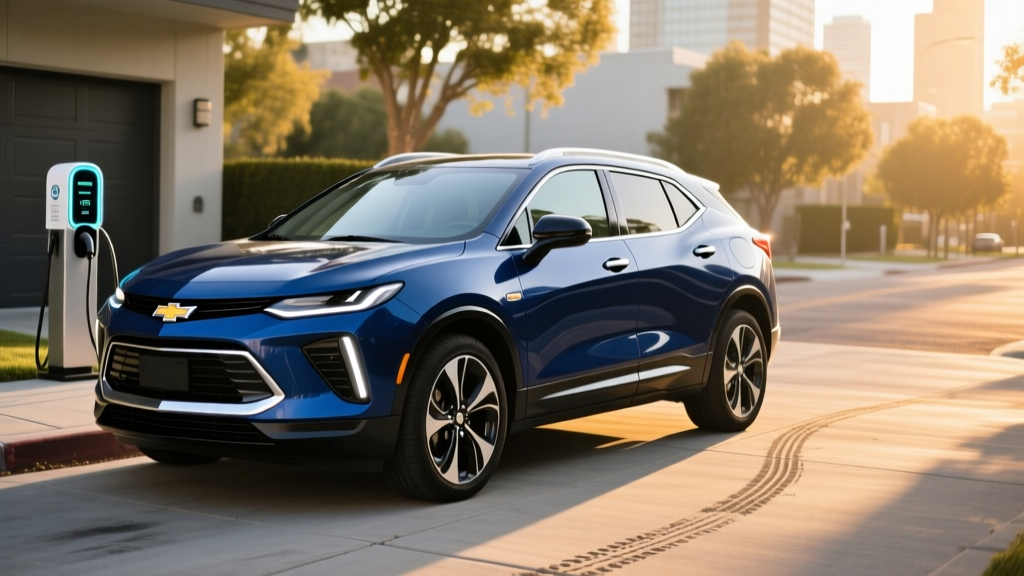
The 2025 Chevrolet Blazer EV LT occupies a specific niche: it's the affordable gateway into Chevy's Ultium-platform electric SUV, trading the sporty SS trim's 557 horsepower and the upscale RS trim's premium touches for a lower starting price and strong everyday utility. After spending time with the LT trim — both the front-wheel-drive (FWD) and all-wheel-drive (AWD) configurations — it's clear this is the version most buyers should actually consider. You get competitive range, reasonable DC fast-charging speeds, and a spacious cabin, all while staying under the $55,000 MSRP cap for the federal EV tax credit. The trade-offs are real: the LT's interior materials feel a step below rivals like the Hyundai Ioniq 5, and GM's early Ultium software stumbles have left a lingering reputation concern. But for 2025, the platform is more mature, and the LT trim delivers the most practical value in the Blazer EV lineup.
| Spec | LT FWD | LT AWD |
|---|---|---|
| Base MSRP | $44,600 | $47,600 |
| EPA Range | 324 mi | 279 mi |
| Battery (usable) | 102 kWh (NMC) | 102 kWh (NMC) |
| Horsepower | 220 hp | 288 hp (dual-motor) |
| 0-60 mph | ~8.2 sec | ~6.5 sec |
| DC Fast Charge (peak) | 190 kW | 190 kW |
| 10-80% DCFC Time | ~33 min | ~33 min |
| Level 2 Home Charge | 11.5 kW (~34 mi/hr) | 11.5 kW (~34 mi/hr) |
| MPGe (city/hwy/combined) | 99 / 87 / 93 | 94 / 82 / 88 |
| Efficiency | 36 kWh/100 mi | 38 kWh/100 mi |
| Cargo (behind rear seats) | 28.4 cu ft | |
| Cargo (rear seats folded) | 64.2 cu ft | |
| Battery Warranty | 8 yr / 100,000 mi | |
Real-World Range: What to Expect Beyond the EPA Sticker
EPA Estimated Range: 324 miles (LT FWD) / 279 miles (LT AWD)
Real-World Expectation: Plan for roughly 260-290 miles on the FWD model and 230-255 miles on the AWD model during mixed highway driving at 70-75 mph. In cold weather (below 30°F), expect a further 20-30% reduction, dropping usable range to approximately 190-230 miles for the FWD and 170-200 for the AWD. City driving with regenerative braking recovers some efficiency, often matching or slightly exceeding the EPA number.
The Blazer EV LT's 102 kWh usable battery pack is one of the largest in its class, and that capacity is the primary reason the FWD version achieves its impressive 324-mile EPA rating. However, this is a heavy vehicle — over 5,800 lbs for the AWD LT — and mass works against highway efficiency. According to fueleconomy.gov, the LT AWD's combined MPGe of 88 translates to 38 kWh per 100 miles, which is noticeably less efficient than the Hyundai Ioniq 5 AWD (34 kWh/100 mi) or the Tesla Model Y Long Range (28 kWh/100 mi). That efficiency gap is the main reason the AWD Blazer sacrifices 45 miles of range versus the FWD despite using the same battery.
For context on a practical road trip: in the AWD LT starting at 90% state of charge (SoC), driving at highway speeds with moderate climate control use, you should plan your first charging stop at around 200 miles. The FWD model can stretch that to roughly 230-240 miles before you're hunting for a charger. These are comfortable margins, but they aren't class-leading.
Charging Speed: DC Fast Charging and Home Level 2
| Charging Level | Power / Rate | Miles Added per Hour | Notes |
|---|---|---|---|
| Level 1 (120V standard outlet) | ~1.4 kW | ~3-4 mi/hr | Emergency/trickle only; full charge takes days |
| Level 2 (240V home, 48A) | 11.5 kW | ~34 mi/hr | Full 10-100% in ~9.5 hours; overnight-ready |
| DC Fast Charge (peak) | 190 kW | ~250+ mi/hr at peak | 10-80% in ~33 min; tapers significantly above 80% |
The Blazer EV LT's peak DC fast-charging rate of 190 kW is adequate but not exceptional for 2025. Competitors like the Hyundai Ioniq 5 and Kia EV6 (both on 800V architectures) peak at 233-240 kW and can hit 10-80% in approximately 18 minutes. The Blazer's ~33-minute 10-80% window is still practical for a meal stop or bathroom break, but it's noticeably slower on long road trips where you're stacking multiple charging sessions.
The charge curve matters more than the peak number. The Blazer EV holds close to its 190 kW peak from roughly 10-40% SoC, then steps down to around 120-130 kW through the 60% mark, and drops further to 60-80 kW approaching 80%. This taper is typical of GM's Ultium platform and NMC battery chemistry — it protects long-term battery health but means the last 20% of a charge takes disproportionately long. On a road trip, plan to charge from 10-80% and then move on rather than topping off to 95%.
At home, the 11.5 kW onboard charger is competitive. With a properly installed 48-amp Level 2 wall connector on a 60-amp circuit (expect $800-$2,000 for equipment and electrician, depending on panel capacity), you'll add roughly 34 miles of range per hour of charging. A full overnight session from 10% to 100% takes about 9.5 hours — perfectly suited for off-peak electricity rates. Note: the Blazer EV ships with a NACS (Tesla-style) charge port for 2025, giving you native access to Tesla Supercharger stations without an adapter, a significant advantage over CCS-only rivals still relying on adapter workarounds.
Performance and Driving Dynamics
The LT trim offers two powertrain configurations, and the choice between them hinges on how you value range versus acceleration:
- LT FWD (220 hp, single front motor): This is the efficiency play. The 0-60 mph time of roughly 8.2 seconds is perfectly adequate for merging and passing, but it won't thrill anyone. The trade-off is 324 miles of range and the lowest price in the lineup.
- LT AWD (288 hp, dual-motor): The additional rear motor adds 68 hp, all-wheel-drive traction, and cuts 0-60 to about 6.5 seconds. That's a meaningful improvement in everyday confidence — highway on-ramps, rain, snow — and the 279-mile range is still solid for daily use.
Ride quality is a Blazer EV strength. The Ultium platform's low center of gravity and multi-link rear suspension deliver composed, quiet highway cruising that outclasses some sportier-feeling rivals. The steering is light and uncommunicative — this is a comfort-tuned SUV, not a corner-carver — but for the family-hauling and commuting use case, that's the right calibration. Regenerative braking offers a one-pedal driving mode that's intuitive and strong enough to bring the vehicle to a full stop in traffic without touching the brake pedal.
Interior, Cargo, and Technology
The Blazer EV's cabin is dominated by a 17.7-inch diagonal infotainment touchscreen — one of the largest in any mainstream EV — paired with an 11-inch digital instrument cluster. The Google Built-In infotainment system supports native Google Maps navigation (which integrates real-time charger routing and battery preconditioning), Google Assistant voice control, and the Play Store for in-dash apps. Wireless Apple CarPlay and Android Auto are standard.
Space is genuinely generous. Rear legroom measures 38.5 inches, which accommodates tall adults comfortably, and the flat floor (no transmission tunnel hump) makes the middle seat usable. Cargo volume of 28.4 cubic feet behind the rear seats expands to 64.2 cubic feet with the 60/40 split rear seats folded — competitive with midsize gas SUVs and sufficient for a family road trip's worth of luggage and gear. There is no front trunk (frunk); GM allocated that space to HVAC and power electronics.
Driver-assistance features on the LT include Chevy's Super Cruise capability (subscription-based after a trial period) on compatible mapped highways — an SAE Level 2 hands-free system that requires driver attention monitoring. This is not autonomous driving; you must remain engaged and ready to take over. Standard safety tech includes automatic emergency braking, lane-keeping assist, adaptive cruise control, and blind-spot monitoring under the Chevy Safety Assist suite.
Pricing, Trims, and Federal Tax Credit Eligibility
| Trim | Base MSRP | Est. Tax-Credit-Adjusted Price* |
|---|---|---|
| LT FWD | $44,600 | ~$37,100 |
| LT AWD | $47,600 | ~$40,100 |
| RS AWD (for comparison) | $54,200 | ~$46,700 |
*Assumes full $7,500 federal tax credit via point-of-sale transfer under IRS §30D. Actual eligibility depends on buyer income, battery sourcing, and MSRP caps. Consult a tax professional and check IRS.gov §30D guidelines for your specific situation.
§30D Federal EV Tax Credit Requirements (2025):
- MSRP Cap: Vehicle must have an MSRP at or below $80,000 for SUVs — the Blazer EV LT qualifies easily.
- Buyer Income Cap: Modified adjusted gross income (MAGI) must not exceed $150,000 (single), $225,000 (head of household), or $300,000 (married filing jointly).
- Battery Sourcing: The $7,500 credit is split into two halves — $3,750 for critical minerals sourcing and $3,750 for battery component manufacturing. GM has worked to shift Ultium battery supply chains to North America, but verify current-year sourcing compliance on the IRS qualified vehicle list before purchasing.
- Point-of-Sale Transfer: You can transfer the credit to the dealer at purchase, reducing your out-of-pocket cost immediately rather than waiting to claim it on your tax return.
The LT trim's positioning under $55,000 is strategically important — it keeps the Blazer EV well within the SUV MSRP cap and leaves room for common options (like a panoramic sunroof or the Super Cruise package) without risking credit eligibility. The RS trim pushes closer to the limit, and a fully loaded RS can approach $60,000.
Pros and Cons
Pros
- Class-leading 324-mile EPA range on FWD model
- Spacious cabin with strong rear legroom (38.5 in) and cargo capacity
- NACS charge port standard — native Supercharger access
- Comfortable, quiet ride quality on the Ultium platform
- Qualifies for up to $7,500 federal tax credit (verify sourcing)
- Google Built-In infotainment with native EV route planning
Cons
- DC fast charging at 190 kW trails 800V rivals (Ioniq 5, EV6)
- AWD efficiency of 38 kWh/100 mi is below class average
- No front trunk (frunk) for additional storage
- Interior material quality on LT feels budget-conscious at this price
- GM's early software reliability concerns may linger for cautious buyers
- Super Cruise requires a paid subscription after the trial period
Who Should Buy the 2025 Blazer EV LT?
Choose the Blazer EV LT FWD if: You prioritize maximum range and lowest price, commute mostly in fair weather, and don't need aggressive acceleration. The 324-mile EPA rating and ~$37,100 effective price (with tax credit) make this one of the most affordable long-range electric SUVs available.
Choose the Blazer EV LT AWD if: You need all-weather traction, want the confidence of dual-motor acceleration (6.5 sec 0-60), and can accept a ~45-mile range reduction. This is the better all-around choice for four-season climates and families.
Look elsewhere if: Fast DC charging is a priority (consider the Hyundai Ioniq 5 or Kia EV6), you want a frunk for extra cargo, or you prefer a sportier driving feel (the Ford Mustang Mach-E or Tesla Model Y are more engaging to drive).
Frequently Asked Questions
What is the real-world range of the 2025 Chevrolet Blazer EV LT?
The EPA rates the LT FWD at 324 miles and the LT AWD at 279 miles. In real-world highway driving at 70-75 mph, expect approximately 260-290 miles (FWD) and 230-255 miles (AWD). Cold weather below 30°F can reduce range by an additional 20-30%.
How fast does the Blazer EV LT charge at home and on the road?
At home on a Level 2 (240V, 48A) charger, the Blazer EV charges at 11.5 kW, adding about 34 miles of range per hour — a full charge takes roughly 9.5 hours. On DC fast chargers, it peaks at 190 kW and charges from 10-80% in approximately 33 minutes. The NACS charge port provides native access to Tesla Superchargers.
How much does the 2025 Blazer EV LT cost after the federal tax credit?
The LT FWD starts at $44,600 and the LT AWD at $47,600. If you qualify for the full $7,500 federal tax credit under IRS §30D (subject to income caps, battery sourcing requirements, and MSRP limits), the effective prices drop to approximately $37,100 and $40,100, respectively. The credit can be transferred at the point of sale for an immediate price reduction.
Does the 2025 Blazer EV LT qualify for the federal EV tax credit?
The Blazer EV LT meets the MSRP cap ($80,000 for SUVs) and GM has worked to qualify its Ultium batteries under §30D sourcing rules. However, eligibility also depends on your individual tax situation — specifically, your modified adjusted gross income must fall below $150K (single), $225K (head of household), or $300K (married filing jointly). Always verify the vehicle's current status on the IRS qualified vehicles list before purchasing.
Is the Blazer EV LT worth buying versus competitors like the Ioniq 5 or Model Y?
It depends on your priorities. The Blazer EV LT wins on cabin space and, in FWD form, EPA range. The Hyundai Ioniq 5 charges significantly faster (18 min 10-80% on a 350 kW charger) and has a more distinctive design. The Tesla Model Y offers superior efficiency (28 kWh/100 mi vs. 36-38 for the Blazer), a more mature Supercharger network experience, and a frunk. If you value a traditional SUV feel, generous rear seat space, and Google-based infotainment, the Blazer EV LT is a strong choice. If charging speed and efficiency are paramount, the Ioniq 5 and Model Y have the edge.
What is the battery warranty on the Blazer EV?
Chevrolet covers the Blazer EV's battery pack and electric powertrain components for 8 years or 100,000 miles, whichever comes first. The warranty guarantees the battery will retain a minimum state of health (typically 70% capacity retention, though verify exact terms in your purchase documentation). This is in line with industry standards and provides long-term ownership confidence.