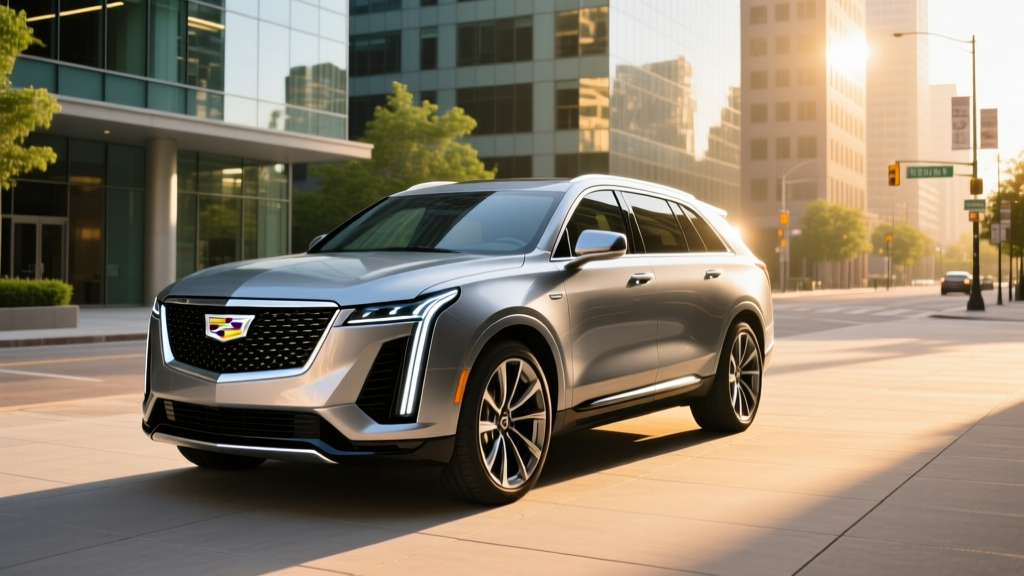
The 2025 Cadillac Escalade IQ Sport 2 arrives as General Motors' answer to the ultra-luxury electric SUV segment, built on the Ultium platform and targeting buyers who want three rows of space, a 460-mile EPA-estimated range, and the kind of presence that only an Escalade can deliver. But with a starting MSRP pushing well past $130,000, does the math work? We break down the real-world range, charging curve behavior, tax credit eligibility, and whether this flagship EV justifies its price against rivals like the Tesla Model X, Rivian R1S, and Mercedes EQS SUV.
Quick Verdict: Who Should Buy the Escalade IQ Sport 2?
The 2025 Cadillac Escalade IQ Sport 2 is engineered for affluent families and executives who need three-row seating, want to avoid gas station stops on long highway trips, and value a quiet, tech-forward cabin. It excels as a daily commuter and cross-country cruiser, thanks to its massive battery and comfortable ride. However, its sheer size (over 18 feet long) makes urban parking a chore, and its price excludes most buyers from federal tax incentives. If you need a luxury electric hauler with genuine 400+ mile range and don't mind the premium, the Sport 2 trim hits a sweet spot between the base Luxury and the ultra-high-performance Sport 1.
Range & Efficiency: EPA vs. Real-World Expectations
The 2025 Cadillac Escalade IQ Sport 2 carries a massive 200 kWh usable battery (approximately 225 kWh total capacity) using NMC (nickel manganese cobalt) chemistry, the standard for GM's large Ultium vehicles prioritizing energy density over the lower-cost LFP chemistry found in smaller EVs.
Real-World Highway (70+ mph): Expect ~370–390 miles
Cold Weather (below 32°F): Expect ~320–350 miles
City/Stop-and-Go: Closer to 440–460 miles (regen-heavy driving helps)
That 200 kWh battery is one of the largest ever fitted to a production passenger vehicle. For context, the Ford F-150 Lightning's extended-range pack is 131 kWh usable, and the Rivian R1S Max Pack is around 141 kWh. The Escalade IQ's sheer energy capacity is what enables its headline range figure.
Efficiency is rated at approximately 2.2–2.4 kWh per mile (roughly 57–60 MPGe combined, per fueleconomy.gov). That's not class-leading — the Tesla Model X achieves around 100 MPGe — but the Escalade IQ trades efficiency for interior volume, towing capability, and that unmistakable road presence.
Charging Speed: DC Fast Charge & Home Level 2
With a battery this large, charging speed is critical. GM equips the Escalade IQ with an 800-volt architecture capable of accepting up to 350 kW peak DC fast charging. However, as with all large batteries, the sustained rate matters more than the peak.
| Charging Level | Power | Speed / Time | Notes |
|---|---|---|---|
| DC Fast Charge (peak) | Up to 350 kW | ~100 miles in 10 minutes | Peak rate only; tapers significantly above 60% SoC |
| DC Fast Charge (10–80%) | Avg ~200 kW sustained | ~45–50 minutes | Expect ~35 min from 10–60%, then curve flattens |
| Level 2 Home (11.5 kW) | 11.5 kW / 48A | ~22 miles per hour of charging | Full 10–100% in ~18–20 hours |
| Level 2 Home (19.2 kW) | 19.2 kW / 80A | ~37 miles per hour of charging | Requires upgraded 100A circuit; full charge in ~11 hours |
| Level 1 (120V) | ~1.4 kW | ~3 miles per hour | Emergency/top-up only |
Real-world charging insight: On a 350 kW-capable station (like Electrify America's newest stalls), the Escalade IQ will pull close to peak rate from roughly 10–40% SoC, then taper to ~200 kW through 60%, and drop further to ~100 kW by 80%. The 10–80% time of 45–50 minutes is acceptable for a 200 kWh pack but noticeably longer than smaller-battery rivals. For road trips, plan one 40-minute stop every 350 miles or so.
At home, the onboard 19.2 kW AC charger (a standout feature) means that with the right Level 2 wall connector and an 80-amp dedicated circuit, you can recover a full day's driving overnight. Most buyers will want to consult a licensed electrician about whether their panel supports a 100A circuit; a panel upgrade can add $1,500–$3,000 to installation costs.
Performance: 750 HP and Sub-5-Second Acceleration
The Escalade IQ Sport 2 uses a dual-motor all-wheel-drive powertrain producing 750 horsepower and an estimated 785 lb-ft of torque. GM quotes a 0–60 mph time of approximately 4.7 seconds — remarkable for a vehicle with a curb weight likely exceeding 7,500 pounds.
| Specification | 2025 Escalade IQ Sport 2 |
|---|---|
| EPA Range | 460 miles |
| Battery (usable / total) | ~200 kWh / ~225 kWh (NMC) |
| Drivetrain | Dual-motor AWD |
| Horsepower | 750 HP |
| Torque | ~785 lb-ft |
| 0–60 mph | ~4.7 seconds |
| Top Speed | ~130 mph (electronically limited) |
| Max DC Charge Rate | 350 kW (peak) |
| 10–80% DC Fast Charge | ~45–50 minutes |
| Onboard AC Charger | 19.2 kW |
| Towing Capacity | ~8,000 lbs (estimated) |
| MPGe (combined) | ~57–60 MPGe |
| Efficiency | ~2.2–2.4 kWh/mile |
The dual-motor setup provides confident all-weather traction, and GM's adaptive air suspension adjusts ride height for highway efficiency or rough-road clearance. The Sport 2 trim adds a sport-tuned suspension calibration over the Luxury trims, firming up the ride slightly at the benefit of flatter cornering — though at nearly 4 tons, this is a cruiser, not a canyon carver.
Interior, Cargo, and Technology
The Escalade IQ's cabin is where Cadillac justifies its premium pricing. The dashboard is dominated by a 55-inch total LED display surface spanning nearly the entire width, combining the driver cluster, central infotainment, and passenger screen into one seamless unit. Google Built-in handles navigation, voice commands, and app integration.
Passenger Space:
- First row headroom: ~40.0 inches
- Second row legroom: ~42.0 inches (captain's chairs standard on Sport 2)
- Third row legroom: ~34.0 inches (usable for adults on shorter trips)
- Seating capacity: 7 passengers (2-2-3 configuration)
Cargo Volume:
- Behind 3rd row: ~25 cu ft
- Behind 2nd row (3rd row folded): ~60 cu ft
- Max cargo (2nd & 3rd folded): ~110 cu ft
- Front trunk (frunk): ~12 cu ft (e-trunk with power open/close)
Standout Tech:
- Super Cruise (SAE Level 2) hands-free driving on 400,000+ miles of compatible roads — driver monitoring required via infrared camera
- AKG Studio Reference 40-speaker audio system with headrest speakers
- Executive second-row seating with available stowable tables, dual 12.6-inch screens, and massaging
- Bi-directional charging (V2H/V2L) — power home appliances or a worksite from the battery
- One-Pedal Driving with adjustable regen levels
Notable Drawbacks:
- Third row is tighter than the ICE Escalade ESV due to floor-mounted battery raising the floor slightly
- Infotainment learning curve — the 55-inch screen is impressive but menu depth can be frustrating
- No Apple CarPlay/Android Auto wireless projection at launch (wired only on some trims; Google Built-in is the primary interface)
- Turning radius is enormous — tight parking structures will test your patience
Pricing, Trims & Federal Tax Credit Eligibility
The 2025 Cadillac Escalade IQ lineup starts with the Luxury 1 and climbs through Sport 1, Luxury 2, Sport 2, and the range-topping Sport 2 with available Ultra Luxury package. Pricing is firmly in ultra-luxury territory.
| Trim | Base MSRP | Est. As-Tested | §30D Tax Credit |
|---|---|---|---|
| Luxury 1 | ~$129,990 | ~$135,000 | Not eligible (MSRP cap exceeded*) |
| Sport 1 | ~$130,990 | ~$138,000 | Not eligible |
| Luxury 2 | ~$149,990 | ~$158,000 | Not eligible |
| Sport 2 | ~$150,990 | ~$160,000+ | Not eligible |
*Federal Tax Credit Reality: Under current IRS §30D rules, the Escalade IQ does not qualify for the $7,500 federal EV tax credit. The credit has an MSRP cap of $80,000 for SUVs, and every Escalade IQ trim exceeds this by a wide margin. Additionally, buyer income caps ($300,000 MFJ / $150,000 single) would exclude many target buyers regardless. Battery critical-mineral and component sourcing rules add further restrictions. Always verify current rules at IRS.gov or consult a tax professional.
The Sport 2 trim, our focus here, starts around $150,990 (including destination). A well-optioned Sport 2 with the Ultra Luxury package, 24-inch wheels, and premium paint can push past $165,000. This places it squarely against the Mercedes-Benz EQS 580 SUV (~$127,000) and well above the Rivian R1S Quad-Motor (~$100,000).
Warranty & Ownership Costs
GM backs the Escalade IQ with competitive warranty coverage:
- Battery & Powertrain: 8 years / 100,000 miles (whichever comes first), with a guaranteed minimum 70% capacity retention
- Bumper-to-Bumper: 4 years / 50,000 miles
- Corrosion: 6 years / 100,000 miles
- Roadside Assistance: 6 years / 70,000 miles
5-Year Estimated Ownership Costs:
- Electricity (15,000 mi/yr at $0.16/kWh avg): ~$5,300–$5,800 total
- Maintenance: Significantly lower than ICE Escalade — no oil changes, fewer brake replacements (regen saves pads), cabin air filter every ~20,000 miles
- Insurance: Expect $3,500–$5,000/year depending on location and driving record (luxury EVs carry higher premiums)
- Depreciation: Luxury EVs have historically depreciated faster than ICE counterparts; expect ~45–55% value retention at 5 years
Compared to a gas Escalade (~$4,500/year in fuel at 14 MPG and $3.50/gallon), the IQ saves roughly $1,500–$2,000 annually on energy alone — but the higher purchase price means the payback period stretches beyond a decade for most buyers.
Escalade IQ Sport 2 vs. Key Competitors
| Spec | Cadillac Escalade IQ Sport 2 | Rivian R1S Quad-Motor | Mercedes EQS 580 SUV | Tesla Model X Plaid |
|---|---|---|---|---|
| EPA Range | 460 mi | ~352 mi (Max Pack) | ~305 mi | ~326 mi |
| Battery | ~200 kWh (NMC) | ~141 kWh (NMC) | ~108 kWh (NMC) | ~100 kWh |
| HP | 750 | 835 | 536 | 1,020 |
| 0–60 mph | ~4.7 sec | ~3.5 sec | ~4.4 sec | ~2.5 sec |
| 3rd Row | Yes | Yes (tight) | Optional | Yes |
| Max DC Charge | 350 kW | ~220 kW | ~200 kW | ~250 kW |
| Base MSRP | ~$151,000 | ~$100,000 | ~$127,000 | ~$120,000 |
| §30D Credit | No (MSRP cap) | Partial eligibility | No (MSRP cap) | No (MSRP cap) |
The Escalade IQ's key advantage is range and battery size — nothing else in the class touches 460 miles EPA. The Rivian R1S offers more off-road capability and a lower price. The Tesla Model X Plaid is dramatically quicker but feels less luxurious inside. The Mercedes EQS SUV is quieter and more refined but gives up significant range.
- Maximum range (400+ miles real) is your top priority
- You need genuine 7-passenger comfort with a usable third row
- You value Cadillac's dealer network and service infrastructure
- You want V2H/V2L capability for home backup or job-site power
- Budget is under $120,000 → Rivian R1S
- You want sub-3-second acceleration → Tesla Model X Plaid
- You prioritize interior refinement over raw range → Mercedes EQS SUV
- You want federal tax credit eligibility → look at lower-MSRP EVs
Pros & Cons
- Class-leading 460-mile EPA range
- Massive 200 kWh battery reduces range anxiety on road trips
- 19.2 kW onboard AC charger — fastest in class for home charging
- Genuinely usable third row for adults
- Super Cruise hands-free highway driving (400K+ miles of roads)
- Quiet, isolated ride quality with adaptive air suspension
- V2H/V2L bi-directional charging capability
- 40-speaker AKG audio is best-in-class
- $150,000+ price with no federal tax credit eligibility
- Enormous footprint — difficult in tight urban environments
- Efficiency is poor (~57 MPGe) compared to smaller luxury EVs
- 10–80% DC charge time of ~45–50 min is long on road trips
- No wireless Apple CarPlay/Android Auto at launch
- Infotainment menu complexity
- Depreciation risk on a $160K luxury EV
- Third-row floor height slightly compromised by battery pack
Frequently Asked Questions
What is the real-world range of the 2025 Cadillac Escalade IQ Sport 2?
The EPA rates the Escalade IQ at 460 miles. In real-world highway driving at 70–80 mph, expect roughly 370–390 miles. In cold weather (below freezing), plan for 320–350 miles due to battery chemistry limitations and cabin heating demands. City driving with frequent regenerative braking can approach the EPA figure.
How fast does the Escalade IQ charge at home and on the road?
On a 350 kW DC fast charger, the Escalade IQ can add ~100 miles in 10 minutes at peak rate, with a 10–80% charge taking approximately 45–50 minutes due to the massive battery. At home on a 19.2 kW Level 2 charger (requires an 80A circuit), you'll recover about 37 miles per hour of charging, reaching a full charge in roughly 11 hours. On a standard 11.5 kW (48A) Level 2 setup, expect about 22 miles per hour.
Does the 2025 Cadillac Escalade IQ qualify for the federal EV tax credit?
No. Under current IRS §30D rules, the Escalade IQ does not qualify for the $7,500 federal tax credit because its MSRP ($129,990–$160,000+) far exceeds the $80,000 SUV cap. Additionally, buyer income limits ($300,000 married filing jointly / $150,000 single) and battery sourcing requirements would further restrict eligibility. Always check IRS.gov for the most current rules.
Is the Escalade IQ Sport 2 worth buying over the Rivian R1S or Tesla Model X?
It depends on your priorities. The Escalade IQ offers the longest range (460 miles EPA vs. ~352 for the R1S Max and ~326 for the Model X) and the most traditional luxury experience with a strong dealer network. The Rivian R1S is more affordable (~$100K), more capable off-road, and more efficient. The Tesla Model X Plaid is far quicker (2.5 sec 0–60) but less refined. If range and three-row luxury are paramount and budget is flexible, the IQ is compelling.
What are the biggest pros and cons of the Escalade IQ Sport 2?
The biggest pro is class-leading range paired with genuine three-row space and top-tier luxury. The 19.2 kW onboard charger is also best-in-class for home charging. The biggest con is the $150,000+ price with no federal tax credit, combined with poor efficiency (~57 MPGe) and long DC charge times on road trips (~45–50 min for 10–80%).
How much cargo space does the Escalade IQ have?
The Escalade IQ offers approximately 25 cu ft behind the third row, 60 cu ft behind the second row, and up to 110 cu ft with both rear rows folded. A 12 cu ft front trunk (e-trunk) adds secure, weatherproof storage. Total utility is strong, though the raised floor (due to the battery pack) slightly reduces vertical space compared to the ICE Escalade ESV.
What is the battery warranty on the Escalade IQ?
GM provides an 8-year / 100,000-mile warranty on the battery and powertrain components, guaranteeing a minimum of 70% capacity retention over that period. The bumper-to-bumper warranty covers 4 years / 50,000 miles. Given the NMC chemistry and active thermal management, most owners should expect well over 80% capacity retention at the 100,000-mile mark based on Ultium platform data from other GM EVs.
Sources: EPA fuel economy data via fueleconomy.gov; Cadillac official specifications; IRS §30D clean vehicle credit rules via irs.gov.