Quick Answer: Is the 2025 Cadillac Escalade IQ Worth It?
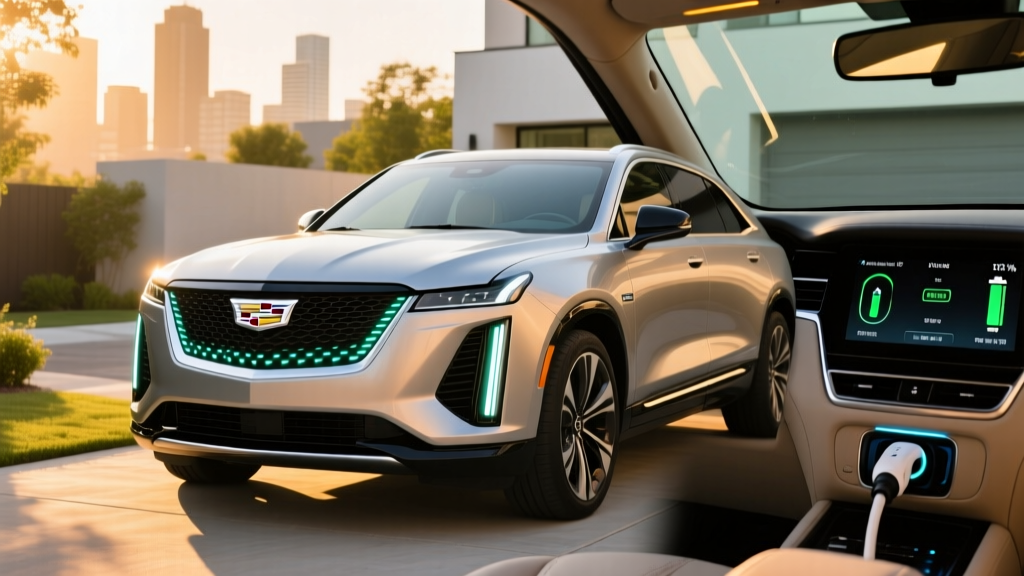
The 2025 Cadillac Escalade IQ (Cadillac's all-electric Escalade) delivers an EPA-estimated 460 miles of range from a massive 200+ kWh Ultium battery, peaks at 200 kW DC fast charging, and starts at $129,990. It eliminates the gas Escalade's ~$4,500/year fuel bill but demands home Level 2 charging access, commands higher insurance premiums, and does not qualify for the $7,500 federal §30D tax credit due to its MSRP exceeding the $80,000 SUV cap. Buy it if you want three-row luxury with silent, instant torque and can charge at home. Skip it if you frequently tow heavy loads over long distances or lack reliable charging access.
2025 Cadillac Escalade IQ: Core EV Specifications
The Escalade IQ rides on GM's BT1 electric platform (shared with the Silverado EV and Sierra EV) and represents Cadillac's first fully electric flagship SUV. Here are the exact figures buyers need:
| Spec | Value |
|---|---|
| EPA Range (estimated) | ~460 miles |
| Battery Capacity (usable) | ~200 kWh, NMC (Ultium) |
| Peak DC Fast Charge Rate | 200 kW |
| 10–80% DC Fast Charge Time | ~35–40 minutes |
| Level 2 AC Charging | 11.5 kW (up to 19.2 kW with optional module) |
| Horsepower (AWD Luxury) | 680 hp |
| Horsepower (Velocity / Sport) | 750 hp |
| 0–60 mph | ~3.4 sec (Velocity trim) |
| Towing Capacity | 8,000 lbs (est.) |
| Seating | 7 passengers, 3 rows |
| Starting MSRP | $129,990 (Luxury); $149,990 (Sport) |
| Battery/Powertrain Warranty | 8 years / 100,000 miles |
Real-World Range vs. EPA Sticker
The ~460-mile EPA estimate assumes mixed driving at moderate temperatures. Expect 370–400 miles on sustained highway driving at 75 mph, and 300–340 miles in sub-freezing winter conditions due to cabin heating demands and battery chemistry limitations. The 200 kWh battery provides a large absolute buffer, but the Escalade IQ's heavy curb weight (~9,000 lbs) and boxy aerodynamics work against highway efficiency. For context, that real-world 370-mile highway range still exceeds most competitors and comfortably covers a Dallas-to-Houston or NYC-to-DC trip without stopping.
Charging the Escalade IQ: Home, Public, and What It Costs
A 200 kWh battery is enormous — roughly double the capacity of a Tesla Model Y Long Range. That means charging logistics matter more here than with smaller EVs.
| Charging Level | Power (kW) | Miles Added per Hour | 0–100% Time (approx.) |
|---|---|---|---|
| Level 1 (120V outlet) | 1.2 kW | ~3 mi/hr | ~170 hours (impractical) |
| Level 2 (240V, 48A) | 11.5 kW | ~29 mi/hr | ~17–18 hours |
| Level 2 (240V, 80A optional) | 19.2 kW | ~48 mi/hr | ~10–11 hours |
| DC Fast Charge (peak) | 200 kW | ~500 mi/hr (peak) | 10–80% in ~35–40 min |
Home Charging Reality
With a standard 11.5 kW Level 2 home charger (48-amp hardwired unit on a 60-amp circuit), you'll add roughly 200 miles overnight in 7 hours — enough for most daily needs but not a full 0–100% recharge in a single night. Upgrading to the optional 19.2 kW onboard charger module and an 80-amp circuit cuts that to ~10 hours, which is more practical for a battery this size.
Home installation cost: Expect $1,200–$3,500 for a Level 2 charger install (equipment + licensed electrician + permit) if your panel has capacity. A 200-amp panel upgrade adds $2,000–$4,000. Given the Escalade IQ's 19.2 kW capability, an 80-amp circuit is worth the investment.
DC Fast Charging Curve Reality
The 200 kW peak rate only applies at low state-of-charge (roughly 10–40%). Above 60% SoC, the charge rate tapers significantly — likely dropping to 100–120 kW, then further to ~50 kW above 80%. This is physics, not a defect: lithium-ion batteries limit current as they fill to prevent degradation and overheating. On a road trip, plan stops around the 10–80% window for the fastest experience. A 10–80% session takes ~35–40 minutes; pushing to 95% could add another 25–30 minutes.
Escalade IQ vs. Gas Escalade: 5-Year Cost Comparison
The most common question from luxury SUV buyers: does going electric actually save money on a six-figure vehicle? Let's run the numbers against the 2025 gas Escalade (6.2L V8, 420 hp, ~16 MPG combined).
| Category | Escalade IQ (EV) | Gas Escalade (V8) |
|---|---|---|
| Base MSRP | $129,990 | $83,895 |
| Federal Tax Credit (§30D) | $0 (MSRP exceeds $80K cap) | $0 |
| Fuel/Energy (5 yrs, 75K mi) | $5,625 ($0.15/kWh home avg) | $23,440 ($3.50/gal, 16 MPG) |
| Maintenance (5 yrs) | ~$2,500 (no oil, fewer wear items) | ~$6,500 (oil, trans, belts, brakes) |
| Insurance (5 yrs, est.) | ~$22,500 ($4,500/yr) | ~$17,500 ($3,500/yr) |
| Estimated Depreciation (5 yrs) | ~$65,000 | ~$42,000 |
| Total 5-Year Cost | ~$225,615 | ~$173,335 |
The verdict: The Escalade IQ saves roughly $17,800 in fuel over 5 years and $4,000 in maintenance, but those savings are overwhelmed by a $46,000 higher purchase price, higher insurance, and steeper projected depreciation. This is not an EV that pays for itself through fuel savings — it's a luxury technology purchase. Buyers motivated purely by economics should consider a more affordable EV or a plug-in hybrid. Buyers who want the experience, the silence, the instant torque, and the tech will find the ownership costs competitive within the ultra-luxury segment.
Energy Cost Per Mile Breakdown
At an estimated 2.0 kWh/mile (a reasonable figure for a 9,000-lb SUV), the Escalade IQ consumes roughly 50 kWh per 100 miles. At the national average residential electricity rate of ~$0.15/kWh (source: EIA), that's $0.30 per mile at home. Public DC fast charging at $0.40–$0.55/kWh pushes that to $0.80–$1.10/mile — comparable to or exceeding the gas Escalade's $0.31/mile at $3.50/gal and 16 MPG. Home charging is essential to realizing any energy-cost advantage.
Federal Tax Credit and Incentive Reality
Under current IRS §30D rules, the Escalade IQ does not qualify for the $7,500 federal clean vehicle credit. The law caps eligible SUVs at $80,000 MSRP, and the Escalade IQ starts at $129,990. There is no workaround — the point-of-sale transfer option and the income caps are irrelevant because the vehicle itself is ineligible.
§30D Eligibility Checklist (2025–2026 Rules)
- MSRP Cap (SUVs): ≤ $80,000 — Escalade IQ FAILS ($129,990)
- Buyer Income Cap (SUVs): ≤ $300K joint / $150K single — N/A
- Battery Sourcing (Critical Minerals): N/A (vehicle ineligible on price)
- North American Assembly: Yes (Factory ZERO, Detroit) — N/A
- Point-of-Sale Transfer: N/A
Always verify current-year rules at IRS.gov and consult a tax professional before purchasing.
Some states offer additional incentives that may not have MSRP caps. Check your state's energy office or DMV for local rebates — but do not count on them offsetting the six-figure price.
Real-World Ownership: What First-Time EV Buyers Must Know
The Escalade IQ is a first EV for many luxury buyers. Here's what the brochure won't tell you:
Home Charging Access Is Non-Negotiable
With a 200 kWh battery, relying solely on public charging is expensive and time-consuming. A full 0–100% charge at a public DC fast charger could cost $80–$110 and take over an hour. At home on Level 2, that same charge costs ~$30 and happens while you sleep. If you live in a condo, apartment, or street-parking situation without charging access, this vehicle will be a frustration, not a luxury.
Cold Weather Hits Harder on Heavy EVs
Lithium-ion batteries lose efficiency in cold temperatures, and cabin heating draws significant energy. Expect 20–30% range reduction in sustained sub-30°F weather. The Escalade IQ's heat pump (standard) mitigates this somewhat, but 460 EPA miles can become 320–350 real winter miles. For northern-climate owners, preconditioning the battery while plugged in (using grid power to warm the pack before driving) is critical for preserving range and enabling faster DC charging.
Towing Slashes Range Dramatically
The estimated 8,000-lb towing capacity is impressive, but towing a 6,000-lb trailer at highway speeds can cut range by 40–50%. That 460-mile range drops to roughly 230–275 miles while towing. Plan charging stops accordingly on any trailer-hauling road trip.
Insurance Costs Are Higher
EV insurance premiums run 15–30% higher than equivalent gas vehicles due to higher repair costs, specialized parts, and battery replacement risk. For a $130,000+ vehicle, expect annual premiums of $4,000–$5,500 depending on your state, driving record, and coverage level. Get quotes before purchasing.
| Myth | Fact |
|---|---|
| "It qualifies for the $7,500 tax credit." | No — MSRP of $129,990 exceeds the $80,000 SUV cap under §30D. |
| "460 miles means I never need to charge on road trips." | Highway and cold-weather real-world range is 300–400 miles. Plan stops on 400+ mile trips. |
| "I can charge it anywhere quickly." | 200 kW peak only at low SoC. Above 80%, charging slows to ~50 kW. Full charges take 35–65 min at DC stations. |
| "EVs need no maintenance." | Tires (heavy EVs wear tires faster), cabin air filters, brake fluid, coolant, and wiper systems still need service. Budget ~$500/yr. |
| "The battery will need replacing in 5 years." | GM's Ultium NMC batteries are warranted for 8 years/100,000 miles with ≤30% degradation. Real-world data shows most EV batteries retain 85–90% capacity at 100K miles. |
Super Cruise and Driver Assistance
The Escalade IQ comes with GM's Super Cruise, a hands-free Level 2 driver-assistance system operational on over 750,000 miles of mapped highways in North America.
SAE Automation Level: Level 2 (Partial Automation)
Super Cruise is not self-driving. The driver must remain attentive, and the system monitors driver engagement via an infrared camera. Hands can leave the wheel on compatible roads, but you are legally and practically responsible for the vehicle at all times. This is fundamentally different from Level 4 robotaxi services like Waymo, which operate without a human driver in geofenced areas.
Super Cruise is one of the best Level 2 systems available — smooth lane changes, reliable on divided highways, and genuinely reducing fatigue on long trips. But it will not navigate construction zones, unmapped roads, or complex urban intersections without driver takeover.
Decision Framework: Should You Buy the Escalade IQ?
Buy the Escalade IQ If:
- You have home Level 2 charging (or can install it)
- You want three-row luxury SUV space with silent, instant-torque electric powertrain
- Your typical daily driving is under 200 miles and road trips are occasional
- You value cutting-edge tech (55-inch LED dash, Super Cruise, air suspension)
- You want to eliminate $4,500+/year in fuel costs and reduce maintenance visits
- Budget is not the primary purchase driver
Skip the Escalade IQ If:
- You lack home or workplace charging access
- You frequently tow heavy loads over long distances (range drops 40–50%)
- You need the $7,500 federal tax credit to justify the purchase
- You drive 300+ highway miles regularly in cold climates without charging infrastructure
- You want the most economical path to three-row family transport (consider a gas Escalade, Grand Cherokee L, or plug-in hybrid alternatives)
- You expect the EV to "pay for itself" through fuel savings — it won't at this price point
Frequently Asked Questions
What is the real-world range of the 2025 Cadillac Escalade IQ?
The EPA-estimated range is approximately 460 miles. In real-world mixed driving, expect 380–420 miles. On sustained highway trips at 75 mph, expect 370–400 miles. In cold weather (below 30°F), expect 300–350 miles. The large 200 kWh battery provides a significant buffer, but the vehicle's weight and aerodynamics limit efficiency at high speeds.
How long does it take to charge the Escalade IQ at home?
On a standard 11.5 kW Level 2 home charger, a full charge takes roughly 17–18 hours. With the optional 19.2 kW onboard charger and an 80-amp circuit, a full charge takes ~10–11 hours. Most owners will charge from 20–80% daily, which takes 6–8 hours on 11.5 kW — easily achievable overnight.
Does the 2025 Escalade IQ qualify for any tax credits?
No. Under current IRS §30D rules, the Escalade IQ's MSRP of $129,990 exceeds the $80,000 cap for SUVs. It does not qualify for the $7,500 federal clean vehicle credit regardless of buyer income or battery sourcing. Some states may offer separate incentives without MSRP caps — check your state's energy office.
How does the Escalade IQ compare to the Tesla Model X?
The Model X Plaid offers more horsepower (1,020 hp), faster 0–60 (2.5 sec), and access to the Supercharger network, but has lower range (~348 miles EPA), less third-row space, and a lower starting price (~$94,990). The Escalade IQ wins on interior luxury, space, and range; the Model X wins on performance and charging infrastructure. Both exceed the §30D MSRP cap.
What connector does the Escalade IQ use?
The 2025 Escalade IQ uses the CCS1 (Combined Charging System) connector for DC fast charging and J1772 for Level 2 AC. GM has committed to transitioning future models to NACS (Tesla's connector), and adapters are expected for Supercharger access — verify adapter availability at purchase time.
Is the battery covered under warranty?
Yes. GM covers the Ultium battery pack for 8 years or 100,000 miles, whichever comes first, against defects and excessive capacity loss (typically defined as dropping below 70% state of health). Based on Ultium chemistry data and broader NMC battery performance in the industry, most packs retain 85–92% capacity at 100,000 miles under normal use.
Can I tow with the Escalade IQ?
Yes, with an estimated 8,000-lb towing capacity. However, towing significantly reduces range — expect a 40–50% reduction at highway speeds. A 460-mile range becomes roughly 230–275 miles while towing a large trailer. Plan charging stops accordingly.
Sources: Cadillac Escalade IQ Official Page, fueleconomy.gov (EPA), IRS §30D Clean Vehicle Credit Rules.