The Ultra-Luxury EV, Quantified
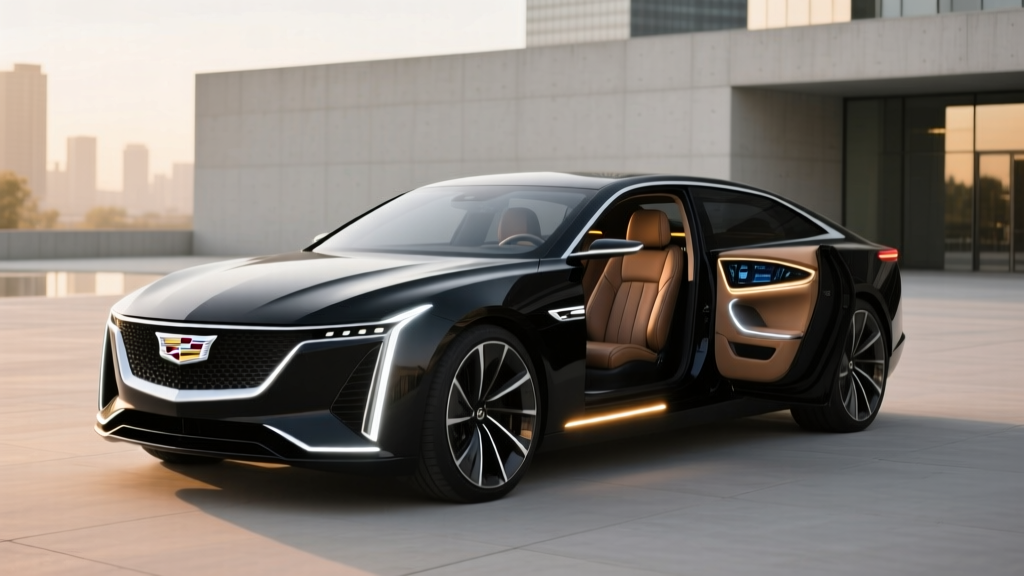
The 2025 Cadillac Celestiq isn't trying to compete with the Tesla Model S or the Mercedes EQS on volume. It's a hand-built, coach-commissioned flagship limited to roughly 400 units per year, each one tailored to its buyer. But beneath the bespoke leather and 55-inch pillar-to-pillar display sits a serious Ultium-based electric powertrain. This review breaks down the Celestiq's real-world range, charging behavior, performance, and ownership economics with the exact numbers buyers need.
Starting above $340,000 before destination, the Celestiq occupies rarefied air — competing with the Rolls-Royce Spectre and Bentley's forthcoming EV rather than mainstream luxury sedans. Every unit is built at GM's Factory ZERO in Detroit with individual buyer consultations. Let's get into what the engineering actually delivers.
Range, Battery, and Efficiency
The Celestiq uses a massive 111 kWh usable lithium-ion battery pack built on GM's Ultium platform with NMC (nickel manganese cobalt) chemistry. The pack feeds a dual-motor all-wheel-drive system. EPA-rated efficiency sits at approximately 89 MPGe combined, which translates to roughly 38 kWh per 100 miles — reasonable for a 5,800-pound sedan.
Real-World Expectation: Plan for approximately 250–270 miles on sustained highway driving at 70+ mph, and as low as 220–240 miles in freezing temperatures with cabin heating active. The Celestiq's large frontal area and weight work against highway efficiency. City driving with regenerative braking can push real-world results closer to the EPA sticker.
| Spec | Value |
|---|---|
| EPA Range | 303 miles |
| Battery (usable) | 111 kWh, NMC chemistry |
| Efficiency | 89 MPGe / ~38 kWh/100mi |
| Drivetrain | Dual-motor AWD |
| Horsepower | ~600 HP (estimated) |
| Torque | ~640 lb-ft (estimated) |
| 0–60 mph | ~3.8 seconds |
| Max DC Fast Charge | ~200 kW peak |
| 10–80% DC Charge Time | ~35 minutes |
| Level 2 (240V) Charge Rate | ~11.5 kW (~22 mi/hr) |
| Base MSRP | ~$340,000+ |
Charging Speed and Infrastructure
The Celestiq supports DC fast charging at a peak rate of approximately 200 kW via the CCS1 connector (standard on GM Ultium vehicles). On an Electrify America or similar 350 kW-rated station, the Celestiq can add roughly 10–80% state of charge in about 35 minutes. However, as with all large-battery EVs, the charge curve tapers significantly above 80% — a full 80–100% top-off can add another 25–30 minutes. Battery preconditioning activates automatically when a DC fast-charger is set as a navigation destination, which is critical for achieving peak charge rates in cold weather.
| Level | Power (kW) | Miles Added per Hour | Use Case |
|---|---|---|---|
| Level 1 (120V) | ~1.4 kW | ~3 mi/hr | Emergency/overnight trickle |
| Level 2 (240V, 48A) | ~11.5 kW | ~22 mi/hr | Home daily charging |
| DC Fast (CCS1) | ~200 kW peak | ~200+ mi in 30 min | Road trips |
At home on a properly installed Level 2 charger (NEMA 14-50 or hardwired wallbox at 48 amps), the Celestiq will fully replenish from near-empty in roughly 10 hours — easily overnight. Given the $340K+ price point, most buyers will have a dedicated 60-amp circuit installed in their garage, and Cadillac's concierge service assists with home charging setup as part of the purchase experience. Note: kW is the rate of power delivery (how fast energy flows into the battery), while kWh is the total energy capacity of the battery itself — the 111 kWh pack is the tank, and 200 kW is how fast the pump fills it.
Performance and Driving Dynamics
The dual-motor AWD powertrain produces an estimated 600 horsepower and 640 lb-ft of torque, propelling the 5,800-pound sedan to 60 mph in approximately 3.8 seconds. That's not supercar territory, but for a full-size luxury sedan it's brisk and effortless — the kind of surge that makes highway merging and overtaking trivial.
The Celestiq rides on GM's Ultium platform with a dedicated luxury-tuned air suspension, rear-wheel steering (up to 12 degrees), and magnetic ride control 4.0. The steering ratio is calibrated for low-effort maneuvering rather than sporty feedback. This is a car designed for wafting, not carving canyons. Cabin isolation is exceptional — active noise cancellation and acoustic laminated glass keep road and wind noise at limousine-grade levels.
Interior, Cargo, and Technology
The Celestiq's cabin is its primary selling point. A 55-inch pillar-to-pillar LED display spans the entire dashboard, with a separate passenger-side screen to prevent driver distraction. The center console features a fixed glass roof panel with suspended particle device (SPD) smart-glass technology that adjusts tint electronically. Each of the four seats is individually adjustable with heated, ventilated, and massaging functions — this is strictly a four-passenger vehicle.
Cargo volume: The trunk offers approximately 18.2 cubic feet of luggage space. There is no front trunk (frunk) — the Ultium platform's front motor and power electronics occupy that space. Rear legroom is generous at approximately 41 inches, befitting a chauffeur-class sedan.
Driver Assistance: The Celestiq comes equipped with Super Cruise, GM's Level 2 hands-free driving system operational on over 400,000 miles of mapped highways in the U.S. and Canada. Super Cruise is a SAE Level 2 system — the driver must remain attentive, and the infrared camera monitors eye gaze at all times. It is not autonomous driving (Level 4). The system handles lane-keeping, adaptive cruise, and automatic lane changes on compatible roads with impressive smoothness, but hands-off does not mean eyes-off.
Pricing, Trims, and Tax Credit Eligibility
The 2025 Cadillac Celestiq starts at approximately $340,000 before destination and any bespoke customization. Because every Celestiq is individually commissioned through Cadillac's Halo concierge program, final prices vary significantly based on material selections, paint-to-sample finishes, and interior personalization. Expect as-tested examples to land between $360,000 and $400,000+.
| Item | Details |
|---|---|
| Base MSRP | ~$340,000 |
| As-Tested (typical) | $360,000–$400,000+ |
| §30D Federal Tax Credit | Not eligible — exceeds $55,000 sedan MSRP cap |
| Point-of-Sale Transfer | N/A (credit does not apply) |
Federal tax credit reality: Under IRS §30D rules, new EVs classified as sedans must have an MSRP at or below $55,000 to qualify for the up-to-$7,500 federal tax credit. The Celestiq, at $340,000+, exceeds this cap by an enormous margin and is not eligible for any portion of the federal EV tax credit. This is standard for ultra-luxury vehicles — the Rolls-Royce Spectre and Mercedes-Maybach EQS face the same limitation. Buyers in this segment are not typically credit-motivated, but it's worth noting for total-cost calculations.
Warranty and Ownership Costs
Cadillac backs the Celestiq with the brand's standard EV warranty package:
- Battery warranty: 8 years / 100,000 miles (with a capacity retention threshold — GM guarantees the battery will retain at least 70% of original capacity during the warranty period)
- Powertrain warranty: 6 years / 70,000 miles
- Bumper-to-bumper: 4 years / 50,000 miles
- Concierge service: Includes scheduled maintenance, detailing, and Super Cruise connectivity for an initial ownership period (terms vary by commission agreement)
Insurance premiums for a $340K+ EV are substantial — expect annual premiums in the $8,000–$14,000 range depending on driver profile, garage location, and coverage levels. Depreciation is a wildcard: ultra-limited-production vehicles can hold value better than mass-market luxury EVs, but the Celestiq's long-term residual values have no precedent to reference yet.
Who Should Buy the Celestiq?
The 2025 Cadillac Celestiq suits a very specific buyer: someone who wants a hand-built, American-made ultra-luxury electric sedan that makes a statement distinct from the European establishment. It's for the collector who already has a Rolls-Royce and wants something rarer, the GM loyalist at the top of the brand's ladder, or the EV-early-adopter executive who values exclusivity over efficiency.
It is not the rational choice for someone prioritizing range-per-dollar, charging speed, or practicality. A Lucid Air Grand Touring offers 516 miles of EPA range for a third of the price. A Mercedes EQS 580 provides comparable luxury at roughly $120,000. The Celestiq is an artisanal product — you're paying for bespoke craftsmanship and exclusivity, not spec-sheet dominance.
- You want a hand-built, commission-only American luxury EV with fewer than 400 produced annually
- Bespoke personalization matters more than spec-sheet leadership
- You value exclusivity and brand heritage over efficiency metrics
- Maximum range is your priority (Lucid Air Grand Touring: 516 mi EPA)
- You want the fastest DC charging in the luxury segment (Porsche Taycan or Hyundai Ioniq 5)
- Total cost of ownership and depreciation concern you
Pros and Cons
- Hand-built exclusivity — fewer than 400 units/year
- 55-inch pillar-to-pillar display is unmatched in any production car
- Super Cruise hands-free driving on 400K+ miles of highway
- Air suspension + rear-wheel steering delivers limousine-grade ride
- 111 kWh battery provides solid 303-mi EPA range for its class
- Full concierge ownership experience
- $340K+ starting price; no federal tax credit eligibility
- ~200 kW peak DC charging is outpaced by Porsche/Hyundai 800V platforms
- No frunk; trunk-only cargo at 18.2 cu ft
- Strictly four-passenger — no fifth seat option
- Real-world highway range drops to ~250 mi
- Unproven long-term resale value
Frequently Asked Questions
What is the real-world range of the 2025 Cadillac Celestiq?
The EPA rates the Celestiq at 303 miles. In real-world highway driving at 70+ mph, expect approximately 250–270 miles. In freezing temperatures with cabin heat active, that can drop to 220–240 miles. City driving with regenerative braking recovers more energy and may approach the EPA figure.
How fast does the Celestiq charge?
On a DC fast charger, the Celestiq peaks at approximately 200 kW and can charge from 10–80% in about 35 minutes. At home on a Level 2 (240V, 48A) charger, it adds roughly 22 miles per hour, meaning a full overnight charge takes about 10 hours. Charging slows significantly above 80% SoC — plan for 25–30 additional minutes for a complete top-off.
Does the 2025 Cadillac Celestiq qualify for the federal EV tax credit?
No. Under IRS §30D, sedans must have an MSRP of $55,000 or less. The Celestiq's ~$340,000 base price disqualifies it entirely. Income caps and battery-sourcing requirements are moot once the MSRP cap is exceeded.
Is the Celestiq worth buying vs. the Rolls-Royce Spectre or Lucid Air?
The Celestiq competes on exclusivity and bespoke craftsmanship, not specs. The Rolls-Royce Spectre (~$420K, 260-mi EPA range) offers stronger brand cachet but less range. The Lucid Air Grand Touring (~$140K, 516-mi EPA range) dominates on efficiency and value but lacks the Celestiq's hand-built rarity. It depends entirely on whether you value artisanal exclusivity or engineering leadership.
What is the Celestiq's battery chemistry and how long will it last?
The Celestiq uses NMC (nickel manganese cobalt) chemistry in its 111 kWh Ultium battery pack. NMC offers high energy density suited to a large luxury sedan. GM warranties the battery for 8 years/100,000 miles with a 70% capacity retention guarantee. NMC packs typically see 10–15% degradation over 100,000 miles under normal use patterns — avoiding frequent 100% charges and DC fast charging when possible extends longevity.
How much does it cost to charge the Celestiq at home?
With a 111 kWh battery and average U.S. residential electricity at ~$0.16/kWh, a full home charge costs approximately $17.76. At the Celestiq's efficiency of ~38 kWh/100mi, that works out to roughly $0.06 per mile — a fraction of what a comparable V8 luxury sedan would spend on premium fuel.