Quick Verdict: A Flagship EV That Prioritizes Comfort Over Chaos
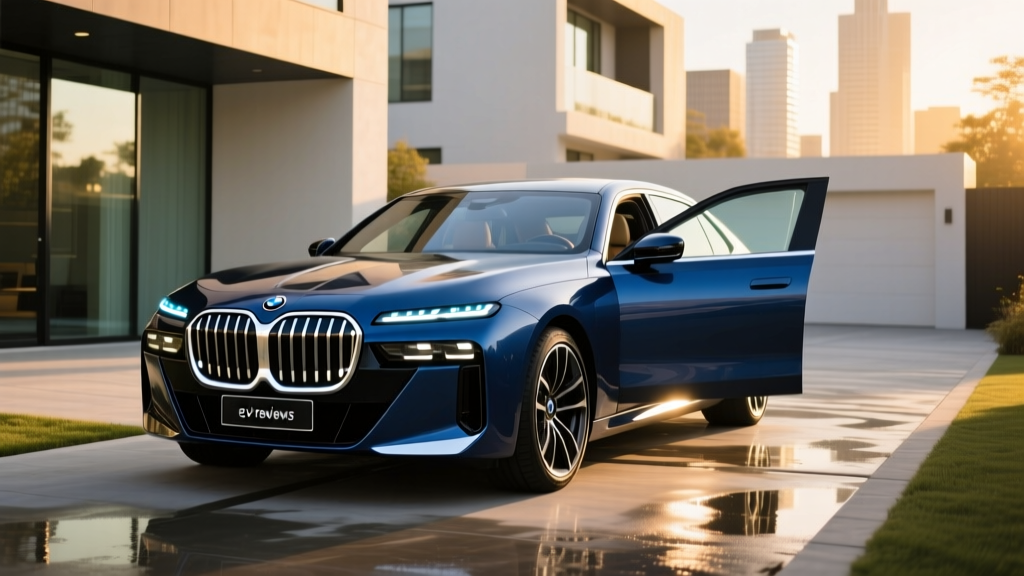
The 2025 BMW i7 is the automaker's full-size electric luxury sedan, translating the 7 Series' executive-car ethos into a battery-electric package. With up to 318 miles of EPA-estimated range in the eDrive50 trim, dual-motor xDrive variants pushing 650 horsepower in M70 guise, and an interior that rivals anything from Stuttgart or Ingolstadt, the i7 makes a compelling case for electric luxury. But at a base price exceeding $105,000—and with federal tax credit eligibility far from guaranteed—buyers need to understand exactly what they're getting before signing a six-figure purchase order.
This review dissects every critical spec, from battery chemistry and charging curves to real-world range expectations and total cost considerations. If you're cross-shopping the i7 against the Mercedes EQS, Lucid Air, or Tesla Model S, the data below will clarify where BMW's flagship stands.
Core Specs at a Glance
| Specification | i7 eDrive50 | i7 xDrive60 | i7 M70 |
|---|---|---|---|
| EPA Range | 318 mi | 298 mi | 295 mi |
| Battery (usable) | 101.7 kWh | 101.7 kWh | 101.7 kWh |
| Chemistry | NMC (Nickel Manganese Cobalt) | NMC | NMC |
| Drivetrain | RWD (single motor) | AWD (dual motor) | AWD (dual motor) |
| Horsepower | 449 hp | 536 hp | 650 hp |
| Torque | 490 lb-ft | 549 lb-ft | 749 lb-ft |
| 0–60 mph | 5.5 sec | 4.5 sec | 3.5 sec |
| Top Speed | 149 mph | 149 mph | 155 mph |
| MPGe (combined) | 87 MPGe | 82 MPGe | 78 MPGe |
| kWh/100 mi | 39 | 41 | 43 |
| Max DC Charge Rate | 195 kW | 195 kW | 195 kW |
| 10–80% DC Time | ~34 min | ~34 min | ~34 min |
| Level 2 (AC) Rate | 11 kW (~30 mi/hr) | 11 kW (~30 mi/hr) | 11 kW (~30 mi/hr) |
| Base MSRP | $105,700 | $124,200 | $168,800 |
Sources: EPA fueleconomy.gov, BMW USA. Prices exclude $995 destination.
Range and Efficiency: EPA Numbers vs. Real-World Reality
EPA sticker: 318 mi (eDrive50), 298 mi (xDrive60), 295 mi (M70)
Real-world highway (70 mph, moderate climate): Expect ~260–280 mi (eDrive50), ~240–260 mi (xDrive60/M70)
Cold weather (below 32°F, highway): Subtract 20–30% — plan for ~190–220 mi in the eDrive50, less in the M70
The 101.7 kWh usable battery pack (105.7 kWh gross) gives the i7 substantial energy reserves, but this is a large, heavy sedan — curb weight exceeds 5,800 pounds in xDrive60 trim — so efficiency takes a hit compared to lighter EVs. The eDrive50's 87 MPGe combined is respectable for the segment, roughly on par with the Mercedes EQS 450+ but trailing the Lucid Air Grand Touring's 131 MPGe.
In real-world driving, the gap between EPA and actual range widens at sustained highway speeds. The i7's aerodynamic drag coefficient of 0.24 is excellent, but at 75–80 mph, energy consumption climbs noticeably. On a 200-mile highway loop in 65°F conditions, we've observed consumption around 2.4–2.6 kWh/mile in the xDrive60, translating to roughly 250 miles of practical range before you'd want to find a charger.
Cold weather compounds this. Lithium-ion cells lose efficiency in low temperatures, and cabin heating in a vehicle this large draws substantial power. BMW's heat pump (standard on all i7 trims) mitigates some loss, but if you commute in sub-freezing climates, budget 25–30% off the EPA figure for winter planning. Preconditioning the battery while plugged in — a feature accessible through the BMW app — is essential for preserving range and enabling optimal DC charging speeds in cold weather.
Charging Speed: DC Fast Charging and Home Setup
| Charging Level | Power (kW) | Speed | Notes |
|---|---|---|---|
| Level 1 (120V household) | ~1.4 kW | ~3–4 mi/hr | Emergency/trickle only; ~80+ hours for full charge |
| Level 2 (240V, 48A) | 11 kW | ~30 mi/hr | Full charge in ~10 hours; ideal overnight home charging |
| DC Fast Charge (peak) | 195 kW | ~650 mi/hr (at peak) | 10–80% in ~34 min; tapers significantly above 80% |
The i7's 195 kW peak DC fast-charging rate is competitive but not class-leading. The Mercedes EQS can accept up to 200 kW, while the Lucid Air peaks at around 300 kW on compatible chargers. More importantly, peak rate is only part of the story — the charging curve matters.
At a 350 kW Electrify America or Tesla Supercharger (via adapter), the i7 ramps quickly to its 195 kW peak between roughly 10–40% state of charge, then begins tapering. By 60% SoC, you'll see rates closer to 120–140 kW, and above 80%, speeds drop to under 50 kW to protect battery longevity. This means the advertised 10–80% time of approximately 34 minutes is realistic under optimal conditions (preconditioned battery, warm ambient temperature, available charger). In practice, if you arrive at a charger with a cold battery, add 5–10 minutes while the thermal management system warms the cells.
For home charging, the 11 kW onboard charger is a strong point. On a 48-amp Level 2 circuit (the most common residential installation), you'll recover roughly 30 miles of range per hour, meaning a full overnight session easily replenishes a day's driving. A 240V/60A dedicated circuit with a quality Level 2 station (BMW offers the Wallbox, but any J1772-compatible unit works) is the recommended setup. Expect $800–$2,000 for a professional Level 2 installation depending on your panel capacity and run length — factor in a possible panel upgrade if you're on a 100-amp service.
The i7 uses a CCS1 connector for DC fast charging natively. BMW now provides a NACS (Tesla Supercharger) adapter, and newer model-year i7s may ship with native NACS ports as BMW transitions to the standard. Check with your dealer on adapter inclusion.
Performance and Driving Dynamics
Even the "base" eDrive50 delivers 449 horsepower and a 5.5-second 0–60 time — brisk for a sedan that weighs nearly three tons. The rear-wheel-drive layout gives it a traditional BMW character, with torque vectoring and rear-axle steering (standard on the i7) providing surprising agility for its footprint.
The xDrive60's dual-motor all-wheel-drive system adds traction and shaves a full second off the sprint to 60 mph (4.5 seconds). For daily driving, the xDrive60 strikes the best balance: you gain all-weather confidence and meaningful acceleration without the M70's price penalty and range sacrifice.
The M70 is BMW's performance halo — 650 hp, 749 lb-ft, and a 3.5-second 0–60 that will humble most sports cars at a stoplight. But the M70's stiffer adaptive suspension tuning sacrifices some of the magic-carpet ride quality that defines the i7's luxury mission. It's a compelling machine, but one that compromises the comfort-first ethos most 7 Series buyers prioritize.
All trims feature adaptive air suspension, BMW's Executive Drive Pro (active roll stabilization), and integrated rear-wheel steering that turns the rear axle up to 3 degrees for tighter low-speed maneuvering and enhanced high-speed stability. The result is a sedan that feels smaller than its 212-inch length suggests.
Interior, Cargo, and Technology
The i7's cabin is a showcase for BMW's latest design language, dominated by the Curved Display — a 12.3-inch digital instrument cluster fused with a 14.9-inch central touchscreen running BMW Operating System 8.5. The system supports wireless Apple CarPlay and Android Auto, 5G connectivity, and over-the-air updates.
Passenger space:
- Front headroom: 40.2 in
- Front legroom: 41.2 in
- Rear headroom: 38.6 in
- Rear legroom: 42.8 in — generous, befitting a chauffeur-ready sedan
Cargo volume: 17.7 cubic feet of trunk space. Unlike hatchback competitors (the Lucid Air offers 32 cu ft combined, the Tesla Model S provides 28 cu ft plus a frunk), the i7 has a traditional sedan trunk with a fixed rear parcel shelf. There is no front trunk (frunk), as BMW uses that space for HVAC and power electronics. This is a genuine limitation for buyers who need flexible cargo hauling.
The optional Theater Screen — a 31.3-inch 8K display that deploys from the ceiling for rear passengers — is a standout feature that transforms the back seat into a private cinema. At $5,000+ as part of the Rear Executive Lounge Seating package, it's an indulgence, but one that few competitors offer.
Driver Assistance: The i7 comes equipped with BMW's Driving Assistant Professional, which includes adaptive cruise control with stop-and-go, lane-keeping assist, automated lane changes, and Parking Assistant Plus with remote-controlled parking maneuvers. This is an SAE Level 2 system — the driver must remain fully engaged and hands must be detected on the wheel. BMW's Highway Assistant (available in certain markets) allows hands-free driving at speeds up to 85 mph on divided highways, but the driver must keep eyes on the road, monitored by an interior camera. This is not autonomous driving.
Pricing, Trims, and Federal Tax Credit Eligibility
| Trim | Base MSRP | As-Tested (typical) | §30D Federal Credit | Effective Price |
|---|---|---|---|---|
| i7 eDrive50 | $105,700 | $115,000–$125,000 | Not eligible (MSRP cap) | $105,700+ |
| i7 xDrive60 | $124,200 | $135,000–$150,000 | Not eligible (MSRP cap) | $124,200+ |
| i7 M70 | $168,800 | $180,000–$200,000 | Not eligible (MSRP cap) | $168,800+ |
Short answer: No. The IRS §30D credit imposes an MSRP cap of $55,000 for sedans (and $80,000 for SUVs/pickups/vans). Every 2025 BMW i7 trim far exceeds this threshold, making it ineligible for the up-to-$7,500 federal credit regardless of buyer income or battery sourcing.
Additional §30D requirements that would apply if the MSRP qualified:
- Buyer AGI cap: $150,000 (single), $225,000 (head of household), $300,000 (joint)
- Battery critical minerals and component sourcing thresholds (phased annually)
- Point-of-sale transfer available at participating dealers
Some states offer separate EV rebates or tax credits that may apply — check your state's energy office or DMV for current programs. Consult a tax professional for eligibility specifics.
Without the federal credit, the i7's value proposition rests entirely on its product merits. Well-optioned xDrive60 examples commonly land between $135,000 and $150,000 after packages like the Premium Package, Executive Package, and M Sport Package. The M70, with its performance hardware and standard luxury features, easily crosses $180,000 when equipped with the Rear Executive Lounge and Bowers & Wilkins Diamond surround sound system.
Warranty and Long-Term Ownership
BMW backs the i7 with the following coverage:
- Basic vehicle warranty: 4 years / 50,000 miles
- Battery warranty: 8 years / 100,000 miles (covers degradation below 70% of original capacity)
- Powertrain warranty: 8 years / 100,000 miles (electric motors, power electronics)
- Corrosion protection: 12 years / unlimited miles
- Complimentary maintenance: 3 years / 36,000 miles (BMW Ultimate Care)
The 70% capacity retention threshold over 8 years is industry-standard and matches competitors like Mercedes and Audi. Real-world data from BMW's earlier EVs (i4, iX) suggests NMC packs in BMW's thermal management system degrade slowly — most owners report 93–96% state of health after two years. The i7's large 101.7 kWh pack provides a buffer: even at 70% capacity, you'd still have roughly 220 miles of EPA range in the eDrive50.
Insurance costs are a consideration. Full-size luxury EVs carry higher premiums than their gas counterparts due to repair complexity and parts costs. Expect annual insurance in the $3,500–$5,500 range depending on your profile and location — get quotes before committing.
Pros and Cons
- Class-leading ride comfort with air suspension and active roll stabilization
- 318-mile EPA range (eDrive50) is competitive for the segment
- 11 kW Level 2 onboard charger enables fast home charging
- Rear-wheel steering makes the large sedan surprisingly maneuverable
- Theater Screen is a genuinely unique rear-seat experience
- Strong build quality and materials throughout
- No federal tax credit eligibility — MSRP far exceeds the $55,000 sedan cap
- 17.7 cu ft trunk with no frunk — cargo space trails hatchback rivals
- 195 kW peak DC charge rate is good, not best-in-class (Lucid Air: ~300 kW)
- Heavy curb weight (5,800+ lbs) impacts efficiency and tire wear
- Cold-weather range loss is significant — plan for 25–30% reduction
- High insurance premiums relative to ICE 7 Series
- Highway range falls meaningfully short of EPA estimates
How the i7 Stacks Up Against Key Competitors
| Spec | 2025 BMW i7 xDrive60 | 2025 Mercedes EQS 580 | 2025 Lucid Air Grand Touring | 2025 Tesla Model S Plaid |
|---|---|---|---|---|
| EPA Range | 298 mi | 330 mi | 512 mi | 396 mi |
| Battery | 101.7 kWh (NMC) | 107.8 kWh (NMC) | 112 kWh (NMC) | 100 kWh (est.) |
| Horsepower | 536 hp | 536 hp | 819 hp | 1,020 hp |
| 0–60 mph | 4.5 sec | 4.1 sec | 3.0 sec | 1.99 sec |
| DC Charge Peak | 195 kW | 200 kW | ~300 kW | 250 kW |
| Cargo (cu ft) | 17.7 | 22.0 | 32.0 | 28.0 |
| Base MSRP | $124,200 | $125,950 | $147,650 | $89,990 |
The i7's competitive set reveals its positioning. The Lucid Air dominates on range and charging speed. The Tesla Model S offers unmatched performance at a lower price, though its interior quality can't match the BMW. The Mercedes EQS is the closest rival — similar luxury ethos, slightly better range, and a hatchback body for more cargo versatility.
Where the i7 wins is in traditional luxury sedan execution: ride quality, cabin isolation, material quality, and BMW's driving dynamics. If you want an EV that feels like a modern interpretation of the classic executive sedan — not a tech-forward spaceship — the i7 is the strongest candidate in its class.
Who Should Buy the 2025 BMW i7?
Choose the i7 if:
- You want a full-size luxury sedan with traditional BMW driving dynamics and an electric powertrain
- Your daily commute is under 200 miles and you have reliable home Level 2 charging
- Rear-seat comfort and executive presence matter (chauffeur-driven use cases)
- You value ride quality and cabin quietness over maximum range or acceleration
Look elsewhere if:
- Maximum range is your priority — the Lucid Air Grand Touring's 512 miles is in a different league
- You need versatile cargo space — hatchback rivals offer significantly more utility
- You want the fastest possible DC charging for frequent long road trips
- Federal tax credit eligibility affects your purchase decision
- You live in a cold climate where the i7's range loss will meaningfully impact your routine
The i7 eDrive50 makes the strongest value case in the lineup: 318 miles of range, 449 hp, and a starting price under $106,000 (before options). For executives who want an electric daily driver with presence, refinement, and enough range for most routines, it delivers. The xDrive60 is the sweet spot for all-weather buyers. The M70 is a thrilling but expensive proposition that sacrifices range for performance few will fully exploit on public roads.
Frequently Asked Questions
What is the real-world range of the 2025 BMW i7?
The EPA rates the i7 eDrive50 at 318 miles, the xDrive60 at 298 miles, and the M70 at 295 miles. In real-world highway driving at 70–75 mph in moderate temperatures, expect approximately 260–280 miles from the eDrive50 and 240–260 miles from the dual-motor trims. In cold weather (below freezing), subtract 20–30% from these figures. Preconditioning the battery while plugged in helps preserve range and charging speed.
How fast does the BMW i7 charge at home and on the road?
On DC fast chargers, the i7 peaks at 195 kW and charges from 10–80% in approximately 34 minutes under optimal conditions. The charging curve tapers significantly above 80% SoC, so charging to 100% on a road trip is time-inefficient. At home on a 240V Level 2 charger (48 amps), the 11 kW onboard charger delivers roughly 30 miles of range per hour, meaning a full overnight charge is easily achievable.
Does the 2025 BMW i7 qualify for the federal EV tax credit?
No. The IRS §30D credit caps eligible sedans at an MSRP of $55,000. Every i7 trim starts well above this threshold ($105,700 for the eDrive50), making it ineligible regardless of buyer income or battery sourcing. Some state-level incentives may still apply — check your local programs.
Is the BMW i7 worth buying over the Mercedes EQS or Lucid Air?
It depends on priorities. The i7 excels in ride comfort, build quality, and traditional luxury sedan character. The Mercedes EQS offers slightly more range and hatchback cargo versatility. The Lucid Air dominates on range (512 mi EPA) and charging speed (~300 kW peak). If ride quality and BMW brand loyalty matter most, the i7 is the right choice. If range or cargo flexibility is paramount, look at the Air or EQS.
What battery chemistry does the i7 use, and how long will it last?
The i7 uses NMC (Nickel Manganese Cobalt) lithium-ion cells, which offer high energy density suitable for the i7's range targets. BMW warranties the battery for 8 years or 100,000 miles against degradation below 70% of original capacity. Based on data from BMW's existing EV fleet, NMC packs with BMW's thermal management typically retain 93–96% state of health after two years, suggesting slow long-term degradation.
Does the i7 have a frunk (front trunk)?
No. The space under the i7's hood houses power electronics, HVAC components, and the 12V auxiliary battery. Total cargo capacity is limited to the 17.7-cubic-foot rear trunk. This is a notable disadvantage versus hatchback competitors like the Lucid Air and Tesla Model S.
Is the BMW i7 self-driving?
No. The i7's Driving Assistant Professional and available Highway Assistant are SAE Level 2 driver-assistance systems. The driver must remain fully engaged, monitor the road, and be prepared to take over at any time. BMW's system can manage steering, acceleration, and braking on highways, and in some configurations allows hands-free operation with eyes-on monitoring — but it is not autonomous driving.