Quick Verdict: The Electric Sports Sedan That Doesn't Compromise
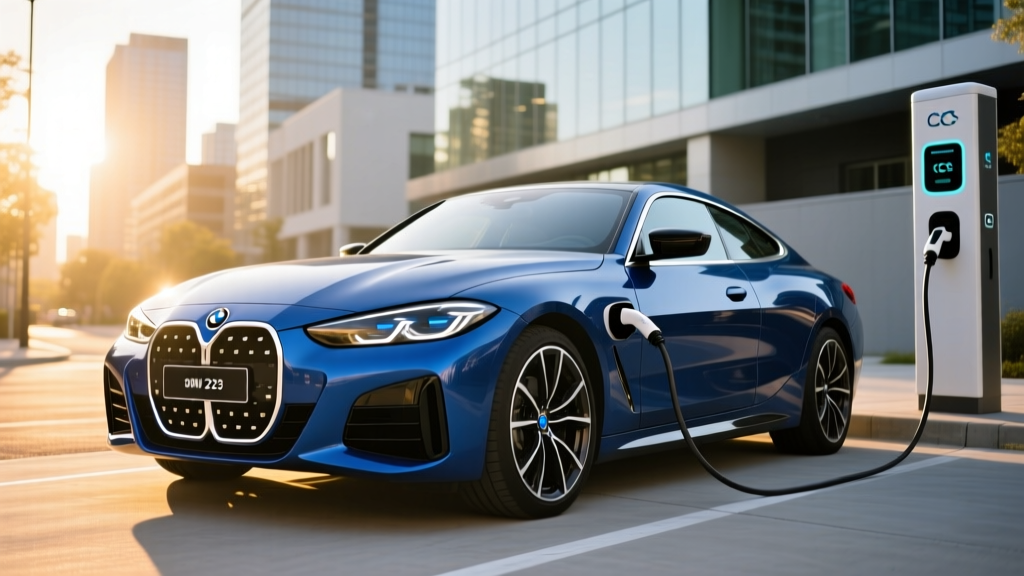
The 2025 BMW i4 remains one of the most convincing arguments for electrified luxury sedans. Built on BMW's flexible CLAR platform alongside the 3 and 4 Series, the i4 delivers genuine driving engagement, a premium cabin, and competitive range — without the dedicated-EV packaging advantages of rivals like the Tesla Model 3 or Hyundai Ioniq 6. For 2025, BMW has refreshed the i4 with updated styling, a revised interior, and new driver-assistance features, while keeping the powertrain lineup largely intact across the eDrive35, eDrive40, and M50 trims.
If you want a luxury EV that drives like a BMW first and an electric car second, the i4 is hard to fault. If maximum interior volume, the lowest price-per-mile-of-range, or the fastest public charging in the segment are your priorities, alternatives deserve a close look.
2025 BMW i4 Specifications at a Glance
| Spec | eDrive35 | eDrive40 | M50 |
|---|---|---|---|
| Base MSRP | $52,200 | $57,200 | $69,900 |
| Drivetrain | RWD (single motor) | RWD (single motor) | AWD (dual motor) |
| Horsepower | 281 hp | 335 hp | 536 hp |
| 0–60 mph | 5.8 sec | 5.5 sec | 3.7 sec |
| Battery (gross / usable) | 70.2 kWh / 66.5 kWh | 83.5 kWh / 80.7 kWh | 83.5 kWh / 80.7 kWh |
| Battery Chemistry | NMC (Nickel Manganese Cobalt) | NMC | NMC |
| EPA Range | 256 mi (18" wheels) | 307 mi (18" wheels) | 245–270 mi |
| EPA Efficiency | 100 MPGe (29 kWh/100mi) | 109 MPGe (27 kWh/100mi) | 97 MPGe (31 kWh/100mi) |
| Max DC Fast Charge | 180 kW | 205 kW | 205 kW |
| 10–80% DC Charge Time | ~31 min | ~31 min | ~31 min |
| Level 2 Home Charge Rate | 11 kW (AC) | 11 kW (AC) | 11 kW (AC) |
| Cargo Volume (rear seats up/down) | 16.6 cu ft (liftback) / 45.6 cu ft (seats folded) | ||
| Battery Warranty | 8 years / 100,000 miles | ||
Source: EPA fueleconomy.gov and BMW USA specifications. Range varies by wheel size and trim configuration.
Range and Efficiency: EPA Numbers vs. Real-World Expectations
EPA Sticker: Up to 307 miles (eDrive40 with 18" wheels)
Real-World Expectation: Expect approximately 250–275 miles on a mixed highway/city drive in moderate temperatures. Sustained 75+ mph highway driving reduces range to roughly 230–250 miles. In cold weather (below 30°F), plan for 20–30% range loss, bringing usable range down to 180–210 miles without preconditioning.
The eDrive40's 80.7 kWh usable battery paired with its efficient single-motor RWD layout delivers the best range in the lineup. The eDrive35, with its smaller 66.5 kWh usable pack, sacrifices about 50 miles of EPA range to hit a lower price point. The M50's dual-motor AWD system and heavier curb weight drop range to between 245 and 270 miles depending on wheel selection.
The i4's NMC chemistry provides strong energy density but is more sensitive to extreme temperatures than LFP (lithium iron phosphate) packs found in some competitors. BMW's thermal management system is robust — the car actively heats and cools the battery — but the physics of NMC cells mean you'll see more cold-weather range reduction than in an LFP-equipped vehicle. Preconditioning the battery before fast charging or departure (via the BMW app or scheduled timer) mitigates this significantly.
Efficiency-wise, the eDrive40 achieves 27 kWh per 100 miles combined — competitive with the Tesla Model 3 Long Range (25 kWh/100mi) and slightly behind the Hyundai Ioniq 6 Long Range (24 kWh/100mi). The i4's aerodynamic drag coefficient of 0.24 helps, but its Gran Coupe liftback shape and heavier weight work against it on long highway slogs.
Charging Performance: DC Fast Charging and Home Setup
| Charging Level | Power / Rate | Miles Added per Hour | Notes |
|---|---|---|---|
| Level 1 (120V household) | ~1.4 kW | ~4–5 mi/hr | Emergency/top-up only; ~60+ hours for full charge |
| Level 2 (240V home) | 11 kW (48A) | ~32–36 mi/hr | Full charge in ~8 hours; requires 60A circuit |
| DC Fast Charge | Peak 205 kW (eDrive40/M50) Peak 180 kW (eDrive35) | ~195 mi in 10 min (peak) | 10–80% in ~31 min; tapers significantly above 80% |
The i4 uses the CCS1 connector standard for DC fast charging, compatible with Electrify America, EVgo, and most non-Tesla networks. BMW does not currently offer a NACS (Tesla Supercharger) native port on the 2025 i4, though a CCS-to-NACS adapter is available for access to Tesla's V3 Superchargers — check BMW's official adapter compatibility list before purchasing one.
The 205 kW peak charge rate (eDrive40 and M50) is respectable but trails the Hyundai Ioniq 6's 350 kW-capable 800V architecture and the Tesla Model 3's sustained charge curve. In practice, the i4 holds strong charging speeds between 10% and 50% SoC, then progressively tapers. From 80% to 100%, expect charging to slow dramatically — this is typical of NMC chemistry and BMW's conservative charge profile to protect long-term battery health.
For home charging, the i4's 11 kW onboard charger is one of the faster AC chargers in the luxury sedan segment. On a 48-amp Level 2 circuit (requiring a 60-amp breaker), you'll add roughly 32–36 miles of range per hour. Most owners charging overnight from 20% to 80% will wake up to a full daily charge in 5–6 hours. If your home electrical panel is older or at capacity, budget for a potential panel upgrade — a 200-amp service is typically recommended for Level 2 charging alongside other household loads.
Performance and Driving Dynamics
The i4's CLAR platform origins give it a clear advantage: this is a BMW that happens to be electric, not an EV with BMW branding bolted on. The steering weight, chassis balance, and suspension tuning feel authentic to the brand's sports-sedan heritage.
The eDrive35 (281 hp, RWD) is the entry point and still delivers brisk acceleration at 5.8 seconds to 60 mph. For daily commuting and highway merging, it's more than adequate. The eDrive40 (335 hp, RWD) is the sweet spot — 5.5 seconds to 60 with a more relaxed power delivery and the best range in the lineup. The M50 (536 hp, AWD) is a genuine performance machine: 3.7 seconds to 60, adaptive M suspension, and an M-specific rear-axle torque bias that makes it genuinely engaging on a back road.
All trims feature regenerative braking with adjustable levels, including an adaptive mode that uses radar and navigation data to modulate regen based on traffic and upcoming intersections. One-pedal driving is available but not as aggressive as in a Nissan Leaf or Chevrolet Bolt — BMW calibrates it for a more natural feel that mirrors a conventional automatic transmission's deceleration.
Adaptive cruise control with stop-and-go, lane-keeping assist, and BMW's Driving Assistant Professional package (available on higher trims) provide SAE Level 2 driver assistance. The driver must remain engaged at all times — this is not autonomous driving. The system is competent on highways but not class-leading compared to GM's Super Cruise or Ford's BlueCruise in hands-free scenarios.
Interior, Cargo, and Technology
The 2025 i4 features BMW's latest iDrive 8.5 infotainment system on a curved display panel combining a 12.3-inch instrument cluster and a 14.9-inch central touchscreen. The system is responsive, supports wireless Apple CarPlay and Android Auto, and includes BMW's Intelligent Personal Assistant voice control. The QuickSelect menu bar provides direct access to climate and media functions without digging through submenus — a welcome improvement over earlier iDrive iterations.
Cabin materials are premium: standard Sensatec synthetic leather, available Vernasca leather, aluminum or wood trim, and well-damped switchgear throughout. Front seats are supportive with good bolstering. Rear seat space is the i4's compromise: legroom measures 34.5 inches — adequate for adults on shorter trips but tight for tall passengers on long drives. The transmission tunnel hump (a carryover from the CLAR platform's ICE compatibility) intrudes on the center rear footwell.
Cargo capacity is a standout thanks to the Gran Coupe liftback design: 16.6 cubic feet behind the rear seats and 45.6 cubic feet with the 40/20/40 rear seats folded. That's significantly more practical than a traditional trunk and makes the i4 viable for airport runs, IKEA trips, and weekend travel for two. There is no front trunk (frunk) — the space is occupied by power electronics.
Pricing, Trims, and Federal Tax Credit Eligibility
| Trim | Base MSRP | Destination | Est. As-Tested* | Federal §30D Credit |
|---|---|---|---|---|
| eDrive35 | $52,200 | $995 | $55,000–$62,000 | See eligibility below |
| eDrive40 | $57,200 | $995 | $60,000–$70,000 | See eligibility below |
| M50 | $69,900 | $995 | $73,000–$85,000 | See eligibility below |
*As-tested pricing reflects common option packages including Premium Package, Driving Assistant Professional, and larger wheel selections.
The IRS §30D federal tax credit offers up to $7,500 for qualifying new EVs, but eligibility for the 2025 BMW i4 is complex and depends on multiple factors:
- MSRP Cap: Sedans must have an MSRP at or below $55,000. This means the eDrive35 (base $52,200) may qualify, but the eDrive40 ($57,200) and M50 ($69,900) exceed the sedan cap and are not eligible for the new-vehicle credit.
- Buyer Income Limits: Modified AGI must not exceed $150,000 (single), $225,000 (head of household), or $300,000 (joint filing).
- Battery Sourcing: The credit is split into two halves — $3,750 for critical minerals and $3,750 for battery component assembly, each with separate North American sourcing thresholds that tighten annually. BMW's battery supply chain sourcing determines how much of the full $7,500 is available.
- Point-of-Sale Transfer: As of 2024, qualifying buyers can transfer the credit to the dealer at purchase, reducing the purchase price directly rather than waiting for a tax refund.
Bottom line: Only the base eDrive35 at $52,200 MSRP has a path to the federal credit, and even then, the exact amount depends on BMW's battery sourcing compliance for the specific build month. Always verify eligibility on the IRS website or with a tax professional before relying on the credit in your purchase budget. State and local incentives may apply separately — check AFDC's state incentive database for your jurisdiction.
Pros and Cons
Pros
- Genuine BMW driving dynamics — steering, chassis, and ride quality feel premium and engaging
- Up to 307 miles EPA range (eDrive40) is competitive for the segment
- Liftback Gran Coupe design provides excellent cargo versatility (45.6 cu ft max)
- iDrive 8.5 is responsive and well-organized with wireless CarPlay/Android Auto
- 11 kW onboard AC charger is faster than many luxury competitors
- 8-year/100,000-mile battery warranty with 70% capacity retention guarantee
Cons
- Rear seat legroom (34.5") is tight for a luxury sedan in this price range
- 205 kW peak DC charge rate trails Ioniq 6 (350 kW) and Tesla Model 3
- No front trunk (frunk) — CLAR platform ICE architecture takes up the space
- Center floor hump intrudes on rear middle-seat comfort
- eDrive40 and M50 exceed the $55,000 MSRP cap for federal tax credit
- NACS adapter required for Tesla Supercharger access; no native NACS port
Who Should Buy the 2025 BMW i4?
The i4 is best suited for:
- Luxury sedan loyalists going electric: If you're coming from a 3 Series, 4 Series, or Audi A5/S5 and want to keep the same driving feel with zero tailpipe emissions, the i4 is the most natural transition.
- Commuters with home charging: The 307-mile eDrive40 handles a 60-mile round-trip commute for 4+ days between charges. The 11 kW AC charger refills quickly overnight.
- Couples and small households: The liftback cargo area is practical for two people with active lifestyles. Rear seats work for children or occasional adult passengers on shorter trips.
Consider alternatives if:
- You regularly carry rear-seat adults: The Tesla Model 3, Hyundai Ioniq 6, and BMW i5 (larger, pricier) offer more rear legroom.
- Fastest DC charging is a priority: The Ioniq 6's 800V architecture charges from 10–80% in roughly 18 minutes at a 350 kW station.
- You want the full $7,500 federal credit: Look at the Tesla Model 3 Long Range ($47,740 base, credit-eligible) or Chevrolet Equinox EV.
Frequently Asked Questions
What is the real-world range of the 2025 BMW i4?
The EPA rates the eDrive40 at 307 miles with 18-inch wheels. In real-world mixed driving at moderate temperatures, expect 250–275 miles. Sustained highway speeds above 75 mph reduce this to roughly 230–250 miles. In freezing weather without preconditioning, plan for 180–210 miles of usable range.
How fast does the BMW i4 charge at home and on the road?
At home on a 240V Level 2 charger (48 amps), the i4 charges at 11 kW, adding about 32–36 miles of range per hour — a full overnight charge from 20% takes roughly 6 hours. On DC fast chargers, the eDrive40 and M50 peak at 205 kW and reach 10–80% in approximately 31 minutes. The eDrive35 peaks at 180 kW with a similar 10–80% time due to its smaller battery.
Does the 2025 BMW i4 qualify for the $7,500 federal EV tax credit?
Only the base eDrive35 ($52,200 MSRP) has a chance at the credit, as the IRS §30D sedan MSRP cap is $55,000. The eDrive40 and M50 exceed this cap and do not qualify. Even for the eDrive35, the actual credit amount depends on buyer income limits, battery critical-mineral sourcing, and battery component assembly requirements. Always verify on irs.gov before purchasing.
Is the BMW i4 worth buying over the Tesla Model 3 or Hyundai Ioniq 6?
The i4 wins on build quality, driving dynamics, and cabin luxury. The Model 3 wins on price, Supercharger network access, efficiency, and software. The Ioniq 6 wins on DC charging speed and aerodynamic efficiency. If premium materials and BMW's driving feel are your top priorities, the i4 justifies its premium. If value, range-per-dollar, or charging speed lead your decision, the competitors are stronger.
What is the battery warranty on the BMW i4?
BMW provides an 8-year/100,000-mile high-voltage battery warranty that guarantees at least 70% of original capacity retention. If the battery degrades below this threshold within the warranty period, BMW will repair or replace it. The general vehicle warranty covers 4 years/50,000 miles.
Can the BMW i4 use Tesla Superchargers?
The 2025 i4 has a CCS1 charge port, not a native NACS port. Access to Tesla Superchargers requires a BMW-approved CCS-to-NACS adapter. Confirm adapter compatibility with your dealer before purchase, as not all adapters support all charge rates and some Supercharger stalls may have cable reach limitations with the i4's charge port location.
Does the i4 have one-pedal driving?
Yes, but BMW's implementation is milder than competitors. The strongest regen setting provides significant deceleration but doesn't bring the car to a complete hold in all conditions. The adaptive regen mode, which uses sensors to adjust braking automatically, is often the most practical setting for daily driving.