Quick Verdict: The Sport Sedan That Doesn't Feel Like a Compromise
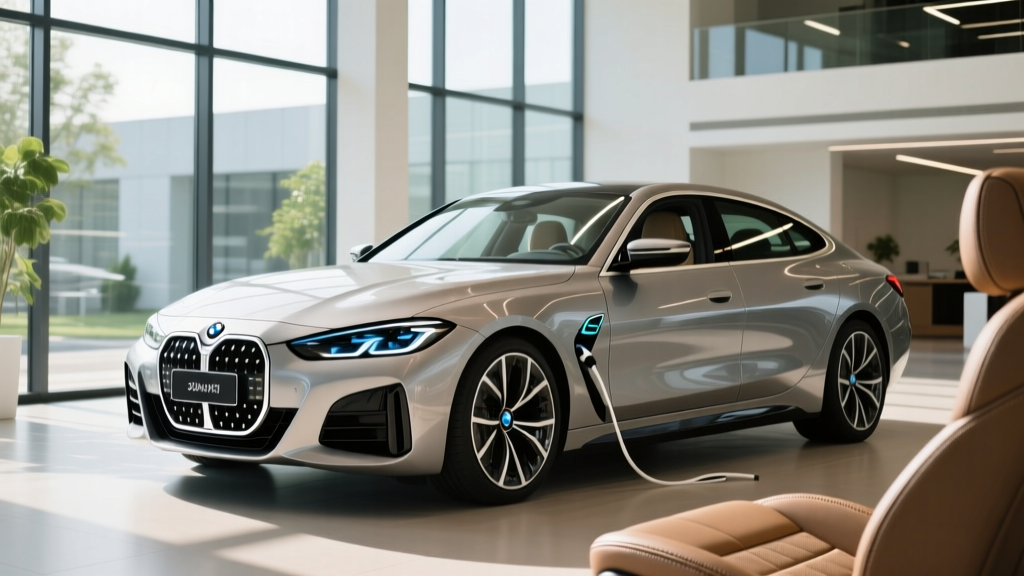
The BMW i4 has always occupied a specific niche: the EV for drivers who want a proper sport sedan first and an electric car second. For 2025, BMW has refreshed the i4 with a redesigned kidney grille, updated LED lighting signatures, and a revamped 2025 BMW i4 interior centered on the latest iDrive 8.5 software. But beneath the cosmetic updates, the powertrain lineup and battery hardware remain largely carryover, which is both a compliment and a caution. The i4 eDrive40 still delivers up to an EPA-estimated 307 miles of range, while the M50 xDrive trades some efficiency for 536 horsepower and a 3.7-second 0-60 mph sprint.
This review covers every spec that matters — real-world range, DC fast-charging behavior, interior dimensions, and whether the i4 still qualifies for the federal EV tax credit under current IRS §30D rules. If you're cross-shopping against the Tesla Model 3, Polestar 2, or Hyundai Ioniq 6, the data below will tell you exactly where the i4 wins and where it falls short.
Range, Battery & Real-World Efficiency
BMW equips every 2025 i4 variant with an 83.9 kWh gross (81.5 kWh usable) lithium-ion battery pack using NMC (nickel manganese cobalt) cell chemistry. BMW sources cells from CATL and Samsung SDI, arranged in a low-slung module layout beneath the cabin floor. Unlike some competitors that have shifted to LFP chemistry for lower-cost trims, BMW sticks with NMC across the i4 lineup to prioritize energy density and cold-weather performance.
| Trim | EPA Range | Real-World Highway (70 mph) | Cold Weather (32°F) |
|---|---|---|---|
| eDrive40 (RWD, 18" wheels) | 307 mi | ~260–275 mi | ~215–235 mi |
| eDrive40 (19" wheels) | 289 mi | ~245–260 mi | ~200–220 mi |
| xDrive40 (AWD) | 287 mi | ~240–255 mi | ~195–215 mi |
| M50 xDrive | 276 mi | ~230–245 mi | ~185–205 mi |
Source: fueleconomy.gov. Real-world estimates based on observed highway efficiency of 3.0–3.3 mi/kWh and typical NMC cold-weather loss of 20–30%. Your results vary with terrain, HVAC use, and driving style.
Efficiency on the eDrive40 is rated at 97 MPGe combined (roughly 34 kWh/100 mi), which is respectable for a 4,700-lb sedan but trails the Tesla Model 3 Long Range (131 MPGe) and Hyundai Ioniq 6 (140 MPGe). The i4's efficiency penalty comes from its heavier CLAR-based platform — originally engineered to accommodate both ICE and EV powertrains — versus the dedicated EV architectures of its rivals.
Charging Speed: DC Fast, Level 2 & Connector Details
The 2025 i4 supports DC fast charging at up to 205 kW peak via its CCS1 connector (NACS adapter access to Tesla Superchargers is available through BMW's partnership). On a capable 350 kW charger, BMW claims a 10–80% charge in approximately 31 minutes. However, real-world charging curves tell a more nuanced story.
| Charging Level | Power / Rate | Time / Miles Added |
|---|---|---|
| DC Fast Charge (peak) | 205 kW | 10–80% in ~31 min; tapers sharply above 80% |
| DC Fast Charge (sustained avg.) | ~130–150 kW | Expect ~180 mi added in 30 min (10–60% SoC) |
| Level 2 (240V, 48A) | 11 kW | ~33 mi/hr; 0–100% in ~8.5 hours |
| Level 1 (120V, 12A) | 1.4 kW | ~4 mi/hr; emergency/trickle only |
The i4's charge curve peaks early (around 15–20% SoC) and sustains above 150 kW through roughly 40% SoC, then begins a gradual taper. By 80%, you're pulling roughly 50–60 kW. This means the 10–80% time is competitive, but topping off from 80–100% adds another 25–30 minutes. For road trips, plan to charge in the 10–80% window and skip the last 20% unless you're stopping for a meal.
The onboard AC charger is rated at 11 kW, which is standard for the segment. On a Level 2 home charger (such as a ChargePoint Home Flex or BMW Wallbox), you'll recover roughly 33 miles of range per hour. A full overnight charge from 20% to 100% takes about 7–8 hours — easily handled by a standard 50-amp circuit with a hardwired 48A unit.
2025 BMW i4 Interior: Materials, Tech & Dimensions
The 2025 BMW i4 interior is where this car makes its strongest case against Tesla's minimalist approach. BMW's driver-centric cockpit wraps the dashboard in Sensatec synthetic leather (Veganza in higher trims), with available Merino leather on the M50. The centerpiece is BMW's Curved Display — a 12.3-inch digital instrument cluster seamlessly joined to a 14.9-inch infotainment touchscreen running iDrive 8.5.
Key interior highlights and dimensions:
- Curved Display: 12.3" cluster + 14.9" touchscreen, slightly angled toward driver
- Infotainment: iDrive 8.5 with wireless Apple CarPlay, Android Auto, and BMW's QuickSelect menu layer
- Audio: 10-speaker standard; available 17-speaker Harman Kardon surround system ($875)
- Seating: Sport seats standard; available M Sport seats with enhanced bolstering and ventilation
- Ambient lighting: Standard with multiple color zones; new for 2025 — illuminated interaction bar across the dash
- Headroom (front/rear): 39.8" / 36.6"
- Legroom (front/rear): 41.5" / 33.4"
- Cargo volume: 16.6 cu ft (trunk) — competitive with Model 3's 23 cu ft including frunk, but the i4 has no front trunk
- Rear seat folding: 40/20/40 split, expanding cargo to ~47 cu ft
The rear seat is the i4's most common criticism. At 33.4 inches of legroom, it's tighter than the Tesla Model 3 (35.3") and Hyundai Ioniq 6 (37.3"). The floor-mounted battery raises the cabin floor, creating a somewhat "knees-up" seating position for rear passengers on longer trips. If rear-seat passengers are a regular part of your routine, the Ioniq 6 or even the BMW iX offer meaningfully more space.
Performance & Driving Dynamics
The 2025 i4 lineup spans three powertrain configurations:
| Spec | eDrive40 | xDrive40 | M50 |
|---|---|---|---|
| Drivetrain | RWD (single motor) | AWD (dual motor) | AWD (dual motor, M-tuned) |
| Horsepower | 335 hp | 402 hp | 536 hp |
| Torque | 317 lb-ft | 443 lb-ft | 586 lb-ft |
| 0–60 mph | 5.5 sec | 4.6 sec | 3.7 sec |
| Top Speed | 118 mph | 124 mph | 130 mph (155 w/ M Driver's Pkg) |
| Curb Weight | 4,682 lb | 4,844 lb | 4,943 lb |
| EPA Range | 307 mi | 287 mi | 276 mi |
| MPGe (combined) | 97 | 94 | 89 |
The eDrive40 is the efficiency play — its single rear motor delivers BMW's trademark 50/50 weight distribution and a genuinely engaging rear-drive character. The M50 is the performance flagship, with adaptive M suspension, M Sport brakes, and a synthetic engine sound piped through the speakers (debatable in taste, but defeatable with a button press).
Regenerative braking is configurable from light (coasting) to strong (near one-pedal driving in "B" mode). Unlike some competitors, BMW doesn't force aggressive regen by default, which appeals to drivers transitioning from ICE vehicles.
Pricing, Trims & Federal Tax Credit Eligibility
The 2025 BMW i4 lineup starts at $52,200 MSRP (eDrive40) and climbs to $67,300 for the M50 before destination charges ($995). BMW bundles most options into packages rather than à la carte, which simplifies ordering but limits granular customization.
| Trim | Base MSRP | As-Tested (typical) | §30D Credit Eligible? |
|---|---|---|---|
| eDrive40 | $52,200 | $58,000–$62,000 | Partial — see sourcing rules |
| xDrive40 | $57,200 | $63,000–$68,000 | Partial — see sourcing rules |
| M50 | $67,300 | $72,000–$78,000 | Likely ineligible (MSRP cap) |
- MSRP Cap: Sedans must be ≤$55,000. The eDrive40 base qualifies; M50 does not. xDrive40 is borderline depending on options.
- Buyer Income Cap: AGI ≤$150,000 (single) / $300,000 (joint).
- Battery Sourcing: Critical minerals and battery components must meet escalating domestic/FAT-partner thresholds. BMW's CATL/Samsung SDI supply chain may not satisfy all 2025 requirements — verify on irs.gov before purchase.
- Point-of-Sale Transfer: Eligible buyers can transfer the credit to the dealer for an upfront price reduction (up to $7,500).
- Vehicle Assembly: Must be assembled in North America. The i4 is built in Munich, Germany — this likely disqualifies the i4 from the §30D new-vehicle credit entirely.
Important: The i4's German assembly is a significant tax-credit disadvantage. Always confirm current eligibility on the IRS website and consult a tax professional before relying on any credit amount.
Safety & Driver-Assistance Technology
The 2025 i4 comes standard with BMW's Active Driving Assistant, which includes forward collision warning, automatic emergency braking, lane departure warning, and blind-spot detection. The available Driving Assistance Professional Package ($1,700) adds adaptive cruise control with stop-and-go, lane centering, and Extended Traffic Jam Assistant — BMW's hands-off, eyes-on system for speeds up to 40 mph in heavy traffic.
The i4's driver-assistance features are SAE Level 2 — the vehicle can control steering and speed under certain conditions, but the driver must remain fully attentive with hands on or near the wheel at all times. This is not autonomous or "self-driving" capability. For context, only Waymo and Zoox robotaxi services currently operate at Level 4 in limited geofenced areas.
The i4 has not been crash-tested by NHTSA as of this writing. The previous-generation i4 earned a Good rating from IIHS in most crashworthiness categories, and the 2025 model carries over the same underlying CLAR structure.
Ownership: Warranty, Maintenance & Total Cost
BMW backs the i4 with the following warranty coverage:
- Basic vehicle: 4 years / 50,000 miles
- Battery & electric powertrain: 8 years / 100,000 miles (covers capacity below 70% of original)
- Corrosion: 12 years / unlimited miles
- Complimentary maintenance: 3 years / 36,000 miles (covers brake fluid, cabin filters, wiper inserts)
- Roadside assistance: 4 years / unlimited miles
The 8-year/100,000-mile battery warranty with a 70% capacity retention threshold is industry-standard. BMW's complimentary maintenance program is a genuine differentiator — most EV competitors offer no free scheduled maintenance. Over a 5-year ownership period, expect insurance to run $1,800–$2,400/year (higher than a comparable gas 3 Series) and home electricity costs of roughly $600–$900/year depending on local utility rates and mileage.
Pros, Cons & Who Should Buy the 2025 BMW i4
- Excellent build quality and premium interior materials
- Engaging driving dynamics — especially the RWD eDrive40
- iDrive 8.5 is one of the best infotainment systems in the segment
- Competitive 307-mile EPA range (eDrive40)
- Complimentary maintenance program
- Strong 205 kW DC fast-charging capability
- Rear seat legroom is tight (33.4") vs. key rivals
- No front trunk (frunk) — cargo space limited to 16.6 cu ft trunk
- German assembly likely disqualifies from §30D federal tax credit
- Efficiency (97 MPGe) trails Tesla Model 3 and Ioniq 6
- Options packages push price well above base MSRP
- Heavier platform limits handling edge vs. dedicated EV architectures
- You prioritize interior quality, driving refinement, and brand cachet over maximum range-per-dollar
- You want a sport sedan that drives like a BMW first and happens to be electric
- Your household doesn't regularly need generous rear-seat space
- You have access to home Level 2 charging and don't rely solely on the federal tax credit
- Rear-seat passenger comfort is a priority (consider Ioniq 6 or Tesla Model 3)
- You need the $7,500 federal tax credit to make the math work (the i4's German assembly is a blocker)
- Maximum efficiency and lowest cost-per-mile are your top criteria
Frequently Asked Questions
What is the real-world range of the 2025 BMW i4?
The eDrive40 is EPA-rated at 307 miles, but expect roughly 260–275 miles on highway road trips at 70 mph, and 215–235 miles in freezing temperatures. The M50 delivers around 230–245 real-world highway miles.
How fast does the i4 charge at home and on DC fast chargers?
On a DC fast charger, the i4 peaks at 205 kW and charges 10–80% in about 31 minutes. At home on a Level 2 charger (11 kW / 48A), it adds roughly 33 miles per hour, reaching a full charge overnight in about 8.5 hours.
Does the 2025 BMW i4 qualify for the $7,500 federal EV tax credit?
Very likely not. The i4 is assembled in Munich, Germany, and current IRS §30D rules require North American final assembly. Always verify on the IRS website before purchase. Some states offer separate rebates that are not tied to assembly location.
Is the BMW i4 worth it vs. the Tesla Model 3 or Hyundai Ioniq 6?
The i4 wins on interior quality, driving refinement, and infotainment. The Model 3 wins on efficiency (131 MPGe), Supercharger access, and tax credit eligibility. The Ioniq 6 wins on range (361 mi), rear-seat space, and price. The i4 is the premium play for buyers who value the BMW driving experience and don't need maximum range-per-dollar.
What are the biggest drawbacks of the 2025 BMW i4?
Tight rear legroom (33.4"), no frunk, lower efficiency than dedicated-EV rivals, and likely ineligibility for the federal tax credit due to German assembly. The options-package pricing structure also inflates the as-tested price significantly above MSRP.
What battery chemistry does the i4 use, and how long will it last?
The i4 uses NMC (nickel manganese cobalt) cells — offering higher energy density than LFP at the cost of slightly faster long-term degradation. BMW warrants the battery at 70% capacity retention for 8 years/100,000 miles. Real-world NMC data from similar BMW packs suggests 10–15% degradation over 100,000 miles with normal use.