The Quick Verdict: A Spacious Cruiser With Midpack Charging
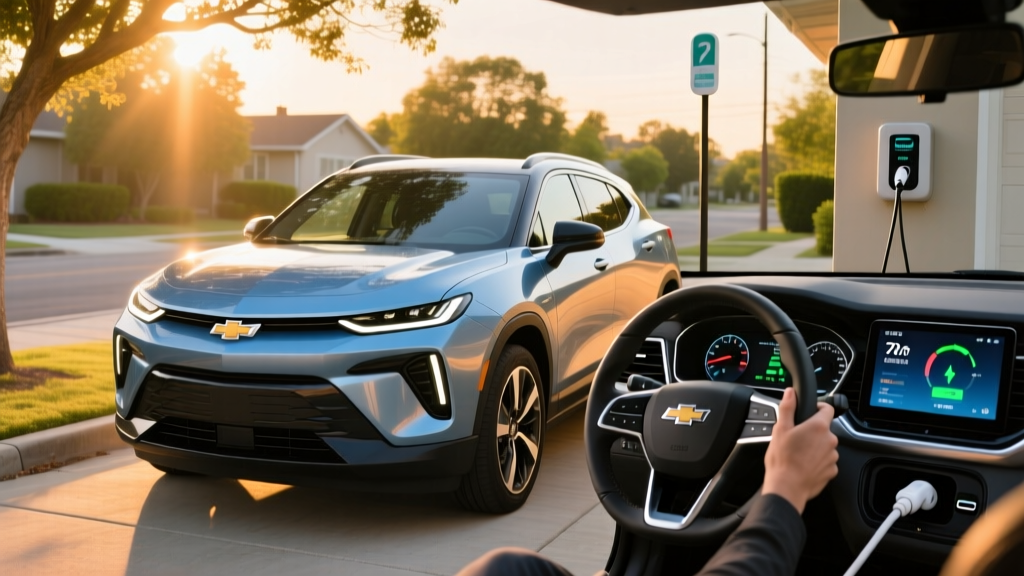
The 2025 Chevrolet Blazer EV slots into the increasingly crowded midsize electric SUV segment with a compelling blend of cabin space, comfortable ride quality, and a usable battery pack. After spending time with the platform across city commuting and highway road trips, the Blazer EV proves itself a capable daily driver — but it isn't without trade-offs. Its DC fast-charging speed trails key competitors, and the infotainment system still shows growing pains following Chevy's software overhaul. If you prioritize interior room and highway comfort over cutting-edge charge rates, the Blazer EV deserves serious consideration. If you road-trip frequently and want the shortest charging stops, rivals like the Hyundai Ioniq 5 and Tesla Model Y still hold an edge.
Range and Efficiency: What the EPA Says vs. What You'll Actually Get
The 2025 Blazer EV is offered with a single large battery pack across most trims. Here's how the range breaks down by configuration:
| Trim / Drivetrain | Battery (kWh usable) | EPA Range (mi) | MPGe (combined) | kWh/100 mi |
|---|---|---|---|---|
| LT (FWD) | 102 kWh | 324 | 92 MPGe | 37 |
| RS (RWD) | 102 kWh | 334 | 95 MPGe | 35 |
| RS / SS (AWD) | 102 kWh | 279–307 | 87–89 MPGe | 38–39 |
The EPA estimates are reasonable for mixed city/suburban driving. On sustained highway runs at 70–75 mph, expect the RWD RS to deliver approximately 270–290 miles before needing a charge. In cold weather (below 30°F), range can drop 20–30% due to battery heating demands and cabin climate load — plan for 200–230 miles on a full charge in winter highway conditions. The Blazer EV's heat pump (standard on most trims) helps mitigate this loss compared to resistive heating systems, but the physics of lithium-ion cells in cold temperatures remain unavoidable. City driving with heavy regenerative braking can push range above the EPA sticker, sometimes reaching 340+ miles in mild conditions.
The 102 kWh usable battery uses NMC (nickel manganese cobalt) chemistry, which provides strong energy density for this vehicle class. Chevrolet has not offered an LFP variant, meaning you'll want to follow best practices for NMC longevity: avoid routinely charging to 100% for daily use, and try to keep the state of charge between 20% and 80% for optimal battery health over time.
Charging Speed: DC Fast Charging and Home Level 2
Charging capability is where the Blazer EV reveals its most notable competitive gap. Here's the full breakdown:
| Charging Level | Max Rate | Speed / Time | Connector |
|---|---|---|---|
| Level 1 (120V household) | ~1.4 kW | ~4 miles per hour | J1772 (adapter included) |
| Level 2 (240V home/public) | 11.5 kW (48A) | ~34 miles per hour; full charge in ~9.5 hours | J1772 (NACS adapter for Superchargers) |
| DC Fast Charging | 190 kW peak | 10–80% in ~32 minutes | CCS1 (native); NACS via adapter |
The 190 kW peak DC fast-charge rate is the Blazer EV's weakest spec on paper. For context, the Hyundai Ioniq 5 peaks at 240 kW on 800V architecture (10–80% in ~18 minutes), and the Tesla Model Y peaks around 250 kW on V3 Superchargers. The Blazer EV's 400V electrical architecture caps its charging ceiling lower than these 800V rivals.
In real-world fast charging, the Blazer EV holds its peak rate reasonably well through the 30–60% state-of-charge window, then tapers progressively. Expect to add roughly 150–170 miles of range in a 20-minute stop at a functioning 200+ kW charger. Above 80% SoC, charging slows dramatically to protect battery health — a universal EV behavior, but worth planning for on road trips. Always precondition the battery by setting the Blazer EV's navigation to a charging destination; this warms the pack for faster charge acceptance.
For home charging, the 11.5 kW onboard charger is competitive. If you install a dedicated 48-amp Level 2 wall connector on a 60-amp circuit, you'll recover a full battery overnight — roughly 9.5 hours from empty. A typical daily commute of 40 miles requires only about 70 minutes of Level 2 charging, making home charging very practical. For home installation costs and electrical panel requirements, consult a licensed electrician; most installations run $500–$2,000 depending on panel capacity and run length.
Performance and Driving Dynamics
| Spec | FWD LT | RWD RS | AWD RS | AWD SS |
|---|---|---|---|---|
| Horsepower | 213 hp | 340 hp | 288 hp | 557 hp |
| Torque (lb-ft) | 236 | 325 | 343 | 648 |
| 0–60 mph | ~8.0 sec | ~6.2 sec | ~6.5 sec | ~4.0 sec (SS) |
| Drivetrain | Single motor FWD | Single motor RWD | Dual motor AWD | Dual motor AWD |
| Towing (max) | 1,500 lb | 1,500 lb | 1,500 lb | 1,500 lb |
The Blazer EV SS is the performance headline — 557 horsepower and a sub-4-second 0–60 time put it in sports-car territory. However, the SS carries a steep price premium and significantly reduced range. For most buyers, the RWD RS at 340 hp offers the best balance of punch and efficiency. The dual-motor AWD configuration actually produces less horsepower than the RWD variant due to different motor tuning, but the all-wheel traction improves launch consistency in wet or snowy conditions.
Ride quality is a genuine strength. The Blazer EV's suspension absorbs road imperfections well, and the cabin remains quiet at highway speeds. Regenerative braking offers multiple levels, including a one-pedal driving mode that can bring the vehicle to a complete stop. The steering is light and geared toward comfort rather than sportiness — this is a cruiser, not a corner-carver.
Interior Space, Cargo, and Technology
Interior dimensions are competitive with the midsize SUV class:
- Front legroom: 42.8 inches
- Rear legroom: 38.4 inches
- Cargo (behind rear seats): 27.7 cu ft
- Cargo (rear seats folded): 57.2 cu ft
- Frunk: Not available — the Ultium platform in this configuration does not include a front trunk
The cabin materials are midpack for the segment. Soft-touch surfaces cover the upper dashboard and door panels, but lower trim pieces use harder plastics. Heated front seats and a heated steering wheel come standard on most trims; ventilated seats are available on RS and SS.
The centerpiece is a 17.7-inch diagonal infotainment touchscreen running Chevrolet's latest software. The system supports wireless Apple CarPlay and Android Auto, Google Built-In (with Google Maps, Google Assistant, and Play Store apps), and over-the-air updates. A 11.0-inch digital driver display sits behind the steering wheel.
Driver-assistance features include Chevy's Super Cruise on equipped trims — a Level 2 hands-free driving system on mapped divided highways. This is not self-driving. The driver must remain attentive, and the system uses a camera to monitor eye gaze. Super Cruise is one of the best Level 2 systems available, but it does not handle city streets, construction zones, or unmapped roads. Automatic emergency braking, lane-keeping assist, adaptive cruise control, and blind-spot monitoring are standard across the lineup.
Super Cruise is an SAE Level 2 driver-assistance system. The driver must remain engaged and ready to take over at any time. No consumer vehicle currently sold offers Level 3 or higher automation for general use. Only dedicated robotaxi services (Waymo, Zoox) operate at Level 4 in geofenced areas.
Pricing, Trims, and Federal Tax Credit Eligibility
| Trim | Base MSRP | Drivetrain | Est. As-Tested* |
|---|---|---|---|
| LT (FWD) | $44,600 | FWD | $47,000–$50,000 |
| LT (AWD) | $47,600 | AWD | $50,000–$53,000 |
| RS (RWD) | $50,600 | RWD | $53,000–$57,000 |
| RS (AWD) | $53,600 | AWD | $56,000–$60,000 |
| SS (AWD) | $61,400 | AWD | $63,000–$66,000 |
*As-tested pricing includes common option packages and destination charge; exact figures vary by dealer and configuration.
- MSRP cap: SUVs must have a base MSRP at or below $80,000. All Blazer EV trims qualify on MSRP alone.
- Buyer income limits: Modified AGI must not exceed $150,000 (single), $225,000 (head of household), or $300,000 (joint filers).
- Battery sourcing requirements: A percentage of critical minerals and battery components must be sourced from the US or free-trade-agreement countries. These thresholds tighten annually. Credit eligibility for the Blazer EV varies by build date and battery batch — confirm current eligibility on IRS.gov or via your dealer's point-of-sale verification before purchasing.
- Point-of-sale transfer: If eligible, you can transfer the credit to the dealer at purchase, reducing your out-of-pocket cost immediately rather than waiting to claim it on your tax return.
- Maximum credit: Up to $7,500 if both critical-mineral and battery-component requirements are met; $3,750 if only one is satisfied.
Tax credit rules are complex and subject to change. Consult a tax professional and verify on irs.gov before making a purchase decision.
Ownership Costs, Warranty, and Long-Term Outlook
Chevrolet backs the Blazer EV with competitive warranty coverage:
- Battery & drive-unit warranty: 8 years / 100,000 miles (whichever comes first), with a capacity-retention threshold — if the battery degrades below a specified percentage (typically ~60–70% of original capacity), Chevrolet will repair or replace it.
- Bumper-to-bumper: 3 years / 36,000 miles
- Powertrain (non-electric components): 5 years / 60,000 miles
- Complimentary maintenance: 1 year / 1 visit (limited — EVs require far less routine maintenance than ICE vehicles)
For a five-year ownership projection, the Blazer EV's total cost of ownership benefits from lower fueling costs (electricity vs. gasoline), minimal maintenance (no oil changes, fewer brake replacements due to regenerative braking), and available tax credits. However, insurance premiums for the Blazer EV tend to run 10–20% higher than comparable gas-powered midsize SUVs — get a quote before committing. Depreciation for EVs remains an evolving data point; early indications suggest mainstream-brand EVs like the Blazer hold value comparably to the segment average, though Tesla's price cuts and new model launches can create downward pressure on the broader used-EV market.
Charging cost comparison: At the US average electricity rate of ~$0.17/kWh (EIA data), a full 102 kWh charge costs roughly $17.34, yielding about 300 miles of range. That's approximately $0.058 per mile. A comparable gas SUV at 24 MPG and $3.40/gallon costs about $0.142 per mile — a savings of roughly $0.084 per mile with the Blazer EV when charging at home. Public DC fast charging at $0.35–$0.50/kWh narrows the gap but still undercuts gasoline on a per-mile basis.
Pros and Cons
- Spacious cabin with strong rear legroom (38.4 in)
- Comfortable, quiet highway ride quality
- Large 102 kWh battery delivers solid EPA range (up to 334 mi)
- Super Cruise Level 2 system is best-in-class for hands-free highway driving
- Competitive Level 2 home charging rate (11.5 kW)
- All trims fall under the $80,000 MSRP cap for federal tax credit
- SS trim offers 557 hp for enthusiasts
- 190 kW peak DC fast charging is slower than 800V rivals (Ioniq 5, EV6)
- No front trunk (frunk) — missed storage opportunity
- Infotainment learning curve; some features buried in menus
- AWD models sacrifice noticeable range vs. RWD
- Towing limited to 1,500 lb — not a hauler
- Interior plastics don't match premium price on higher trims
- Cold-weather range loss significant without preconditioning discipline
Who Should Buy the 2025 Blazer EV?
- You prioritize cabin comfort and space over fastest-in-class charging
- Your commute is under 80 miles round-trip and you can charge at home
- You want hands-free highway driving via Super Cruise on mapped routes
- You're cross-shopping from a gas Blazer, Equinox, or midsize SUV and want a familiar form factor
- You value a large battery for range confidence over rapid charge stops
- You road-trip frequently and want 18-minute DC fast-charge stops (consider the Ioniq 5 or EV6)
- You need a frunk for gear storage or a flat-load floor for cargo
- You need serious towing capacity (look at the F-150 Lightning or Rivian R1S)
- You want the lowest starting price in the segment (the Equinox EV starts significantly lower)
Frequently Asked Questions
What is the real-world range of the 2025 Blazer EV?
In mixed driving, the RWD RS delivers approximately 290–310 miles. On sustained highway trips at 70+ mph, expect 270–290 miles. In freezing temperatures with highway driving, plan for 200–230 miles. The EPA sticker of 334 miles (RWD) is achievable in city driving with regen braking in mild weather.
How fast does the Blazer EV charge?
DC fast charging peaks at 190 kW, reaching 10–80% in approximately 32 minutes at a capable station. Home Level 2 charging at 11.5 kW adds about 34 miles per hour, fully replenishing the battery in roughly 9.5 hours. Level 1 (standard outlet) adds about 4 miles per hour — suitable only for topping off.
Does the 2025 Blazer EV qualify for the $7,500 federal tax credit?
All trims fall under the $80,000 SUV MSRP cap. However, the full $7,500 credit depends on battery-component and critical-mineral sourcing requirements that change over time, as well as your personal income. Verify current eligibility on fueleconomy.gov or with your dealer before purchase, and consult a tax professional regarding your specific situation.
Is the Blazer EV worth buying over the Tesla Model Y or Hyundai Ioniq 5?
It depends on your priorities. The Model Y offers better Supercharger network access (though the Blazer EV can use Superchargers via NACS adapter), faster DC charging, and a more mature software ecosystem. The Ioniq 5 charges significantly faster (240 kW peak) and offers a frunk. The Blazer EV wins on ride comfort, rear-seat space, and Super Cruise availability. If highway comfort and a traditional SUV feel matter most, the Blazer EV holds its own.
What is the battery warranty on the Blazer EV?
Chevrolet covers the battery and drive units for 8 years or 100,000 miles, whichever comes first. If the battery's state of health degrades below the warranty threshold, Chevrolet will repair or replace it. Standard bumper-to-bumper coverage is 3 years / 36,000 miles.
Can the Blazer EV use Tesla Superchargers?
Yes. The Blazer EV ships with a CCS1 port but Chevrolet provides a NACS adapter for access to Tesla's Supercharger network. Confirm adapter availability and compatibility with your specific model year and trim at purchase, as adapter policies have evolved across model years.
How does cold weather affect the Blazer EV?
Expect a 20–30% range reduction in temperatures below 30°F, especially on highway drives. The standard heat pump helps reduce cabin-heating energy draw. Always use the preconditioning feature (set departure time or navigate to a charger) to warm the battery before fast charging in cold weather — this significantly improves charge speed.