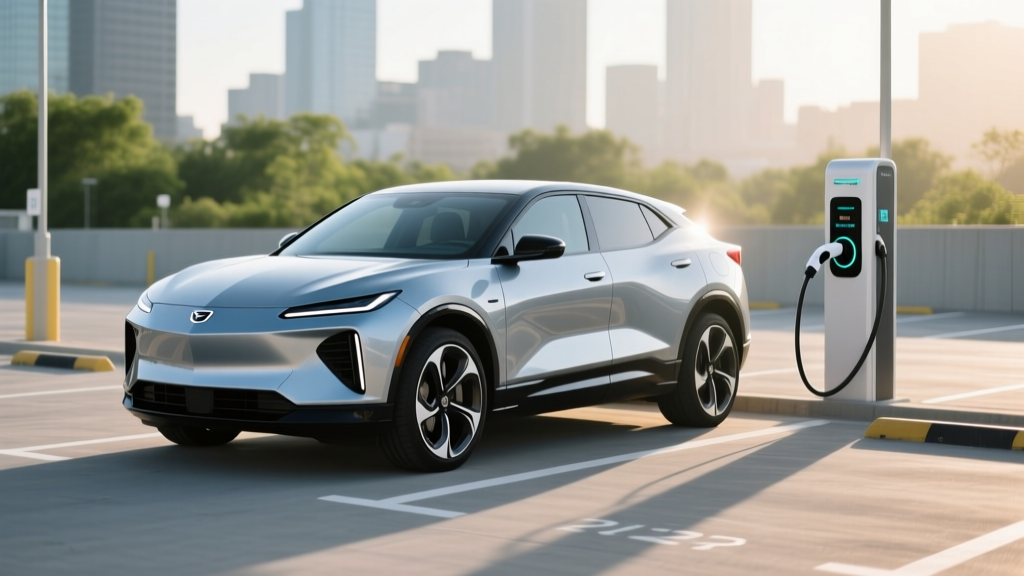
The Chevrolet Blazer EV occupies a peculiar space in the midsize electric SUV segment. It's larger than a Tesla Model Y, priced closer to a Ford Mustang Mach-E, and styled like something that escaped from a muscle-car garage. After Chevrolet resolved the early-production software issues that plagued the 2024 launch, the 2025 Blazer EV arrives as the vehicle GM originally promised — a comfortable, tech-forward electric crossover with genuine road-trip capability and one of the segment's best battery warranties.
This review breaks down every number that matters: real-world range versus the EPA sticker, the actual charging curve you'll experience at a DC fast charger, total cost after the federal tax credit, and whether this EV earns a spot in your driveway over rivals from Ford, Hyundai, and Tesla.
2025 Blazer EV Specs at a Glance
| Spec | 2LT (FWD/RWD) | RS (RWD/AWD) | SS (AWD) |
|---|---|---|---|
| EPA Range | 324 mi (FWD) | 279–324 mi | 293 mi |
| Battery (usable) | 102 kWh (NMC) | 85 or 102 kWh | 102 kWh (NMC) |
| Horsepower | 220 hp | 288–340 hp | 557 hp |
| 0–60 mph | ~7.9 sec | ~6.0 sec (AWD) | ~3.4 sec |
| Max DC Charge Rate | 190 kW | 190 kW | 190 kW |
| 10–80% DCFC Time | ~30 min | ~28–30 min | ~30 min |
| Level 2 Home Rate | 11.5 kW (~34 mi/hr) | 11.5 kW (~34 mi/hr) | 11.5 kW (~34 mi/hr) |
| MPGe (combined) | 92 MPGe | 88–92 MPGe | 84 MPGe |
| Base MSRP | $44,600 | $49,800 | $62,800 |
Real-World Range: What the EPA Sticker Doesn't Tell You
The EPA rates the Blazer EV 2LT FWD at 324 miles — a strong figure for a midsize SUV. The RS with the larger 102 kWh battery and AWD drops to 279 miles, while the high-performance SS lands at 293 miles despite its dual-motor powertrain.
EPA 2LT FWD: 324 mi
Expect on highway road trips (70–75 mph): ~255–275 mi
Cold weather (below 32°F): ~210–240 mi (30–35% reduction typical for NMC packs without aggressive preconditioning)
Combined daily driving (city + suburban): ~290–310 mi
The Blazer EV's 102 kWh usable pack is one of the largest in the segment, which helps offset its 5,000+ lb curb weight. Efficiency drops noticeably above 70 mph due to the Blazer's wide frontal area and 0.32 Cd drag coefficient.
Chevrolet uses Ultium-format NMC (nickel manganese cobalt) pouch cells in the Blazer EV — not the LFP chemistry found in some Tesla Model Y variants. NMC delivers higher energy density and stronger cold-weather performance than LFP, but it also means GM recommends charging to 80% for daily use and reserving 100% sessions for road trips. The Blazer EV's software includes a configurable charge-limit setting and a departure-time preconditioning feature that warms the battery before you leave, recovering some of that cold-weather range loss.
Charging Speed: DC Fast Charge and Home Level 2
The Blazer EV peaks at 190 kW on a DC fast charger — competitive but not class-leading. The Hyundai Ioniq 5 hits 240 kW, and the Tesla Model Y can sustain around 250 kW on V3 Superchargers. Here's what the Blazer's charge curve actually looks like in practice:
| Charging Level | Power / Rate | Miles Added | Notes |
|---|---|---|---|
| Level 1 (120V / 12A) | ~1.4 kW | ~4 mi/hr | Emergency/trickle only; ~80 hrs for full charge |
| Level 2 (240V / 48A) | 11.5 kW | ~34 mi/hr | Full charge in ~9–10 hrs; ideal overnight |
| DC Fast Charge | Peak 190 kW | ~70 mi in 10 min | 10–80% in ~30 min; tapers sharply above 80% |
At a 350 kW Electrify America or EVgo station, the Blazer EV will ramp quickly to ~185–190 kW between 10–30% SoC, then step down to ~150 kW through 50%, and further to ~100 kW by 70%. Above 80%, expect speeds below 50 kW — this is typical charge-curve taper for NMC chemistry, and it's why planning road-trip stops to 80% (not 100%) saves significant time. A 10–80% session takes approximately 28–30 minutes depending on battery temperature.
For home charging, the onboard 11.5 kW charger is a strong point. With a 48-amp Level 2 wall connector on a dedicated 60-amp circuit, you'll add roughly 34 miles of range per hour — enough to replenish a full day's driving in about 2–3 hours. Chevrolet includes a dual-level charge cord with the vehicle that handles both 120V and 240V (at up to 32A / 7.7 kW on a NEMA 14-50 outlet), though a hardwired Level 2 station is recommended for daily use.
Performance and Driving Dynamics
The Blazer EV lineup spans from a sensible 220 hp FWD commuter to the SS trim's absurd 557 hp. The SS uses GM's WOW (Wide Open Watts) mode — a dual-motor AWD setup that launches the 5,300-lb SUV to 60 mph in roughly 3.4 seconds. That puts it in Porsche Cayenne Turbo territory, though the Blazer SS can't match that vehicle's cornering composure.
For most buyers, the RS AWD (340 hp, ~6.0 sec 0–60) is the sweet spot — quick enough for confident highway merging without the SS's range penalty and $62,800 price tag. The base 2LT FWD at 220 hp feels adequate around town but noticeably labors during high-speed passing maneuvers.
Ride quality is where the Blazer EV distinguishes itself from sportier rivals. The suspension tuning favors comfort, absorbing highway expansion joints and broken pavement with a composure the Tesla Model Y simply can't match. Steering is light and numb — this is a cruiser, not a canyon carver. GM's Super Cruise hands-free driving system is available on the RS and SS trims, offering genuine Level 2 hands-off operation on over 750,000 miles of mapped highways in the U.S. and Canada.
Interior, Cargo, and Technology
The Blazer EV's cabin is a mixed bag of premium ambition and cost-cutting reality. The dashboard is dominated by a 17.7-inch diagonal infotainment touchscreen running GM's latest Ultifi software — a significant upgrade from the laggy interface that plagued early 2024 models. Wireless Apple CarPlay and Android Auto are standard across all trims, and Google Built-In provides native Google Maps navigation, Google Assistant, and Play Store apps.
Material quality is acceptable for the price point, with soft-touch surfaces on the dash and door uppers, but hard plastics lurk on the lower panels and center console sides. The RS trim adds perforated leather-appointed seats and a flat-bottom steering wheel that elevates the ambiance.
| Dimension | Measurement |
|---|---|
| Front Legroom | 43.1 in |
| Rear Legroom | 37.8 in |
| Front Headroom | 40.1 in |
| Cargo (rear seats up) | 27.7 cu ft |
| Cargo (rear seats folded) | 55.1 cu ft |
| Frunk | None (no front trunk) |
Cargo space is a weak point relative to the competition. The Model Y offers 30.2 cu ft behind the rear seats (plus a frunk), and the Hyundai Ioniq 5 provides 27.2 cu ft plus a small front trunk. The Blazer EV's lack of a frunk means no separate compartment for charging cables or wet gear — a practical annoyance on road trips.
On the tech front, the Blazer EV includes a comprehensive ADAS suite: Super Cruise (RS/SS), automatic emergency braking with pedestrian detection, lane-keep assist, adaptive cruise control, blind-spot monitoring, and rear cross-traffic alert. A head-up display and digital rearview camera mirror are optional on the RS and standard on the SS.
Pricing, Trims, and Federal Tax Credit Eligibility
The 2025 Blazer EV starts at $44,600 for the 2LT FWD and climbs to $62,800 for the SS AWD. Chevrolet simplified the trim structure after the chaotic 2024 launch that briefly included a 1LT fleet-oriented trim (now discontinued).
| Trim | MSRP | Est. After §30D Credit* |
|---|---|---|
| 2LT FWD | $44,600 | $37,100 |
| 2LT AWD | $47,600 | $40,100 |
| RS RWD | $49,800 | $42,300 |
| RS AWD | $52,800 | $45,300 |
| SS AWD | $62,800 | $55,300 |
*Estimated price assumes full $7,500 federal tax credit. Actual eligibility depends on multiple IRS requirements.
- MSRP Cap: SUVs must be ≤$80,000 — all Blazer EV trims qualify ✓
- Buyer Income Cap: AGI ≤$150,000 (single), ≤$225,000 (head of household), ≤$300,000 (joint) — verify against your tax situation
- Battery Sourcing: Critical minerals and battery components must meet escalating percentage thresholds from designated trade partners — GM sources Ultium cells from the LG Energy Solution joint venture in Ohio, which has helped maintain eligibility
- Point-of-Sale Transfer: You can apply the credit as a down-payment reduction at the dealer rather than waiting for a tax refund
- Filing Requirement: Must file IRS Form 8936; consult a tax professional for your specific situation
Rules change frequently. Always verify current eligibility on IRS.gov before purchasing.
Efficiency and Ownership Costs
The Blazer EV's efficiency is midpack for the segment. The 2LT FWD achieves 92 MPGe combined (roughly 36 kWh/100 mi), while the heavier RS AWD drops to 88 MPGe and the SS to 84 MPGe. For comparison, the Hyundai Ioniq 5 RWD returns 114 MPGe and the Tesla Model Y Long Range achieves 117 MPGe — both significantly more efficient per mile driven.
The Blazer's lower efficiency stems from its large frontal area, 5,000+ lb curb weight, and less aerodynamic profile compared to sleeker rivals. At the U.S. average electricity rate of ~$0.17/kWh, charging the 2LT costs roughly $6.12 per 100 miles. A comparable gasoline Blazer (22 mpg combined) would cost approximately $14.50 per 100 miles at $3.20/gallon — a fuel savings of about $8.40 per 100 miles, or roughly $1,000 per year at 12,000 annual miles.
Chevrolet backs the Blazer EV's battery and powertrain with an 8-year/100,000-mile warranty, with coverage triggered if the pack falls below 70% of original capacity. This is competitive with the segment standard (Hyundai offers 10-year/100,000-mile; Tesla covers 8-year/120,000-mile). GM's Ultium platform has shown promising early degradation data, with most owners reporting less than 5% capacity loss in the first 20,000 miles, though long-term 100,000+ mile data is still accumulating.
2025 Blazer EV vs. Key Competitors
| Attribute | Blazer EV RS AWD | Model Y LR AWD | Ioniq 5 Limited AWD | Mustang Mach-E GT |
|---|---|---|---|---|
| EPA Range | 279 mi | 311 mi | 290 mi | 292 mi |
| Battery | 102 kWh NMC | ~78 kWh NMC | 77.4 kWh NMC | 91 kWh NMC |
| DCFC Peak | 190 kW | 250 kW | 240 kW | 150 kW |
| 0–60 mph | 6.0 sec | 4.8 sec | 5.1 sec | 3.5 sec |
| Cargo (seats up) | 27.7 cu ft | 30.2 cu ft | 27.2 cu ft | 29.7 cu ft |
| Base MSRP | $52,800 | $47,990 | $54,350 | $59,995 |
| Hands-Free ADAS | Super Cruise ✓ | No (FSD supervised) | No | BlueCruise ✓ |
- Comfortable, quiet ride quality — best-in-class for highway cruising
- Super Cruise hands-free driving on 750K+ miles of highways
- 102 kWh battery provides strong range buffer
- 11.5 kW Level 2 onboard charger is fast for home use
- 17.7-inch infotainment screen with Google Built-In
- Spacious front and rear seating
- DCFC peak of 190 kW trails Ioniq 5 and Model Y
- No frunk — unusual for an EV at this price point
- Midpack efficiency (MPGe) means higher charging costs
- Cargo space trails Model Y and Mach-E
- SS trim is expensive for the performance delivered
- 2024 launch software issues damaged brand trust (now resolved)
Who Should Buy the 2025 Blazer EV?
- You prioritize ride comfort and cabin quietness over sporty handling
- You frequently drive on Super Cruise-compatible highways and want genuine hands-free capability
- You want a large battery (102 kWh) for range confidence on road trips
- You're cross-shopping from a gas Blazer, Equinox, or Traverse and want a familiar Chevrolet experience
- You need generous rear-seat legroom for car seats or adult passengers
- Fastest possible DC charging is a priority (choose Ioniq 5 or Model Y)
- Maximum cargo space and a frunk are non-negotiable (choose Model Y)
- You want the highest MPGe to minimize charging costs (choose Ioniq 5 or Model Y)
- Track-worthy performance is the goal (the Mach-E GT and Blazer SS are both compromised by weight)
Frequently Asked Questions
What is the real-world range of the 2025 Blazer EV?
The EPA rates the Blazer EV 2LT FWD at 324 miles, but expect 255–275 miles on highway road trips at 70–75 mph, and 210–240 miles in sub-freezing temperatures. The RS AWD with the 102 kWh pack delivers roughly 230–250 real-world highway miles. These figures are competitive with the segment but trail the Model Y Long Range's real-world highway range of ~270 miles.
How fast does the Blazer EV charge at home and on the road?
On a Level 2 home charger (48A/240V), the Blazer EV charges at 11.5 kW, adding about 34 miles of range per hour — a full overnight session replenishes the battery in 9–10 hours. On a DC fast charger, it peaks at 190 kW and reaches 10–80% in approximately 28–30 minutes. Charging above 80% slows dramatically, so road-trip planning should target 80% stops.
Does the 2025 Blazer EV qualify for the $7,500 federal tax credit?
All Blazer EV trims fall under the $80,000 SUV MSRP cap, making them potentially eligible. However, buyer income limits ($150K single / $300K joint) and battery-sourcing requirements must also be met. GM's Ohio-built Ultium battery cells have maintained eligibility as of early 2025, but sourcing rules tighten annually. Verify on fueleconomy.gov and with your tax advisor before purchase. The credit can be transferred to the dealer at point of sale as a price reduction.
Is the Blazer EV worth buying over the Tesla Model Y or Hyundai Ioniq 5?
It depends on your priorities. The Blazer EV wins on ride comfort, cabin quietness, and Super Cruise availability. The Model Y wins on charging speed (250 kW), efficiency (117 MPGe), cargo versatility (frunk + 30.2 cu ft), and Supercharger network access. The Ioniq 5 wins on charging speed (240 kW), efficiency, and value pricing. If hands-free highway driving and a smooth ride matter most, the Blazer EV makes a compelling case.
How does Super Cruise compare to Tesla Autopilot or Ford BlueCruise?
Super Cruise, BlueCruise, and Tesla's Autopilot/FSD (Supervised) are all SAE Level 2 systems requiring driver attention. Super Cruise's advantage is its reliability on pre-mapped divided highways — it works consistently where it's enabled. Tesla's FSD attempts broader coverage (city streets, residential roads) but requires constant steering-wheel supervision and has a more variable performance record. BlueCruise is similar to Super Cruise in concept but covers fewer mapped miles. None of these systems are self-driving.
What is the battery warranty, and how much does replacement cost?
Chevrolet covers the Blazer EV battery for 8 years or 100,000 miles against defects and capacity loss below 70%. A full battery replacement outside warranty is estimated at $15,000–$20,000 based on current Ultium pack pricing, though module-level repairs may be significantly less. Long-term degradation data is still limited given the platform's 2022 debut, but early reports from Cadillac Lyriq owners (same Ultium architecture) show less than 5% loss at 25,000 miles.