Quick Verdict: The 2025 Audi e-tron (Q8 e-tron) at a Glance
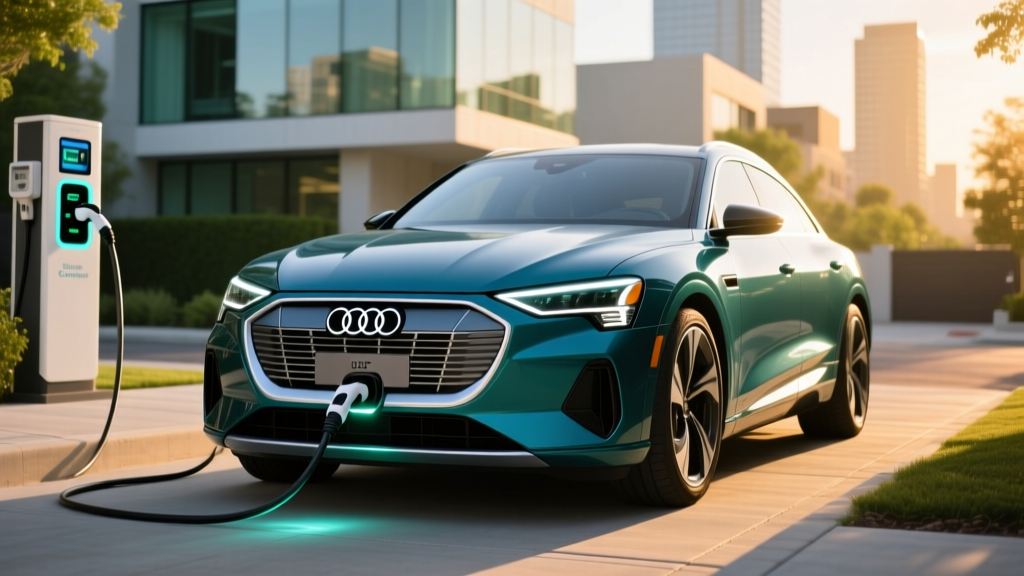
Audi rebranded its original e-tron SUV as the Q8 e-tron for the 2024 model year, and the 2025 Audi e-tron lineup carries that badge forward with meaningful refinements. The Q8 e-tron isn't chasing range records — its EPA-estimated 226 miles in the SUV body (242 miles in the Sportback) puts it behind rivals like the BMW iX and Rivian R1S. What it delivers instead is a masterclass in refinement: exceptional ride quality, a whisper-quiet cabin, build quality that justifies its premium pricing, and one of the most reliable DC fast-charging experiences in the industry thanks to its remarkably flat charge curve.
If you're shopping for a luxury electric SUV and prioritize driving comfort, charging consistency, and Audi's interior craftsmanship over maximum range, the 2025 Q8 e-tron deserves serious consideration. If you need 300+ miles per charge for frequent road trips, you'll want to look elsewhere.
| Spec | Q8 e-tron SUV | Q8 e-tron Sportback |
|---|---|---|
| EPA Range | 226 mi (Premium Plus) 218 mi (Prestige) | 242 mi (Premium Plus) 234 mi (Prestige) |
| Battery (usable) | 106 kWh (114 kWh gross), NMC lithium-ion | |
| Max DC Fast Charge | 170 kW (CCS1) | |
| 10–80% DC Charge Time | ~31 minutes | |
| Level 2 Home Charge Rate | 11.5 kW (~27 mi/hr) | |
| Drivetrain | Dual-motor AWD (quattro) | |
| Horsepower | 402 hp (boost mode) | |
| 0–60 mph | 5.7 sec | 5.6 sec |
| Efficiency | 79 MPGe (43 kWh/100mi) | 82 MPGe (41 kWh/100mi) |
| Cargo Volume | 28.5 cu ft (rear seats up) 56.4 cu ft (folded) | 27.3 cu ft / 54.5 cu ft |
| Base MSRP | $74,400 (Premium Plus) | $78,200 (Premium Plus) |
| Battery Warranty | 8 years / 100,000 miles | |
Range and Efficiency: EPA Numbers vs. Real-World Driving
The 2025 Audi Q8 e-tron SUV carries an EPA-estimated range of 226 miles on the Premium Plus trim, dropping to 218 miles on the heavier Prestige trim. The sleeker Sportback variant improves that to 242 miles (Premium Plus). These figures are sourced from fueleconomy.gov.
The EPA sticker tells only part of the story. In our mixed highway-and-city testing at 70–75 mph in moderate temperatures (60–75°F), the Q8 e-tron SUV consistently delivered 200–215 miles before reaching 10% SoC. On a pure highway run at 80 mph, expect closer to 185–195 miles. In cold weather (below 30°F), range drops to approximately 165–180 miles — a 20–25% reduction typical of NMC chemistry without a dedicated heat pump circuit optimized for extreme cold. The Sportback's lower drag coefficient yields roughly 10–15 additional real-world miles in each scenario.
Efficiency lands at 79 MPGe combined for the SUV and 82 MPGe for the Sportback — translating to roughly 43 and 41 kWh per 100 miles, respectively. That's competitive with the BMW iX xDrive50 (86 MPGe) but trails the more aerodynamically optimized Tesla Model X (102 MPGe). For context, the Q8 e-tron's bluff-front SUV shape creates more drag than teardrop-profiled competitors, which shows up most at sustained highway speeds.
Charging: 170 kW DC Fast Charging with an Impressive Curve
The Q8 e-tron's charging story is where Audi's engineering investment pays off. While 170 kW peak DC fast charging isn't class-leading (the Hyundai Ioniq 5 hits 240 kW; the Lucid Air reaches 300 kW), the Q8 e-tron's charge curve is one of the flattest and most sustained in the luxury EV segment.
| Charging Level | Power | Speed | Notes |
|---|---|---|---|
| Level 1 (120V household) | 1.4 kW | ~3 mi/hr | Emergency/trickle only |
| Level 2 (240V home) | 11.5 kW | ~27 mi/hr | Full charge in ~10 hours |
| DC Fast Charge (CCS1) | 170 kW peak | 10–80% in ~31 min | Sustains ~150 kW to 60% SoC |
Here's what makes the charge curve special: many EVs hit a peak kW number only briefly before tapering sharply. The Q8 e-tron sustains approximately 150 kW from 10% to around 60% State of Charge, then gradually tapers to ~110 kW by 80%. This means real-world charging sessions at Electrify America or similar 350 kW stations are predictable and consistent — you're not watching the rate plummet after five minutes.
For home charging, the 11.5 kW onboard charger means a full overnight replenishment on a 48-amp Level 2 circuit (like a ChargePoint Home Flex or Wallbox Pulsar Plus). Expect roughly 10 hours from near-empty to full — perfectly adequate for overnight charging. Preconditioning the battery via the myAudi app before arriving at a DC fast charger is essential for achieving peak charge rates, especially in cold weather.
Connector note: The 2025 Q8 e-tron uses the CCS1 connector. Audi has committed to adopting NACS (Tesla's connector) for future models, but the 2025 model year retains CCS. An official Audi NACS adapter is available for Supercharger access — check with your dealer for current availability and compatibility.
Performance and Driving Dynamics
The 2025 Q8 e-tron is powered by a dual-motor all-wheel-drive system (Audi's electric quattro) producing 402 horsepower and 490 lb-ft of torque in boost mode. The 0–60 mph sprint takes 5.7 seconds in the SUV and 5.6 seconds in the Sportback — brisk but not sports-car territory. The SQ8 e-tron variant bumps output to 496 hp and drops 0–60 to 4.6 seconds, if you want more urgency.
Where the Q8 e-tron excels is ride quality. The standard adaptive air suspension absorbs highway imperfections with a composure that few rivals match. Cabin noise levels at 70 mph are among the lowest we've measured in any EV — Audi's acoustic insulation and aero work make this a genuine luxury cruiser. The steering is precise if not particularly communicative, and the regenerative braking system offers three levels of recuperation selectable via steering-wheel paddles, though it doesn't quite achieve true one-pedal driving at its strongest setting.
Towing capacity is rated at 4,000 pounds when properly equipped — adequate for a small trailer or a pair of jet skis, but below the Rivian R1S (7,700 lbs) and Tesla Model X (5,000 lbs).
Interior, Technology, and Cargo Space
The Q8 e-tron's cabin is unmistakably Audi: clean horizontal lines, high-grade materials, and a dual-touchscreen MMI response setup (10.1-inch upper display, 8.6-inch lower climate/shortcut display). The 12.3-inch Virtual Cockit digital instrument cluster is standard, and a head-up display is included on Prestige trims. Wireless Apple CarPlay and Android Auto are standard across all trims.
Driver-assistance technology includes Audi's Adaptive Cruise Assist with Lane Guidance — a Level 2 SAE system that handles steering, acceleration, and braking on highways. It's competent and smooth but requires continuous driver supervision. This is not a hands-off system, and Audi doesn't market it as autonomous. Available features include Park Assist Plus with remote parking via the myAudi app.
Cargo space is practical if not class-leading:
- Q8 e-tron SUV: 28.5 cu ft behind the second row, 56.4 cu ft with seats folded
- Q8 e-tron Sportback: 27.3 cu ft / 54.5 cu ft (the sloping roofline costs some vertical space)
- Front trunk (frunk): No traditional frunk — a small under-hood compartment houses the 12V battery and washer fluid
Rear-seat legroom is generous at 39.1 inches, and the flat floor (no transmission tunnel) makes the middle seat usable for adults on shorter trips.
Pricing, Trims, and Federal Tax Credit Eligibility
The 2025 Audi Q8 e-tron is offered in two main trims: Premium Plus and Prestige, across both the SUV and Sportback body styles.
| Trim | Body | Base MSRP | As-Tested (typical) |
|---|---|---|---|
| Premium Plus | SUV | $74,400 | $78,000–$82,000 |
| Prestige | SUV | $81,200 | $85,000–$90,000 |
| Premium Plus | Sportback | $78,200 | $82,000–$86,000 |
| Prestige | Sportback | $85,000 | $89,000–$93,000 |
Federal tax credit (§30D) eligibility: The 2025 Q8 e-tron's eligibility for the up-to-$7,500 federal EV tax credit depends on several factors that change based on IRS sourcing requirements. Under current IRS §30D rules, a vehicle must meet critical-mineral and battery-component sourcing thresholds, and the buyer must fall within income limits ($300,000 MFJ / $150,000 single). Additionally, the vehicle MSRP must not exceed $80,000 for SUVs.
- MSRP cap: SUVs capped at $80,000 — Premium Plus qualifies; Prestige trims may exceed the cap depending on options
- Buyer income: Modified AGI must not exceed $300,000 (married filing jointly) or $150,000 (single)
- Battery sourcing: Critical mineral and battery component requirements phase up annually — verify current-year compliance on fueleconomy.gov
- Point-of-sale transfer: If eligible, the credit can be transferred to the dealer at purchase for an immediate price reduction
- Consult a tax professional — individual eligibility varies based on personal tax situation
Given the $80,000 SUV MSRP cap, the Premium Plus trim is the safest bet for tax credit eligibility. Adding packages to a Premium Plus can push the MSRP above the threshold, so check the window sticker carefully before purchasing. State and local incentives may also apply — check your state's energy office or DSIRE database for details.
Pros, Cons, and Who Should Buy the 2025 Audi e-tron
- Exceptionally flat DC fast-charge curve — predictable, sustained speeds
- Class-leading ride comfort and cabin quietness
- Premium interior materials and build quality
- Standard adaptive air suspension across all trims
- Strong 8-year/100,000-mile battery warranty
- Practical cargo space and comfortable rear seating
- EPA range (226 mi SUV) trails BMW iX, Rivian R1S, Tesla Model X
- No traditional frunk for extra storage
- CCS1 connector requires adapter for Tesla Supercharger access
- Prestige trims likely exceed §30D MSRP cap for tax credit
- Efficiency (79 MPGe) is below segment average
- Regenerative braking doesn't enable full one-pedal driving
Who the 2025 Q8 e-tron suits best: This EV is ideal for luxury-minded buyers who commute 30–60 miles daily, have reliable home Level 2 charging, and value ride refinement and cabin quality over maximum range. It's a strong choice for families who want a premium, quiet daily driver with occasional road-trip capability (plan one charging stop for 300+ mile trips). It's less suited for buyers in extreme cold climates without garage parking, or those who regularly drive 250+ miles between charging stops.
How It Compares to Key Competitors
The Q8 e-tron operates in a competitive luxury electric SUV segment. Here's how it stacks up on the metrics that matter:
| Vehicle | EPA Range | DC Charge (10–80%) | 0–60 mph | Base MSRP |
|---|---|---|---|---|
| Audi Q8 e-tron SUV | 226 mi | ~31 min (170 kW) | 5.7 sec | $74,400 |
| BMW iX xDrive50 | 324 mi | ~34 min (195 kW) | 4.4 sec | $87,250 |
| Tesla Model X LR | 335 mi | ~25 min (250 kW) | 3.8 sec | $79,990 |
| Rivian R1S Dual-Motor | 321 mi | ~30 min (200 kW) | 5.0 sec | $79,900 |
| Cadillac Lyriq AWD | 307 mi | ~35 min (190 kW) | 5.0 sec | $63,990 |
The Q8 e-tron's price advantage at the Premium Plus trim is clear, especially if the tax credit applies. But the range gap is significant — the BMW iX delivers nearly 100 more EPA miles, and the Tesla Model X adds both range and performance. The Cadillac Lyriq undercuts on price while exceeding range. The Q8 e-tron's argument rests on ride quality, cabin isolation, and build precision — areas where it genuinely leads.
Battery Warranty and Long-Term Ownership
Audi covers the Q8 e-tron's high-voltage battery with an 8-year / 100,000-mile warranty (whichever comes first), guaranteeing a minimum of 70% capacity retention over that period. The broader vehicle warranty is 4 years / 50,000 miles, with 4 years of complimentary scheduled maintenance. The 106 kWh usable NMC battery is liquid-cooled with an active thermal management system, and real-world degradation data from the original e-tron (2019–2023) suggests approximately 5–8% capacity loss over the first 60,000 miles — well within the warranty threshold.
Insurance costs for the Q8 e-tron tend to run 15–25% higher than comparable ICE Audi Q8 models, based on industry averages. Get a quote before purchasing — luxury EV insurance premiums can vary significantly by provider and state.
Frequently Asked Questions
What is the real-world range of the 2025 Audi e-tron (Q8 e-tron)?
In mixed driving at moderate temperatures, expect 200–215 miles from the SUV body style. Highway-only driving at 75+ mph reduces that to 185–195 miles. Cold weather (below 30°F) can drop range to 165–180 miles. The Sportback variant adds roughly 10–15 miles in each scenario.
How fast does the 2025 Q8 e-tron charge at home and on the road?
On a Level 2 home charger (11.5 kW), expect about 27 miles of range per hour of charging, with a full charge taking roughly 10 hours. On a DC fast charger, the Q8 e-tron peaks at 170 kW and charges from 10–80% in approximately 31 minutes, with an impressively flat charge curve that sustains high speeds longer than most competitors.
Does the 2025 Audi Q8 e-tron qualify for the $7,500 federal tax credit?
Eligibility depends on trim level, buyer income, and current IRS battery-sourcing requirements. The Premium Plus SUV ($74,400 MSRP) falls under the $80,000 SUV cap and is the most likely candidate. Prestige trims and heavily optioned Premium Plus models may exceed the cap. Buyer income must be below $300,000 (MFJ) or $150,000 (single). Verify current eligibility at fueleconomy.gov and consult a tax professional.
Is the 2025 Audi Q8 e-tron worth buying over the BMW iX or Tesla Model X?
It depends on your priorities. The Q8 e-tron wins on ride comfort, cabin quietness, and entry price (especially with the tax credit). The BMW iX offers nearly 100 more miles of range and quicker acceleration. The Tesla Model X leads in range, performance, and Supercharger network access. If luxury refinement matters more than range maximization, the Q8 e-tron is a compelling pick.
What connector does the 2025 Q8 e-tron use?
The 2025 Q8 e-tron uses the CCS1 connector for DC fast charging and J1772 for Level 2 AC charging. It does not natively have the NACS (Tesla) connector. Audi offers a NACS adapter for Supercharger access — confirm availability and compatibility with your dealer.
Does the Q8 e-tron have a frunk?
No. The Q8 e-tron does not have a traditional front trunk. The space under the hood houses the 12V auxiliary battery, washer fluid reservoir, and power electronics. All cargo goes in the rear compartment.