Quick Verdict: Is the 2024 VW ID.4 Worth Leasing?
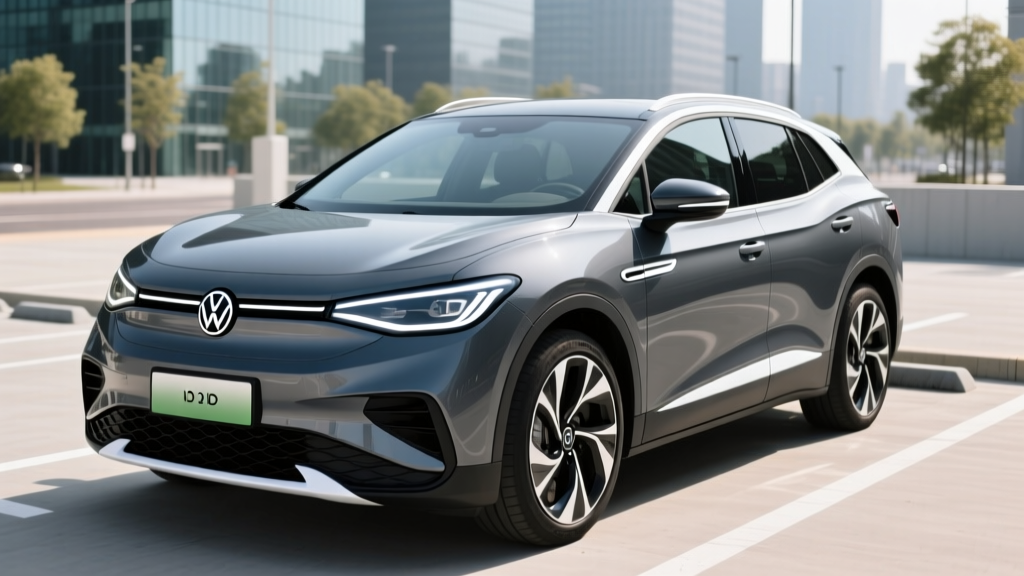
The 2024 Volkswagen ID.4 occupies a pragmatic sweet spot in the compact electric SUV segment: a usable 275-mile EPA range, competitive interior volume, and a starting MSRP that — after the federal tax credit — undercuts most rivals. For buyers searching for a 2024 Volkswagen ID.4 lease, the math often works out favorably because VW's captive finance arm frequently applies the $7,500 federal credit as a lease bonus, sidestepping the battery-sourcing and income hurdles that complicate purchase eligibility.
But the ID.4 isn't the fastest charger in its class, its infotainment software still draws criticism, and real-world highway range falls noticeably short of the sticker. Here's every number you need before signing anything.
Range and Efficiency: EPA vs. Reality
Real-World Expectation: ~220–240 mi highway (RWD 275-mi trim); ~170–190 mi in freezing temps with cabin heat
The rear-wheel-drive Pro S trim, equipped with the larger 82 kWh battery pack (77 kWh usable), delivers the headline 275-mile EPA estimate. The Standard Range Pro uses a 62 kWh pack (58 kWh usable) for 206 miles. All-wheel-drive variants sacrifice roughly 12 miles of range for the traction and power of a dual-motor setup.
In EPA testing, the ID.4 Pro S RWD achieves 104 MPGe combined (city 104 / highway 99), translating to roughly 30 kWh per 100 miles. That's competitive with the Hyundai Ioniq 5 but trails the Tesla Model Y's 122 MPGe combined.
Cold-weather range loss is the ID.4's most significant real-world caveat. The SUV uses a resistance heater on lower trims; only the Pro S and higher trims offer an optional heat pump, which cuts cold-weather energy penalty roughly in half. Expect a 30–40% range reduction in sub-30°F driving without a heat pump, and 20–25% with one.
Charging Speed: Home and DC Fast Charging
| Level | Power | Rate / Time | Notes |
|---|---|---|---|
| Level 1 (120V) | ~1.4 kW | ~3–4 mi/hr | Emergency / overnight trickle only |
| Level 2 (240V, 48A) | 11.5 kW | ~33 mi/hr; 0–100% in ~7.5 hr | Home wallbox or public L2 |
| DC Fast Charge | Peak 170 kW (Pro S) | 10–80% in ~30 min | Standard Range peaks at 135 kW |
The ID.4's onboard charger accepts up to 11.5 kW on Level 2, meaning a full charge from empty takes roughly 7.5 hours on a 48-amp home charger — standard overnight territory. On DC fast charging, the 82 kWh pack peaks at 170 kW, but the charge curve tapers aggressively above 60% state of charge. In practice, you'll see sustained rates closer to 110–130 kW through the bulk of the session, which is why the 10–80% time stretches to around 30 minutes. Competitors like the Hyundai Ioniq 5 (240 kW peak, ~18 min 10–80%) and the Kia EV6 (235 kW, ~18 min) charge meaningfully faster on 350 kW-capable stations.
The ID.4 uses the CCS1 connector natively. VW has not yet adopted NACS (Tesla's connector) on the 2024 model year, though a Tesla Supercharger adapter became available in late 2024 for existing owners. Confirm adapter availability with your dealer before relying on the Supercharger network.
Performance and Drivetrain
| Spec | Pro S (RWD) | AWD Pro S |
|---|---|---|
| Horsepower | 282 hp | 335 hp |
| Torque | 339 lb-ft | 339 lb-ft (combined) |
| 0–60 mph | 7.7 sec | 5.4 sec |
| Drivetrain | Rear-Wheel Drive | Dual-Motor AWD |
| Battery (usable) | 77 kWh (NMC) | 77 kWh (NMC) |
| Towing Capacity | 2,200 lb (w/ hitch) | 2,700 lb (w/ hitch) |
The RWD model's 282 hp and 7.7-second 0–60 time are adequate for merging and passing, though not thrilling. The AWD variant's 5.4-second sprint feels genuinely quick and adds all-weather confidence. Regenerative braking offers a "B" mode for stronger regen, but the ID.4 does not provide true one-pedal driving — it will not come to a complete stop without touching the brake pedal, unlike many competitors.
Pricing, Trim Levels, and Federal Tax Credit
| Trim | Base MSRP | Est. After §30D Credit |
|---|---|---|
| Pro (Standard Range) | $39,735 | $32,235* |
| Pro S (Standard Range) | $43,475 | $35,975* |
| Pro S (82 kWh RWD) | $46,815 | $39,315* |
| Pro S Plus (82 kWh RWD) | $51,015 | $43,515* |
| AWD Pro S | $50,215 | $42,715* |
| AWD Pro S Plus | $53,615 | $46,115* |
*Tax credit estimates assume full $7,500 eligibility under IRS §30D rules. Eligibility depends on buyer income, battery sourcing, and MSRP caps. See checklist below.
- MSRP Cap: SUVs must be at or below $80,000 — all 2024 ID.4 trims qualify.
- Income Cap: Modified AGI ≤ $150,000 (single) / $300,000 (married filing jointly).
- Battery Sourcing: The ID.4's battery cells are manufactured by SK Innovation. Critical-mineral and battery-component sourcing requirements phase in annually and may reduce the credit to $3,750 or $0 depending on the production date. Verify the specific VIN with your dealer.
- Point-of-Sale Transfer: Beginning in 2024, buyers can transfer the credit to the dealer for an upfront price reduction, rather than waiting to claim it on their tax return.
- Lease Loophole: Under IRS Notice 2024-07, leased vehicles qualify for the commercial clean vehicle credit (§45W), which has no income cap, no MSRP cap, and no sourcing requirements. Many lessors pass this $7,500 savings to lessees as a capitalized-cost reduction.
Interior, Cargo, and Technology
The ID.4's cabin is spacious for its footprint. Rear-seat legroom measures 37.6 inches, and cargo volume behind the second row is 30.3 cubic feet, expanding to 64.2 cubic feet with the rear seats folded. That's competitive with the Hyundai Ioniq 5 (27.2 / 56.2 cu ft) and the Ford Mustang Mach-E (29.7 / 59.7 cu ft), though the Tesla Model Y offers significantly more at 30.2 / 72.1 cu ft plus a front trunk.
The ID.4 has a modest 0.5 cu ft frunk (front trunk) on AWD models — essentially a cable storage cubby — and no frunk at all on RWD models. For a family SUV, the lack of meaningful frunk space is a missed opportunity.
Infotainment runs on VW's ID. Software 4.0 (updated for 2024), displayed on a 12.9-inch touchscreen. The system is noticeably more responsive than the 2021–2023 versions, with improved voice recognition and wireless Apple CarPlay/Android Auto. However, the capacitive-touch climate controls and slider bars remain a usability frustration — particularly while driving. The 10.3-inch digital instrument cluster is compact but legible.
Standard driver-assistance features include Travel Assist (adaptive cruise + lane centering), Front Assist with automatic emergency braking, and Lane Assist. These are SAE Level 2 systems — the driver must remain fully engaged and hands on or near the wheel at all times. There is no hands-free driving mode comparable to GM's Super Cruise or Ford's BlueCruise.
Pros and Cons
Pros
- Competitive pricing after tax credit — among the most affordable compact EV SUVs
- Spacious rear seat and cargo area for the class
- Comfortable, compliant ride quality; quiet cabin at highway speed
- Lease credit pathway avoids sourcing/income restrictions
- Standard Travel Assist adaptive cruise + lane centering
Cons
- DC fast charging slower than Ioniq 5, EV6, and Model Y
- Capacitive-touch sliders and climate controls frustrate while driving
- No true one-pedal driving mode
- Cold-weather range loss significant without optional heat pump
- No hands-free highway driving capability
Who the ID.4 Suits Best
Choose the ID.4 if: You prioritize value after tax credits, need a comfortable commuter with a roomy back seat for kids, and have reliable home Level 2 charging to offset the moderate DC fast-charge speed.
Look elsewhere if: You road-trip frequently (Ioniq 5 or EV6 charge ~12 minutes faster per stop), want hands-free highway driving (Mach-E with BlueCruise), or need maximum cargo space (Model Y).
The ID.4 is best positioned as a lease for families and commuters who charge at home and make occasional road trips. If your typical day is under 80 miles round-trip and you have a garage or driveway for a Level 2 charger, the ID.4's range and charging limitations rarely surface. For frequent long-distance drivers, the 30-minute fast-charge time and cold-weather range loss add up.
Warranty and Long-Term Ownership
Volkswagen covers the ID.4's battery and drive units with an 8-year / 100,000-mile warranty, guaranteeing a minimum of 70% state of health (capacity retention) over that period. The bumper-to-bumper limited warranty is 4 years / 50,000 miles. VW also includes 3 years or 36,000 miles of scheduled maintenance and 2 years of complimentary Electrify America DC fast charging (up to 30-minute sessions) — a meaningful perk for new owners.
The 82 kWh pack uses NMC (nickel manganese cobalt) chemistry, which offers higher energy density than LFP but is more sensitive to sustained high-state-of-charge storage. For longest battery life, VW recommends keeping daily charge limits around 80% and only charging to 100% for long trips.
Frequently Asked Questions
What is the real-world range of the 2024 VW ID.4?
The EPA rates the Pro S RWD at 275 miles, but real-world highway driving at 70+ mph typically yields 220–240 miles. In freezing weather with cabin heat, expect 170–190 miles without a heat pump, or 200–220 miles with one. City and suburban driving with regenerative braking recovers more energy and can match or slightly exceed the EPA number.
How fast does the ID.4 charge at home and on the road?
On a 48-amp Level 2 home charger, the ID.4 accepts up to 11.5 kW, adding roughly 33 miles of range per hour and reaching a full charge in about 7.5 hours. On DC fast chargers, the 82 kWh model peaks at 170 kW and charges from 10% to 80% in approximately 30 minutes. The Standard Range model peaks at 135 kW.
Does the 2024 ID.4 qualify for the $7,500 federal tax credit?
It depends. The ID.4 is below the $80,000 SUV MSRP cap, so the vehicle qualifies. However, buyer income must be under $150,000 (single) or $300,000 (joint), and battery sourcing requirements may reduce the credit to $3,750 or eliminate it entirely based on the production batch. Leasing the ID.4 sidesteps most restrictions: the lessor claims the commercial credit and typically passes the savings through as a lower capitalized cost.
Is the ID.4 better than the Hyundai Ioniq 5 or Tesla Model Y?
The ID.4 wins on lease pricing after incentives and ride comfort. The Ioniq 5 charges significantly faster (~18 min 10–80% vs ~30 min) and has a more distinctive design. The Model Y offers superior range (330 mi EPA), faster Supercharger access, more cargo space, and over-the-air updates, but starts at a higher price and has a firmer ride. Your priority — value, charging speed, or range — determines the winner.
Does the ID.4 have one-pedal driving?
No. The ID.4's "B" mode increases regenerative braking but does not bring the vehicle to a complete stop. You must use the brake pedal to come to a full halt. This is a deliberate VW engineering choice, but it's a drawback for drivers accustomed to one-pedal operation in vehicles like the Chevrolet Bolt or Nissan Leaf.
Can the ID.4 use Tesla Superchargers?
VW announced Supercharger adapter compatibility for CCS-equipped ID.4 models, with adapters becoming available through dealers. Check with your specific dealer for stock and pricing before relying on Supercharger access. The ID.4 can also use Electrify America, EVgo, ChargePoint, and other CCS networks natively.