The 2024 VinFast VF 9 is a bold entry from Vietnam's first global automaker — a three-row, dual-motor electric SUV aimed squarely at the Tesla Model X, Rivian R1S, and Kia EV9. With a massive 123 kWh battery, 402 horsepower, and a starting MSRP around $69,800, it promises premium space and long range. But as a debut vehicle from a brand-new manufacturer, the VF 9 demands scrutiny beyond the spec sheet. We've analyzed EPA data, real-world driving impressions, charging behavior, and ownership economics to give you the full picture.
Quick Verdict: Ambitious but Unproven
The VF 9 delivers genuine three-row comfort, strong acceleration, and one of the largest battery packs in its class. However, its real-world range falls notably short of the EPA sticker, its software ecosystem is still maturing, and VinFast's dealer and service network remains thin. It's best suited for early-adopters who value space and design over proven reliability and ubiquitous support infrastructure.
| Spec | Value |
|---|---|
| EPA Range | 291 miles (Eco w/ 20" wheels) |
| Battery (usable) | ~123 kWh, NMC lithium-ion |
| Drivetrain | Dual-motor AWD |
| Horsepower | 402 hp / 457 lb-ft torque |
| 0–60 mph | ~6.5 seconds (manufacturer est.) |
| Max DC Fast Charge | ~200 kW (peak) |
| 10–80% DC Charge | ~35 minutes (est.) |
| Level 2 (240V) Rate | ~11 kW (~22 mi/hr) |
| MPGe (combined) | 77 MPGe (EPA) |
| Efficiency | ~43 kWh/100 mi |
| Cargo (behind 3rd row) | ~14.3 cu ft |
| Cargo (all rows folded) | ~86 cu ft |
| Base MSRP (Eco) | $69,800 |
| Battery Warranty | 10 years / 125,000 miles |
Range and Efficiency: The Real-World Reality
Real-World Expectation: Expect 230–260 miles on mixed highway driving at 70+ mph. In cold weather (below 32°F), plan for 190–220 miles. The VF 9's heavy curb weight (~6,100 lbs) and boxy aerodynamics penalize highway efficiency significantly. City/regenerative driving may approach the EPA figure, but road-trippers should budget conservatively.
The VF 9's 123 kWh battery is among the largest in any consumer EV sold in the U.S. — rivaling the GMC Hummer EV. That massive capacity is necessary: this is a heavy, three-row SUV pushing over 6,000 pounds. The EPA rates the Eco trim (with 20-inch wheels) at 291 miles, while the Plus trim with 21-inch wheels drops to roughly 274 miles.
Efficiency is rated at approximately 77 MPGe combined, or about 43 kWh per 100 miles. That's notably thirstier than the Kia EV9 (roughly 35 kWh/100 mi) and the Rivian R1S with its standard pack. On a road trip at highway speeds, you'll see consumption climb toward 48–52 kWh/100 mi, meaning a practical range closer to 230–250 miles before you need to stop. In freezing temperatures, battery chemistry limitations and cabin heating demands can reduce that further by 15–25%.
VinFast has not published detailed cold-weather testing data, but based on NMC chemistry behavior in similar heavy EVs, preconditioning the battery before DC fast charging is essential to achieving advertised charge speeds in winter conditions.
Charging Speed: DC Fast and Home Level 2
| Charging Level | Power / Rate | Time or Miles Added |
|---|---|---|
| Level 1 (120V) | ~1.4 kW | ~3 mi/hr — impractical for this battery |
| Level 2 (240V / 48A) | ~11 kW | ~22 mi/hr; full charge in ~11–12 hours |
| DC Fast Charge (peak) | ~200 kW | 10–80% in ~35 minutes |
| DC Fast (sustained avg) | ~130–150 kW | Average over a 10–80% session |
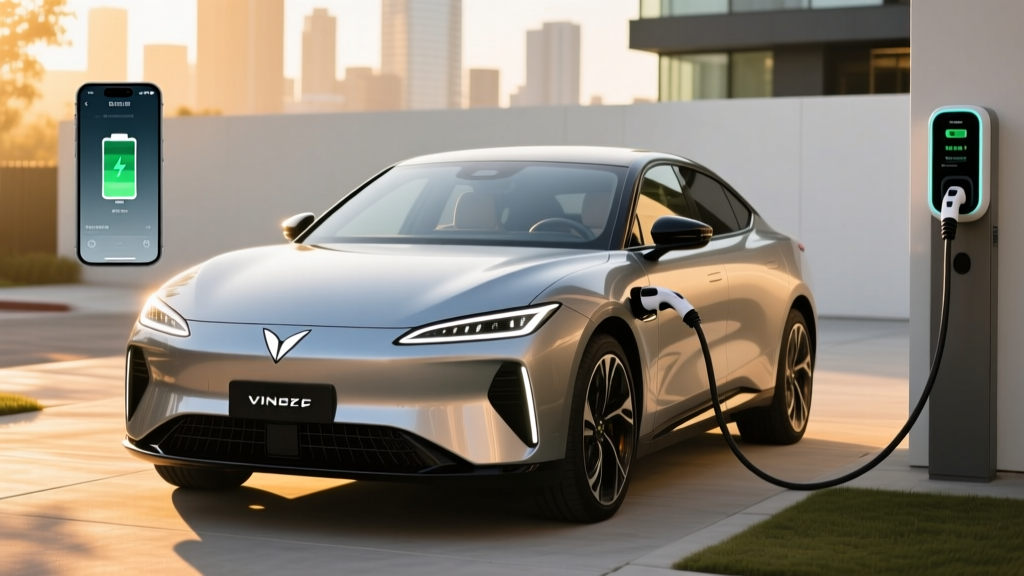
The VF 9 uses the CCS1 connector for DC fast charging (VinFast has not announced a NACS adapter timeline as of this writing). At a 350 kW Electrify America or similar station, the VF 9 peaks around 200 kW. However, as with all EVs, peak rate is not sustained rate. The charge curve tapers meaningfully above 60% state of charge, and the 10–80% session typically takes about 35 minutes under optimal thermal conditions.
At home on a Level 2 charger (240V, 48-amp hardwired unit), the VF 9 accepts roughly 11 kW, adding about 22 miles of range per hour. A full 0–100% charge takes approximately 11–12 hours. Given the 123 kWh battery, Level 1 (120V) trickle charging is essentially useless for daily needs — you'd gain roughly 3 miles per hour, requiring over 40 hours for a full charge. A Level 2 home installation is mandatory for practical ownership.
One note: with a battery this large, most owners will rarely charge from 0 to 100%. Daily driving of 30–50 miles consumes roughly 13–22 kWh, easily replenished overnight on Level 2 in 1–2 hours. The large battery is an advantage for daily usability — you can charge to 80% and still have 230+ miles of buffer for most weekly routines.
Performance and Driving Dynamics
Every 2024 VF 9 comes with a dual-motor all-wheel-drive powertrain producing 402 horsepower and 457 lb-ft of torque. The 0–60 mph sprint takes approximately 6.5 seconds — respectable for a three-row family hauler, though not class-leading (the Rivian R1S dual-motor hits 60 in about 4.5 seconds with the Max pack, and the Tesla Model X is quicker still).
On the road, the VF 9 rides comfortably thanks to its adaptive air suspension (standard on Plus trim, available on Eco). The steering is light and isolated — this is a cruiser, not a canyon carver. Body roll is well-controlled for its height, and the regenerative braking offers adjustable levels, though it does not achieve true one-pedal driving in all modes. Road noise at highway speeds is moderate; the cabin is quieter than most body-on-frame SUVs but not as refined as a BMW iX or Mercedes EQS SUV.
Interior, Space, and Technology
The VF 9 seats up to seven passengers (2-3-2 layout) or six with optional second-row captain's chairs. Third-row legroom is approximately 30 inches — adequate for children or short trips but tight for adults on longer journeys. Cargo space behind the third row is roughly 14.3 cubic feet, expanding to about 86 cubic feet with both rear rows folded. There is no front trunk (frunk); the hood area houses HVAC and electronics components.
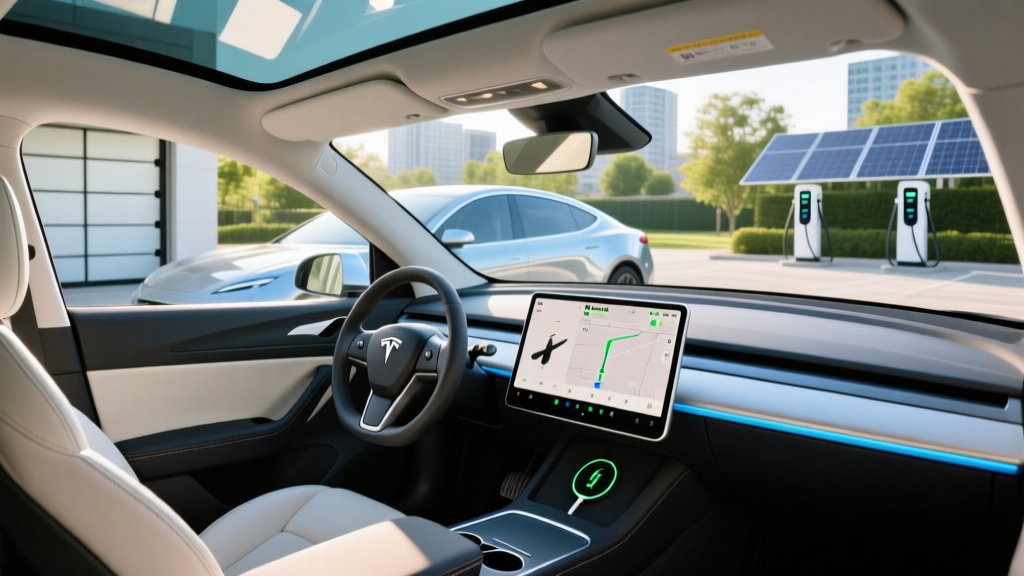
The centerpiece of the dashboard is a 15.6-inch touchscreen running VinFast's proprietary infotainment system. The interface is Android-based and supports over-the-air updates, but early reviewers and owners have noted sluggish response times, occasional bugs, and a learning curve compared to more mature systems from Tesla, Hyundai, or BMW. Apple CarPlay and Android Auto were not available at launch; VinFast has indicated wireless smartphone integration is planned via OTA, but timelines have shifted.
Driver-assistance features include adaptive cruise control, lane-keeping assist, automated emergency braking, and a 360-degree camera system. These constitute an SAE Level 2 driver-assist system — the driver must remain fully engaged with hands on the wheel and eyes on the road. There is no hands-free driving mode comparable to GM's Super Cruise or Ford's BlueCruise.
Pricing, Trims, and Federal Tax Credit Eligibility
| Trim | Base MSRP | Est. Federal Credit | Effective Price (if eligible) |
|---|---|---|---|
| Eco (20" wheels, cloth/leatherette) | $69,800 | Up to $7,500 (§30D) | ~$62,300 |
| Plus (21" wheels, premium interior, air susp.) | $73,800 | Up to $7,500 (§30D) | ~$66,300 |
The 2024 VF 9 qualifies under the IRS §30D new clean vehicle credit rules for SUVs, which carry an $80,000 MSRP cap — both trims clear this threshold. However, eligibility is far from guaranteed. Buyers must meet adjusted gross income limits ($300,000 joint / $225,000 head of household / $150,000 single). Additionally, the vehicle's battery must satisfy critical minerals and battery component sourcing requirements that phase in more strictly each year. Because VinFast sources battery cells from Gotion High-Tech (a Chinese-affiliated manufacturer) and assembles the VF 9 in Vietnam, the critical minerals and foreign entity of concern (FEOC) rules may partially or fully disqualify the credit depending on the specific production batch and model year. Always verify eligibility on the fueleconomy.gov tax credit page and consult a tax professional before relying on the credit.
Since January 2024, qualifying buyers can transfer the credit to the dealer at point of sale, reducing the purchase price directly rather than waiting for a tax refund. VinFast also initially offered a battery-subscription model that reduced the purchase price, but this program has been discontinued for U.S. customers — the battery is now included in the vehicle price.
Warranty and Ownership Considerations
VinFast provides a competitive warranty package:
- Basic vehicle warranty: 7 years / 75,000 miles
- Battery and powertrain warranty: 10 years / 125,000 miles (capacity retention guaranteed above 70%)
- Roadside assistance: 7 years / 75,000 miles
The 10-year battery warranty is a strong signal of confidence, matching or exceeding most competitors. The 70% capacity retention threshold is standard industry practice. However, the practical concern for early VF 9 buyers is VinFast's still-developing U.S. service network. As of 2024, VinFast operates a limited number of service centers in select metropolitan areas (primarily California, Florida, and a few other states), supplemented by mobile service vans. If you live outside these zones, warranty repairs may require significant logistics. This is a genuine ownership risk that buyers should weigh carefully against the vehicle's on-paper value.
Pros, Cons, and Who Should Buy
Pros
- Massive 123 kWh battery provides daily-driving buffer
- Genuine three-row seating with usable cargo space
- Standard dual-motor AWD with 402 hp
- Air suspension on Plus trim for ride comfort
- 10-year / 125,000-mile battery warranty
- Distinctive design that stands out in a crowded segment
Cons
- Real-world highway range falls well short of EPA 291 mi
- CCS-only charging with no announced NACS adapter
- Infotainment software still buggy and missing CarPlay/Android Auto
- Very limited U.S. service and dealer network
- Federal tax credit eligibility uncertain due to battery sourcing
- High energy consumption (43+ kWh/100 mi) raises charging costs
Who this EV suits best: The VF 9 is best for design-forward families in metropolitan areas with VinFast service coverage who need three rows, prioritize cabin space over maximum range, and are comfortable with the risks of a first-generation product from a new brand. It's less ideal for road-trippers who need reliable 300+ mile range, buyers in rural areas far from service centers, or anyone who wants a polished software experience.
Competitor Check: VF 9 vs. the Segment
Against the Kia EV9 (~$54,900 starting, EPA 304 mi, NACS-compatible via adapter), the VF 9 is more expensive, less efficient, and has a less mature tech stack — though it offers a larger battery and more distinctive styling. The Rivian R1S (~$74,900, EPA 270–410 mi depending on pack) offers better range options, a proven adventure platform, and a stronger service network, but at a higher entry price. The Tesla Model X (~$79,990, EPA 335 mi) remains quicker, more efficient, and backed by the Supercharger network, but costs significantly more. The VF 9 occupies a narrow niche: it's for buyers who want something different and are willing to trade proven infrastructure for bold design and generous interior space.
Frequently Asked Questions
What is the real-world range of the 2024 VinFast VF 9?
The EPA rates the VF 9 Eco at 291 miles. In real-world mixed highway driving at 70+ mph, expect 230–260 miles. In cold weather below freezing, plan for 190–220 miles. The heavy curb weight and boxy shape hurt highway efficiency significantly.
How fast does the VF 9 charge at home and on the road?
On a DC fast charger, it peaks around 200 kW with a 10–80% time of approximately 35 minutes. At home on Level 2 (240V), it charges at about 11 kW, adding roughly 22 miles per hour. A full Level 2 charge takes 11–12 hours.
Does the 2024 VinFast VF 9 qualify for the $7,500 federal EV tax credit?
It may, but eligibility is not guaranteed. The MSRP is under the $80,000 SUV cap, but buyers must meet IRS income limits and the battery must satisfy critical-mineral and FEOC sourcing rules. Because VinFast's battery supply chain involves Chinese-affiliated companies, partial or full credit disqualification is possible. Check fueleconomy.gov and consult a tax professional.
Is the VF 9 worth buying over the Kia EV9 or Rivian R1S?
For most buyers, the Kia EV9 offers better value, efficiency, and a more established support network. The Rivian R1S provides more range flexibility and proven capability. The VF 9 makes sense only if you prioritize its distinctive design, large battery buffer, and are comfortable with VinFast's limited service footprint and evolving software.
What connector does the VF 9 use for charging?
The VF 9 uses CCS1 for DC fast charging and J1772 for Level 2 AC charging. As of this writing, VinFast has not announced a NACS (Tesla-style) adapter, meaning Supercharger access is not currently available.
Does the VF 9 have a frunk (front trunk)?
No. The front hood area is occupied by HVAC components and power electronics. All cargo space is in the rear — 14.3 cu ft behind the third row, expanding to ~86 cu ft with both rear rows folded.