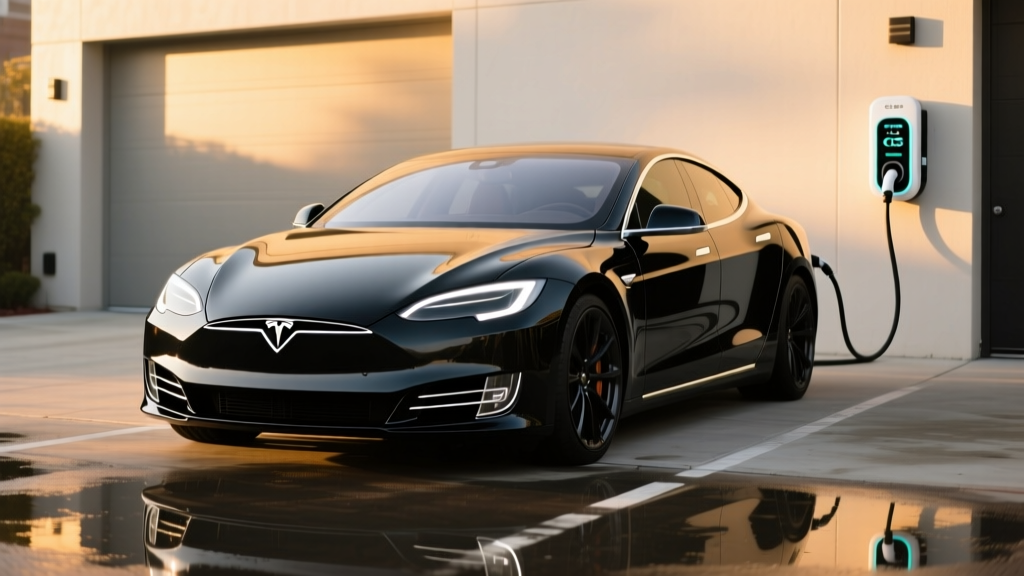
2024 Tesla Model S Plaid at a Glance
The 2024 Tesla Model S Plaid remains the benchmark for electric performance sedans, pairing a 1,020-horsepower tri-motor powertrain with a usable battery large enough to cross state lines without range panic. While newer competitors like the Lucid Air Sapphire and Porsche Taycan Turbo GT have entered the arena, the Plaid's combination of sub-2-second 0-60 times, Supercharger network access, and over-the-air updates keeps it relevant in 2026 as a used and certified-pre-owned option. Below, we break down every spec that matters to buyers and owners — from real-world highway range to the exact charging curve you'll see at a V3 Supercharger.
| Spec | Value |
|---|---|
| EPA Range | 396 miles (19" wheels) / 359 miles (21" wheels) |
| Battery (usable) | ~95 kWh, NMC (nickel manganese cobalt) |
| Drivetrain | Tri-motor AWD (1 front, 2 rear) |
| Horsepower | 1,020 hp |
| 0-60 mph | 1.99 seconds (manufacturer, with rollout subtracted) |
| Top Speed | 200 mph (with paid hardware upgrade) |
| Max DC Fast Charge | 250 kW peak (V3 Supercharger / CCS adapter) |
| 10-80% DC Charge | ~30 minutes |
| Level 2 Home Charge | 11.5 kW / 48A (~34 mi/hr) |
| EPA Efficiency | 116 MPGe combined (29 kWh/100 mi) |
| Cargo Volume | 28.0 cu ft (rear trunk) + ~5.0 cu ft (frunk) |
| Base MSRP (2024) | $89,990 (before destination) |
| Battery Warranty | 8 years / 150,000 miles (70% capacity retention) |
Real-World Range: What the EPA Sticker Doesn't Tell You
EPA Estimate: 396 miles (19" Tempest wheels) / 359 miles (21" Arachnid wheels)
Real-World Expectation: 300–340 miles highway at 70 mph; 250–280 miles in sub-30°F winter conditions
The 2024 Model S Plaid's EPA-rated 396 miles applies only to the 19-inch Tempest wheel configuration. Opt for the 21-inch Arachnid performance wheels — which most Plaid buyers do for the grip and aesthetics — and that drops to 359 miles, per fueleconomy.gov.
In real-world highway driving at sustained 70–75 mph speeds, expect roughly 300 to 340 miles before hitting a 10% state of charge. The Plaid's tri-motor setup and wider rear tires create more rolling resistance and drag than the dual-motor Long Range variant, which is rated at 402 miles. Cold weather compounds the loss: lithium-ion cells operate less efficiently below 30°F, and cabin heating (even with the Plaid's heat pump) draws significant energy. In winter testing at highway speeds in temperatures around 20°F, plan for 250 to 280 miles of usable range.
One advantage the Plaid retains is its efficiency relative to its power output. At 29 kWh per 100 miles (combined), it outperforms the Lucid Air Grand Touring's efficiency only slightly, but dramatically beats heavier performance SUVs. For context, that translates to roughly 3.4 miles per kWh in mixed driving — respectable for a 4,766-pound sedan with over 1,000 horsepower.
Charging Speed: DC Fast, Level 2, and the Charge Curve Reality
| Charging Level | Power (kW) | Speed (mi/hr added) | Notes |
|---|---|---|---|
| Level 1 (120V) | ~1.4 kW | ~4 mi/hr | Emergency / trickle only |
| Level 2 (240V, 48A) | 11.5 kW | ~34 mi/hr | Home Wall Connector; ~10 hr for full charge |
| DC Fast (V3 Supercharger) | 250 kW peak | ~200 mi in 15 min | Peak sustained to ~50% SoC, then tapers |
| DC Fast (CCS via adapter) | Up to 250 kW | Varies by station | Electrify America, EVgo, etc. |
The Plaid peaks at 250 kW on a V3 Supercharger or equivalent CCS station, but that peak is sustained only briefly — typically between 10% and 30% state of charge. By 50% SoC, the charge rate tapers to roughly 150 kW, and above 80%, it drops below 60 kW to protect the NMC battery cells. A 10-80% session takes approximately 30 minutes under ideal thermal conditions (battery preconditioned via navigation to a Supercharger).
For home charging, Tesla's Gen 3 Wall Connector at 48 amps delivers 11.5 kW on a 240V/60A circuit. That adds roughly 34 miles of range per hour, meaning a full charge from 10% to 100% takes about 10 hours — practical for overnight charging. Most owners will set a daily charge limit to 80% or 90% to preserve long-term battery health, which is standard best practice for NMC chemistry.
The 2024 Model S uses Tesla's proprietary connector natively but ships with (or can be fitted with) a CCS adapter for non-Tesla DC fast chargers. As of 2025–2026, Tesla has opened its Supercharger network to other EV brands, but Tesla owners retain the most seamless plug-and-charge experience on the network, with over 6,000 V3/V4 stalls across North America.
Performance: Tri-Motor Powertrain and Driving Dynamics
The Plaid's tri-motor layout — one permanent-magnet motor up front and two carbon-sleeved rotors in the rear — produces 1,020 horsepower and an estimated 1,050 lb-ft of torque. Tesla claims a 1.99-second 0-60 mph time, though this uses a 1-foot rollout subtraction (common in drag racing). Independent testing by outlets like Motor Trend has recorded 2.07–2.15 seconds, still placing the Plaid among the fastest production cars ever measured.
Beyond straight-line acceleration, the Plaid's torque-vectoring rear motors provide aggressive yaw control in corners, and the adaptive air suspension (standard) adjusts ride height and damping based on driving mode. Track Mode allows adjustable front/rear torque bias, stability control intervention levels, and simulated regenerative braking profiles.
The yoke steering wheel remains standard on the Plaid (a conventional round wheel is available as a no-cost option as of late 2024). While the yoke is polarizing — critics cite hand-over-hand maneuvering difficulty in parking lots — most Plaid owners adapt within a few weeks. The variable-ratio steering rack eliminates the need for hand-over-hand in most driving scenarios.
Pricing, Trim Levels, and Federal Tax Credit Eligibility
| Item | Amount |
|---|---|
| Base MSRP (Plaid) | $89,990 |
| Destination Fee | $1,390 |
| 21" Arachnid Wheels | $4,500 |
| Full Self-Driving (Supervised) | $8,000 (or $99/mo subscription) |
| Typical As-Tested Price | $103,880 |
| Federal §30D Tax Credit (New) | $0 — exceeds MSRP cap |
The 2024 Model S Plaid does not qualify for the IRS §30D federal EV tax credit when purchased new. The reason is straightforward: the §30D credit imposes an MSRP cap of $55,000 for sedans, and the Plaid's $89,990 base price far exceeds that threshold. Even the base Model S Long Range ($74,990) is ineligible.
Additionally, the §30D credit has buyer income caps ($150,000 single / $300,000 joint for new vehicles) and strict battery-sourcing and critical-mineral requirements that shift annually. For used Model S Plaid purchases (model year 2024 bought in 2026 as a pre-owned vehicle), the separate Used Clean Vehicle Credit (§25E) offers up to $4,000 — but only if the sale price is $25,000 or less, which is unrealistic for a Plaid. In short, plan your budget without assuming any federal credit.
Interior, Cargo, and Technology
The 2024 Model S interior received incremental updates from the 2021 refresh, including ventilated front seats, a 17-inch center touchscreen with 22-speaker audio, and a rear-seat 8-inch display for climate and entertainment controls. Build quality has improved measurably since earlier Fremont production runs, though panel-gap consistency still trails German competitors like the Porsche Taycan.
Passenger space accommodates five adults, though the rear middle seat is best suited for shorter trips. Rear legroom measures 41.7 inches — generous for the segment. Cargo capacity totals 28.0 cubic feet behind the rear seats (liftback design provides a wide opening) plus approximately 5.0 cubic feet in the front trunk (frunk). With the rear seats folded, cargo space expands to roughly 64 cubic feet, making the Model S surprisingly practical for road-trip luggage or large-item hauling.
Standout Tech:
- 17-inch cinematic touchscreen with AMD Ryzen processor (gaming-capable)
- Autopilot standard; FSD (Supervised) available — note: this is SAE Level 2 driver-assist, not autonomous driving
- Over-the-air updates adding features post-purchase
- Sentry Mode (360° camera-based security recording)
- HEPA air filtration with Bioweapon Defense Mode
Notable Drawbacks:
- No Apple CarPlay or Android Auto (Tesla's proprietary infotainment only)
- Minimal physical controls — climate, mirrors, and glovebox are screen-operated
- Rear touchscreen is small and low-mounted for adult passengers
- No head-up display (HUD)
Warranty Coverage and Long-Term Battery Outlook
Tesla covers the 2024 Model S Plaid's battery and drive unit for 8 years or 150,000 miles, whichever comes first, with a guaranteed capacity retention threshold of 70%. The limited vehicle warranty runs 4 years / 50,000 miles.
The NMC battery in the Plaid is proven technology, but its high-performance usage profile (frequent hard acceleration, track use, regular DC fast charging) can accelerate degradation compared to a gently driven commuter EV. Based on fleet data from sources like Recurrent Auto, Model S batteries typically retain 90–93% capacity after 100,000 miles under normal use. Plaid owners who frequently use Track Mode or charge to 100% daily may see slightly faster degradation, though the 70% warranty floor provides substantial headroom.
A full battery replacement outside of warranty currently costs between $15,000 and $22,000 depending on the service center and whether a remanufactured pack is used. Given the 150,000-mile warranty coverage, most original owners will never face this expense.
Who Should Buy the 2024 Tesla Model S Plaid?
Pros
- Sub-2.1-second 0-60 mph — hypercar acceleration in a sedan
- 396-mile EPA range (19" wheels) enables genuine road-trip capability
- Supercharger network access: most reliable DC fast-charging infrastructure
- Continuous OTA updates add features years after purchase
- Practical liftback cargo design + frunk
- Strong resale value relative to German EV competitors
Cons
- $89,990+ starting price; no federal tax credit eligibility
- 250 kW peak charging is slower than 800V competitors (Taycan at 320 kW, Lucid at 300+ kW)
- Yoke steering is polarizing and takes adaptation
- No CarPlay/Android Auto integration
- Insurance premiums are among the highest in the EV segment
- Interior materials don't match the price point vs. Mercedes EQS or Taycan
The 2024 Model S Plaid is best suited for:
- Performance enthusiasts who want daily-drivable supercar acceleration without gasoline
- Tech-forward commuters with home Level 2 charging who value OTA updates and Autopilot for highway miles
- Road-trip-capable EV buyers who need 300+ real-world miles of range and seamless Supercharger access
It is less ideal for buyers prioritizing luxury interior materials (look at the Mercedes EQS or Porsche Taycan), those on a budget (the Hyundai Ioniq 6 or Tesla Model 3 Performance offer strong value), or anyone expecting Level 4 autonomous driving (FSD Supervised requires constant driver attention).
Frequently Asked Questions
What is the real-world range of the 2024 Tesla Model S Plaid?
Expect 300–340 miles at highway speeds (70 mph) in moderate temperatures, and 250–280 miles in cold weather (below 30°F). The EPA rates it at 396 miles on 19-inch wheels, but sustained highway driving and cold temperatures reduce that figure by 15–35%.
How fast does the Model S Plaid charge at home and on the road?
On a 240V Level 2 home charger at 48A, it charges at 11.5 kW, adding roughly 34 miles per hour (~10 hours for a full charge). On a V3 Supercharger, it peaks at 250 kW and charges from 10-80% in approximately 30 minutes, though the charge rate tapers significantly above 50% SoC.
Does the 2024 Model S Plaid qualify for the federal EV tax credit?
No. The IRS §30D credit caps eligible sedans at $55,000 MSRP. The Plaid starts at $89,990, well above that limit. The Used Clean Vehicle Credit (§25E) also won't apply realistically, as it requires a sale price of $25,000 or less.
Is the Plaid worth buying over the Lucid Air Sapphire or Porsche Taycan Turbo GT?
The Lucid Air Sapphire offers more range (427 mi EPA) and comparable acceleration at a higher price ($249,000). The Porsche Taycan Turbo GT delivers superior handling dynamics and 800V charging architecture but less range (~269 mi). The Plaid occupies a middle ground: the best value in the 1,000+ hp EV sedan segment, with the strongest charging infrastructure access via Superchargers.
What is the biggest drawback of owning a Model S Plaid?
Insurance costs. Average annual premiums for the Model S Plaid run $3,500–$5,000+ depending on your state and driving record — significantly higher than most EVs. Combined with no federal tax credit and premium tire replacement costs (the 21" Arachnid tires run $400+ each), total cost of ownership is meaningfully higher than the base MSRP suggests.