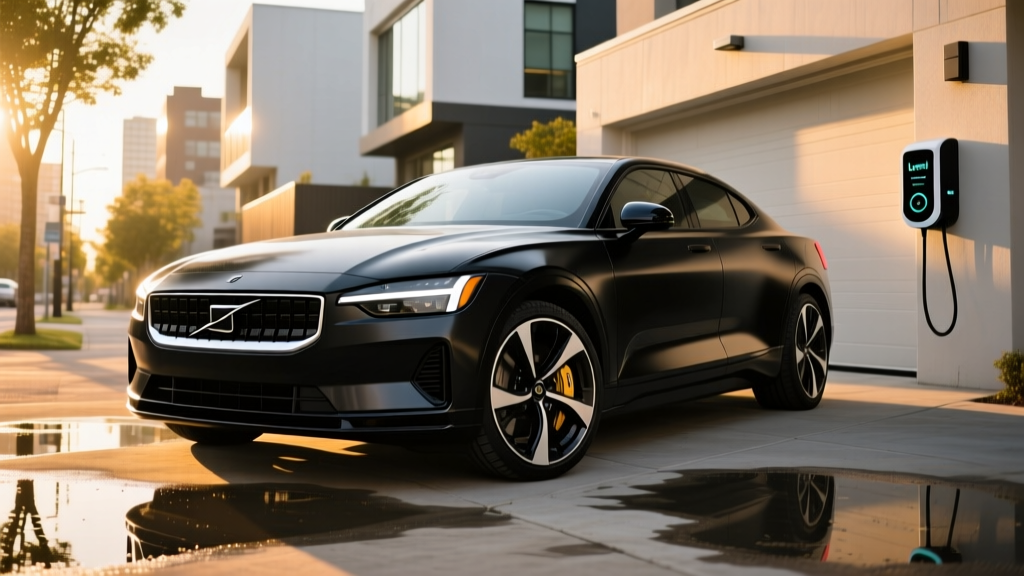
The 2024 Polestar 2 arrived with a major mid-cycle refresh that fundamentally changed the car's character: a switch from front-wheel drive to rear-wheel drive for the single-motor variant, a larger 82 kWh battery pack, and significantly faster DC charging. For buyers researching the 2024 Polestar 2 in the used and certified-pre-owned market—or comparing it against current inventory—this model year represents a turning point that made the Swedish-Chinese EV genuinely competitive with the Tesla Model 3, Hyundai Ioniq 6, and BMW i4.
Below is a data-driven breakdown of everything that matters: real-world range reconciliation, charging-curve behavior, federal tax credit eligibility under IRS §30D rules, and whether the Polestar 2's premium-GT positioning justifies its price.
2024 Polestar 2 Core Specifications
| Spec | Single Motor (RWD) | Long Range Single Motor (RWD) | Long Range Dual Motor (AWD) |
|---|---|---|---|
| EPA Range | 276 mi | 320 mi | 276 mi |
| Battery (usable) | 69 kWh (LFP) | 82 kWh (NMC) | 82 kWh (NMC) |
| Horsepower | 299 hp | 299 hp | 408 hp (421 w/ Performance) |
| 0–60 mph | 5.9 sec | 5.9 sec | 4.3 sec (4.0 w/ Perf.) |
| Drivetrain | RWD | RWD | AWD |
| Max DC Charge Rate | 135 kW | 205 kW | 205 kW |
| 10–80% DC Time | ~34 min | ~28 min | ~28 min |
| Level 2 Rate | 11 kW | 11 kW | 11 kW |
| MPGe (combined) | 114 MPGe | 114 MPGe | 100 MPGe |
| EPA Efficiency | 29 kWh/100mi | 29 kWh/100mi | 33 kWh/100mi |
| Base MSRP (2024) | $49,900 | $53,400 | $56,900 |
Sources: EPA fueleconomy.gov, Polestar USA pressroom.
Real-World Range: What the EPA Sticker Doesn't Tell You
EPA Estimate: 320 miles
Real-World Highway (70 mph, mild weather): ~265–285 miles
Real-World Mixed Commute: ~290–310 miles
Cold Weather (below 30°F, highway): ~215–245 miles (30–35% reduction)
With Performance Pack (20" wheels): Subtract ~15–20 miles from all figures
The 2024 model year's switch to the 82 kWh NMC lithium-ion pack (supplied by CATL and LG Energy Solution depending on production batch) gave the Long Range Single Motor a substantial range bump over the pre-2024 models. The EPA rates it at 320 miles, which is a credible figure for mixed suburban driving with moderate regen use.
However, the Polestar 2's aerodynamic profile—while sleek—still carries a relatively high drag coefficient compared to the Hyundai Ioniq 6. At sustained highway speeds above 70 mph, expect range to drop to roughly 265–285 miles in mild conditions. In freezing temperatures, the car's resistive cabin heater (no heat pump on the standard equipment list; the heat pump is bundled in the optional Plus Pack) compounds the typical lithium-ion cold-weather capacity loss. If you regularly drive in sub-freezing climates, budget for a real-world winter range closer to 220 miles on the highway.
The Standard Range Single Motor's 69 kWh LFP (lithium iron phosphate) battery delivers 276 miles EPA. LFP chemistry trades energy density for longevity and thermal stability—you can charge it to 100% daily without the degradation concerns of NMC. For commuters with home charging, the LFP pack is arguably the smarter ownership choice despite the shorter range.
Charging Speed and Infrastructure
| Charging Level | Power / Rate | Miles Added per Hour | Notes |
|---|---|---|---|
| Level 1 (120V) | ~1.4 kW | ~4–5 mi/hr | Emergency/top-up only |
| Level 2 (240V, 48A) | 11 kW | ~33–37 mi/hr | Full charge in ~8 hrs (82 kWh) |
| DC Fast (Standard Range) | Peak 135 kW | ~150 mi in 30 min | 10–80% in ~34 min |
| DC Fast (Long Range) | Peak 205 kW | ~200 mi in 25 min | 10–80% in ~28 min |
The 2024 refresh's biggest practical improvement is the 205 kW peak DC fast-charge capability on Long Range and Dual Motor models (up from 150 kW on pre-2024 models). On a 350 kW Electrify America or Tesla Supercharger (via adapter) station, the Polestar 2 will ramp quickly to ~200 kW and hold strong through about 40% State of Charge (SoC), then taper progressively.
Charging-curve reality: Peak kW is not sustained kW. The 28-minute 10–80% claim assumes optimal battery preconditioning and a charger capable of delivering 205 kW. In practice, if you arrive at a charger without preconditioning (navigating to it via the car's built-in navigation triggers this automatically), expect 32–35 minutes for the same 10–80% session. Above 80% SoC, the charge rate drops sharply—typical of NMC chemistry—to protect the cells. If you're road-tripping, plan your stops around the 10–80% window and skip the temptation to top off to 100% unless it's your final stop.
The 11 kW onboard AC charger is competitive. On a home Level 2 station (240V, 48-amp circuit), you'll add roughly 35 miles of range per hour, meaning an overnight session from 20% to full takes about 7–8 hours. The Standard Range LFP model peaks at 135 kW on DC—adequate, but noticeably slower on road trips.
Connector note: The 2024 Polestar 2 uses a CCS1 connector. Polestar has confirmed future models will adopt NACS, and a CCS-to-NACS adapter is available for Tesla Supercharger access as the network has opened to non-Tesla vehicles.
Performance and Driving Dynamics
The 2024 model year's switch to rear-wheel drive for single-motor variants transformed the Polestar 2's driving character. Where the pre-refresh front-wheel-drive model suffered from torque steer under hard acceleration, the RWD layout delivers a neutral, confidence-inspiring chassis that finally matches the car's premium aspirations.
The Single Motor produces 299 hp and 361 lb-ft of torque, reaching 60 mph in 5.9 seconds. That's brisk enough for any merge or passing situation, though it trails the Tesla Model 3 Long Range RWD (5.8 sec with less power, thanks to lower weight). The Dual Motor AWD model's 408 hp and 4.3-second 0–60 time is genuinely quick, and the optional Performance Pack (software tune to 421 hp, Öhlins dampers, Brembo brakes, 20" forged wheels) drops that to approximately 4.0 seconds.
Ride quality is firm but well-damped—Polestar tuned the chassis on European roads, and it shows. The steering is precise if slightly light on feel. One-pedal driving is available with adjustable regen levels, though the maximum regen force doesn't quite match the aggressive deceleration of a Tesla or Hyundai E-GMP vehicle.
Interior, Cargo, and Daily Practicality
The Polestar 2's cabin uses a minimalist Scandinavian design language with a vegan interior as standard (leather is not offered). The 11.2-inch portrait-oriented center display runs Polestar's Android Automotive OS, which has Google Maps, Google Assistant, and the Google Play Store built natively into the vehicle. This means native Google Maps navigation with real-time traffic and integrated EV route planning—arguably the best infotainment navigation system available in this segment.
Cargo and space dimensions:
- Rear cargo (seats up): 14.4 cu ft (liftback design, practical opening)
- Rear cargo (seats folded): 37.3 cu ft
- Front trunk (frunk): 1.4 cu ft (small—fits a charging cable bag)
- Rear legroom: 35.7 inches
- Front headroom: 40.2 inches
- Rear headroom: 37.0 inches (sloping roofline cuts into space for taller passengers)
The rear seat is the Polestar 2's most obvious compromise versus rivals. The transmission tunnel hump (a legacy of the CMA platform shared with the Volvo XC40) intrudes on the middle-rear footwell, and headroom is tight for anyone over 6 feet. This is a four-person car, comfortably, not a five-person family hauler. If you regularly carry rear-seat adults, the Hyundai Ioniq 6 or Tesla Model 3 offer meaningfully more space.
Pricing, Trims, and Federal Tax Credit Eligibility
| Trim | Base MSRP | As-Tested (Typical) | §30D Credit Eligibility |
|---|---|---|---|
| Standard Range Single Motor | $49,900 | $52,000–$55,000 | Not eligible (MSRP exceeds $55,000 sedan cap for some configs; battery sourcing fails critical-mineral requirement) |
| Long Range Single Motor | $53,400 | $57,000–$63,000 | Not eligible (sedan MSRP cap $55,000; base qualifies but destination + options push over; sourcing rules apply) |
| Long Range Dual Motor | $56,900 | $62,000–$68,000 | Not eligible (MSRP exceeds $55,000 sedan cap) |
Critical tax credit context: Under IRS §30D rules, the 2024 Polestar 2 faces two hurdles. First, the federal credit for sedans caps MSRP eligibility at $55,000 (destination charges included). The Long Range Single Motor's $53,400 base MSRP technically squeaks under, but adding any packages (Plus Pack, Pilot Pack, Performance Pack) or even the $1,400 destination fee pushes the vehicle over the cap. Second, and more decisively, the Polestar 2's battery cells are manufactured in China and South Korea, and the critical-minerals sourcing requirements introduced in 2023 (and tightened in 2024) disqualify the vehicle regardless of MSRP.
The IRS clean vehicle credit page maintains the current list of eligible vehicles. As of the 2024 model year, the Polestar 2 does not qualify for the $7,500 federal tax credit. Buyers should not factor the credit into their purchase math. State-level incentives (California, Colorado, New York, and others) may still apply—check your state's energy office for current programs, as these vary by jurisdiction and change frequently.
For the used-EV market (relevant in 2026), the §25E used clean vehicle credit offers up to $4,000 (30% of sale price, capped) for vehicles priced at $25,000 or less, sold through a dealer, and meeting income limits ($75,000 single / $150,000 joint). A used 2024 Polestar 2 will likely not drop below $25,000 until approximately 2028–2029.
Battery Warranty, Degradation, and Long-Term Ownership
Polestar covers the 2024 Polestar 2's battery and drive units with an 8-year / 100,000-mile warranty (whichever comes first), with a capacity retention threshold of 70%. This is industry-standard, matching Tesla, Hyundai/Kia, and most legacy automakers. The vehicle limited warranty is 4 years / 50,000 miles.
For the Long Range models using NMC chemistry, expect typical degradation of 8–12% over the first 100,000 miles based on fleet data from similar CATL/LG NMC packs. The Standard Range model's LFP battery will likely degrade less (5–8% over the same distance) and tolerates routine 100% charging without accelerated wear. LFP's cycle life advantage (3,000+ full cycles vs. ~1,000–1,500 for NMC) makes it the longevity winner, even if the range is shorter.
Battery replacement cost, should it be needed out of warranty, is estimated at $12,000–$18,000 for the 82 kWh pack based on current parts pricing—though this figure is expected to decline as battery costs continue their downward trend.
Driver Assistance and Safety Technology
The 2024 Polestar 2 comes standard with a comprehensive ADAS suite including:
- Adaptive cruise control with stop-and-go
- Lane-keeping assist and lane-centering
- Blind-spot monitoring with rear cross-traffic alert
- Automatic emergency braking with pedestrian/cyclist detection
- Run-off road protection (Volvo heritage)
The optional Pilot Pack adds Pilot Assist, which combines adaptive cruise and lane-centering for highway driving. This is a SAE Level 2 driver-assistance system—the driver must remain attentive, keep hands on the wheel, and supervise at all times. It is not autonomous driving. Pilot Assist performs competently on well-marked highways but doesn't match the lane-change confidence of GM's Super Cruise or Ford's BlueCruise on supported roads.
• Requires continuous driver supervision (hands-on-wheel detection)
• Does NOT support automatic lane changes
• Performance degrades in heavy rain, construction zones, faded lane markings
• Not a hands-free system — unlike BlueCruise or Super Cruise on mapped highways
• SAE Level 2 only — the driver is always the responsible operator
The IIHS awarded the 2024 Polestar 2 its Top Safety Pick+ rating, with top marks in all crashworthiness categories. The NHTSA gave it a 5-star overall rating.
Who Should Buy the 2024 Polestar 2?
- You value Scandinavian design and build quality over maximum range-per-dollar
- You want native Google Automotive infotainment with built-in Google Maps EV routing
- You prefer RWD driving dynamics and a firm, well-damped chassis
- You charge at home most nights and road-trip 3–5 times per year
- You want LFP battery chemistry (Standard Range) for daily-charge longevity
- You're buying used/CPO in 2026 and can find one at a depreciated price
- Rear-seat passenger space is a priority (choose Model 3, Ioniq 6, or BMW i4)
- You need the $7,500 federal tax credit to make the math work
- You regularly drive in extreme cold without garage parking (no standard heat pump)
- You want hands-free highway driving (BlueCruise or Super Cruise vehicles)
- Maximum fast-charge speed is critical—Hyundai Ioniq 6 charges 10–80% in ~18 min
2024 Polestar 2 Pros and Cons
- Excellent build quality and premium materials throughout
- RWD dynamics a major improvement over pre-2024 FWD models
- Native Google Maps with EV-aware route planning
- 205 kW DC charging on Long Range (28 min 10–80%)
- LFP option (Standard Range) for daily 100% charging without degradation worry
- Top Safety Pick+ from IIHS
- Liftback cargo design more practical than a traditional sedan trunk
- Does not qualify for $7,500 federal tax credit (sourcing rules)
- Tight rear headroom and intrusive floor tunnel limit rear-seat comfort
- No standard heat pump (Plus Pack required) — cold-weather range suffers
- Pilot Assist is competent but behind Super Cruise/BlueCruise in highway capability
- Small frunk (1.4 cu ft) — barely fits the charging cable
- Efficiency (29–33 kWh/100mi) trails Ioniq 6 and Model 3
- CCS1 connector requires adapter for Tesla Supercharger access
Frequently Asked Questions
What is the real-world range of the 2024 Polestar 2?
The Long Range Single Motor's EPA estimate is 320 miles, but expect 265–285 miles at highway speeds in mild weather, and as low as 215–245 miles in freezing temperatures. The Standard Range LFP model delivers roughly 235–255 real-world highway miles. These figures assume no Performance Pack (20" wheels reduce range by 15–20 miles).
How fast does the 2024 Polestar 2 charge at home and on the road?
At home on a Level 2 (240V, 48A) station, the onboard 11 kW charger adds about 35 miles of range per hour—a full overnight charge takes 7–8 hours. On DC fast chargers, the Long Range models peak at 205 kW and reach 10–80% in approximately 28 minutes with battery preconditioning. The Standard Range model peaks at 135 kW with a 10–80% time of about 34 minutes.
Does the 2024 Polestar 2 qualify for the $7,500 federal EV tax credit?
No. The Polestar 2 fails the IRS §30D battery-sourcing and critical-minerals requirements because its battery cells are manufactured outside the United States and its supply chain does not meet the thresholds established by the Inflation Reduction Act. Additionally, most configurations exceed the $55,000 MSRP cap for sedans when destination and options are included. Always verify current eligibility on the IRS clean vehicle credit page.
Is the 2024 Polestar 2 worth buying versus the Tesla Model 3 or Hyundai Ioniq 6?
It depends on your priorities. The Model 3 Long Range offers more range (341 mi EPA), faster Supercharger network access, and better rear-seat space, but its interior quality doesn't match the Polestar. The Ioniq 6 charges faster (10–80% in ~18 min on 800V architecture) and is more efficient, but its styling is polarizing and its infotainment lags behind. The Polestar 2 wins on design, build quality, and Google-native infotainment. If you find a used 2024 model at a strong depreciated price in 2026, it becomes a compelling value proposition in the premium EV sedan segment.
Does the Polestar 2 have a heat pump?
The heat pump is not standard equipment. It's included in the optional Plus Pack (which also adds a panoramic roof, Harman Kardon audio, and heated rear seats). If you live in a cold-weather climate, the Plus Pack is strongly recommended to preserve winter range and reduce energy wasted on resistive cabin heating.
What connector does the 2024 Polestar 2 use?
The 2024 Polestar 2 uses a CCS1 (Combined Charging System) connector for both AC and DC charging. Tesla Supercharger access is possible using a CCS-to-NACS adapter as Tesla has opened portions of its network to non-Tesla EVs. Future Polestar models will adopt the NACS standard natively.