The Entry-Point Mustang EV: What the Select Trim Actually Delivers
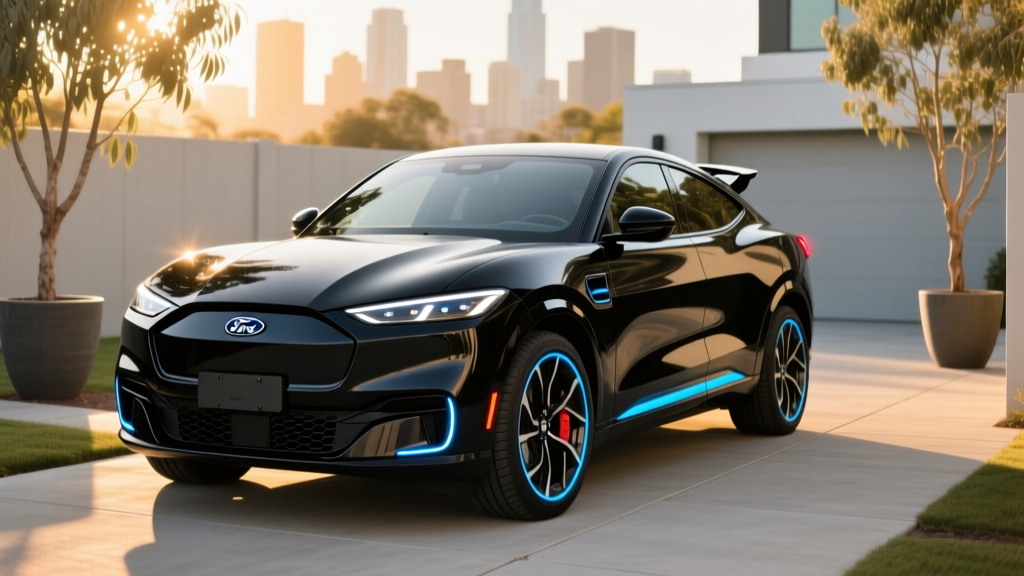
The 2024 Ford Mustang Mach-E Select serves as the gateway into Ford's electric crossover lineup. Stripped of the premium add-ons that push GT models past $60,000, the Select targets buyers who want a practical daily-driver EV with recognizable styling, a usable 250-mile EPA range, and a price that — after the federal tax credit — undercuts many gas-powered midsize SUVs on total cost of ownership. For 2024, Ford made the previously optional extended-range battery and all-wheel drive available across more trims, but the Select remains the value play: a single-motor, rear-wheel-drive configuration with the standard-range battery that prioritizes efficiency over straight-line theatrics.
This review examines what you actually get at the Select trim level — the real-world range you can expect beyond the EPA sticker, the charging curve at public DC fast chargers, the nuances of the LFP battery chemistry, and whether the §30D federal tax credit actually applies to your purchase. We've cross-referenced Ford's official specifications with EPA data from fueleconomy.gov and current IRS §30D guidance to give you the numbers that matter at the dealership.
Range, Efficiency, and the Real-World Caveats
The 2024 Mach-E Select with the standard-range battery and rear-wheel drive carries an EPA-estimated range of 250 miles. That figure comes from a usable battery capacity of approximately 72 kWh (70 kWh usable, with a top-and-bottom buffer to protect long-term health). Efficiency is rated at 101 MPGe combined (105 city / 96 highway), translating to roughly 33 kWh per 100 miles — competitive with the Hyundai Ioniq 5 and slightly behind the Tesla Model Y RWD.
EPA Sticker: 250 miles
Highway driving (70-80 mph, moderate temps): Expect 210–230 miles. EVs lose efficiency at sustained highway speeds because there's no multi-gear transmission to keep the motor in its sweet spot, and aerodynamic drag scales with the square of velocity.
City/suburban mixed driving: 240–260 miles is achievable. Regenerative braking recovers energy that would otherwise be lost to friction brakes, and lower average speeds reduce drag.
Cold weather (below 32°F): Plan for 170–200 miles. The Mach-E Select uses a resistive PTC heater rather than a heat pump (standard on Premium and GT trims), which draws significant energy from the traction battery to warm the cabin. Battery chemistry also becomes less efficient at low temperatures, increasing internal resistance.
| Attribute | Value |
|---|---|
| EPA Range | 250 miles |
| Battery (Gross / Usable) | 72 kWh / ~70 kWh |
| Battery Chemistry | LFP (Lithium Iron Phosphate) |
| Drivetrain | RWD, single rear motor |
| Horsepower | 266 hp |
| Torque | 317 lb-ft |
| 0-60 mph | ~6.3 seconds |
| MPGe (City/Hwy/Combined) | 105 / 96 / 101 |
| Max DC Fast Charge | 150 kW |
| 10-80% DC Fast Charge | ~38 minutes |
| Level 2 Home Charging | 10.5 kW (~32 mi/hr) |
| Cargo (behind rear seats) | 29.7 cu ft |
| Cargo (seats folded) | 59.7 cu ft |
| Front Trunk (Frunk) | 4.7 cu ft |
| Rear Legroom | 38.1 inches |
| Base MSRP | $42,995 (incl. destination) |
| Battery Warranty | 8 years / 100,000 miles |
Battery Chemistry: Why LFP Matters for Ownership
For 2024, Ford equipped the standard-range Mach-E (Select and Premium trims) with an LFP (lithium iron phosphate) battery. This is a deliberate choice that trades some energy density for significant longevity and cost advantages:
- Cycle life: LFP cells typically sustain 3,000+ full charge cycles before degrading to 80% capacity — roughly double that of comparable NMC (nickel manganese cobalt) cells. For a 250-mile-range vehicle, that's well over 500,000 miles of theoretical cycle life before the battery falls below warranty threshold.
- Daily charging to 100%: Unlike NMC batteries, which Ford recommends charging to 80-90% for daily use to minimize degradation, LFP chemistry tolerates regular 100% charges without meaningful lifespan penalty. Ford's own guidance encourages LFP owners to charge to 100% at least once per week for accurate state-of-charge calibration.
- Thermal stability: LFP cells are inherently more resistant to thermal runaway — a critical safety advantage, even though modern battery management systems make such events extremely rare in either chemistry.
- The trade-off: LFP has lower energy density than NMC, which is why the standard-range pack yields 250 miles rather than the 312 miles available with the extended-range NMC pack on higher trims. LFP also performs slightly worse in extreme cold, compounding the range loss from the Select's lack of a heat pump.
Ford backs the battery with an 8-year/100,000-mile warranty guaranteeing at least 70% capacity retention. Based on LFP degradation curves observed in fleet data, most owners will retain 85-90%+ capacity well beyond the warranty period under normal use.
Charging Speed: DC Fast, Level 2, and the Curve
The Mach-E Select accepts up to 150 kW peak on a DC fast charger using its CCS1 port. However, peak rate is not sustained rate — and understanding the charge curve is essential for road-trip planning.
| Charging Level | Power / Rate | Miles Added per Hour | Notes |
|---|---|---|---|
| Level 1 (120V household) | ~1.4 kW | ~3-4 mi/hr | Emergency/top-up only; a full charge takes ~50 hours |
| Level 2 (240V home, 48A) | 10.5 kW | ~32 mi/hr | Full 0-100% in ~7 hours; ideal for overnight charging |
| DC Fast Charge (peak) | 150 kW | ~200+ mi/hr (at peak) | Peak only below ~40% SoC; tapers significantly above 80% |
| DC Fast 10-80% | Avg ~85-95 kW | — | ~38 minutes; charge curve is the limiting factor |
The charge curve reality: The Mach-E Select hits its 150 kW peak only at low states of charge (roughly 10-35% SoC) with a preconditioned battery. As the battery fills, the battery management system progressively reduces current to protect cell health. By 60% SoC, you're likely seeing 90-100 kW; by 80%, it drops to around 50-60 kW; and from 80-100%, charging crawls to under 25 kW. This is why the 10-80% metric (38 minutes) is far more useful than a peak kW number — and why road-trip strategy means charging in the 10-80% window and skipping the slow top-off unless you need those final miles to reach your destination.
Always use the Mach-E's built-in navigation to route to a DC fast charger, even if you know the way. This triggers battery preconditioning — warming the pack to optimal temperature for fast charging. Arriving at a 150 kW charger with a cold battery can reduce your peak rate to 80-100 kW, adding 10-15 minutes to your stop. In winter, this effect is dramatic.
Performance and Driving Dynamics
The Select's single rear motor produces 266 horsepower and 317 lb-ft of torque, delivered to the rear wheels with the instant response characteristic of electric motors. The 0-60 mph time of approximately 6.3 seconds won't embarrass you at a merge, and the torque delivery makes the car feel quicker in urban driving than the number suggests. There's no transmission to shift — just a single-speed reduction gear that keeps the motor in its power band from 0 to the electronically limited top speed.
Ride quality is firm but controlled, with the battery pack's low center of gravity minimizing body roll through corners. The steering is precise if slightly numb — a common EV compromise as manufacturers tune for efficiency-oriented low rolling-resistance tires. Road noise is well-managed at highway speeds, though the absence of engine sound makes tire and wind noise more noticeable than in a comparable gas Mustang (a car the Mach-E shares nothing with mechanically, despite the badge).
Pricing, Tax Credits, and the True Cost
The 2024 Mach-E Select started at an MSRP of $42,995 (including the $1,895 destination charge). With no packages beyond paint color, an as-tested price typically lands between $43,000 and $44,500.
| Item | Amount |
|---|---|
| Base MSRP (incl. destination) | $42,995 |
| Federal §30D Tax Credit (if eligible) | Up to $7,500 |
| Effective Price After Full Credit | ~$35,495 |
| Estimated 5-Year Fuel Savings vs. 25 MPG Gas SUV | $4,000–$6,500* |
*Fuel savings assume 15,000 miles/year, $0.14/kWh home charging, $3.50/gal gas. Actual savings depend on local electricity and fuel prices.
The 2024 Mach-E Select qualifies for up to $7,500 in federal tax credits, but eligibility depends on three factors you must verify:
- Buyer income caps: Modified AGI must not exceed $150,000 (single), $225,000 (head of household), or $300,000 (joint filers).
- MSRP cap: The vehicle's MSRP must be at or below $80,000 for SUVs — the Select clears this easily at ~$43K.
- Battery sourcing: The critical-minerals and battery-component requirements phase in over time. For 2024, the full $7,500 requires meeting both the critical-minerals threshold (50% from US or FTA partners) and the battery-component threshold (100% manufactured in North America). Ford has confirmed the Mach-E qualifies for the full credit, but always verify on fueleconomy.gov at the time of purchase, as sourcing rules can shift.
- Point-of-sale transfer: As of 2024, you can transfer the credit to the dealer at purchase, reducing your out-of-pocket cost immediately rather than waiting to claim it on your tax return.
Consult a tax professional for your specific situation. Rules are set by the IRS and subject to change.
Interior, Tech, and Daily Livability
The Mach-E Select's cabin is defined by the massive 15.5-inch vertical touchscreen running Ford's SYNC 4A infotainment system. The interface is responsive, supports wireless Apple CarPlay and Android Auto, and includes native integration with charging networks (FordPass can route you through Electrify America, EVgo, and other networks with plug-and-charge billing). A 10.2-inch digital instrument cluster sits behind the wheel, displaying speed, range, and driver-assist status.
Driver assistance: The Select includes Ford Co-Pilot360 2.0 as standard: automatic emergency braking with pedestrian detection, blind-spot monitoring, lane-keeping assist, rear cross-traffic alert, and adaptive cruise control with stop-and-go. Ford's BlueCruise hands-free driving system (SAE Level 2) is not standard on the Select — it requires the optional BlueCruise prep package or stepping up to the Premium trim. When equipped, BlueCruise permits hands-off driving on approximately 130,000 miles of pre-mapped divided highways, but the driver must remain attentive and the system monitors via a cabin-facing camera.
BlueCruise, like Tesla Autopilot and GM Super Cruise, is an SAE Level 2 driver-assist system. The driver must remain engaged, monitor the road, and be prepared to take over at any moment. It is not autonomous driving. Only Level 4 services like Waymo operate without a human driver, and those are limited to geofenced urban areas — not available in consumer vehicles.
Cargo and space: Behind the rear seats, the Mach-E offers 29.7 cubic feet — more than a Toyota RAV4 (37.5 cu ft to the RAV4's advantage, but the Mach-E's load floor is lower and flatter). Fold the 60/40 rear seats and you get 59.7 cubic feet. The 4.7-cubic-foot frunk includes a drain plug, making it useful for ice and beverages at a tailgate. Rear legroom of 38.1 inches accommodates adults comfortably, though the sloping roofline cuts into headroom for passengers over 6 feet.
Pros, Cons, and the Competition
- LFP battery allows daily 100% charging without degradation anxiety
- Sub-$36K effective price after federal tax credit
- Spacious cargo area with practical frunk
- SYNC 4A infotainment is responsive and well-organized
- Co-Pilot360 2.0 standard safety suite is comprehensive
- Strong dealer network for service and warranty work
- 250-mile range is tight for road trips vs. 300+ mile competitors
- No heat pump on Select trim — cold-weather range suffers
- 150 kW peak DC charging is slower than Hyundai/Kia's 800V architecture
- BlueCruise not standard; requires package or higher trim
- PTC cabin heater draws significant battery in winter
- No NACS port from factory (Tesla Supercharger access requires adapter)
Key competitors at this price point:
- Hyundai Ioniq 5 SE Standard Range ($42,600): Similar range (220 mi standard, 303 mi extended), significantly faster 800V charging (10-80% in 18 min), but slightly less cargo space.
- Tesla Model Y RWD (~$44,990): Longer range (~310 mi), access to the Supercharger network natively (NACS), more minimalist interior, but limited service center availability in some regions.
- Kia EV6 Wind RWD ($43,700): Shares the Ioniq 5's excellent 800V charging architecture, 310-mile range, and similar interior space.
Who the Mach-E Select Is For — and Who Should Look Elsewhere
Choose the Mach-E Select if: You commute 40-80 miles round-trip with home Level 2 charging, you want the lowest entry price into the Mach-E lineup, you value LFP battery longevity and the freedom to charge to 100% daily, and you rarely drive more than 200 miles in a single day without stopping.
Look elsewhere if: You regularly road-trip 300+ miles (the 250-mile range and 38-minute charge stops will frustrate — consider the extended-range Premium or a Tesla Model Y), you live in a cold climate where the lack of a heat pump will cost you 25-30% of your range in winter, or you want hands-free highway driving without paying for options.
Frequently Asked Questions
What is the real-world range of the 2024 Mach-E Select?
The EPA rates it at 250 miles, but expect 210-230 miles on the highway at 70-80 mph, 240-260 in mixed city driving, and as little as 170-200 miles in freezing temperatures. The lack of a heat pump on the Select trim makes cold-weather range loss more severe than on Premium or GT trims.
How fast does the Mach-E Select charge?
On a DC fast charger, it peaks at 150 kW and charges from 10-80% in approximately 38 minutes. At home on a 240V Level 2 charger (48A/10.5 kW), a full charge takes about 7 hours, adding roughly 32 miles of range per hour. On a standard 120V outlet, expect about 3-4 miles per hour — useful only for overnight top-ups.
Does the 2024 Mach-E Select qualify for the federal EV tax credit?
Yes — the 2024 Mach-E qualifies for up to $7,500 under IRS §30D, provided the buyer meets income caps ($150K single / $300K joint), the MSRP is under $80,000 (it is, at ~$43K), and the battery meets the critical-minerals and component-sourcing thresholds. As of 2024, Ford confirms the Mach-E qualifies for the full credit. You can transfer the credit to the dealer at point of sale. Always verify current eligibility on fueleconomy.gov and consult a tax professional.
Is the Mach-E Select worth buying vs. the Tesla Model Y or Hyundai Ioniq 5?
It depends on your priorities. The Select wins on effective price after the tax credit, LFP battery longevity, and Ford's widespread dealer network for service. The Tesla Model Y wins on range (~310 mi) and native Supercharger access. The Hyundai Ioniq 5 wins on charging speed (18-minute 10-80% via 800V architecture). For a commuter who charges at home overnight and rarely road-trips, the Select's value proposition is compelling. For frequent long-distance drivers, the Ioniq 5 or Model Y makes more sense.
What is the battery warranty on the Mach-E Select?
Ford covers the high-voltage battery for 8 years or 100,000 miles (whichever comes first) against defects and capacity loss below 70% of original capacity. The powertrain (motor, power electronics) carries the same 8-year/100,000-mile coverage. Given LFP chemistry's demonstrated longevity, most owners are unlikely to approach the threshold within the warranty period.
Can I charge the Mach-E Select at Tesla Superchargers?
The 2024 Mach-E Select has a CCS1 charge port. Ford began shipping NACS (Tesla connector) adapters to existing Mach-E owners in 2024, and future models will ship with a native NACS port. With the adapter, the Mach-E can access Tesla's Supercharger network (V2 and V3 stalls), though charging speed is limited by the vehicle's 150 kW peak — not the Supercharger's capability. Use the FordPass app or the vehicle's SYNC navigation to locate and activate Supercharger stalls.