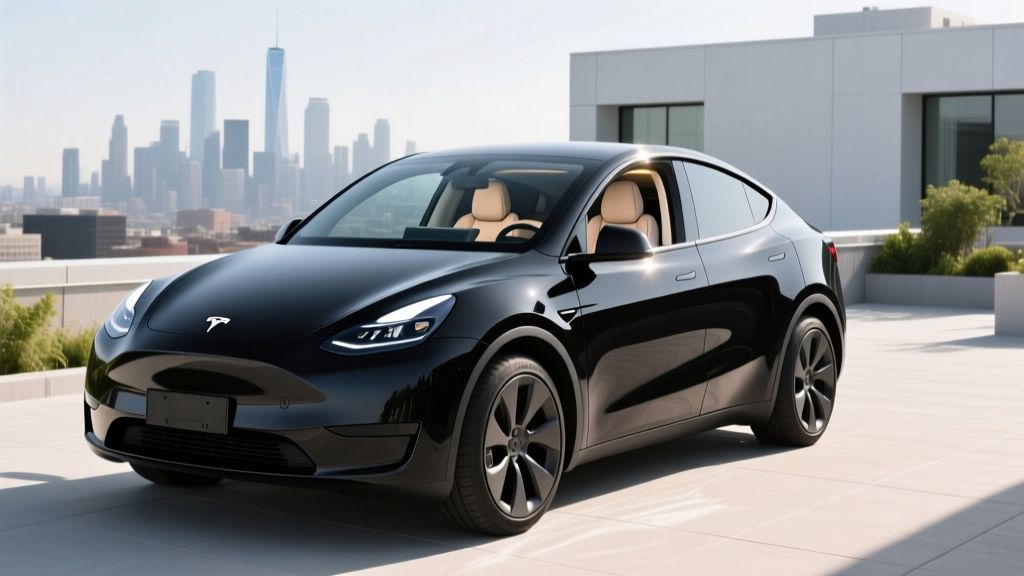
Search for "does Tesla own Grok" and you'll find a tangled web of corporate filings, Elon Musk's dual roles, and one of the most advanced AI assistants ever put inside a production car. The short answer: Tesla does not own Grok. Grok is developed by xAI, a separate artificial intelligence company founded by Musk in 2023. However, Grok has become deeply integrated into Tesla's in-car infotainment ecosystem, blurring the lines between the two entities for consumers.
But Grok's presence in the cabin is only part of the story. The 2026 Tesla Model S remains the flagship sedan that set the template for the modern EV — and it's been updated with new battery chemistry, faster charging architecture, and that controversial AI assistant riding shotgun. Here's the full data-driven breakdown.
Does Tesla Own Grok? The Corporate Reality
Grok is the product of xAI, which Musk launched as an independent company in July 2023. xAI raised $6 billion in a Series B round in May 2024 and has operated as a distinct legal entity. Tesla does not hold a controlling stake in xAI, and xAI is not a subsidiary of Tesla.
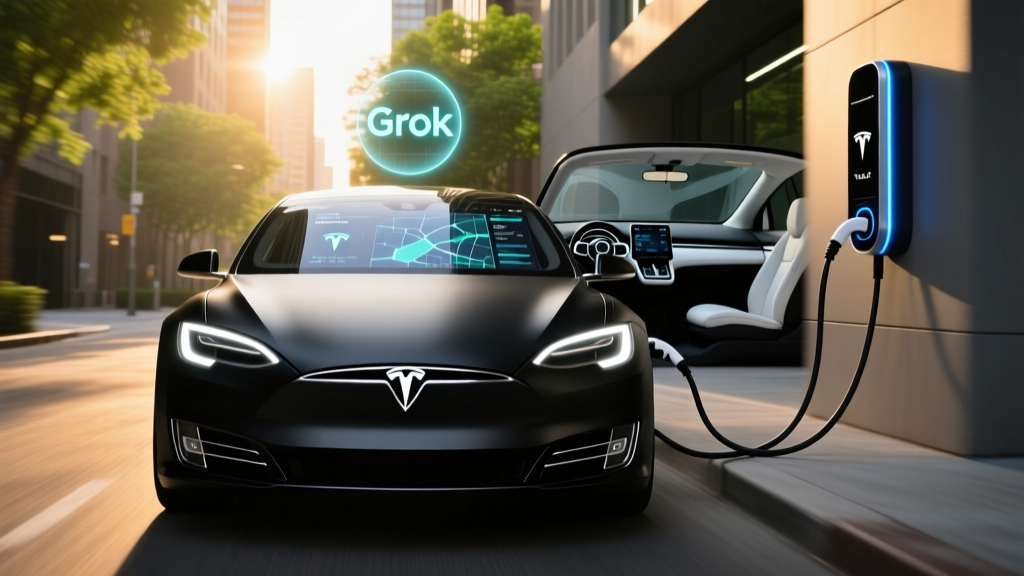
That said, the relationship is close. Grok was integrated into Tesla vehicles via an over-the-air update in late 2024, providing conversational AI access through the center touchscreen. Tesla shareholders have raised questions about whether the integration represents a related-party transaction that benefits Musk's other ventures. As of early 2026, the arrangement continues, with Grok available as a Premium Connectivity feature on all Tesla models running the latest software.
For buyers, the practical takeaway: Grok is a feature you use inside a Tesla, but it's not a Tesla product. Think of it similarly to how Apple CarPlay runs on a car's screen without being made by the automaker — except here, the integration runs deeper into vehicle controls and navigation.
2026 Tesla Model S: Quick Verdict
The 2026 Model S continues as a two-trim lineup: the Long Range (dual-motor AWD) and the Plaid (tri-motor AWD). It's a performance luxury sedan that competes with the Lucid Air, Porsche Taycan, and BMW i7, but its age is starting to show in interior material quality and rear-seat packaging compared to newer rivals.
| Spec | Model S Long Range | Model S Plaid |
|---|---|---|
| EPA Range | 402 miles | 359 miles |
| Battery (usable) | ~95 kWh, NMC | ~95 kWh, NMC |
| Drivetrain | Dual-Motor AWD | Tri-Motor AWD |
| Horsepower | 670 hp | 1,020 hp |
| 0–60 mph | 3.1 seconds | 1.99 seconds |
| Top Speed | 155 mph | 200 mph |
| Max DC Charge Rate | 250 kW | 250 kW |
| 10–80% DC Time | ~27 minutes | ~27 minutes |
| Level 2 Home Charge | 11.5 kW (~44 mi/hr) | 11.5 kW (~44 mi/hr) |
| MPGe (combined) | 120 MPGe | 116 MPGe |
| Efficiency | 28 kWh/100 mi | 29 kWh/100 mi |
| Cargo (trunk + frunk) | 28.0 cu ft total | 28.0 cu ft total |
| Rear Legroom | 35.4 inches | 35.4 inches |
| Base MSRP | $74,990 | $89,990 |
Source: EPA Fuel Economy, Tesla.com specifications.
Real-World Range: What the EPA Sticker Doesn't Tell You
EPA Estimate: 402 miles (Long Range) / 359 miles (Plaid)
Real-World Expectation: ~320–350 miles highway (Long Range) at 70–75 mph; ~280–310 miles (Plaid). In freezing temperatures (below 32°F), expect a 15–25% reduction, bringing effective range to ~250–300 miles (Long Range).
The Model S Long Range's 402-mile EPA figure remains among the highest of any production EV sold in the U.S. That number is achievable in mixed city/suburban driving at moderate speeds, where regenerative braking recaptures energy and the heat pump operates efficiently.
However, sustained highway driving at 75+ mph pushes consumption higher. In real-world testing by multiple outlets, the Long Range averages about 3.0–3.2 miles per kWh at highway speeds, yielding roughly 320–340 miles before needing a charge. The Plaid's tri-motor powertrain and stickier tires increase rolling resistance and energy draw, typically delivering 270–310 real-world highway miles.
Cold weather remains the great equalizer. Tesla's heat pump is among the best in the industry, but lithium-ion chemistry inherently loses efficiency in freezing temps. Preconditioning the battery while plugged in (a feature accessible through the Tesla app) mitigates some of this loss and is critical for maintaining fast-charge speeds in winter.
Charging Speed: DC Fast and Home Level 2
The 2026 Model S uses the NACS (North American Charging Standard) connector natively — no adapter needed at Tesla Superchargers. With the broader industry adopting NACS for 2025 and beyond, the Model S is now compatible with a growing number of non-Tesla DC fast-charging stations using the same plug.
| Charging Level | Power | Speed | Notes |
|---|---|---|---|
| Level 1 (120V) | ~1.4 kW | ~5 mi/hr | Emergency/trickle only |
| Level 2 (240V, 48A) | 11.5 kW | ~44 mi/hr | Full charge in ~9 hours |
| DC Fast (V3 Supercharger) | Peak 250 kW | ~200 mi in 15 min | 10–80% in ~27 min; tapers sharply above 80% |
| DC Fast (V4 Supercharger) | Peak 250 kW | Similar to V3 | Improved cable management; same peak rate for Model S |
The 250 kW peak charge rate is respectable but no longer class-leading. Competitors on 800V architectures — notably the Lucid Air and Hyundai Ioniq 5 — accept 300–350 kW at compatible chargers, shaving 5–8 minutes off a 10–80% session. Tesla's charge curve holds near peak from roughly 10–45% state of charge before tapering to ~150 kW by 65% and dropping further above 80%.
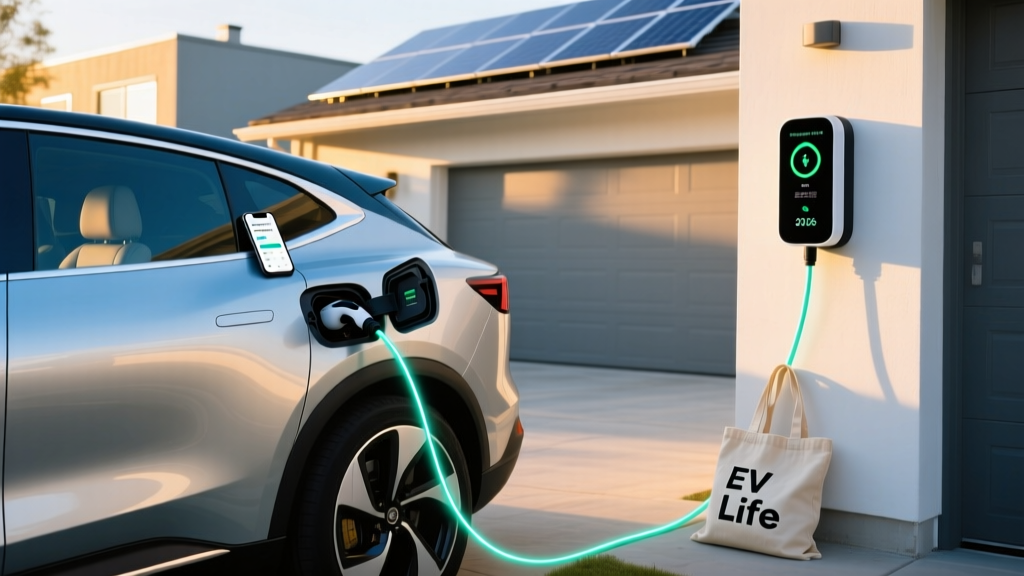
At home, the Model S accepts 11.5 kW on a 60-amp circuit (48A continuous). Using a Tesla Wall Connector or any J1772-to-NACS adapter with a compatible Level 2 station, you'll add roughly 44 miles of range per hour of charging — enough to replenish a full day's driving overnight.
Interior, Tech, and the Grok AI Integration
The Model S cabin centers on a 17-inch landscape touchscreen running Tesla's proprietary infotainment OS. Build quality has improved incrementally since the 2021 refresh, with ventilated front seats, a rear-seat entertainment screen, and a yoke steering wheel (a conventional round wheel is available at no extra charge).
Grok integration is accessed via voice command or a dedicated app tile on the touchscreen. It can answer general-knowledge questions, provide real-time traffic context, draft text messages, and engage in conversational queries. Unlike basic voice assistants, Grok maintains context across a conversation and can access real-time information when the vehicle has Premium Connectivity.
However, Grok does not control vehicle driving functions. Steering, braking, and acceleration remain under the driver's authority and Tesla's Autopilot/FSD (Supervised) stack. Grok is an infotainment and information layer, not a driving system.
Notable drawbacks:
- Rear-seat legroom (35.4 inches) trails the Lucid Air (37.3 in) and BMW i7 (40.5 in)
- No Apple CarPlay or Android Auto — Tesla's closed ecosystem is the only option
- Yoke steering remains polarizing and offers no hand-over-hand capability at low speeds
- Panel gaps and interior trim quality, while improved, still lag behind Porsche and BMW at this price point
Autopilot, FSD (Supervised), and Safety
SAE Automation Level: Tesla Autopilot and Full Self-Driving (Supervised) are Level 2 driver-assistance systems. The driver must remain engaged, hands on wheel (or yoke), and eyes on road at all times. These are not self-driving systems. Only Level 4 services like Waymo operate without a human driver.
The 2026 Model S ships with Tesla's HW4 (Hardware 4) computer and a camera-only perception suite (no radar or ultrasonic sensors). Autopilot includes Traffic-Aware Cruise Control and Autosteer as standard. FSD (Supervised) is a $8,000 add-on (or $99/month subscription as of 2026) that adds automatic lane changes, navigation-guided on-ramp to off-ramp driving, and traffic light/stop sign recognition.
FSD's real-world performance has improved substantially through iterative neural-network updates, but it still requires active supervision. Unexpected construction zones, faded lane markings, and complex unprotected left turns can cause disengagements. NHTSA has conducted ongoing investigations into Autopilot-related incidents, and buyers should treat FSD as a convenience feature, not a replacement for attentive driving.
The Model S earned a 5-Star overall rating from NHTSA and Top Safety Pick+ designation from IIHS (when equipped with acceptable headlights).
Pricing, Tax Credits, and Ownership Cost
| Trim | Base MSRP | Destination | Federal Credit (§30D) | Effective Price |
|---|---|---|---|---|
| Long Range | $74,990 | $1,390 | Up to $7,500* | ~$68,880* |
| Plaid | $89,990 | $1,390 | Up to $7,500* | ~$83,880* |
*Federal tax credit eligibility depends on multiple IRS §30D requirements. See checklist below.
Federal EV Tax Credit (§30D) — 2026 Requirements:
- MSRP Cap: Sedars must be ≤$55,000 MSRP. The Model S ($74,990+) exceeds this cap and does NOT qualify for the $7,500 new-vehicle credit.
- Buyer Income Cap: AGI ≤$150,000 (single) / ≤$300,000 (joint) — moot here due to MSRP cap.
- Battery Sourcing: Critical minerals and battery component requirements must be met — moot here due to MSRP cap.
- Point-of-Sale Transfer: Eligible vehicles can apply the credit as a dealer discount — not applicable to Model S.
Source: IRS.gov — Credits for New Clean Vehicles. Consult a tax professional for your specific situation.
The Model S's price puts it firmly above the §30D MSRP cap for sedans ($55,000). It does not qualify for the federal new-EV tax credit. State and local incentives may still apply — check your state's energy office or AFDC state incentive database for specifics.
For buyers who can absorb the price, the 5-year total cost of ownership is partially offset by low fuel costs (~$0.13/kWh national average = ~$0.037/mile), no oil changes, and strong Tesla resale values relative to legacy luxury EVs.
Model S vs. Key Competitors
| Spec | Tesla Model S LR | Lucid Air Pure | Porsche Taycan 4S | BMW i7 xDrive50 |
|---|---|---|---|---|
| EPA Range | 402 mi | 419 mi | 288 mi | 318 mi |
| Battery | ~95 kWh NMC | 88 kWh NMC | 83.7 kWh NMC | 101.7 kWh NMC |
| Peak DC Charge | 250 kW | 300+ kW | 270 kW | 195 kW |
| 0–60 mph | 3.1 sec | 3.8 sec | 3.8 sec | 4.5 sec |
| Base MSRP | $74,990 | $69,900 | $103,800 | $120,295 |
| Rear Legroom | 35.4 in | 37.3 in | 33.3 in | 40.5 in |
| Federal Credit | No (MSRP cap) | No (MSRP cap) | No (MSRP cap) | No (MSRP cap) |
Choose the Model S Long Range if: You prioritize Supercharger network access, want the longest practical range in a performance sedan, and value Tesla's software/OTA update ecosystem.
Choose the Lucid Air Pure if: You want even more range (419 mi EPA), faster 800V charging, more rear-seat space, and a lower base price — and can accept a smaller (though growing) charging network.
Choose the Porsche Taycan if: Driving dynamics, build quality, and brand prestige matter more than range, and budget is flexible.
Pros and Cons
Pros
- 402-mile EPA range — among the longest of any EV
- Access to 19,000+ Tesla Supercharger stations (NACS)
- Brutal Plaid acceleration (1.99 sec 0–60)
- Strong OTA update cadence keeps software current
- Frunk + trunk = 28 cu ft cargo versatility
- Grok AI adds conversational intelligence to the cabin
Cons
- Does NOT qualify for the $7,500 federal tax credit (MSRP cap)
- Rear seat is tighter than Lucid Air, BMW i7
- 250 kW peak charge rate trails 800V competitors
- No Apple CarPlay/Android Auto
- Yoke steering is divisive; limited low-speed ergonomics
- Interior quality still behind German luxury at $75K+
Battery and Warranty
Tesla covers the Model S battery and drive unit with an 8-year/150,000-mile warranty (whichever comes first), with a guaranteed minimum 70% battery capacity retention over that period. The vehicle limited warranty is 4 years/50,000 miles.
The Model S uses NMC (nickel manganese cobalt) chemistry, which offers higher energy density than LFP (lithium iron phosphate) at the cost of slightly faster long-term degradation. For optimal longevity, Tesla recommends daily charging to 80–90% and reserving 100% charges for road trips. Battery replacement outside warranty, if needed, has historically cost $12,000–$20,000 depending on the pack.
Who the 2026 Model S Is For
Best for: High-mileage commuters and road-trippers who value maximum range and Supercharger infrastructure. Tech-forward buyers who want cutting-edge software (including Grok AI) and over-the-air improvements. Performance enthusiasts who want supercar acceleration in a daily-drivable sedan (Plaid).
Not ideal for: Budget-conscious buyers (no federal credit, $75K+ starting price). Families needing maximum rear-seat space (look at the Model X or BMW i7). Buyers who prefer CarPlay/Android Auto integration or traditional luxury interior materials (Porsche, BMW).
Frequently Asked Questions
Does Tesla own Grok?
No. Grok is developed by xAI, an independent company founded by Elon Musk. Tesla does not own xAI, but Grok is integrated into Tesla vehicles as an infotainment feature via Premium Connectivity.
What is the real-world range of the 2026 Model S?
The Long Range achieves 402 miles EPA, but expect ~320–350 miles in real-world highway driving and ~250–300 miles in freezing weather. The Plaid delivers ~270–310 highway miles.
How fast does the Model S charge?
Peak DC fast charging is 250 kW at a V3 or V4 Supercharger, achieving a 10–80% charge in approximately 27 minutes. Home Level 2 charging at 11.5 kW adds ~44 miles per hour.
Does the Tesla Model S qualify for the federal EV tax credit?
No. The Model S exceeds the IRS §30D MSRP cap of $55,000 for sedans, making it ineligible for the $7,500 federal new-vehicle tax credit regardless of buyer income or battery sourcing.
Is the Model S worth buying vs. the Lucid Air?
The Model S wins on Supercharger network access and performance (Plaid). The Lucid Air Pure offers more range (419 mi), faster charging, more rear-seat space, and a lower base price. If charging infrastructure is your priority, Tesla still has the edge. If interior space and efficiency matter more, the Air is the stronger pick.
Is FSD (Supervised) self-driving?
No. FSD is an SAE Level 2 driver-assist system. You must remain fully engaged and ready to take over at any time. It is not autonomous driving.
What is the battery warranty on the Model S?
8 years or 150,000 miles (whichever comes first) with a minimum 70% capacity retention guarantee.