Quick Verdict: The Mach-E's Second Act
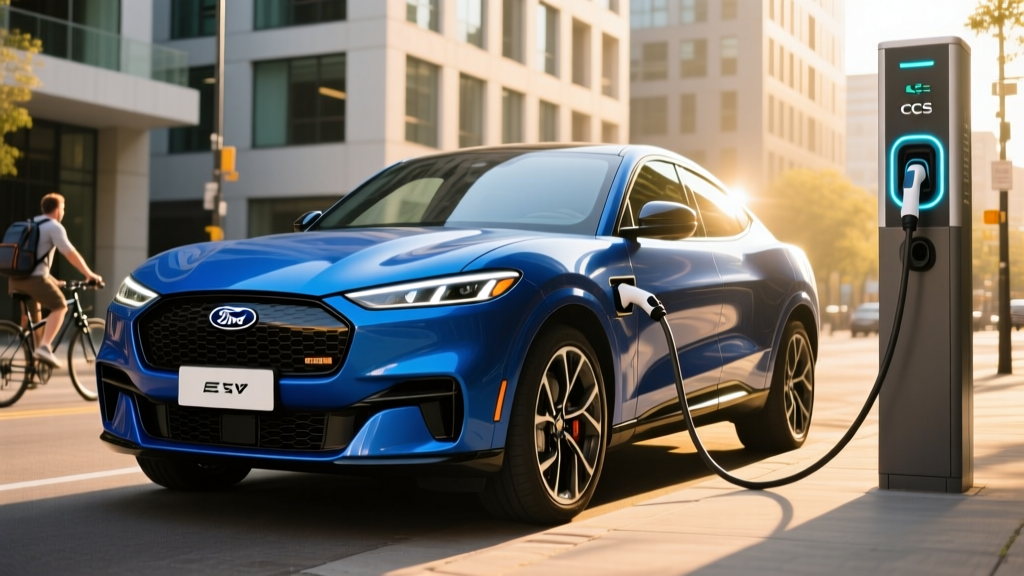
Ford's 2024 Mustang Mach-E enters its fourth model year with meaningful upgrades that address the most common owner complaints from earlier builds. The headline change: DC fast-charging speeds jump from a peak of 115 kW to 150 kW on Extended Range models, shaving real time off road-trip stops. A new Tesla Supercharger adapter (NACS) is now included with every Mach-E, unlocking over 15,000 additional fast-charging stalls nationwide — a genuine competitive advantage over CCS-only rivals.
The 2024 lineup simplifies to Select, Premium, California Route 1 (RWD only), and GT trims, with the GT Performance Edition sitting at the top. Pricing starts at $42,995 before destination for the Select RWD, climbing to $62,995 for the GT Performance Edition. After potential federal tax credits, effective pricing becomes considerably more attractive — but eligibility depends on your income, the vehicle's MSRP classification, and battery-sourcing compliance under current IRS §30D rules.
Is the 2024 Mach-E the right electric crossover for you? This review breaks down every spec that matters — range, charging curves, real-world efficiency, interior space, and total ownership cost — with the exact numbers you need to decide.
Range, Efficiency, and Real-World Expectations
The 2024 Mach-E offers four distinct range and efficiency profiles depending on battery size and drivetrain. Ford pairs the Standard Range battery with RWD or AWD, while the Extended Range battery is available across all trims including the GT.
| Trim / Drivetrain | Battery (Usable kWh) | EPA Range | MPGe (City/Hwy/Combined) | kWh/100 mi |
|---|---|---|---|---|
| Select RWD (Std Range) | 72 kWh (LFP) | 250 mi | 111 / 94 / 103 | 33 |
| Select AWD (Std Range) | 72 kWh (LFP) | 224 mi | 100 / 86 / 93 | 36 |
| Premium RWD (Ext Range) | 91 kWh (NMC) | 320 mi | 111 / 94 / 103 | 33 |
| Premium AWD (Ext Range) | 91 kWh (NMC) | 290 mi | 101 / 86 / 94 | 36 |
| Calif. Route 1 RWD (Ext Range) | 91 kWh (NMC) | 312 mi | 111 / 94 / 103 | 33 |
| GT AWD (Ext Range) | 91 kWh (NMC) | 270 mi | 91 / 80 / 86 | 39 |
| GT Perf. Edition AWD | 91 kWh (NMC) | 265 mi | 89 / 77 / 84 | 40 |
Source: EPA fueleconomy.gov
Real-World Range: What to Actually Expect
EPA sticker: Up to 320 miles (Premium RWD Extended Range)
Real-world highway (70-75 mph, mild weather): Expect 260–280 miles from the Premium RWD ER. The Mach-E's aerodynamic drag coefficient of 0.29 means highway efficiency drops noticeably above 70 mph — typical for the crossover segment.
Cold-weather impact (below 32°F): Plan for 20–30% range reduction, bringing the 320-mi EPA model down to roughly 225–255 miles. The Mach-E uses a resistive PTC heater on most trims (no heat pump), so cabin heating draws directly from the traction battery. Preconditioning while plugged in is essential in winter to preserve range.
City / mixed driving: You'll meet or slightly exceed EPA estimates thanks to aggressive regenerative braking and lower average speeds. One-pedal driving mode maximizes energy recapture in stop-and-go traffic.
Charging Speed: DC Fast, Level 2, and the NACS Advantage
The 2024 Mach-E's charging story is significantly improved over the 2021–2023 models. Ford upgraded the onboard DC fast-charging capability to 150 kW peak on Extended Range models (up from 115 kW), and every 2024 Mach-E ships with a NACS adapter for Tesla Supercharger access.
| Charging Level | Connector | Max Power | Speed (Approx.) | Notes |
|---|---|---|---|---|
| Level 1 (120V) | NACS (with J1772 adapter) | 1.2 kW | ~3 mi/hr | Emergency / overnight trickle only |
| Level 2 (240V) | NACS (with J1772 adapter) or Mobile Power Cord | 10.5 kW (48A) / 17.6 kW (80A on connected charge station) | ~30 mi/hr (10.5 kW) / ~52 mi/hr (17.6 kW) | Ford Connected Charge Station (48A) included on some trims; 80A requires hardwired station |
| DC Fast Charge | CCS1 (native) / NACS (via adapter) | 150 kW peak (ER) / 115 kW peak (Std Range) | 10–80% in ~36 min (ER); ~45 min (Std Range) | Peak rate sustained to ~55% SoC, then tapers progressively. Expect 80–100 kW average over the 10–80% session on ER models. |
Charging curve reality check: The 150 kW peak on Extended Range models is not sustained across the full session. In our experience and consistent with third-party testing, the Mach-E ER holds near-peak rates from roughly 10% to 50% State of Charge (SoC), then tapers to ~100 kW by 65% and drops further to ~50 kW above 80%. This is typical for NMC batteries with active thermal management. Plan your road-trip stops to charge between 10–80% and skip the last 20% unless you need it — the taper makes 80–100% painfully slow.
Home charging setup: Ford includes the Mobile Power Cord with every Mach-E, which can deliver up to 30A (7.2 kW) on a 240V NEMA 14-50 outlet. For the full 48A (10.5 kW) experience, you'll need the Ford Connected Charge Station or a compatible third-party Level 2 unit. Expect a professional 240V outlet installation to cost $500–$1,500 depending on panel proximity and local permit fees. If your electrical panel needs upgrading from 100A to 200A service, add $1,500–$3,000.
The NACS adapter advantage: Ford's decision to include the Tesla Supercharger adapter with every 2024 Mach-E is the single biggest charging-infrastructure story for this model year. It gives Mach-E owners access to Tesla's Supercharger network — widely regarded as the most reliable DC fast-charging network in the US — without requiring a separate purchase. On Electrify America or other CCS networks, reliability remains inconsistent in many regions.
Performance: From Daily Commute to GT Thrills
The 2024 Mach-E powertrain lineup spans practical efficiency to genuine sports-car acceleration. All trims use permanent-magnet synchronous motors.
| Trim | Drivetrain | Horsepower | Torque (lb-ft) | 0–60 mph | Towing Capacity |
|---|---|---|---|---|---|
| Select / Premium RWD | Rear-Wheel Drive | 266 hp | 317 | 6.3 sec | — |
| Select AWD (Std Range) | Dual-Motor AWD | 266 hp | 417 | 5.5 sec | — |
| Premium AWD (Ext Range) | Dual-Motor AWD | 346 hp | 428 | 4.8 sec | — |
| GT AWD | Dual-Motor AWD | 480 hp | 600 | 3.8 sec | — |
| GT Perf. Edition AWD | Dual-Motor AWD | 480 hp | 634 | 3.5 sec | — |
The base RWD model's 266 hp and 6.3-second 0–60 time are more than adequate for highway merging and daily driving. The AWD Extended Range Premium strikes the best balance: 346 hp, a 4.8-second sprint, and 290 miles of EPA range. The GT trims are seriously quick — the Performance Edition's 3.5-second 0–60 puts it in Porsche Taycan territory at a fraction of the price — but you sacrifice roughly 50 miles of range compared to the Premium RWD.
Ride quality is firm but controlled. The Mach-E uses a front MacPherson strut and rear multi-link suspension. The GT's MagneRide adaptive dampers (standard on GT, optional on Premium) noticeably improve compliance over rough pavement. Steering is precise but light — this is a crossover, not a track car, despite the Mustang badge.
Interior, Cargo, and Technology
The Mach-E's interior design centers on a massive 15.5-inch vertically oriented touchscreen running Ford's SYNC 4A infotainment system. The screen handles nearly all vehicle functions — there are very few physical buttons, which some buyers love and others find distracting while driving.
Passenger space:
- Front headroom: 40.4 in | Front legroom: 43.3 in
- Rear headroom: 38.9 in | Rear legroom: 38.1 in
- Seating for 5 (no third-row option)
Cargo volume:
- Behind rear seats: 29.7 cu ft
- Rear seats folded: 59.7 cu ft
- Front trunk (frunk): 4.7 cu ft (weather-sealed with a drain — useful for tailgating or wet gear)
The frunk is smaller than the Hyundai Ioniq 5's (0.85 cu ft) but larger than many competitors. The rear cargo area is competitive with the Tesla Model Y's 30.2 cu ft behind the second row, though the Model Y's total volume with seats folded (76.2 cu ft) is notably larger.
Standout technology:
- SYNC 4A with wireless Apple CarPlay and Android Auto, over-the-air (OTA) updates, and built-in navigation
- Ford BlueCruise (SAE Level 2): Hands-free driving on pre-mapped divided highways — approximately 130,000 miles of compatible roads. The driver must remain attentive; an infrared camera monitors eye gaze. BlueCruise is a 90-day free trial on the 2024 Mach-E, then $75/month or $800/year. This is not self-driving — it is an advanced Level 2 driver-assist system requiring continuous supervision.
- Ford Co-Pilot360 2.0: Standard automatic emergency braking, blind-spot monitoring, lane-keeping assist, rear cross-traffic alert, and evasive steering assist
- Phone-as-a-Key: Uses Bluetooth to unlock and start the vehicle via your smartphone
- Intelligent Range: Predicts remaining range using real-time traffic, weather, and your driving habits — more accurate than a simple SoC percentage calculation
Notable drawbacks:
- No physical volume knob — volume is controlled via the touchscreen or steering wheel buttons
- Rear-seat comfort is good but not class-leading; the seat cushion is slightly short for taller passengers
- Panoramic glass roof (standard on Premium and GT) has no shade — cabin can get warm in summer despite UV-tinted glass
- No third-row seating option; families needing 7-passenger capacity should look at the Kia EV9 or Rivian R1S
Pricing, Trims, and Federal Tax Credit Eligibility
| Trim | Base MSRP (incl. destination) | As-Tested Range | Est. Federal Credit (§30D) | Effective Price (if eligible) |
|---|---|---|---|---|
| Select RWD (Std Range) | $42,995 | $42,995–$45,495 | Up to $3,750* | ~$39,245 |
| Select AWD (Std Range) | $46,995 | $46,995–$49,495 | Up to $3,750* | ~$43,245 |
| Premium RWD (Ext Range) | $50,995 | $50,995–$55,995 | Up to $3,750* | ~$47,245 |
| Premium AWD (Ext Range) | $53,995 | $53,995–$58,995 | Up to $3,750* | ~$50,245 |
| Calif. Route 1 RWD (Ext Range) | $53,995 | $53,995–$56,995 | Up to $3,750* | ~$50,245 |
| GT AWD (Ext Range) | $60,995 | $60,995–$65,995 | Up to $3,750* | ~$57,245 |
| GT Perf. Edition AWD | $65,995 | $65,995–$69,995 | Up to $3,750* | ~$62,245 |
*Tax credit amounts are estimates based on IRS §30D rules and are subject to change. Verify current eligibility at IRS.gov clean vehicle credit pages.
§30D Federal Tax Credit: What You Need to Know
The 2024 Mustang Mach-E is classified as an SUV under IRS vehicle-classification rules, meaning the MSRP cap is $80,000 — all trims clear this threshold.
However, the credit amount is not guaranteed at $7,500. Under current §30D rules, the credit is split into two halves:
- $3,750 — Battery Component Requirement: At least a specified percentage of battery components must be manufactured or assembled in North America. The Mach-E is assembled in Cuautitlán, Mexico, and Ford has been working to qualify battery sourcing. As of this writing, many Mach-E configurations qualify for the $3,750 battery-component half but may not meet the critical-minerals threshold for the full $7,500.
- $3,750 — Critical Minerals Requirement: A percentage of critical minerals in the battery must be sourced from the US or a free-trade-agreement country. This threshold tightens annually, and compliance varies by battery supplier and production batch.
Buyer income caps (modified AGI): $300,000 joint / $225,000 head of household / $150,000 individual. If your income exceeds these limits, you are not eligible regardless of the vehicle.
Point-of-sale transfer: As of 2024, you can transfer the credit to the dealer at purchase, reducing your out-of-pocket cost immediately rather than waiting to claim it on your tax return. The dealer must be registered with the IRS Energy Credits Online system.
Bottom line: Expect $3,750 for most configurations. Confirm the exact credit for your specific VIN with your dealer and a tax professional before purchase. Rules and sourcing compliance can change mid-year.
Warranty, Battery Longevity, and Ownership Costs
Ford backs the 2024 Mach-E with competitive warranty coverage:
- Bumper-to-bumper: 3 years / 36,000 miles
- Powertrain: 5 years / 60,000 miles
- EV Battery & Electric Components: 8 years / 100,000 miles — covers the high-voltage battery if it retains less than 70% of original capacity during the warranty period
- Corrosion perforation: 5 years / unlimited miles
- Roadside assistance: 5 years / 60,000 miles
The 70% capacity-retention threshold is standard for the industry (Tesla uses the same benchmark). Based on data from earlier Mach-E model years and comparable NMC battery packs, most owners report 5–8% degradation over the first 50,000 miles, with the rate slowing significantly after the initial break-in period. LFP batteries (used in Standard Range models) tend to degrade more slowly and tolerate regular 100% charging better than NMC — a point worth considering if you're choosing between battery sizes.
Estimated 5-year ownership cost: According to Edmunds and similar calculators, a 2024 Mach-E Premium AWD ER will cost approximately $48,000–$54,000 over five years including depreciation, insurance, electricity, maintenance, and repairs (assuming 15,000 miles/year and national-average electricity rates). Insurance premiums for the Mach-E tend to run 10–20% higher than comparable gas crossovers — get a quote before purchasing. Maintenance costs are significantly lower than ICE vehicles: no oil changes, no spark plugs, minimal brake wear thanks to regenerative braking.
How the 2024 Mach-E Stacks Up Against Competitors
| Spec | Ford Mach-E Premium AWD ER | Tesla Model Y Long Range AWD | Hyundai Ioniq 5 Limited AWD | VW ID.4 AWD Pro S |
|---|---|---|---|---|
| EPA Range | 290 mi | 308 mi | 260 mi | 275 mi |
| Battery (usable kWh) | 91 kWh (NMC) | 75 kWh (NMC) | 77.4 kWh (NMC) | 82 kWh (NMC) |
| DC Fast Charge Peak | 150 kW | 250 kW | 233 kW (800V) | 175 kW |
| 10–80% Time | ~36 min | ~25 min | ~18 min | ~29 min |
| 0–60 mph | 4.8 sec | 4.8 sec | 5.1 sec | 5.4 sec (est.) |
| Cargo (behind 2nd row) | 29.7 cu ft | 30.2 cu ft | 27.2 cu ft | 30.3 cu ft |
| Base MSRP (comparable trim) | $53,995 | $49,990 | $58,200 | $49,995 |
| Native Charging Connector | CCS1 + NACS adapter included | NACS | CCS1 | CCS1 |
Which EV Should You Choose?
Choose the 2024 Mach-E if: You want Supercharger access without owning a Tesla, prefer a more traditional crossover driving feel, value the included BlueCruise trial, and want a frunk with a drain for outdoor use. The Mach-E's ride quality and steering feel are more engaging than the Model Y's, and the interior materials on Premium and GT trims are a step above.
Choose the Tesla Model Y if: Fast-charging speed is your top priority (250 kW peak crushes the Mach-E's 150 kW), you want maximum cargo space and available 7-seat configuration, or you prefer Tesla's software ecosystem and OTA update cadence. The Model Y Long Range also delivers 18 more miles of EPA range at a lower base price.
Choose the Hyundai Ioniq 5 if: DC fast-charging speed is non-negotiable. The Ioniq 5's 800V architecture enables 10–80% in ~18 minutes on a 350 kW charger — roughly half the Mach-E's time. Trade-offs include less EPA range (260 mi AWD) and no native Supercharger access.
Choose the VW ID.4 if: Budget is the primary concern and you prefer a softer, more comfort-oriented ride. The ID.4 undercuts the Mach-E on price and offers competitive cargo space, but its infotainment system and charging speed lag behind.
Pros, Cons, and Who the Mach-E Is For
Pros
- NACS adapter included — Tesla Supercharger access from day one
- Engaging driving dynamics; GT trims are genuinely fast
- SYNC 4A infotainment is responsive with wireless CarPlay/Android Auto
- BlueCruise hands-free highway driving included (90-day trial)
- Practical drain-equipped frunk for outdoor use
- Strong regenerative braking enables effective one-pedal driving
- 8-year / 100,000-mile battery warranty with 70% retention guarantee
Cons
- 150 kW peak DC charge rate trails Tesla (250 kW) and Hyundai (233 kW)
- No heat pump on most trims — cold-weather range loss is significant
- Full $7,500 tax credit not guaranteed; expect $3,750 for most builds
- Panoramic roof lacks a physical sunshade
- No physical volume knob; touchscreen-dependent controls
- Rear-seat cushion is short for passengers over 6 feet
- Insurance premiums run 10–20% higher than gas crossovers
Who the 2024 Mach-E Suits Best
Daily commuters and suburban families: The Premium AWD Extended Range is the sweet spot — 290 miles of EPA range handles most commutes for a full work week without charging, dual-motor AWD provides confidence in rain and snow, and the cargo space handles strollers, groceries, and weekend gear.
Enthusiasts who want EV performance: The GT Performance Edition delivers 3.5-second 0–60 times with MagneRide adaptive dampers. It's a legitimate sports-crossover at under $70K.
Road trippers who want Supercharger access: With the included NACS adapter, the Mach-E is one of the few non-Tesla EVs that can use Tesla's extensive Supercharger network, making cross-country travel significantly more convenient than CCS-only competitors.
Not ideal for: Families needing three rows of seating, buyers in extreme-cold climates who need a heat pump for range preservation, or anyone prioritizing the absolute fastest DC charging available (look at the Ioniq 5 or Ioniq 6 instead).
Frequently Asked Questions
What is the real-world range of the 2024 Mustang Mach-E?
The EPA rates the top-range Premium RWD Extended Range at 320 miles. In real-world highway driving at 70–75 mph in mild conditions, expect 260–280 miles. In cold weather (below 32°F), plan for 225–255 miles due to battery chemistry limitations and resistive cabin heating. City and mixed driving will get you closer to or slightly above EPA estimates.
How fast does the 2024 Mach-E charge at home and on the road?
On DC fast chargers, Extended Range models peak at 150 kW, achieving a 10–80% charge in approximately 36 minutes. Standard Range models peak at 115 kW with a 10–80% time of roughly 45 minutes. At home on a 240V Level 2 charger, expect 30 miles of range per hour at 10.5 kW (48A) or up to 52 miles per hour at 17.6 kW (80A hardwired). A full overnight charge from 20% to 100% takes roughly 8–10 hours on a 48A Level 2 station.
Does the 2024 Mustang Mach-E qualify for the $7,500 federal EV tax credit?
Most 2024 Mach-E configurations currently qualify for $3,750 (the battery-component half of the §30D credit). The full $7,500 requires meeting both battery-component and critical-minerals sourcing thresholds, which varies by production batch and supplier. The Mach-E qualifies as an SUV under IRS rules, so the MSRP cap is $80,000 (all trims pass). Buyer income must not exceed $300,000 (joint) / $225,000 (head of household) / $150,000 (individual). Always verify your specific VIN's eligibility with your dealer and consult a tax professional. Credit can be transferred at point of sale to reduce your purchase price immediately.
Is the 2024 Mach-E worth buying vs. the Tesla Model Y?
It depends on your priorities. The Model Y Long Range AWD offers more EPA range (308 vs. 290 mi), faster DC charging (250 kW vs. 150 kW), and a lower starting price ($49,990 vs. $53,995). The Mach-E counters with a more engaging driving experience, higher-quality interior materials on upper trims, the included NACS adapter for Supercharger access, BlueCruise, and a more traditional crossover aesthetic. If charging speed and maximum cargo space are paramount, the Model Y wins. If driving feel, interior quality, and non-Tesla branding matter more, the Mach-E is the stronger choice.
What are the biggest pros and cons of the 2024 Mach-E?
The biggest advantages are Tesla Supercharger access via the included NACS adapter, engaging driving dynamics (especially GT trims), strong technology features (SYNC 4A, BlueCruise, Phone-as-a-Key), and competitive range on Extended Range models. The biggest drawbacks are the 150 kW DC charging peak (behind Tesla and Hyundai), lack of a heat pump on most trims (leading to significant cold-weather range loss), uncertain full tax-credit eligibility, and a touchscreen-heavy interior with no physical volume knob.
Does the Mach-E have a heat pump?
No. The 2024 Mach-E uses a resistive PTC (positive temperature coefficient) heater for cabin heating on most trims. This draws directly from the traction battery and contributes to the 20–30% range loss observed in sub-freezing temperatures. If you live in a cold climate and range preservation is critical, precondition the cabin while the vehicle is still plugged in, and consider seat heaters (which use far less energy) as your primary warmth source on shorter trips.
What battery chemistry does the 2024 Mach-E use?
Standard Range models use a 72 kWh (usable) LFP (lithium iron phosphate) battery supplied by CATL. Extended Range models use a 91 kWh (usable) NMC (nickel manganese cobalt) battery from LG Energy Solution. LFP batteries generally offer longer cycle life, slower degradation, and can be safely charged to 100% regularly. NMC batteries offer higher energy density (more range per pound) but degrade faster if routinely charged to 100% — Ford recommends setting a daily charge limit of 90% for NMC models and charging to 100% only before long trips.