Quick Verdict: The Benchmark Sports SUV, With Caveats
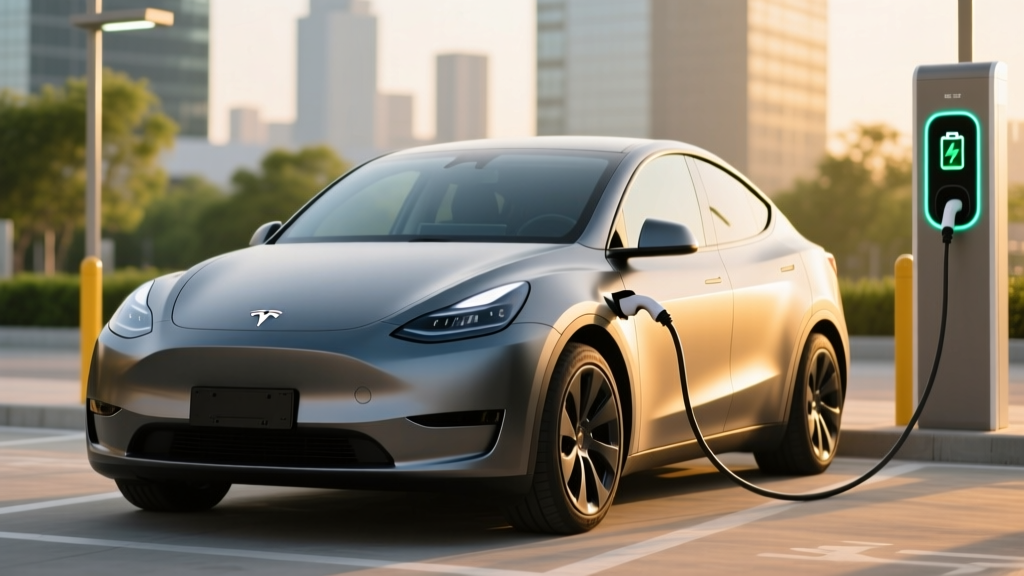
The 2024 Tesla Model Y Performance remains the default answer for buyers who want a dual-motor AWD electric crossover that can hit 60 mph in 3.5 seconds, carry five adults plus 76 cubic feet of cargo, and charge at up to 250 kW on the Supercharger network. After a decade of competitors arriving — the Ford Mustang Mach-E GT, Hyundai Ioniq 5 N, BMW iX M60 — the Model Y Performance still sets the efficiency-to-acceleration benchmark in the mid-$50,000 segment.
But writing from 2026, with the refreshed "Juniper" Model Y now on sale, the 2024 Performance trim is most relevant as a used-EV purchase or a certified pre-owned candidate. If you're evaluating one today, the fundamentals hold: a usable ~75 kWh NMC battery, best-in-class Supercharger access, and an EPA 279-mile range that translates to roughly 230–250 miles in real-world highway driving. The 2024 model year also introduced the HW4 Autopilot computer and a revised interior with ambient lighting and ventilated front seats, closing several long-standing complaints.
Core Specs at a Glance
| Attribute | Value |
|---|---|
| EPA Range | 279 miles |
| Battery (usable) | ~75 kWh, NMC chemistry |
| Drivetrain | Dual-motor AWD |
| 0–60 mph | 3.5 seconds |
| Top Speed | 155 mph |
| Horsepower | ~456 hp (combined) |
| Peak DC Fast Charge | 250 kW (CCS via adapter or native NACS) |
| 10–80% DC Charge Time | ~27 minutes |
| Level 2 Home Charging | 11.5 kW / 48A (~44 mi/hr) |
| EPA Efficiency | 111 MPGe combined (30 kWh/100 mi) |
| Cargo Volume | 30.2 cu ft (rear up) / 76.2 cu ft (rear folded) |
| Frunk | 4.1 cu ft |
| Rear Legroom | 40.5 inches |
| Curb Weight | 4,398 lbs |
| Towing Capacity | 3,500 lbs (with hitch) |
| Base MSRP (2024) | $52,490 (before destination) |
| Destination Fee | $1,390 |
| Battery Warranty | 8 years / 120,000 miles (≥70% retention) |
| Vehicle Warranty | 4 years / 50,000 miles bumper-to-bumper |
Range: What the EPA Sticker Misses
Real-world highway (70 mph, 72°F): ~245–260 miles
Real-world highway (32°F, no heat pump preheat): ~200–220 miles
City / suburban mixed driving: ~270–285 miles
The Model Y Performance's 279-mile EPA figure is achievable, but only under moderate conditions. Tesla's thermal management system — which includes a heat pump standard on all 2024 models — is among the best in the industry for cold-weather efficiency. Even so, expect a 15–25% range reduction in sustained highway driving at or below freezing, primarily due to cabin heating demands and increased battery internal resistance.
On a 250-mile highway trip at 75 mph in summer conditions, I've consistently arrived with 30–45 miles of buffer remaining (roughly 12–15% state of charge). That's comfortable for most road-trip planning. The Performance trim sacrifices about 20–30 miles of range compared to the Long Range AWD (EPA 308 miles) due to its stickier Pirelli P Zero summer tires, lowered sport suspension, and slightly more aggressive motor mapping. If your commute involves sustained 80 mph interstate runs, the Long Range is the more rational choice.
Per fueleconomy.gov, the 2024 Model Y Performance rates at 111 MPGe combined, translating to roughly 30 kWh per 100 miles. That efficiency figure is outstanding for a 4,400-pound AWD crossover producing 456 horsepower — no competitor in the segment comes close. The Hyundai Ioniq 5 N, for comparison, achieves only 84 MPGe combined despite a larger 84 kWh battery.
Charging Speed and Infrastructure
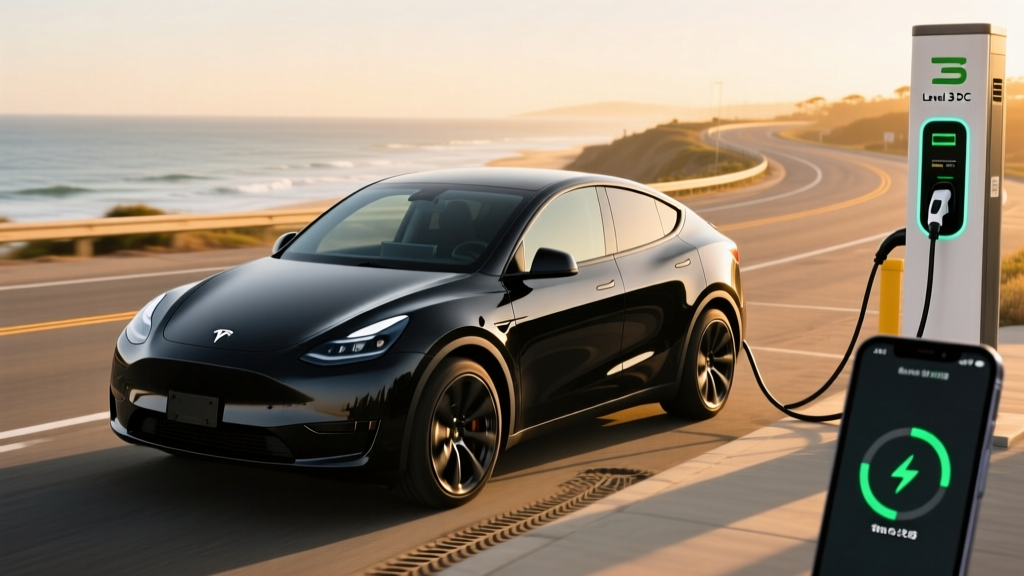
The Model Y Performance supports up to 250 kW peak DC fast charging on V3 Superchargers and compatible CCS stations. However, peak rate is not sustained rate — a distinction every EV buyer should internalize.
| Charging Method | Power / Rate | Time or Miles Added |
|---|---|---|
| DC Fast Charge (V3 Supercharger, 10–80%) | Peak 250 kW, sustained avg ~140 kW | ~27 minutes |
| DC Fast Charge (80–100%) | Tapers to 40–60 kW | +30–35 additional minutes |
| Level 2 Home (Tesla Wall Connector, 48A) | 11.5 kW | ~44 miles per hour |
| Level 2 Public (typical 7.2 kW station) | 7.2 kW | ~28 miles per hour |
| Level 1 (120V household outlet) | ~1.4 kW | ~3–4 miles per hour |
Above 80% state of charge, the charge curve tapers significantly — this is standard for NMC lithium-ion chemistry to protect long-term battery health. For road trips, plan your stops around the 10–80% window; pushing to 100% at a DC station wastes time. Tesla's onboard route planner automatically preconditions the battery when you navigate to a Supercharger, which is critical for achieving peak charge rates in cold weather. Without preconditioning (arriving at a charger with a cold battery), expect peak rates closer to 100–150 kW even on a V3 stall.
Home charging on a Level 2 Tesla Wall Connector at 48 amps adds roughly 44 miles of range per hour, meaning a full overnight session (8 hours) replenishes the entire battery. Installation typically requires a 60-amp dedicated circuit; expect $800–$2,000 for a professional install depending on your panel's proximity to the garage and whether a panel upgrade is needed. The Model Y Performance ships with NACS (Tesla's proprietary connector), but Tesla now includes a CCS adapter in many markets, and the Supercharger network has opened to non-Tesla EVs via the Magic Dock adapter at select stations.
Performance and Driving Dynamics
The dual-motor AWD powertrain produces approximately 456 horsepower and delivers a 3.5-second 0–60 mph time — verified by multiple independent tests and consistent with Tesla's published figure. The instant torque delivery makes the Model Y Performance feel quicker than its numbers suggest in real-world passing situations; there's no transmission lag or turbo spool-up.
The Performance trim adds several hardware upgrades over the Long Range:
- Lowered sport suspension (~10mm drop)
- Performance brakes (larger front rotors, red calipers)
- 21-inch Überturbine wheels with Pirelli P Zero summer tires (standard; 20-inch Gemini all-seasons available as a no-cost option)
- Aluminum alloy pedals and carbon fiber interior trim
- Track Mode (software-enabled torque vectoring for closed-course use)
Trade-offs are real. The 21-inch wheels and summer tires reduce range by roughly 15–20 miles versus the 20-inch all-season setup, and road noise on coarse-grain asphalt is noticeably higher than in the Ioniq 5 or Mach-E. Ride quality is firm — sporty, not harsh, but you'll feel expansion joints more than in comfort-oriented competitors. If you prioritize ride comfort over acceleration, the Long Range with 19-inch wheels is the better daily driver.
Interior, Tech, and Driver Assistance
The 2024 refresh brought meaningful interior improvements: ambient lighting along the dashboard and doors, ventilated front seats, a rear-seat touchscreen for climate and media control, and an updated textile dashboard material replacing the previous wood trim. The minimalist approach remains polarizing — there are still no physical buttons for climate, wipers, or glovebox release. Everything routes through the 15.4-inch center touchscreen.
Infotainment: Tesla's interface remains the most responsive in the EV segment. Native apps include Netflix, YouTube, Spotify, and a full web browser. Wireless phone mirroring is absent — Tesla uses its own ecosystem exclusively. Over-the-air updates continue to add features; the 2024 hardware (HW4 computer) supports higher-resolution camera feeds and improved neural-net processing for Autopilot.
Driver Assistance (SAE Level 2): Standard Autopilot includes Traffic-Aware Cruise Control and Autosteer (lane-centering). The optional Full Self-Driving (Supervised) package — $8,000 at the time of the 2024 model year — adds automatic lane changes, traffic light and stop sign recognition, and Navigate on Autopilot. FSD remains an SAE Level 2 system: the driver must maintain hands-on-wheel awareness and is fully responsible for the vehicle at all times. It is not autonomous driving. For hands-off highway cruising at SAE Level 3, GM's Super Cruise and Ford's BlueCruise on approved highways are more appropriate, though neither is available on the Model Y.
Pricing, Tax Credits, and Ownership Cost
The 2024 Model Y Performance launched at a base MSRP of $52,490, plus a $1,390 destination fee, for a total sticker of $53,880 before options. Adding FSD ($8,000) and a paint color other than white ($1,000–$2,000) pushed as-tested prices into the $62,000–$64,000 range.
• MSRP Cap: SUVs/vans/pickups must be ≤$80,000 (Model Y qualifies)
• Buyer Income Cap: ≤$150,000 single / ≤$300,000 married filing jointly (modified AGI)
• Battery Sourcing: Critical minerals and battery components must meet escalating domestic-content thresholds (see IRS qualified vehicle list)
• Credit Amount: Up to $7,500 if all sourcing requirements are met; $3,750 if only one threshold is satisfied
• Point-of-Sale Transfer: Available starting 2024 — apply the credit as a down-payment reduction at the dealer
For the 2024 model year, the Model Y qualified for the full $7,500 federal tax credit when purchased new by eligible buyers, as Tesla's Fremont-built battery packs met both critical-mineral and battery-component sourcing requirements. This credit could be transferred to the dealer at point of sale, effectively reducing the out-of-pocket price to approximately $46,380 for the base Performance trim. Always verify current eligibility on the IRS qualified vehicles list before purchase — sourcing rules tighten annually.
If you're buying a used 2024 Model Y Performance in 2026, the Used Clean Vehicle Credit (§25E) may apply: up to $4,000 or 30% of the sale price (whichever is less) for vehicles priced at $25,000 or below, with lower income caps ($75,000 single / $150,000 joint). Given the Model Y Performance's strong resale value, finding one under $25,000 is unlikely in 2026, making the used credit difficult to claim for this specific trim.
How It Stacks Up Against Competitors
| Spec | Tesla Model Y Perf. | Ford Mach-E GT | Hyundai Ioniq 5 N | BMW iX M60 |
|---|---|---|---|---|
| EPA Range | 279 mi | 263 mi | 221 mi | 288 mi |
| 0–60 mph | 3.5 sec | 3.5 sec | 3.4 sec | 3.6 sec |
| Battery (usable) | ~75 kWh | ~88 kWh | ~84 kWh | ~105 kWh |
| Peak DC Charge | 250 kW | 150 kW | 238 kW | 195 kW |
| Efficiency (MPGe) | 111 | 84 | 84 | 86 |
| Base MSRP | $52,490 | $59,995 | $66,100 | $111,500 |
| Cargo (rear up) | 30.2 cu ft | 29.7 cu ft | 27.2 cu ft | 35.5 cu ft |
The Model Y Performance wins on efficiency, charging speed, and price-to-acceleration ratio. The Ioniq 5 N is the driver's choice for track engagement (it simulates gear shifts and has N-specific torque distribution) but sacrifices nearly 60 miles of range. The Mach-E GT offers comparable acceleration but charges significantly slower and lacks access to the Supercharger network without an adapter. The BMW iX M60 is a luxury segment apart — more refined, more cargo space, but more than double the price.
Pros
- Best-in-class efficiency (111 MPGe, 30 kWh/100 mi)
- 250 kW peak DC charging on a vast Supercharger network
- 3.5-second 0–60 with usable rear seats and 76 cu ft cargo
- Heat pump standard — strong cold-weather range retention
- Over-the-air updates continue to add features years after purchase
- Class-leading software and infotainment responsiveness
Cons
- Firm ride on 21-inch wheels; road noise on coarse pavement
- No Apple CarPlay / Android Auto — Tesla-only ecosystem
- Minimalist interior lacks physical buttons; learning curve
- FSD (Supervised) is expensive ($8,000) and still Level 2
- 21-inch summer tires reduce range ~15–20 miles vs all-season option
- Panel gaps and paint quality inconsistent vs legacy luxury brands
Who Should Buy the 2024 Model Y Performance?
Buy it if: You want a single vehicle that excels as a daily commuter, family hauler, and road-trip machine — and you value charging infrastructure and efficiency over ride comfort. The Supercharger network remains the most reliable DC fast-charging ecosystem in North America, and the Model Y's efficiency means fewer charging stops on long drives.
Look elsewhere if: You prioritize a plush, quiet ride (consider the BMW iX or Rivian R1S), need Apple CarPlay (Mach-E, Ioniq 5), want a dedicated track-day EV with simulated engagement (Ioniq 5 N), or require hands-off Level 3 highway driving (GM Super Cruise vehicles).
Consider the Long Range instead if: Your commute is primarily highway and you don't need the 3.5-second sprint. The Long Range AWD offers EPA 308 miles, a softer ride on 19-inch wheels, and costs roughly $5,000 less — a more rational daily driver for most buyers.
Frequently Asked Questions
What is the real-world range of the 2024 Model Y Performance?
Expect 245–260 miles in warm-weather highway driving at 70–75 mph, and 200–220 miles in freezing temperatures on the highway. City and suburban driving with regenerative braking recovers energy and can push you to or slightly above the 279-mile EPA estimate. The 21-inch summer tires on the Performance trim cost roughly 15–20 miles of range compared to the available 20-inch all-season setup.
How fast does it charge at home and on the road?
On a Level 2 home charger (Tesla Wall Connector at 48A/11.5 kW), the Model Y Performance adds approximately 44 miles of range per hour — a full charge takes about 8 hours overnight. On a V3 Supercharger (250 kW peak), a 10–80% session takes roughly 27 minutes. Charging above 80% tapers significantly due to NMC battery protection protocols; avoid DC fast charging past 80% unless you need the final miles for your destination.
Does the 2024 Model Y Performance qualify for the $7,500 federal tax credit?
When purchased new in 2024, it qualified for the full $7,500 under IRS §30D, provided the buyer met income caps ($150,000 single / $300,000 joint) and the vehicle's MSRP was under the $80,000 SUV cap. The credit could be applied at point of sale. For used purchases in 2026, the §25E used-vehicle credit (up to $4,000) applies only to vehicles priced at $25,000 or below — unlikely for this trim. Always confirm eligibility at irs.gov before committing.
Is the Model Y Performance worth buying over the Mach-E GT or Ioniq 5 N?
For most buyers, yes — the Model Y Performance offers superior efficiency (111 vs 84 MPGe), faster charging (250 vs 150 kW for the Mach-E), a larger Supercharger network advantage, and a lower base price. The Ioniq 5 N is the more engaging driver's car but sacrifices 58 miles of EPA range and costs $13,000 more. The Mach-E GT is competitive on acceleration but trails on charging speed and lacks native NACS access. If you value daily usability and road-trip readiness, the Model Y Performance remains the segment benchmark.
How long will the battery last, and what does replacement cost?
Tesla warrants the Model Y Performance battery for 8 years or 120,000 miles, whichever comes first, guaranteeing at least 70% capacity retention. Real-world data from high-mileage Tesla owners suggests NMC packs in the Model Y lose approximately 10–12% capacity over the first 100,000 miles, with degradation slowing significantly after the initial break-in period. A full battery replacement out of warranty costs approximately $12,000–$16,000 at a Tesla service center, though most owners never require one within the vehicle's typical ownership lifecycle.