Quick Verdict: The Ultimate Urban EV With a Footprint to Match
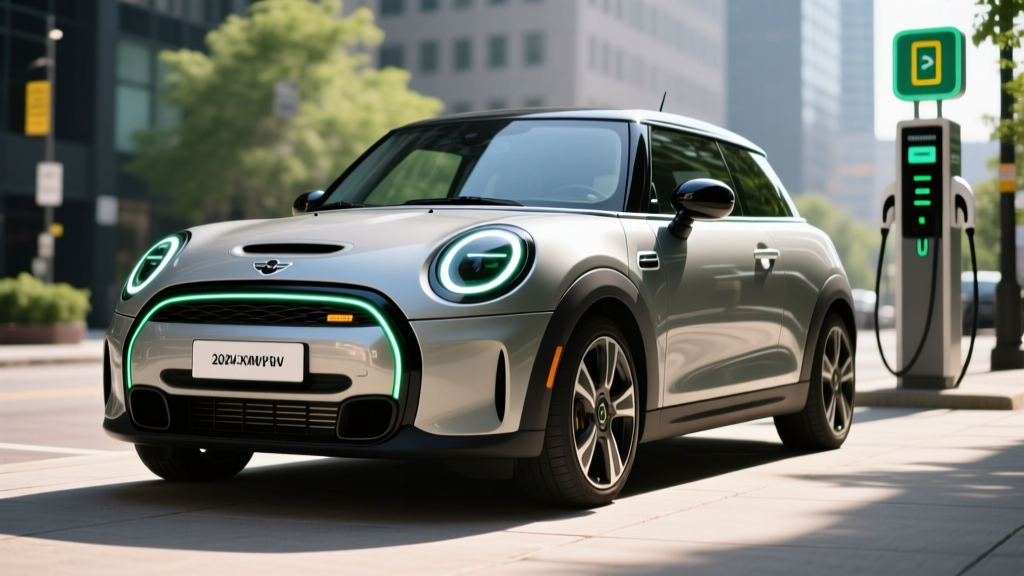
If you've been searching for the 2024 Mini Cooper SE length and overall dimensions, you've likely already guessed the appeal: this is one of the smallest battery-electric vehicles sold in the United States. At just 151.7 inches long, the Cooper SE is roughly 33 inches shorter than a Tesla Model 3 and nearly 40 inches shorter than a Ford Mustang Mach-E. That compact footprint makes it a parking-lot hero and a city-commuter darling — but it also dictates everything else about the car, from its 114-mile EPA range to its limited cargo space.
The 2024 model year is the final iteration of Mini's first-generation electric hatchback before the brand transitions to its next-gen EV platform. That means you're looking at a proven, well-built, fun-to-drive city car with known limitations — not a cutting-edge range champion. Here's every number that matters before you buy.
Dimensions and Exterior: Exactly How Small Is It?
Let's address the keyword question directly. The 2024 Mini Cooper SE is 151.7 inches long, 68.0 inches wide (without mirrors), and 57.2 inches tall, riding on a 98.2-inch wheelbase. Ground clearance sits at approximately 5.1 inches. Curb weight is roughly 3,225 lbs — heavy for its size due to the battery pack, but still lighter than most mainstream EVs.
| Measurement | Specification |
|---|---|
| Overall Length | 151.7 inches |
| Overall Width (no mirrors) | 68.0 inches |
| Overall Height | 57.2 inches |
| Wheelbase | 98.2 inches |
| Ground Clearance | 5.1 inches |
| Curb Weight | 3,225 lbs |
| Turning Circle | 35.1 feet |
For context, a Honda Fit — one of the smallest gas cars recently sold in the U.S. — measured 161.4 inches long. The Cooper SE is nearly 10 inches shorter than that. The trade-off for this stubby footprint is interior space, which we'll cover below.
Range, Battery, and Efficiency
Real-world expectation: 95–110 miles in mixed driving. Highway cruising at 70+ mph drops range to approximately 85–95 miles. In cold weather (below 32°F), expect a 20–30% reduction, potentially yielding 75–90 miles on a full charge.
The Cooper SE uses a 32.6 kWh lithium-ion battery pack (gross capacity), with approximately 28.9 kWh usable. The cells are NMC (nickel-manganese-cobalt) chemistry — the standard for most Western-market EVs of this generation, prioritizing energy density over the cycle-life advantages of LFP.
Efficiency is rated at 110 MPGe combined (city/highway), which translates to roughly 30 kWh per 100 miles. That's competitive with larger EVs and reflects the car's low weight and small frontal area. On the EPA's fueleconomy.gov listing, the Cooper SE posts 113 MPGe city and 107 MPGe highway.
The range limitation is the Cooper SE's defining compromise. Mini made a deliberate engineering choice: rather than compromise the car's iconic proportions and handling by stuffing a larger pack under the floor, they kept the battery small and the car light. For a 20-mile round-trip commute with home charging, that's plenty. For anything beyond 80 miles one-way, it requires planning.
| Specification | Value |
|---|---|
| Battery Chemistry | NMC (Nickel-Manganese-Cobalt) |
| Gross Battery Capacity | 32.6 kWh |
| Usable Battery Capacity | ~28.9 kWh |
| EPA Range | 114 miles |
| EPA MPGe (Combined) | 110 MPGe |
| Energy Consumption | ~30 kWh/100 mi |
Charging Speeds: DC Fast and Home Level 2
The Cooper SE supports DC fast charging at up to 50 kW via a CCS1 connector. At peak rate, a 10–80% charge takes approximately 36 minutes. The charge curve is relatively flat for a 50 kW system — you'll see sustained rates near 40–45 kW through most of the session before tapering above 80%.
For Level 2 home charging, the onboard charger accepts up to 7.4 kW (single-phase, 32A). A full 0–100% charge takes roughly 4 hours and 15 minutes. On a standard 240V/40A home circuit (the most common Level 2 installation), you'll see about 7.2 kW delivered, adding approximately 22–25 miles of range per hour of charging.
| Charging Level | Power (kW) | Time / Rate |
|---|---|---|
| Level 1 (120V, 12A) | ~1.4 kW | ~3 miles per hour |
| Level 2 (240V, 32A) | 7.4 kW | ~4.25 hours (0–100%) |
| DC Fast (CCS1) | 50 kW peak | ~36 min (10–80%) |
A practical note: the 50 kW DC fast-charge ceiling is the Cooper SE's biggest road-trip limitation. While a Hyundai Ioniq 5 or Tesla Model 3 can add 150+ miles in 15 minutes at a 150–250 kW station, the Cooper SE needs roughly double that time for a similar energy replenishment. This car was designed for urban commuters who charge at home, not interstate travelers.
Mini does not include NACS (Tesla connector) compatibility on the 2024 Cooper SE. You'll use CCS1 at public stations, which means Electrify America, EVgo, and ChargePoint DC stations are your primary options. A CCS-to-NACS adapter may become available through Mini in the future, but as of the 2024 model year, it's CCS only.
Performance and Driving Dynamics
The Cooper SE is powered by a single front-mounted electric motor producing 181 horsepower and 199 lb-ft of torque. It's front-wheel drive — a layout unusual among modern EVs, most of which are RWD or AWD, but consistent with the Mini brand's go-kart heritage.
The 0–60 mph time is 6.9 seconds (manufacturer-claimed). That's not sports-car quick by EV standards — a Tesla Model 3 RWD does it in 5.8 seconds — but it feels punchier than the number suggests, thanks to instant torque delivery and the car's low curb weight. Around town, the Cooper SE is genuinely fun: sharp steering, firm suspension, and minimal body roll.
Regenerative braking is adjustable through two levels via steering-wheel paddles. The stronger setting enables one-pedal driving in most city conditions, though it doesn't bring the car to a complete hold — you'll still need the friction brake at the final stop.
| Specification | Value |
|---|---|
| Motor | Single front-mounted (FWD) |
| Horsepower | 181 hp |
| Torque | 199 lb-ft |
| 0–60 mph | 6.9 seconds |
| Top Speed | 93 mph (electronically limited) |
| Drivetrain | Front-wheel drive |
Interior Space, Cargo, and Technology
Interior space reflects the 151.7-inch exterior length. Front-seat occupants get 41.4 inches of headroom and 40.5 inches of legroom — genuinely comfortable for adults up to about 6'2". The rear seat is the compromise: 36.3 inches of headroom and 33.2 inches of legroom. That's tight for adults on anything beyond a short trip, and it's best suited for children or occasional use.
Cargo volume behind the rear seats is 8.7 cubic feet — enough for a week's groceries or a couple of carry-on bags. Fold the 50/50 split rear seats and you get approximately 34.1 cubic feet, which is reasonable for the footprint but far less than a crossover-style EV.
The infotainment system uses an 8.8-inch circular touchscreen (Mini's signature round display) running the brand's latest operating system. Wireless Apple CarPlay and Android Auto are standard. The digital instrument cluster is a 5.0-inch screen behind the steering wheel. Navigation includes EV-specific route planning that accounts for remaining range and charger locations.
Driver-assistance features include forward collision warning, automatic emergency braking, lane departure warning, and a basic adaptive cruise control. These are SAE Level 1–2 assists — the driver must remain fully engaged at all times. There is no hands-free driving system comparable to GM's Super Cruise or Ford's BlueCruise available on the Cooper SE.
Pricing, Trims, and Federal Tax Credit Eligibility
The 2024 Mini Cooper SE is offered in three trims: Classic, Signature, and Iconic. Pricing starts at $30,900 MSRP (including destination) for the Classic and climbs to approximately $38,900 for a fully optioned Iconic.
| Trim | Base MSRP | Key Additions |
|---|---|---|
| Classic | $30,900 | Base model, cloth seats, 8.8" display |
| Signature | $33,900 | Panoramic roof, heated seats, LED headlights |
| Iconic | $36,900 | Leather, Harman Kardon audio, navigation, HUD |
Federal tax credit eligibility (§30D): The 2024 Mini Cooper SE qualifies for up to $7,500 in federal EV tax credits, but eligibility depends on several IRS requirements:
- MSRP cap: The Cooper SE is classified as a sedan/hatchback, so the MSRP cap is $55,000. All trims fall well under this limit.
- Buyer income cap: Adjusted gross income must not exceed $150,000 (single), $225,000 (head of household), or $300,000 (married filing jointly).
- Battery sourcing: The critical minerals and battery component requirements phase in progressively. As of 2024, the Cooper SE's BMW Group battery supply chain meets partial sourcing requirements — check the latest IRS qualified vehicles list for the exact credit amount (which may be $3,750 or $7,500 depending on the model year's sourcing compliance).
- Point-of-sale transfer: As of January 2024, the credit can be transferred to the dealer at purchase, reducing your out-of-pocket cost immediately rather than waiting for a tax refund.
With the full $7,500 credit applied, the effective price of a base Classic drops to approximately $23,400 — making it one of the most affordable new EVs available in the U.S. market. Consult a tax professional to confirm your personal eligibility.
Warranty and Long-Term Ownership
Mini provides the following warranty coverage for the Cooper SE:
| Component | Coverage |
|---|---|
| Limited Vehicle Warranty | 4 years / 50,000 miles |
| Battery & Electric Powertrain | 8 years / 100,000 miles |
| Battery Capacity Retention | Warranted above 70% of original capacity during coverage period |
| Corrosion Perforation | 12 years / unlimited miles |
| Roadside Assistance | 4 years / unlimited miles |
The 8-year/100,000-mile battery warranty is standard for the industry and aligns with NHTSA-recommended minimums for electrified vehicles. The 70% capacity retention threshold means Mini will repair or replace the battery if it degrades below that level during the warranty period. Real-world data from European Cooper SE fleets (where the car has been on sale since 2020) suggests typical degradation of 5–8% over the first three years — well within the warranty buffer.
Pros, Cons, and Who Should Buy
Pros
- 151.7-inch length makes it the easiest EV to park in tight urban spaces
- Genuinely fun to drive — sharp steering, low center of gravity, instant torque
- Affordable entry point: ~$23,400 after full federal tax credit
- Premium interior materials and build quality for the price
- Low operating cost: ~$0.10/mile on average U.S. electricity rates
- Strong brand cachet and distinctive design
Cons
- 114-mile EPA range limits use to commuting and city driving
- 50 kW DC fast-charging is slow by 2024 standards
- Rear seat is cramped for adults
- 8.7 cu ft cargo volume behind rear seats is minimal
- No NACS (Tesla Supercharger) compatibility
- Final model year before platform replacement — potential resale uncertainty
Who this EV suits best: The 2024 Mini Cooper SE is ideal for urban or suburban commuters with reliable home charging, a round-trip commute under 60 miles, and no regular need to carry more than one passenger or significant cargo. It works as a second car in a two-vehicle household where another vehicle handles road trips. It is not suitable as a primary family vehicle, a road-trip car, or for anyone without access to home or workplace charging.
How It Compares to Key Competitors
At the Cooper SE's price and size, the competitive set is narrow but worth examining:
- Nissan LEAF (S trim, 149-mile range): More range, more cargo space, but uses the outdated CHAdeMO DC connector and is no longer in production beyond 2024.
- Chevrolet Bolt EV (discontinued 2023): 259-mile range, far more practical, but no longer available new.
- Hyundai Kona Electric (previous gen, 258-mile range): Significantly more range and cargo space; starts around $34,000.
- Fiat 500e (149-mile range): Similar urban appeal, slightly longer at 143 inches, comparable pricing.
The Cooper SE wins on driving dynamics, build quality, and sheer parkability (its 151.7-inch length is shorter than all competitors listed). It loses on range, charging speed, and practicality. If your priority is a premium-feeling, fun-to-drive city car and you have home charging, the Cooper SE has no direct rival. If you need range flexibility, the Kona Electric or a used Bolt is a better fit.
Frequently Asked Questions
What is the exact length of the 2024 Mini Cooper SE?
The 2024 Mini Cooper SE measures 151.7 inches (3,853 mm) in overall length. This makes it one of the shortest passenger vehicles sold new in the United States.
What is the real-world range of the 2024 Mini Cooper SE?
The EPA rates it at 114 miles. In real-world mixed driving, expect 95–110 miles. Highway driving at 70+ mph reduces that to approximately 85–95 miles. In freezing temperatures, range can drop to 75–90 miles due to battery chemistry limitations and cabin heating demands.
How fast does the Cooper SE charge at home and on DC fast chargers?
At home on a 240V Level 2 charger (7.4 kW), a full charge takes about 4 hours and 15 minutes. On a DC fast charger, it peaks at 50 kW and charges from 10–80% in approximately 36 minutes.
Does the 2024 Mini Cooper SE qualify for the $7,500 federal EV tax credit?
It can qualify for up to $7,500 under IRS §30D rules, subject to buyer income limits ($150K single / $300K married filing jointly), the vehicle's MSRP being under $55,000 (which all trims satisfy), and battery critical-mineral sourcing requirements. The credit can be transferred to the dealer at point of sale. Verify current eligibility on the IRS qualified vehicles page.
Is the 2024 Mini Cooper SE worth buying versus competitors?
If you want a premium, fun-to-drive city EV with the smallest possible footprint and you charge at home, yes — it's uniquely suited to that use case. If you need more than 114 miles of range, regular highway travel, or back-seat space for adults, look at the Hyundai Kona Electric or a used Chevrolet Bolt instead.
Can I take the Cooper SE on road trips?
It's possible but requires significant planning. With 114 miles of range and 50 kW DC fast charging, you'll stop every 70–80 miles for 35–40 minutes. It's feasible for 200-mile trips with one charge stop, but not practical for cross-country travel.
What battery chemistry does the Cooper SE use?
The Cooper SE uses NMC (nickel-manganese-cobalt) lithium-ion cells. This chemistry offers good energy density for the pack size but does not have the extended cycle life or thermal stability advantages of LFP (lithium iron phosphate) chemistry found in some competitors.