Quick Verdict: The Ultimate City EV With a Range Ceiling
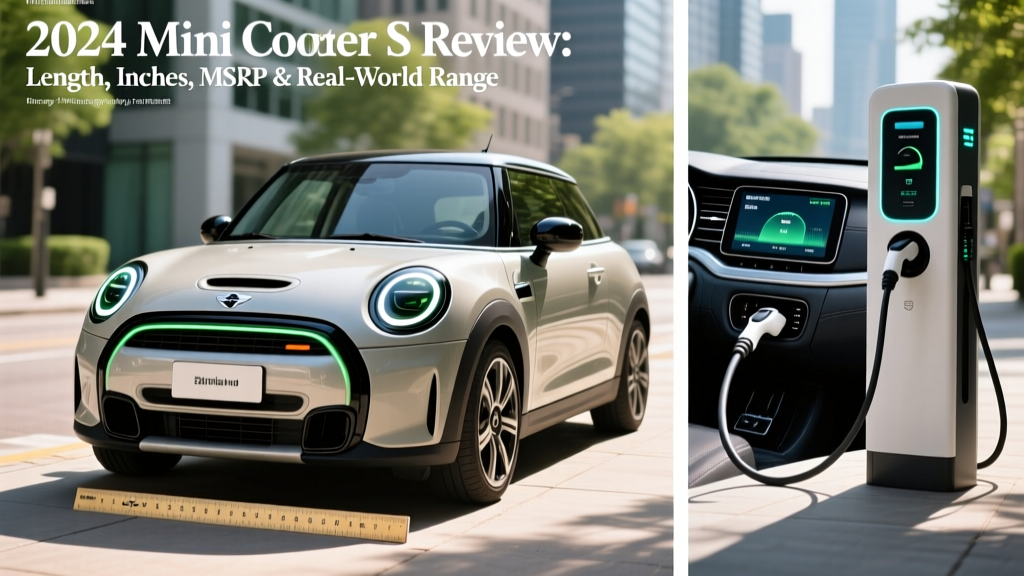
The 2024 Mini Cooper SE Electric is a study in trade-offs. It delivers the go-kart handling Mini is famous for, packs a punchy 181-horsepower electric motor into a footprint barely over 12 feet long, and starts at an MSRP of $30,900 before incentives. But its 32.6 kWh battery yields just 114 miles of EPA-estimated range — the shortest of any new EV sold in the United States for the 2024 model year.
If your daily commute is under 40 miles round-trip and you have reliable home charging, the Cooper SE is one of the most entertaining and affordable premium EVs available. If you need highway road-trip capability or live in a cold climate where range drops 20–30%, this car demands careful planning. Let's break down every spec that matters.
| Spec | Value |
|---|---|
| EPA Range | 114 miles |
| Battery Capacity (Gross / Usable) | 32.6 kWh / ~28.9 kWh |
| Battery Chemistry | NMC (Nickel Manganese Cobalt) |
| Motor Output | 181 hp / 199 lb-ft torque |
| Drivetrain | FWD (single front motor) |
| 0–60 mph | 6.9 seconds |
| Top Speed | 93 mph (electronically limited) |
| EPA Efficiency | 110 MPGe combined (31 kWh/100 mi) |
| Overall Length | 151.9 inches |
| Wheelbase | 98.2 inches |
| Curb Weight | ~3,225 lbs |
| Cargo Volume (rear seats up / down) | 8.7 cu ft / 33.3 cu ft |
| Base MSRP (Cooper SE Signature) | $30,900 |
| Iconic Trim MSRP | $34,900 |
| Battery Warranty | 8 years / 100,000 miles |
Real-World Range: What 114 EPA Miles Actually Means
EPA Estimated Range: 114 miles
Real-World Expectation: 85–105 miles highway; 110–120 miles city; 70–90 miles in sub-freezing cold weather
The EPA's 114-mile figure comes from a mix of city and highway driving cycles. In practice, the Cooper SE's range varies dramatically depending on how and where you drive it.
City driving is where this car thrives. Regenerative braking recaptures energy at every stoplight, and the Cooper SE's one-pedal driving mode (activated via a toggle on the center console) lets you maximize regen without touching the brake pedal. In stop-and-go urban traffic, owners consistently report achieving or slightly exceeding the EPA estimate — 110 to 120 miles is realistic.
Highway driving tells a different story. At sustained 70–75 mph speeds, the small 28.9 kWh usable battery depletes quickly. Expect 85 to 105 miles before the battery warning lights illuminate. The car's bluff-front aerodynamics (inherited from the ICE Mini Hardtop platform) create more drag than purpose-built EVs, compounding the range deficit at speed.
Cold weather is the Cooper SE's Achilles heel. NMC lithium-ion batteries lose efficiency in freezing temperatures, and the car's resistive cabin heater (it lacks a heat pump) draws heavily from the traction battery. In sustained sub-30°F conditions, plan for 70 to 90 miles of real range. Preconditioning the battery while plugged in — a feature available through the Mini Connected app — helps mitigate this loss but doesn't eliminate it.
For context, according to fueleconomy.gov, the Cooper SE's 114-mile EPA rating places it well behind competitors like the Chevrolet Bolt EV (259 miles), Nissan LEAF (212 miles with the larger battery), and Hyundai Kona Electric (258 miles).
Charging Speed: DC Fast Charging and Home Level 2
Charging is where the Cooper SE's small battery cuts both ways. The downside: peak DC fast-charge rate is limited. The upside: that small battery fills up relatively quickly even at modest charge rates.
| Charge Level | Power / Rate | Time / Rate | Connector |
|---|---|---|---|
| Level 1 (120V household) | ~1.4 kW | ~20+ hours (0–100%) | J1772 |
| Level 2 (240V home/public) | 7.4 kW (max onboard) | ~4.5 hours (0–100%) / ~22 mi/hr | J1772 |
| DC Fast Charge | 50 kW peak | ~36 min (10–80%) | CCS1 |
DC Fast Charging Reality: The Cooper SE tops out at 50 kW on CCS1 DC fast chargers. While 50 kW sounds modest compared to the 150–350 kW rates of modern long-range EVs, the small battery means a 10–80% session takes roughly 36 minutes. The charge curve is relatively flat — Mini doesn't aggressively taper until above 85% SoC — so you're not stuck waiting for a painfully slow top-off.
However, 50 kW peak means you're adding roughly 70–80 miles of range in a 30-minute stop. For a car with 114 miles total range, that's a meaningful replenishment but still requires strategic route planning on longer trips.
Home Level 2 Charging: The onboard charger accepts up to 7.4 kW on a 240V Level 2 circuit. A full 0–100% charge takes about 4.5 hours, which means an overnight charge on a home Level 2 station easily refills the battery. Installation of a 240V/40-amp circuit typically costs $500–$2,000 depending on your electrical panel's proximity to the charging location and whether a panel upgrade is needed. Because the Cooper SE's battery is small, you won't need the most expensive high-amperage home chargers — a basic 32-amp Level 2 unit ($300–$500 for equipment) is perfectly adequate.
Level 1 charging on a standard 120V outlet adds roughly 4–5 miles per hour. Given the 114-mile total range, a full Level 1 charge takes over 20 hours — feasible for topping off if your daily driving is under 30 miles, but impractical as a primary charging method.
Performance and Driving Dynamics
The Cooper SE's electric powertrain produces 181 horsepower and 199 lb-ft of torque, all routed to the front wheels through a single-speed reduction gear. The instant torque delivery makes the car feel quicker than its 6.9-second 0–60 mph time suggests, particularly in the 0–30 mph range where it surges off the line with authority.
What truly sets the Cooper SE apart is its driving dynamics. Mini placed the battery pack low in the chassis (under the rear seats and in the transmission tunnel area originally designed for the ICE drivetrain), giving the car a low center of gravity. The result is the signature go-kart feeling — sharp turn-in, minimal body roll, and a playful character that makes winding roads genuinely fun.
The steering is quick and well-weighted, and the car's 151.9-inch overall length and tight 35.4-foot turning circle make it exceptionally nimble in urban environments. Parallel parking in tight city spots is effortless.
Regenerative braking offers two levels: a high-regen mode that enables one-pedal driving in most city conditions, and a low-regen "coasting" mode that lets the car freewheel when you lift off the accelerator — useful for highway driving where you want to maintain momentum.
The trade-off is ride quality. The Cooper SE uses the same suspension tuning as the gasoline Mini Hardtop, which is firm. Over rough pavement and expansion joints, you'll feel more impact than in a Bolt EV or Kona Electric. The 17-inch wheels on the Iconic trim compound this; the 16-inch wheels on the Signature trim offer a marginally more compliant ride.
Dimensions, Interior Space, and Cargo
The keyword that brings buyers to this review often includes the Cooper SE's physical dimensions, and for good reason — this is one of the smallest four-seat EVs on the market.
| Dimension | Measurement |
|---|---|
| Overall Length | 151.9 inches |
| Overall Width (without mirrors) | 68.0 inches |
| Overall Height | 57.1 inches |
| Wheelbase | 98.2 inches |
| Front Headroom | 38.8 inches |
| Rear Headroom | 35.9 inches |
| Front Legroom | 41.4 inches |
| Rear Legroom | 30.9 inches |
| Cargo (rear seats up) | 8.7 cu ft |
| Cargo (rear seats folded) | 33.3 cu ft |
At 151.9 inches in length, the Cooper SE is roughly 20 inches shorter than a Honda Civic and about 30 inches shorter than a Tesla Model 3. This compact footprint is a genuine advantage in dense urban areas — fitting into tight parking spaces, navigating narrow streets, and squeezing through traffic gaps.
Front-seat space is adequate for adults up to about 6'2", with reasonable headroom and good outward visibility. The rear seats are best described as occasional-use: 30.9 inches of legroom is tight for adults on anything beyond short trips. Children and smaller passengers will be fine; six-foot adults will have their knees pressed into the front seatbacks.
Cargo capacity at 8.7 cubic feet (rear seats upright) is modest — enough for a couple of grocery bags or a small suitcase. Fold the 50/50 split rear seats and you get 33.3 cubic feet, which accommodates larger items like a bicycle (with the front wheel removed) or a week's worth of luggage for two people. There is no frunk (front trunk); the space under the hood houses the electric motor and power electronics.
Pricing, Trims, and Federal Tax Credit Eligibility
The 2024 Mini Cooper SE is offered in two trim levels in the U.S. market:
| Trim | Base MSRP | Key Features |
|---|---|---|
| Signature | $30,900 | 16" wheels, heated front seats, 8.8" touchscreen, Apple CarPlay, LED headlights, panoramic glass roof |
| Iconic | $34,900 | 17" wheels, navigation, Harman Kardon audio, head-up display, leather upholstery, parking assistant, ambient lighting |
Destination charge adds $995 to both trims. A well-equipped Iconic trim with options can reach $37,000–$38,000 as-tested.
Does the 2024 Mini Cooper SE Qualify for the Federal EV Tax Credit?
Federal §30D Tax Credit Status: The 2024 Mini Cooper SE does not qualify for the full $7,500 federal EV tax credit. The Cooper SE's battery cells and critical minerals do not meet the domestic sourcing requirements established under the Inflation Reduction Act for 2024.
Under current IRS §30D rules, the federal EV tax credit is split into two $3,750 halves — one for battery component manufacturing and one for critical minerals sourcing. The Cooper SE's battery supply chain does not satisfy either requirement, meaning buyers should not expect any federal credit for this vehicle.
This is a significant factor when comparing the Cooper SE to competitors. The Chevrolet Bolt EV, for example, has historically qualified for a portion or all of the credit (subject to annual rule changes). Always verify current eligibility on the fueleconomy.gov tax credit page before purchasing, as sourcing requirements tighten annually.
State and local incentives may still apply. States like California, Colorado, and New York offer additional rebates or tax credits for EV purchases, and some utilities offer discounted electricity rates or charger installation rebates. Check your state's energy office and local utility for programs specific to your ZIP code.
Used Cooper SE purchases may qualify for the §25E used clean vehicle credit (up to $4,000 or 30% of sale price, whichever is less), subject to income caps ($75,000 single / $150,000 joint) and a sale price cap of $25,000. This makes a 2–3-year-old Cooper SE an attractive budget EV option.
Tech, Safety, and Driver Assistance
The 2024 Cooper SE carries Mini's updated infotainment system centered on an 8.8-inch circular touchscreen — a distinctive design element that echoes the car's round headlight and taillight motifs. The system supports wireless Apple CarPlay (but not Android Auto on the base system; wired Android Auto is available on Iconic trim). A digital instrument cluster replaces the analog gauges, displaying range, energy flow, and navigation.
Standard driver-assistance features include:
- Forward collision warning with automatic emergency braking
- Lane departure warning
- Rearview camera
- Rain-sensing wipers and automatic headlights
The Iconic trim adds:
- Park distance control (front and rear sensors)
- Adaptive cruise control
- Head-up display
Notably absent is any form of lane-keeping assist or semi-autonomous steering. This is an SAE Level 0–1 vehicle in terms of driver assistance — it warns you of hazards but does not actively steer or manage speed in the way that systems like Tesla Autopilot or GM Super Cruise do. For city-focused driving, this is less of a limitation than it would be on a highway cruiser, but it's worth noting for buyers comparing feature lists.
The IIHS has not separately tested the Cooper SE (it shares the Mini Hardtop 2 Door platform, which received Good ratings in most crashworthiness categories in prior model years). NHTSA ratings for the electric variant are limited.
Battery Warranty and Long-Term Ownership
Mini provides an 8-year / 100,000-mile battery warranty on the Cooper SE, guaranteeing that the high-voltage battery will retain at least 70% of its original capacity during the coverage period. This is the industry-standard warranty floor and matches what BMW (Mini's parent company) offers on its other electrified vehicles.
The NMC battery chemistry in the Cooper SE has proven reasonably durable in real-world use. Data from European-market Cooper SEs (sold since 2020 as the Mini Electric) suggests typical degradation of 5–8% over the first three years / 40,000 miles. Given the small battery size, even modest degradation is noticeable — a 10% loss drops your 114-mile range to roughly 103 miles.
To maximize battery longevity:
- Avoid routinely charging to 100% — set the charge limit to 80–90% for daily use
- Minimize repeated DC fast charging; rely on Level 2 home charging when possible
- Use preconditioning in cold weather to warm the battery before driving
- Avoid leaving the car at very low SoC (below 10%) for extended periods
The vehicle's limited warranty covers 4 years / 50,000 miles bumper-to-bumper, and Mini includes 3 years / 36,000 miles of complimentary scheduled maintenance.
Pros
- Engaging go-kart handling and instant electric torque
- Compact 151.9-inch length ideal for tight urban parking
- Low starting MSRP of $30,900 for a premium-brand EV
- Fast home Level 2 charging (4.5 hours 0–100%)
- Distinctive styling and high-quality interior materials
- Standard panoramic glass roof on both trims
- 8-year/100,000-mile battery warranty
Cons
- 114-mile EPA range — shortest of any new U.S.-market EV
- 50 kW DC fast-charge ceiling limits road-trip practicality
- No federal §30D tax credit due to battery sourcing
- Tight rear-seat legroom (30.9 inches) and small 8.7 cu ft cargo area
- No heat pump — cold-weather range loss is significant
- No Android Auto on base Signature trim (wireless)
- Firm ride quality, especially on 17" Iconic wheels
Who Should Buy the 2024 Mini Cooper SE?
Buy the Cooper SE if:
- Your daily round-trip commute is under 50 miles
- You have reliable home Level 2 charging
- You prioritize driving fun and compact dimensions over range
- This is a second car in a multi-vehicle household
- You live in a mild climate (less cold-weather range loss)
- You want a premium-brand EV under $35,000
Look elsewhere if:
- You need 200+ miles of range for road trips or long commutes
- You rely exclusively on public DC fast charging
- You regularly carry rear-seat passengers
- You live in a region with harsh winters and no garage
- Federal tax credit eligibility is a deal-breaker for your budget
The Cooper SE is best understood as a premium urban commuter — a car that excels at making daily city driving genuinely enjoyable while keeping operating costs low. At roughly $0.04–$0.06 per mile on home electricity (depending on your local rate), it costs a fraction of what a gasoline Mini would in fuel alone. But its range limitation is absolute: this is not a one-car-does-everything solution for most households.
Key competitors to cross-shop include the Chevrolet Bolt EV (259-mile range, ~$27,000 MSRP, historically tax-credit eligible), the Hyundai Kona Electric (258-mile range, ~$33,000 MSRP), and the Nissan LEAF SV Plus (212-mile range, ~$36,000 MSRP). All offer substantially more range; none match the Mini's driving character or compact footprint.
Frequently Asked Questions
What is the real-world range of the 2024 Mini Cooper SE?
The EPA rates the Cooper SE at 114 miles combined. In real-world city driving with regenerative braking, expect 110–120 miles. On the highway at 70+ mph, expect 85–105 miles. In freezing weather, plan for as little as 70–90 miles due to battery chemistry limitations and cabin heating draw.
How fast does the 2024 Mini Cooper SE charge?
On a DC fast charger, the Cooper SE peaks at 50 kW and reaches 10–80% in approximately 36 minutes. On a home Level 2 charger (240V, 7.4 kW), a full charge takes about 4.5 hours. Level 1 (120V) charging adds roughly 4–5 miles per hour and is best used only for overnight top-offs.
Does the 2024 Mini Cooper SE qualify for the $7,500 federal EV tax credit?
No. Under current IRS §30D rules, the Cooper SE does not meet the battery component or critical mineral sourcing requirements. Buyers should not expect any federal tax credit. State and local incentives may still apply — check your state energy office. Used Cooper SE models may qualify for the up-to-$4,000 §25E used vehicle credit, subject to income and price caps.
How long is the 2024 Mini Cooper SE in inches?
The 2024 Mini Cooper SE measures 151.9 inches in overall length, 68.0 inches in width (excluding mirrors), and 57.1 inches in height. Its wheelbase is 98.2 inches. This makes it one of the shortest EVs available in the U.S. market — roughly 20 inches shorter than a Honda Civic.
Is the 2024 Mini Cooper SE worth buying over competitors?
It depends entirely on your use case. If you want a fun, compact, premium EV for urban commuting with home charging, the Cooper SE is compelling at $30,900. If range is your priority, the Chevrolet Bolt EV (259 miles, lower MSRP) or Hyundai Kona Electric (258 miles) are more practical choices. The Cooper SE wins on driving dynamics and city-friendly dimensions; it loses on range, charging speed, and tax credit eligibility.
What is the MSRP of the 2024 Mini Cooper SE?
The base Signature trim starts at $30,900 MSRP (plus $995 destination). The higher Iconic trim starts at $34,900. Fully optioned, an Iconic-trim Cooper SE can reach $37,000–$38,000.
Does the Mini Cooper SE have a heat pump?
No. The 2024 Cooper SE uses a resistive electric heater for cabin warmth, which draws directly from the traction battery. This contributes to the car's significant range loss in cold weather. Competitors like the Hyundai Kona Electric and newer Nissan LEAF models offer heat pump systems that are more efficient in cold conditions.