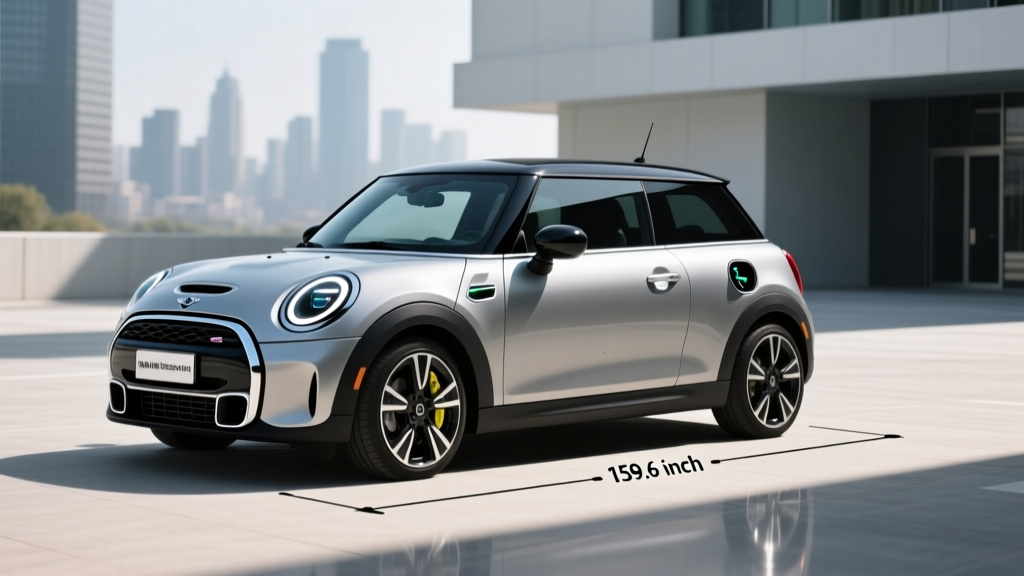
If you've been searching for the 2024 Mini Cooper SE length in inches, the quick answer is 151.7 inches bumper to bumper. But for EV buyers, that compact footprint is just the beginning of the story. The outgoing-generation Cooper SE (the final model year before Mini's ground-up electric redesign) packs iconic styling and go-kart handling into one of the smallest battery-electric vehicles sold in the U.S. — and that creates a very specific set of trade-offs.
We've compiled every dimension, range figure, charging spec, and ownership cost you need to decide whether this city-sized EV fits your life. Note: the 2024 model year was the last of the first-generation Cooper SE built on a modified ICE platform. Mini replaced it with an all-new, longer-range electric Cooper for 2025. If you're shopping used or considering leftover 2024 inventory, this review covers exactly what you're getting.
2024 Mini Cooper SE: Dimensions and Exterior Measurements
The Cooper SE's subcompact dimensions are its defining trait — and the reason it exists in a segment with almost no direct rivals. Here are the complete exterior measurements for the 2024 model:
| Dimension | Measurement |
|---|---|
| Overall Length | 151.7 inches |
| Overall Width (without mirrors) | 68.0 inches |
| Overall Height | 56.5 inches |
| Wheelbase | 98.2 inches |
| Ground Clearance | 4.9 inches |
| Curb Weight | 3,241 lbs |
| Turning Circle | 35.1 feet |
At 151.7 inches long, the 2024 Cooper SE is roughly 18 inches shorter than a Chevrolet Bolt EV and nearly two feet shorter than a Hyundai Kona Electric. That makes it exceptionally easy to park in tight urban spaces, but it also limits cargo and rear-seat room — more on that below. The 35.1-foot turning circle is one of the tightest in any EV, a genuine advantage for city maneuvering.
EPA Range and Real-World Driving Expectations
EPA Estimated Range: 114 miles
Real-World Highway (70 mph): ~90–100 miles
Real-World City/Mixed: ~105–120 miles
Cold Weather (below 30°F): ~75–90 miles (20–30% reduction)
The EPA rates the 2024 Mini Cooper SE at 114 miles of combined range, one of the lowest figures of any EV currently on the U.S. market. This is the single biggest limitation you'll need to accept. The 32.6 kWh battery pack (gross capacity; approximately 28.9 kWh usable) simply doesn't hold enough energy for long trips.
According to fueleconomy.gov, the Cooper SE achieves 110 MPGe combined (119 city / 100 highway), translating to roughly 31 kWh per 100 miles. That efficiency is decent but not class-leading — the car's boxy aerodynamics and relatively heavy curb weight for its size work against it at highway speeds.
In real-world driving, expect the range to fluctuate significantly with conditions. Summer city driving with regenerative braking can push past the EPA estimate, while sustained highway travel at 70+ mph or winter temperatures below freezing will drop usable range to 80–90 miles. If your daily commute is under 40 miles round-trip and you have reliable home charging, the range is manageable. If you regularly need 100+ miles between charges, this is the wrong EV.
Battery, Charging Speeds, and Connector Details
The 2024 Cooper SE uses a 32.6 kWh lithium-ion battery pack with NMC (nickel manganese cobalt) cell chemistry, mounted in a T-shape under the floor and rear seats. Unlike some newer EVs using LFP (lithium iron phosphate) chemistry, this NMC pack prioritizes energy density over cycle longevity — though Mini's battery management system includes conservative buffers to limit degradation.
| Charging Method | Power / Rate | Time or Miles Added |
|---|---|---|
| Level 1 (120V household outlet) | ~1.4 kW | ~5 miles per hour of charging |
| Level 2 (240V home/public AC) | 7.4 kW (max onboard charger) | 0–100% in ~4.5 hours; ~25 mi/hr |
| DC Fast Charging (CCS) | 50 kW peak | 10–80% in ~36 minutes |
Charging is where the Cooper SE shows its age relative to newer EVs. The 50 kW DC fast-charge peak is far below the 150–350 kW rates common in 2024-era competitors. On a CCS-equipped DC fast charger (the Cooper SE uses the CCS1 connector, not NACS), you'll add roughly 80 miles of range in 30 minutes — enough for a quick top-up but not a true road-trip solution.
At home on a Level 2 charger, the 7.4 kW onboard charger replenishes the small battery in about 4.5 hours from empty. That's practical for overnight charging and means you don't need an expensive high-amperage wallbox — a standard 32-amp Level 2 unit is sufficient. On a standard 120V outlet, a full charge takes over 20 hours, which is only viable for emergency trickle charging or very low-mileage days.
Charging curve note: The 50 kW peak rate holds roughly from 10% to 50% state of charge, then tapers to approximately 25–30 kW above 70%. Plan DC fast-charging stops accordingly — there's little benefit to charging past 80% on a road trip.
Performance: 0-60, Horsepower, and Driving Dynamics
The 2024 Cooper SE is powered by a single front-mounted electric motor producing 181 horsepower and 199 lb-ft of torque, driving the front wheels. Mini quotes a 0-60 mph time of 6.9 seconds, which feels brisk in a car this small — the instant torque delivery makes it genuinely quick off the line and eager in urban traffic.
Where the Cooper SE earns its reputation is handling. The low center of gravity from the under-floor battery, short wheelbase, and Mini's signature steering tuning make this one of the most engaging EVs to drive on a winding road. The ride is firm — some would say harsh — on rough pavement, but body roll is minimal and the car feels planted well beyond its price point.
The drivetrain is front-wheel drive only; all-wheel drive is not available. Regenerative braking offers two levels: a high-regen mode that enables near one-pedal driving in city traffic, and a low-regen mode for highway coasting. Unlike some competitors, there's no adaptive regen or true one-pedal stop-and-hold function.
Interior Space, Cargo Volume, and Practicality
Inside, the 2024 Cooper SE seats four passengers, though the rear seats are best suited for children or short trips. Here's how the interior dimensions break down:
| Measurement | Specification |
|---|---|
| Front Headroom | 38.8 inches |
| Front Legroom | 41.4 inches |
| Rear Headroom | 37.3 inches |
| Rear Legroom | 33.2 inches |
| Cargo Volume (rear seats up) | 8.7 cu ft |
| Cargo Volume (rear seats folded) | 34.0 cu ft |
The 8.7 cubic feet of cargo space behind the rear seats is modest — enough for a couple of grocery bags or a small suitcase, but not much more. Folding the rear seats opens up 34.0 cu ft, which accommodates larger items but still trails rivals like the Bolt EV (56.2 cu ft max). There is no front trunk (frunk); the space under the hood houses the motor and power electronics.
The cabin materials are a highlight: soft-touch surfaces, aluminum or piano-black trim options, and the signature Mini toggle bar give the interior a premium feel that punches above the car's price. The 8.8-inch circular infotainment display (a Mini trademark) supports Apple CarPlay and Android Auto, navigation with charging-route planning, and a digital instrument cluster.
Pricing, Trims, and Federal Tax Credit Eligibility
The 2024 Mini Cooper SE was offered in two trims for the U.S. market:
| Trim | Base MSRP | Key Features |
|---|---|---|
| Signature | $30,900 | 8.8" display, heated seats, LED headlights, panoramic roof |
| Iconic | $38,900 | Leather, Harman Kardon audio, HUD, navigation, premium trim |
A destination charge of $995 applies to both trims. As-tested prices for well-equipped Iconic models with options typically landed in the $40,000–$42,000 range.
- Maximum credit: Up to $7,500 if all requirements are met
- MSRP cap: Vehicle MSRP must be ≤ $55,000 (sedans/hatchbacks) — Cooper SE qualifies
- Buyer income cap: AGI ≤ $150,000 (single) / $300,000 (joint) — verify with your tax professional
- Battery sourcing: Critical minerals and battery component requirements phase in yearly; per IRS qualified vehicles list, the 2024 Cooper SE's eligibility for the full $7,500 vs. partial $3,750 depends on the specific battery-sourcing compliance at time of delivery
- Point-of-sale transfer: Available for 2024 purchases — you can transfer the credit to the dealer for an upfront price reduction
With a full $7,500 credit, the Signature trim effectively drops to around $23,400 — a compelling value for a premium-branded EV. However, buyers should verify current sourcing compliance on the IRS qualified vehicles list, as partial credit ($3,750) may apply depending on battery-component sourcing.
Warranty Coverage and Battery Longevity
Mini provides the following warranty coverage for the 2024 Cooper SE:
| Coverage | Term |
|---|---|
| Limited Vehicle Warranty | 4 years / 50,000 miles |
| High-Voltage Battery Warranty | 8 years / 100,000 miles (retains ≥70% capacity) |
| Powertrain Warranty | 4 years / 50,000 miles |
| Roadside Assistance | 4 years / unlimited miles |
| Complimentary Maintenance | 3 years / 36,000 miles |
The 8-year/100,000-mile battery warranty guarantees that the high-voltage pack will retain at least 70% of its original capacity — consistent with industry standards from BMW (Mini's parent company). Real-world degradation data from first-generation Cooper SE owners suggests the NMC pack loses roughly 5–8% capacity over the first 3 years of typical use, well within warranty thresholds. Replacement cost for the battery pack, if out of warranty, is estimated at $8,000–$12,000 based on BMW dealer parts pricing, though full replacements remain rare.
Standout Tech and Driver-Assistance Features
The 2024 Cooper SE includes Mini's Driving Assistant package on the Iconic trim (optional on Signature), featuring:
- Active cruise control (stop-and-go capable)
- Lane departure warning
- Forward collision warning with automatic emergency braking
- Park distance control (front and rear sensors)
- Rear-view camera
These are SAE Level 1 driver-assistance features — they support the driver but do not provide hands-free or automated steering. There is no Level 2 lane-centering or highway driving assist available on this generation. For buyers expecting Tesla Autopilot-style functionality, the Cooper SE falls short; its ADAS suite is basic by 2024 standards.
On the infotainment side, the circular 8.8-inch display is visually distinctive but smaller than competitor screens. Wireless Apple CarPlay is standard; Android Auto requires a USB connection. The Mini Connected app enables remote climate preconditioning (a must-have for maximizing range in extreme temperatures), charge status monitoring, and departure timers.
Who Should Buy the 2024 Mini Cooper SE?
Choose the Cooper SE if:
- Your daily commute is under 50 miles round-trip
- You have reliable home Level 2 charging
- You prioritize fun driving dynamics over range
- You live in a city with tight parking
- You want a premium badge at a tax-credit-adjusted bargain price
- You need 200+ miles of range for road trips
- You regularly carry rear-seat passengers or large cargo
- You want advanced Level 2 driver-assist features
- You lack home charging and depend on public infrastructure
- You live in a very cold climate where range loss compounds the small battery
The 2024 Cooper SE is a niche vehicle, and it owns that niche confidently. It's the EV equivalent of a sports car with a small fuel tank — thrilling to drive, impractical for long hauls, and deeply satisfying if it matches your use case. Urban commuters, apartment dwellers with garage charging access, and driving enthusiasts who want an affordable second EV will find a lot to love. Families and road-trippers should look to the Chevrolet Bolt EV, Hyundai Kona Electric, or the newer 2025 Mini Cooper Electric (which offers up to 227 miles of WLTP range on the new platform).
Pros and Cons at a Glance
- Engaging handling and quick acceleration for the class
- Premium interior materials and distinctive design
- Compact 151.7-inch length ideal for city parking
- Tight 35.1-foot turning circle
- Attractive price after federal tax credit
- Strong resale value (Mini brand loyalty)
- 114-mile EPA range limits utility severely
- 50 kW DC fast charging is slow for 2024
- Tiny 8.7 cu ft cargo area
- Cramped rear seats
- No advanced Level 2 driver-assist option
- Firm ride quality on rough roads
- Outgoing platform — newer EVs offer far more range
Frequently Asked Questions
What is the exact length of the 2024 Mini Cooper SE in inches?
The 2024 Mini Cooper SE measures 151.7 inches in overall length, making it one of the shortest EVs sold in the United States. For comparison, the Chevrolet Bolt EV is 169.5 inches and the Hyundai Kona Electric is 170.1 inches.
What is the real-world range of the 2024 Mini Cooper SE?
The EPA rates it at 114 miles combined. In real-world mixed driving, expect 105–120 miles in mild city conditions, 90–100 miles at sustained highway speeds, and as low as 75–90 miles in cold weather below 30°F due to battery chemistry limitations and cabin heating demands.
How fast does the 2024 Cooper SE charge?
On a DC fast charger (CCS connector), it peaks at 50 kW, reaching 10–80% in approximately 36 minutes. On a Level 2 home charger (240V, 7.4 kW), a full charge takes about 4.5 hours. A standard 120V outlet adds roughly 5 miles of range per hour.
Does the 2024 Mini Cooper SE qualify for the federal EV tax credit?
It can qualify for up to $7,500 under IRS §30D, subject to buyer income limits ($150K single / $300K joint AGI), the $55,000 MSRP cap for hatchbacks (which the Cooper SE meets), and battery critical-minerals and component sourcing requirements. The point-of-sale transfer option lets you apply the credit as a dealer discount. Always verify current eligibility on the IRS qualified clean vehicles list.
Is the 2024 Cooper SE worth buying vs. competitors?
If you prioritize driving fun, premium branding, and a compact footprint — and your daily mileage stays under 50 miles — it's a compelling choice, especially after tax credits bring the Signature trim below $24,000. However, if range, cargo space, or fast-charging capability matter, the Chevrolet Bolt EV (259 miles EPA, ~$27K after credit) or Hyundai Kona Electric (261 miles EPA) offer significantly more utility. The 2025 redesigned Mini Cooper Electric is also worth waiting for if you want the Mini brand with modern range.
What connector does the 2024 Cooper SE use for charging?
The 2024 Cooper SE uses the CCS1 connector for DC fast charging and the J1772 connector for AC Level 1 and Level 2 charging. It does not have the NACS (Tesla) connector. Adapters are available for using Tesla Superchargers (J1772-to-Tesla for AC; CCS-to-NACS adapters for DC are emerging but verify compatibility before purchasing).
What is the battery warranty on the 2024 Cooper SE?
Mini covers the high-voltage battery for 8 years or 100,000 miles, whichever comes first, guaranteeing at least 70% capacity retention over that period. This is standard for the industry and matches coverage from BMW, Volkswagen, and most mainstream manufacturers.