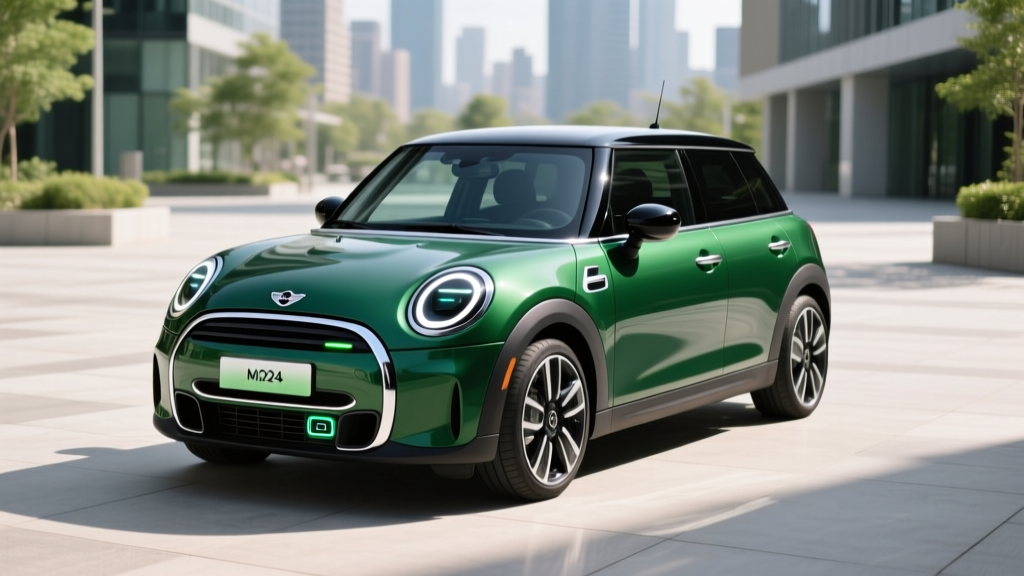
The Mini Cooper SE has always been the EV you buy with your heart, not your spreadsheet. But for 2024, Mini quietly kept the 4-door Hardtop EV in production even as it prepared a next-generation platform — and that means buyers hunting for a compact electric runabout still need hard numbers on price, range, and charging before signing a lease. If you've been searching for the 2024 Mini Cooper SE 4 door MSRP and what it actually costs to own, this review reconciles the sticker with the reality of daily driving, DC fast charging, and federal tax-credit eligibility under current IRS §30D rules.
2024 Mini Cooper SE 4-Door MSRP and Trim Pricing
The 2024 Mini Cooper SE 4-Door Hardtop is offered in two trims. Mini simplified the lineup compared to earlier years, bundling more features standard. Below is the official pricing before destination or incentives:
| Trim | Base MSRP | Destination | Total Before Incentives |
|---|---|---|---|
| Signature | $30,900 | $995 | $31,895 |
| Iconic | $34,900 | $995 | $35,895 |
The Iconic trim adds a Harman Kardon premium audio system, head-up display, panoramic moonroof, and Mini's full Driver Assistance Package. Neither trim qualifies as luxury-price, but the Iconic pushes into territory where competitors like the Chevrolet Bolt EUV or Hyundai Kona Electric offer more range for similar money.
EPA Range, Battery Specs, and Real-World Expectations
The 2024 Mini Cooper SE carries a 32.6 kWh gross battery (approximately 28.9 kWh usable), using NMC (nickel manganese cobalt) lithium-ion cells. That's a modest pack by modern standards — smaller than the Hyundai Kona Electric's 64 kWh or even the Nissan Leaf's 40 kWh — and it shows on the range sticker.
Real-World Highway (70 mph): Expect ~90–100 miles in mild weather. The SE's boxy shape and short wheelbase hurt efficiency at speed.
Real-World City/Mixed: ~105–115 miles — regen braking in stop-and-go traffic helps recover energy.
Cold Weather (below 32°F): Range can drop to 75–85 miles. The SE uses a resistive heater (no heat pump), which draws heavily from the small pack in winter.
According to fueleconomy.gov, the 2024 Cooper SE achieves 110 MPGe combined (119 city / 100 highway), translating to roughly 30 kWh per 100 miles. That efficiency figure is middling — the Hyundai Kona Electric returns 120 MPGe combined with twice the range, and the Tesla Model 3 RWD does 132 MPGe.
| Spec | Value |
|---|---|
| Battery (gross / usable) | 32.6 kWh / ~28.9 kWh |
| Chemistry | NMC (Nickel Manganese Cobalt) |
| EPA Range | 114 miles |
| MPGe (city / hwy / combined) | 119 / 100 / 110 |
| Energy consumption | ~30 kWh/100 mi |
| Drivetrain | FWD, single motor |
| Horsepower | 181 hp (135 kW) |
| Torque | 199 lb-ft |
| 0–60 mph | 6.9 seconds |
Charging Speed: DC Fast Charge and Home Level 2
Charging is where the Cooper SE's small battery is both a weakness and a hidden strength. The weakness: peak DC fast-charge rate tops out at approximately 50 kW (some sources cite bursts to 55 kW on a preconditioned pack). That's well below the 150–250 kW rates common on modern EVs. The strength: because the battery is so small, even 50 kW fills it quickly in absolute terms.
| Charging Level | Power | Time / Rate |
|---|---|---|
| Level 1 (120V household) | ~1.4 kW | ~20+ hours for full charge; ~4 mi/hr |
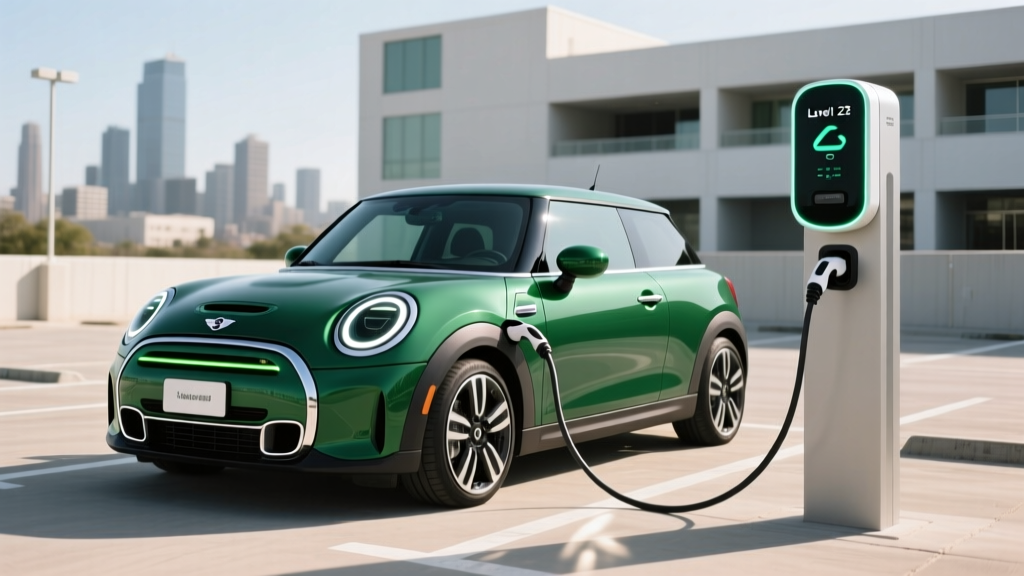
| Level 2 (240V home/public) | 7.4 kW (max onboard) | ~4.5 hours 0–100%; ~25 mi/hr |
| DC Fast Charge (CCS) | 50 kW peak | 10–80% in ~36 minutes |
A few real-world charging notes:
- Charge curve taper: The SE holds close to peak 50 kW up to roughly 50–60% SoC, then tapers significantly. The 10–80% time of ~36 minutes is reasonable for the pack size, but you won't see the sub-20-minute stops that 800V architectures enable.
- Level 2 is the sweet spot: At 7.4 kW onboard, a home Level 2 charger (like a ChargePoint Home Flex or Emporia Vue) easily replenishes the pack overnight. Most owners will rarely need DC fast charging unless they're taking the SE on longer trips — which, given the 114-mile range, is not its forte.
- Connector: The 2024 model uses CCS1 for DC fast charging and J1772 for Level 2 AC. No NACS (Tesla) port — though CCS-to-NACS adapters are becoming available for Supercharger access.
Interior Space, Cargo, and Daily Practicality
The 4-door Hardtop body style adds rear-seat access that the 2-door lacks, but "4-door Mini" is still a compact proposition. Here's what the tape measure says:
| Dimension | Measurement |
|---|---|
| Front legroom | 41.4 in |
| Rear legroom | 33.2 in |
| Front headroom | 39.9 in |
| Rear headroom | 37.5 in |
| Cargo (behind rear seats) | 13.1 cu ft |
| Cargo (rear seats folded) | 40.4 cu ft |
| Curb weight | ~3,215 lbs |
For context, 13.1 cubic feet of cargo space is roughly equivalent to a large hatchback or a small crossover's rear area — enough for a week's groceries or two carry-on suitcases, but not furniture runs. The rear seats accommodate adults for short trips; anyone over 5'10" will find knee room tight on longer rides.
Technology, Driver Assists, and Standout Features
The 2024 Cooper SE uses Mini's 8.8-inch circular touchscreen (the iconic center dial), running the older Mini Connected infotainment system rather than the newer MINI Operating System 9 found in the 2025+ redesigned models. It supports Apple CarPlay and Android Auto (wireless for CarPlay, wired for Android Auto), and includes built-in navigation with EV-specific routing that accounts for charge stops.
Driver assistance features (standard on Iconic, optional on Signature):
- Active Driving Assistant (forward collision warning, automatic emergency braking, lane departure warning)
- Park Distance Control (front and rear sensors)
- Rear-view camera
- Adaptive cruise control (Iconic only)
Standout feature: Mini's "green mode" drive setting maximizes regen and limits HVAC draw to squeeze extra miles from the pack. The SE also offers a one-pedal driving mode strong enough to bring the car to a complete stop without touching the brake — useful in city traffic.
Warranty and Battery Longevity
| Coverage | Term |
|---|---|
| Basic (bumper-to-bumper) | 4 years / 50,000 miles |
| Powertrain | 4 years / 50,000 miles |
| High-voltage battery | 8 years / 100,000 miles (retains ≥70% capacity) |
| Corrosion perforation | 12 years / unlimited miles |
| Roadside assistance | 4 years / unlimited miles |
The battery warranty's 70% capacity retention threshold is standard for the industry. With a 28.9 kWh usable pack, dropping to 70% would leave roughly 20.2 kWh — translating to maybe 80 miles of range in year eight. NMC chemistry in this generation has shown moderate degradation in real-world fleet data: expect roughly 5–8% loss over the first 50,000 miles under normal use (avoiding repeated DC fast-charge sessions and extreme SoC storage).
Who Should Buy the 2024 Mini Cooper SE 4-Door?
- Fun-to-drive character: go-kart steering feel, instant EV torque, 6.9s 0–60
- Compact footprint ideal for tight urban parking
- Premium interior materials and distinctive styling
- Low running costs: ~$0.04–0.06/mile on home electricity
- One-pedal driving excellent in stop-and-go traffic
- 114-mile EPA range limits road-trip usefulness
- 50 kW max DC charge rate is slow by 2024 standards
- No heat pump — significant winter range loss
- Tight rear seat and modest cargo space
- Limited federal tax credit due to battery sourcing
Look elsewhere if: You need 200+ miles of range, regularly drive highway commutes over 50 miles one way, live in a cold climate without garage parking, or need a primary family vehicle. Consider the Hyundai Kona Electric (261 mi range, ~$33K), Chevrolet Bolt EV/EUV (259 mi, ~$27K), or Nissan Leaf SV Plus (212 mi, ~$36K) for more practical range at similar price points.
Frequently Asked Questions
What is the real-world range of the 2024 Mini Cooper SE?
The EPA rates it at 114 miles. In real-world mixed driving, expect 105–115 miles in mild weather and as little as 75–85 miles in sub-freezing temperatures due to the lack of a heat pump and resistive cabin heating drawing from the small 28.9 kWh usable pack.
How fast does the 2024 Mini Cooper SE charge?
On a DC fast charger, it peaks at approximately 50 kW, reaching 10–80% in about 36 minutes. At home on a 240V Level 2 charger (7.4 kW max), a full charge takes roughly 4.5 hours. Level 1 (120V) trickle charging adds about 4 miles per hour.
Does the 2024 Mini Cooper SE qualify for the federal EV tax credit?
Partially. Under current IRS §30D rules, the Cooper SE may qualify for up to $3,750 depending on battery critical-minerals sourcing for its specific build date. It does not meet the full battery-component sourcing requirement for the additional $3,750 half. Buyers must also meet income caps ($150K single / $300K joint AGI) and the MSRP is well under the $55,000 cap for sedans/hatchbacks. Verify eligibility at IRS.gov before purchasing.
How much does the 2024 Mini Cooper SE cost after incentives?
The Signature trim starts at $30,900 MSRP plus $995 destination ($31,895). If you qualify for the partial $3,750 federal credit, your effective cost drops to roughly $28,145. Some states offer additional rebates (e.g., California, Colorado, New York) — check your state energy office for current programs.
Is the 2024 Mini Cooper SE worth buying vs. competitors?
It depends on priorities. If driving enjoyment and premium urban style matter more than range, the SE delivers. But purely on range-per-dollar, the Hyundai Kona Electric (261 mi, similar price) and the now-discontinued-but-still-available Chevrolet Bolt EV (259 mi, lower price) offer substantially more practicality. The SE is a compelling second car or dedicated city commuter — not a one-car household solution for most buyers.
What is the Mini Cooper SE battery warranty?
Mini covers the high-voltage battery for 8 years or 100,000 miles against defects and capacity loss below 70% of original. The standard bumper-to-bumper warranty is 4 years / 50,000 miles.
Sources: EPA fueleconomy.gov, IRS §30D qualified vehicles, MINI USA official specifications.