Quick Verdict: Luxury EV SUV With Real Substance
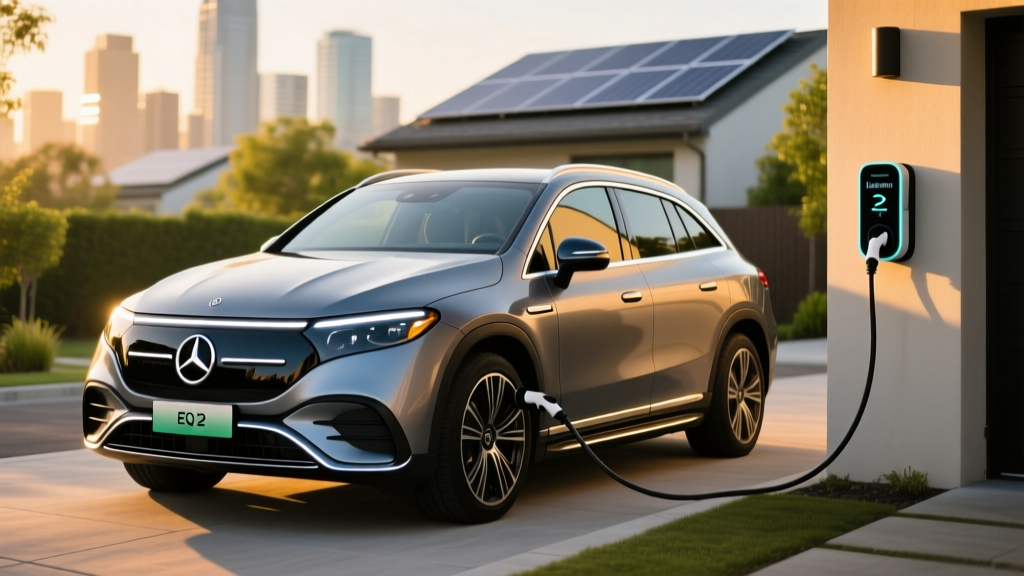
The 2024 Mercedes-Benz EQS SUV is the three-row electric flagship of the Mercedes lineup — a 108.4 kWh battery pack, up to 305 miles of EPA-estimated range, and the kind of cabin refinement that justifies its six-figure price tag. But luxury EV buyers in 2026 have more choices than ever, from the BMW iX to the Rivian R1S to the Tesla Model X. So where does the EQS SUV actually land when you look past the star badge?
After spending time with the EQS 450+ and EQS 580 4MATIC variants, the answer is nuanced. This is an exceptionally comfortable, technology-dense electric SUV that excels at highway cruising and daily luxury commuting. Its DC fast-charging speed, while improved over earlier Mercedes EVs, still trails the best in class. And its federal tax credit situation requires careful attention to IRS sourcing rules. Here's everything you need to know before signing a purchase order.
Range and Efficiency: EPA Numbers vs. Real-World Driving
Real-World Expectation: 250–280 miles on highway road trips at 70+ mph; 220–250 miles in sub-freezing winter conditions. City and mixed driving with regen braking can approach or slightly exceed the EPA sticker.
The EQS 450+ with rear-wheel drive achieves its maximum 305-mile EPA rating thanks to a combination of low drag coefficient (0.20 Cd — among the slipperiest SUVs ever tested), a large 108.4 kWh usable battery, and single-motor efficiency. The dual-motor EQS 580 4MATIC drops to 285 miles EPA due to the added weight and parasitic loss of the front motor.
Efficiency ratings bear this out. The EQS 450+ returns 86 MPGe combined (roughly 39 kWh per 100 miles), while the 580 4MATIC sits at 79 MPGe combined (~43 kWh/100 mi). In our experience, these figures hold up in moderate-temperature mixed driving. Sustained highway speeds above 75 mph push consumption closer to 45–48 kWh/100 mi, which is where the 250-mile real-world highway figure comes from.
Cold weather is the equalizer for all EVs, and the EQS SUV is no exception. Battery chemistry (NMC — nickel manganese cobalt) is energy-dense but suffers typical lithium-ion cold-weather losses. Expect a 15–25% range reduction in sustained below-freezing temperatures, depending on whether you precondition the cabin and battery while still plugged in. The EQS SUV does include a heat pump, which helps cabin heating efficiency considerably compared to resistive heaters.
Battery and Charging: Specs, Speeds, and the Curve Reality
| Specification | EQS 450+ (RWD) | EQS 580 4MATIC |
|---|---|---|
| Battery Capacity (usable) | 108.4 kWh | 108.4 kWh |
| Battery Chemistry | NMC (Nickel Manganese Cobalt) | NMC (Nickel Manganese Cobalt) |
| Max DC Fast-Charge Rate | 200 kW (peak) | 200 kW (peak) |
| 10–80% DC Fast Charge | ~31 minutes | ~31 minutes |
| Level 2 AC Charge Rate | 9.6 kW (onboard charger) | 9.6 kW (onboard charger) |
| Level 2 Miles per Hour | ~25 mi/hr | ~23 mi/hr |
| Level 1 (120V) Miles per Hour | ~3 mi/hr | ~3 mi/hr |
| Charge Port | CCS1 (J1772 combo) | CCS1 (J1772 combo) |
The 200 kW peak DC fast-charging rate is a meaningful step up from Mercedes' earlier EQ models, but it's important to understand the charge curve. The EQS SUV hits 200 kW only briefly in the 10–30% state-of-charge window. From roughly 40–60%, sustained rates drop to 130–150 kW, and above 80% the taper is aggressive — as it is with nearly all NMC packs protecting cell longevity. The 31-minute 10–80% time is competitive but trails the Hyundai Ioniq 5 (~18 min at 350 kW chargers) and the Lucid Gravity.
For home charging, the 9.6 kW onboard charger is standard. On a 48-amp Level 2 home charger (the most common hardwired installation), a full 0–100% charge takes roughly 11–12 hours. Most owners will plug in overnight and wake up to a full battery — the 108.4 kWh pack means even a 20–80% daily charge window gives you over 200 miles of range for the next day.
Mercedes uses the CCS1 connector standard. With the industry-wide shift to NACS (Tesla's connector), Mercedes has committed to NACS adoption on future models, and current CCS-equipped Mercedes EVs can access Tesla Superchargers via an approved CCS-to-NACS adapter. Confirm adapter compatibility with Mercedes before relying on this for road trips.
Performance and Drivetrain
| Specification | EQS 450+ (RWD) | EQS 580 4MATIC |
|---|---|---|
| Horsepower | 355 hp | 536 hp |
| Torque | 419 lb-ft | 633 lb-ft |
| 0–60 mph | 6.5 seconds | 4.3 seconds |
| Drivetrain | Rear-Wheel Drive (single motor) | AWD (dual motor) |
| Towing Capacity | Not rated | Not rated |
| Top Speed | 130 mph (electronically limited) | 130 mph (electronically limited) |
The EQS 450+ is the value-oriented pick if you don't need all-wheel drive. Its 6.5-second 0–60 time is perfectly adequate for a luxury family SUV — this isn't a performance vehicle, and it doesn't pretend to be. The single rear motor provides smooth, linear acceleration and better efficiency.
The EQS 580 4MATIC transforms the character entirely. 536 hp and a 4.3-second 0–60 time give it genuine sports-sedan acceleration in a 5,800+ pound SUV. The dual-motor AWD system provides confident traction in rain and light snow, though the EQS SUV is not an off-roader — ground clearance is modest, and Mercedes does not rate it for towing.
Regenerative braking offers multiple levels selectable via steering-wheel paddles, including a smart adaptive mode that uses radar and navigation data to modulate regen based on traffic and upcoming stops. It's one of the better-executed adaptive regen systems in the EV market, though it doesn't quite achieve true one-pedal driving in all scenarios — you'll still use the brake pedal for complete stops.
Interior, Cargo, and Technology
The cabin is where the EQS SUV makes its strongest case for the price. The available MBUX Hyperscreen — a 56-inch curved glass panel spanning the entire dashboard — remains one of the most visually impressive infotainment setups in any production vehicle. It includes a 17.7-inch central OLED touchscreen, a 12.3-inch driver cluster, and a 12.3-inch passenger display. The system is fast, visually rich, and supports wireless Apple CarPlay and Android Auto.
However, the Hyperscreen is not without criticism. Climate controls are buried in submenus rather than physical buttons, and the sheer amount of screen real estate can be distracting. Mercedes has improved the software over the 2023 model year, but some owners still prefer the simpler dual-screen setup available on lower trims.
Cargo and passenger dimensions:
- Cargo (behind 3rd row): 14.4 cu ft
- Cargo (behind 2nd row, 3rd row folded): 42.0 cu ft
- Cargo (max, all rear seats folded): 74.2 cu ft
- Front legroom: 40.4 inches
- Second-row legroom: 40.3 inches
- Third-row legroom: 28.1 inches
- Seating capacity: 5 or 7 (optional third row)
The third row is best described as occasional-use. At 28.1 inches of legroom, it works for children or short trips but will not accommodate adults comfortably for longer drives. With all three rows up, the 14.4 cu ft of cargo space is tight — a couple of carry-on bags, not a family's worth of luggage. Fold the third row and the 42 cu ft behind the second row is far more practical for daily use.
Driver assistance: The EQS SUV comes standard with Mercedes' Driver Assistance Package, which includes adaptive cruise control with stop-and-go, active lane-keeping, active blind-spot assist, and evasive steering assist. The available Drive Pilot system is an SAE Level 3 system — meaning it can handle all driving tasks under specific conditions (pre-mapped highways, below 40 mph, good weather) without driver supervision. This is a genuine differentiator: Level 3 is legally distinct from the Level 2 systems in Teslas, Fords, and GMs, where the driver must remain engaged at all times. Drive Pilot availability is currently limited to Nevada and California on specific highway segments, and it requires a subscription.
Pricing, Trims, and Federal Tax Credit Eligibility
| Trim | Base MSRP | Federal §30D Credit Eligible? | Effective Price (if eligible) |
|---|---|---|---|
| EQS 450+ (RWD) | $104,400 | No — exceeds MSRP cap | $104,400 |
| EQS 450 4MATIC | $107,400 | No — exceeds MSRP cap | $107,400 |
| EQS 580 4MATIC | $125,950 | No — exceeds MSRP cap | $125,950 |
| AMG EQS SUV | $149,550 | No — exceeds MSRP cap | $149,550 |
Here's the critical pricing reality: no 2024 EQS SUV trim qualifies for the federal §30D new EV tax credit. Under current IRS rules, SUVs must have an MSRP at or below $80,000 to be eligible. Every EQS SUV trim starts well above that threshold. This is not a battery-sourcing issue — it's purely a price-cap disqualification.
Buyer income caps also apply to §30D eligibility (modified AGI: $300,000 joint / $225,000 head of household / $150,000 individual), but they're moot here since the MSRP cap eliminates the vehicle regardless.
There is one potential workaround: the used EV credit (§25E). If you purchase a qualifying pre-owned EQS SUV from a dealer for $25,000 or more, and the vehicle is at least two model years old, you may be eligible for up to $4,000 (30% of sale price, capped at $4,000) — subject to the same income caps and dealer-reporting requirements. As of 2026, early 2023-model EQS SUVs are beginning to appear in the used market and may qualify. Verify eligibility on the IRS used-clean-vehicle credit page and confirm with your tax professional.
Destination charges, dealer-installed options, and packages can push as-tested prices significantly higher. A well-equipped EQS 580 4MATIC with the Hyperscreen, AMG Line package, rear-axle steering, and Executive Rear Seat Package can easily reach $140,000–$150,000 before incentives.
Warranty and Long-Term Ownership
| Coverage Type | Duration |
|---|---|
| New Vehicle Limited Warranty | 4 years / 50,000 miles |
| High-Voltage Battery Warranty | 10 years / 155,000 miles |
| Battery Capacity Retention Guarantee | ≥70% of original capacity over warranty period |
| Powertrain (Electric Motors) | 4 years / 50,000 miles (under new vehicle warranty) |
| Roadside Assistance | 4 years / 50,000 miles |
| Corrosion Perforation | 4 years / 50,000 miles |
The 10-year / 155,000-mile high-voltage battery warranty is competitive with the industry standard (most automakers offer 8 years / 100,000 miles). Mercedes guarantees the battery will retain at least 70% of its original usable capacity during the warranty period. If degradation exceeds that threshold, Mercedes will repair or replace the battery at no cost. NMC chemistry in Mercedes' thermal management system has shown solid longevity data in the EQS sedan — early 2022-model vehicles are reporting minimal degradation at 30,000–50,000 miles.
One ownership cost to budget for: insurance. The EQS SUV is expensive to insure relative to mainstream EVs. Average annual premiums run $3,200–$4,500 depending on state, driving record, and coverage levels. Get quotes before purchasing — this is a meaningful line item in total cost of ownership.
Pros, Cons, and Who Should Buy
Pros
- Exceptional cabin refinement and ride quality — air suspension standard
- 305-mile EPA range (450+ RWD) is competitive for the class
- Available Drive Pilot (SAE Level 3) — a genuine technology advantage
- 10-year / 155,000-mile battery warranty exceeds most competitors
- Heat pump standard — better cold-weather cabin efficiency
- MBUX Hyperscreen is visually stunning and feature-rich
- Spacious second row with 40.3 inches of legroom
Cons
- 200 kW peak DC charging trails class leaders (Ioniq 5, Model X, Lucid)
- No federal tax credit — all trims exceed $80,000 MSRP cap
- Third row is cramped (28.1" legroom) and cargo space tight with all rows up
- Hyperscreen buries climate controls in menus
- No towing rating — limits utility for trailer-hauling buyers
- Insurance premiums significantly above average
- Heavy at 5,800+ lbs — affects tire wear and braking distances
Who Should Buy the 2024 EQS SUV
Choose the EQS SUV if: You prioritize cabin luxury and ride comfort above all else, want SAE Level 3 Drive Pilot capability (in approved areas), need a three-row electric SUV primarily for passenger comfort rather than cargo hauling, and the $100K+ price point fits your budget without relying on federal incentives.
Look elsewhere if: You need maximum DC fast-charging speed for frequent road trips (consider the BMW iX xDrive50 or Hyundai Ioniq 5), you need genuine towing capability (Rivian R1S), you want federal tax credit eligibility (consider the BMW iX — which also exceeds the cap — or look at the Cadillac Lyriq, Genesis Electrified GV70, or Tesla Model X in specific trims), or you need a usable third row for adults regularly.
Frequently Asked Questions
What is the real-world range of the 2024 Mercedes-Benz EQS SUV?
The EPA rates the EQS 450+ at 305 miles and the 580 4MATIC at 285 miles. In real-world highway driving at 70–80 mph, expect 250–280 miles. In cold weather (below 32°F), that drops to roughly 220–250 miles unless you precondition the battery and cabin while plugged in. City driving with regenerative braking can match or slightly exceed the EPA sticker.
How fast does the EQS SUV charge at home and on the road?
On a DC fast charger, the EQS SUV peaks at 200 kW and charges from 10–80% in approximately 31 minutes. At home on a 48-amp Level 2 charger (9.6 kW), it adds roughly 25 miles of range per hour, with a full charge taking 11–12 hours. On a standard 120V outlet (Level 1), expect about 3 miles per hour — only practical for emergency top-ups or very low daily mileage.
Does the 2024 EQS SUV qualify for the federal EV tax credit?
No. Under IRS §30D rules, SUVs must have an MSRP at or below $80,000 to qualify. Every 2024 EQS SUV trim starts above $104,000, disqualifying it regardless of battery sourcing or buyer income. Check IRS.gov for current rules, and consult a tax professional for your specific situation.
Is the EQS SUV worth buying vs. the BMW iX, Rivian R1S, or Tesla Model X?
It depends on your priorities. The EQS SUV wins on cabin luxury and ride comfort. The BMW iX xDrive50 offers faster DC charging (up to 200 kW as well, but with a slightly better curve) and a sportier driving feel at a lower starting price (~$87,000). The Rivian R1S is far more capable off-road, offers genuine towing (7,700 lbs), and has a more usable third row — but its interior materials don't match Mercedes. The Tesla Model X offers the most range (348 mi EPA) and the best Supercharger network access, but its build quality and ride refinement fall short of the EQS SUV. None of these competitors qualify for the federal credit at current MSRP levels either.
What is the biggest drawback of the EQS SUV?
The most impactful drawback is the combination of no federal tax credit eligibility and DC fast-charging speeds that trail the segment's best. At $104,000+ without a $7,500 credit offset, and with 31-minute 10–80% charge times while competitors achieve 18–22 minutes, the value proposition requires you to place a premium on Mercedes-specific luxury and technology.
Can the EQS SUV use Tesla Superchargers?
Mercedes has committed to NACS (Tesla connector) adoption, and current CCS-equipped vehicles can access Superchargers using an approved CCS-to-NACS adapter. Verify adapter availability and compatibility directly with Mercedes-Benz before planning road trips around the Supercharger network. Mercedes is also expanding its own Mercedes-Benz High-Power Charging network with 400 kW-capable stations in major US metro areas.
How long will the EQS SUV battery last?
Mercedes warranties the high-voltage battery for 10 years or 155,000 miles with a 70% capacity retention guarantee. Based on early data from 2022–2023 EQS sedans, NMC degradation under Mercedes' thermal management system is tracking well — most vehicles show 3–5% capacity loss in the first 30,000–50,000 miles. With proper care (avoiding frequent 100% charges, using preconditioning, limiting DC fast-charging to road trips), the battery should comfortably exceed 200,000 miles before approaching the 70% threshold.