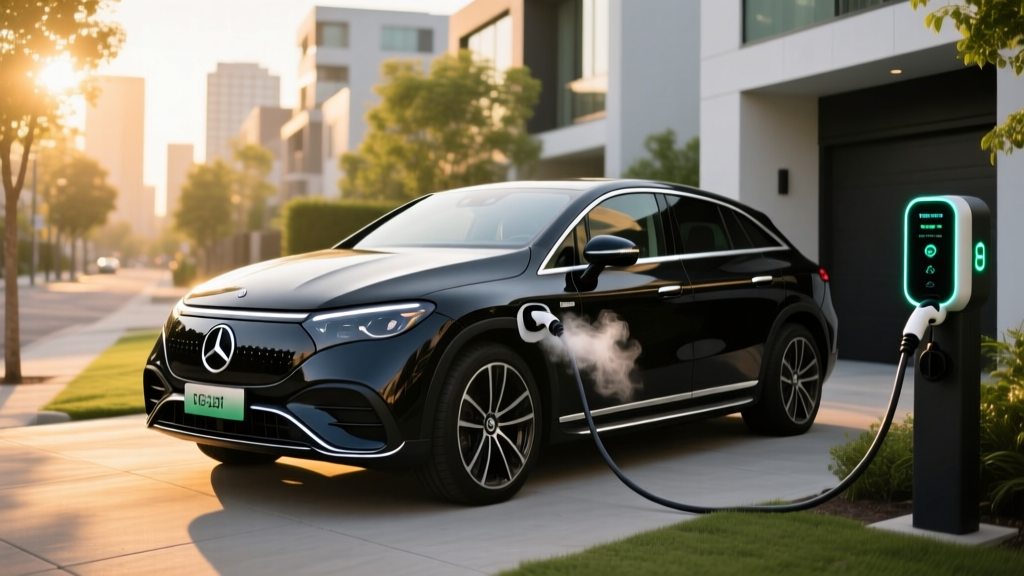
The 2024 Mercedes-Benz EQE SUV slots into a narrow but important gap in the luxury EV market: a midsize electric crossover that prioritizes ride refinement and cabin isolation over outright performance metrics. Built on the same EVA2 platform as the EQE sedan, it sacrifices some range for a taller, more practical body. For buyers cross-shopping the BMW iX, Audi Q8 e-tron, and Tesla Model X, the EQE SUV demands a closer look — and a clear-eyed assessment of where it excels and where it falls short.
2024 Mercedes-Benz EQE SUV: Quick Verdict
The EQE SUV is a comfort-first luxury electric crossover with class-leading cabin quietness, a well-tuned air suspension, and Mercedes' latest MBUX infotainment. Its 90.6 kWh usable battery delivers an EPA-estimated 279 miles in the EQE 350+ (RWD), which is competitive but not category-leading. DC fast charging peaks at 170 kW — adequate but not blistering by 2024 standards. Pricing starts at $77,900, and federal tax credit eligibility depends on your income, the vehicle's MSRP cap status, and battery-sourcing compliance under IRS §30D rules.
| Spec | EQE 350+ (RWD) | EQE 350 4MATIC (AWD) | EQE 500 4MATIC | AMG EQE |
|---|---|---|---|---|
| EPA Range | 279 mi | 253 mi | 253 mi | 235 mi |
| Battery (usable) | 90.6 kWh (NMC) | 90.6 kWh (NMC) | 90.6 kWh (NMC) | 90.6 kWh (NMC) |
| Horsepower | 288 hp | 288 hp | 402 hp | 617 hp |
| 0–60 mph | 6.4 sec | 6.4 sec | 4.7 sec | 3.7 sec |
| Max DC Charge Rate | 170 kW | 170 kW | 170 kW | 170 kW |
| 10–80% DC Time | ~32 min | ~32 min | ~32 min | ~32 min |
| Level 2 Rate | 9.6 kW | 9.6 kW | 9.6 kW | 9.6 kW |
| MPGe (combined) | 82 MPGe | 77 MPGe | 77 MPGe | 72 MPGe |
| Base MSRP | $77,900 | $80,900 | $95,900 | $111,400 |
Source: fueleconomy.gov, Mercedes-Benz USA
Real-World Range: What to Actually Expect
EPA Estimate: 279 miles (EQE 350+ RWD)
Real-World Highway (70–75 mph): ~235–255 miles
Cold Weather (below 32°F): ~200–225 miles (20–30% reduction)
Mixed Commute (city/suburban): ~260–275 miles
The EQE 350+ RWD's 279-mile EPA rating is the lineup's best, but real-world driving tells a more nuanced story. In highway testing at sustained 70–75 mph speeds, expect roughly 235 to 255 miles before needing a charge. The EQE SUV's aerodynamic profile helps, but its 5,600-pound curb weight and taller frontal area work against efficiency at speed.
Cold weather is the bigger concern. The EQE SUV uses a heat pump (standard on all trims), which mitigates cabin-heating energy draw, but battery chemistry itself loses efficiency below freezing. Plan for a 20–30% range reduction in sustained sub-32°F conditions. In city and suburban driving with frequent regenerative braking opportunities, you'll get closer to the EPA sticker — often 260 to 275 miles.
The AWD trims (350 4MATIC, 500 4MATIC, AMG) sacrifice range for traction and power, dropping to 235–253 miles EPA. For road-trippers in northern climates, the RWD 350+ is the efficiency pick, though you'll want winter tires for snow-belt driving.
Charging Speed: DC Fast, Level 2, and the Curve
| Charging Level | Power | Miles Added per Hour | Notes |
|---|---|---|---|
| Level 1 (120V) | ~1.4 kW | ~3–4 mi/hr | Emergency/trickle only |
| Level 2 (240V, 40A) | 9.6 kW | ~25–28 mi/hr | Full charge in ~10 hrs |
| DC Fast (peak) | 170 kW | ~500+ mi/hr (peak) | 10–80% in ~32 min |
The EQE SUV's 170 kW peak DC fast-charge rate is its most debated spec. In a market where the Hyundai Ioniq 5 hits 240 kW and the Lucid Air exceeds 300 kW, Mercedes' figure feels conservative. Here's what that means in practice:
10–80% charging takes approximately 32 minutes at a compatible 170+ kW station (such as Electrify America's 150–350 kW stalls). The EQE SUV sustains close to peak rate from roughly 10% to 55% State of Charge, then tapers progressively. Above 80%, charging slows dramatically — a 10–80% session is efficient, but 10–100% will add another 25–30 minutes.
Preconditioning matters. The EQE SUV's navigation-linked battery preconditioning warms the pack when a DC fast charger is set as your destination. Without preconditioning (arriving at a charger with a cold battery), peak rates may be limited to 100–120 kW until the pack warms, adding 5–10 minutes to your session.
For home Level 2 charging, the onboard 9.6 kW charger adds roughly 25–28 miles of range per hour. A full overnight charge from 10% takes about 10 hours on a 40-amp circuit. Most owners will charge from 20–80% overnight, which takes roughly 6 hours — well within a typical sleep cycle.
The EQE SUV uses the CCS1 connector standard. With the industry's shift toward NACS (Tesla's connector), Mercedes-Benz has confirmed future models will adopt NACS, but the 2024 EQE SUV ships with CCS1. Adapters for Tesla Supercharger access are available from third-party suppliers, though Mercedes does not yet offer an official NACS adapter for this model year.
Performance and Driving Dynamics
The EQE SUV lineup spans a wide performance envelope. The base EQE 350+ (288 hp, single-motor RWD) reaches 60 mph in 6.4 seconds — adequate for merging and passing but hardly thrilling. The dual-motor EQE 350 4MATIC matches that time while adding all-wheel-drive traction.
The EQE 500 4MATIC (402 hp) drops the 0–60 time to 4.7 seconds, delivering the kind of effortless acceleration luxury-EV buyers expect. At the top, the AMG EQE (617 hp with launch control) hits 60 mph in 3.7 seconds — supercar territory in a 5,800-pound SUV.
Ride quality is where the EQE SUV truly differentiates. Standard AIRMATIC air suspension absorbs road imperfections with a plushness that rivals the BMW iX and surpasses the firmer-riding Tesla Model X. Rear-axle steering (optional, up to 10 degrees) shrinks the turning circle to a remarkably car-like 34.4 feet, making parking-lot maneuvers surprisingly easy for a vehicle this size.
Regenerative braking offers multiple modes: paddle-shifted regen levels (from coasting to strong one-pedal-style deceleration) and an intelligent D-AUTO mode that uses radar and navigation data to adjust regen dynamically. It's one of the better-executed adaptive regen systems in the segment.
Interior, Cargo, and Technology
The EQE SUV's cabin is a showcase for Mercedes' current design language. The standard MBUX Hyperscreen (a 56-inch curved glass panel spanning the dashboard) is available on upper trims, combining a 12.3-inch instrument cluster, 17.7-inch central OLED touchscreen, and 12.3-inch passenger display. Lower trims receive a 12.8-inch central touchscreen with the same MBUX software.
Passenger space is generous for five occupants:
- Front legroom: 41.1 inches
- Rear legroom: 38.0 inches
- Front headroom: 40.4 inches
- Rear headroom: 39.0 inches
Cargo volume is where the SUV body pays dividends over the EQE sedan:
- Behind rear seats: 14.0 cu ft (seats up) / 55.0 cu ft (seats folded)
- No front trunk (frunk) — the space is occupied by HVAC and power electronics
The 14.0 cu ft behind the rear seats is modest for the class (the BMW iX offers 35.5 cu ft), but the 55.0 cu ft maximum with seats folded is competitive. If cargo-hauling is a priority, the iX and the Tesla Model X (with its available third row) offer more versatility.
On the technology front, the EQE SUV includes:
- Wireless Apple CarPlay and Android Auto
- Burmester 3D surround sound (15 speakers standard, optional 1,400W system)
- MBUX augmented-reality navigation (overlays directions on a live camera feed)
- 64-color ambient lighting with active mood-lighting themes
- Wireless phone charging (two front pads)
- Fingerprint reader for driver-profile authentication
Driver Assistance and Safety
The EQE SUV's Driver Assistance Package (including Active Distance Assist DISTRONIC, Active Steering Assist, and Active Lane Change Assist) is a Level 2 driver-assistance system. The driver must remain engaged, hands on or near the wheel, and eyes on the road at all times. This is not self-driving. Mercedes' Level 3 DRIVE PILOT system (which allows conditional hands-off driving in specific traffic-jam scenarios) is available in limited markets on the EQS sedan but is not offered on the 2024 EQE SUV in the United States.
Standard safety equipment includes:
- Active Brake Assist (automatic emergency braking with pedestrian detection)
- Active Lane Keeping Assist
- Blind Spot Assist with exit-warning function
- PRE-SAFE (predictive occupant protection)
- Surround-view camera with 360-degree view
The IIHS has not crash-tested the EQE SUV as of this writing. Euro NCAP awarded the closely related EQE sedan a 5-star rating, which provides a reasonable proxy for structural safety.
Pricing, Trims, and Federal Tax Credit Eligibility
| Trim | Base MSRP | As-Tested (Typical Options) | §30D Credit Eligibility |
|---|---|---|---|
| EQE 350+ (RWD) | $77,900 | $85,000–$92,000 | See below |
| EQE 350 4MATIC (AWD) | $80,900 | $88,000–$96,000 | See below |
| EQE 500 4MATIC | $95,900 | $105,000–$115,000 | See below |
| AMG EQE | $111,400 | $120,000+ | See below |
Does the 2024 EQE SUV Qualify for the Federal EV Tax Credit?
The IRS §30D clean vehicle credit offers up to $7,500 for qualifying new EVs, but eligibility hinges on several requirements that make the EQE SUV a complex case:
- MSRP Cap: SUVs must have an MSRP at or below $80,000. The EQE 350+ ($77,900 base) clears this threshold, but adding packages (AMG Line, Hyperscreen, Premium Plus) can push the window sticker above $80,000, disqualifying that specific vehicle. The 350 4MATIC ($80,900 base) exceeds the cap at base price and does not qualify.
- Buyer Income Cap: Modified adjusted gross income must not exceed $300,000 (joint filers), $225,000 (head of household), or $150,000 (single).
- Battery Sourcing: The battery's critical minerals and components must meet phased-in domestic-content and free-trade-agreement thresholds. Mercedes sources battery cells from multiple global suppliers, and the EQE's battery pack assembly location affects eligibility. This requirement has tightened annually since 2023, and many imported luxury EVs have lost partial or full credit eligibility.
- Point-of-Sale Transfer: As of 2024, buyers can transfer the credit to the dealer at purchase, reducing the out-of-pocket cost directly — rather than waiting to claim it on a tax return.
Bottom line: A base EQE 350+ (RWD, no options exceeding $80,000 MSRP) may qualify for partial or full credit if battery-sourcing requirements are met and the buyer is within income limits. Higher trims do not qualify due to MSRP. Always verify current eligibility on fueleconomy.gov and consult a tax professional before relying on the credit in your purchase decision.
Warranty and Long-Term Battery Outlook
Mercedes-Benz backs the EQE SUV with:
- New Vehicle Limited Warranty: 4 years / 50,000 miles
- Battery Certificate: 8 years / 100,000 miles (covers capacity loss below 70% State of Health)
- Powertrain Warranty: 8 years / 100,000 miles (electric motors, power electronics)
The 70% State of Health threshold is industry-standard (matching BMW, Audi, and Tesla). The EQE SUV uses NMC (nickel manganese cobalt) battery chemistry, which offers higher energy density than LFP (lithium iron phosphate) but is more sensitive to sustained high State of Charge. Best practices for longevity: charge to 80% for daily use, avoid frequent DC fast charging when Level 2 is available, and precondition the battery in extreme temperatures.
Long-term degradation data for the EQE platform is still accumulating (the model launched in 2023). Early owner reports and Mercedes' own testing suggest approximately 8–12% capacity loss over the first 100,000 miles under normal use patterns — within the warranty threshold.
Who Should Buy the 2024 EQE SUV?
- Ride comfort and cabin quietness are your top priorities
- You want a luxury badge with a plush, tech-forward interior
- Your daily commute is under 150 miles round-trip
- You value rear-axle steering for urban maneuverability
- You prefer traditional luxury-car aesthetics over minimalist/tech-bro design
- Maximum range is critical (the BMW iX xDrive50 achieves 324 miles EPA)
- You need fast DC charging for frequent road trips (Ioniq 5, Ioniq 6, and Lucid Air charge faster)
- Cargo space is a priority (the BMW iX offers significantly more behind the rear seats)
- You want a third row (Tesla Model X offers one)
- You need the federal tax credit and your configured MSRP exceeds $80,000
Pros and Cons at a Glance
- Exceptional ride comfort with AIRMATIC air suspension
- Class-leading cabin quietness at highway speeds
- Rear-axle steering dramatically improves maneuverability
- Rich, high-quality interior with available Hyperscreen
- Strong regenerative braking system with adaptive D-AUTO mode
- Heat pump standard (improves cold-weather efficiency)
- 170 kW DC charging is slower than key competitors
- Modest cargo space behind rear seats (14.0 cu ft)
- No frunk for additional storage
- Tax credit eligibility limited to base RWD trim (MSRP cap)
- Range drops significantly with AWD and higher trims
- MBUX software can feel over-layered with menus
- Rear visibility is compromised by thick C-pillars
Frequently Asked Questions
What is the real-world range of the 2024 Mercedes-Benz EQE SUV?
The EPA rates the EQE 350+ (RWD) at 279 miles, but expect 235–255 miles on highway road trips at 70–75 mph, and 200–225 miles in sustained cold weather (below 32°F). City and suburban driving with regenerative braking can return 260–275 miles.
How fast does the EQE SUV charge at home and on the road?
At home on a Level 2 (240V, 40A) charger, the EQE SUV charges at 9.6 kW, adding roughly 25–28 miles per hour. A full overnight charge from 10% takes about 10 hours. On DC fast chargers, it peaks at 170 kW and charges from 10–80% in approximately 32 minutes.
Does the 2024 EQE SUV qualify for the $7,500 federal EV tax credit?
Only the base EQE 350+ (RWD, MSRP $77,900) may qualify, and only if the as-configured MSRP stays at or below $80,000, the buyer meets income limits ($300,000 joint / $150,000 single), and the battery meets IRS sourcing requirements. All other trims exceed the $80,000 MSRP cap and do not qualify. Verify on fueleconomy.gov and consult a tax professional.
Is the EQE SUV worth buying over the BMW iX or Audi Q8 e-tron?
The EQE SUV wins on ride comfort and cabin quietness. The BMW iX offers more range (324 mi EPA), more cargo space (35.5 cu ft), and faster charging. The Audi Q8 e-tron (now discontinued after 2024) offered similar comfort but less range. If comfort is paramount, the EQE SUV is compelling. If range and practicality matter more, the iX is the stronger pick.
What are the biggest drawbacks of the EQE SUV?
The 170 kW DC charging speed lags competitors, cargo space behind the rear seats is modest at 14.0 cu ft, there's no frunk, and tax credit eligibility is restricted to the base RWD trim. The MBUX interface, while feature-rich, requires more menu-diving than some rivals.
What battery chemistry does the EQE SUV use?
The EQE SUV uses NMC (nickel manganese cobalt) lithium-ion cells with 90.6 kWh of usable capacity. NMC offers higher energy density than LFP but benefits from daily charging limits of 80% for long-term health.
For the latest tax credit eligibility and efficiency data, consult fueleconomy.gov and the IRS §30D guidance page. Specifications and pricing reflect 2024 model-year data as published by Mercedes-Benz USA.