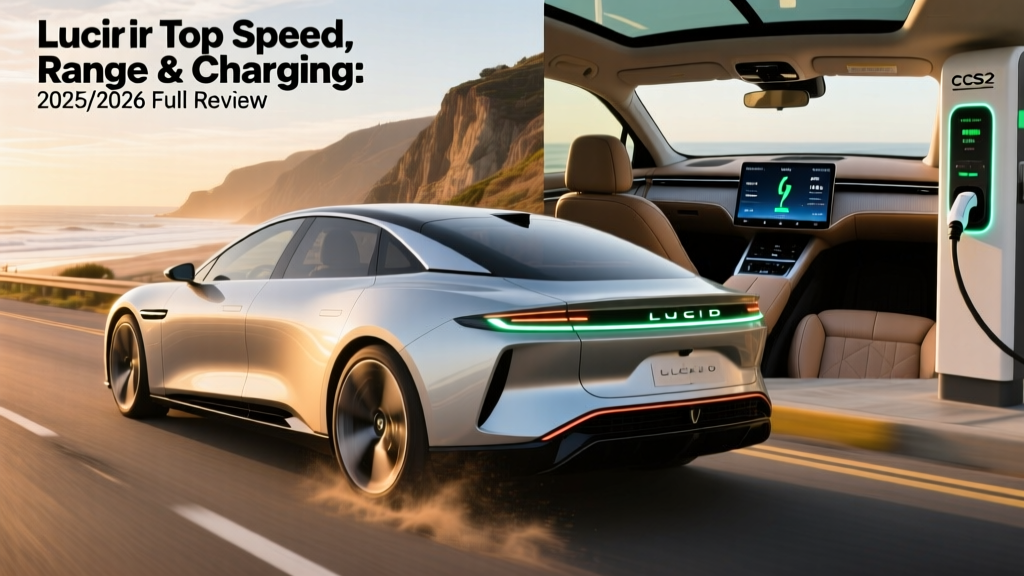
The Lucid Air remains the efficiency benchmark in the luxury electric sedan segment. While Tesla, Mercedes-Benz, and BMW fight for attention with horsepower wars and screen real estate, Lucid's engineering team in Newark, California has focused on what matters most to EV ownership: squeezing more miles from every kilowatt-hour. The result is a sedan that achieves up to 516 miles of EPA range in its highest-spec form — a number no production EV has matched as of early 2026 — while offering one of the fastest DC charging architectures available.
But range stickers don't tell the whole story. Real-world highway driving, cold-weather performance, charging infrastructure access, and the shifting landscape of federal tax credits all determine whether the Air is the right luxury EV for your garage. This review breaks down every spec that matters, from battery chemistry to the nuances of the 900-volt electrical architecture, and helps you decide which trim (if any) makes financial sense under current IRS §30D rules.
2024 Lucid Air at a Glance: Trim-by-Trim Specs
| Spec | Pure RWD | Touring | Grand Touring | Sapphire |
|---|---|---|---|---|
| Base MSRP | $69,900 | $77,900 | $109,900 | $249,000 |
| EPA Range | 419 mi | 425 mi | 516 mi | 427 mi |
| Battery (usable) | 88 kWh | 112 kWh | 112 kWh | 118 kWh |
| Chemistry | NMC | NMC | NMC | NMC |
| Drivetrain | RWD (single motor) | AWD (dual motor) | AWD (dual motor) | AWD (tri-motor) |
| Horsepower | 430 hp | 620 hp | 819 hp | 1,234 hp |
| 0–60 mph | 5.0 sec | 3.4 sec | 3.0 sec | 1.89 sec |
| MPGe (combined) | 146 MPGe | 131 MPGe | 131 MPGe | 109 MPGe |
| Efficiency | 23 kWh/100mi | 26 kWh/100mi | 26 kWh/100mi | 31 kWh/100mi |
| Max DC Charge Rate | 220 kW | 300 kW | 300 kW | 300 kW |
| 10–80% DC Time | ~25 min | ~20 min | ~20 min | ~22 min |
| Level 2 Rate | 19.2 kW | 19.2 kW | 19.2 kW | 19.2 kW |
All trims share Lucid's proprietary 900-volt electrical architecture and Wunderbox powertrain packaging. The Pure RWD uses a single rear motor; Touring and Grand Touring use a dual-motor AWD layout; the Sapphire adds a third rear motor for its staggering 1,234 hp output. Battery chemistry across the lineup is nickel-manganese-cobalt (NMC), optimized for energy density over the cycle-life advantages of LFP.
Range: EPA Stickers vs. Real-World Reality
The Grand Touring's 516-mile EPA rating — achieved with 19-inch wheels — stands as the highest of any production EV. Switch to the available 21-inch wheels and the rating drops to 476 miles, a reminder that rolling resistance and aerodynamic drag matter enormously at this efficiency level. According to fueleconomy.gov, the Grand Touring consumes just 26 kWh per 100 miles, a figure that rivals many compact EVs despite the Air's 5,000+ lb curb weight.
Lucid achieves this through a combination of factors: the 900V architecture reduces resistive losses in the powertrain, the miniaturized drive units (each roughly the size of a carry-on bag) free up cabin and aero space, and the sedan's 0.197 coefficient of drag is among the lowest of any production car. In practical terms, this means fewer charging stops on road trips and lower electricity costs per mile — roughly $0.04–0.06 per mile at average US residential electricity rates, compared to $0.12–0.15 per mile for a comparable gas-powered luxury sedan.
Charging: 900V Architecture and Real Charge Curves
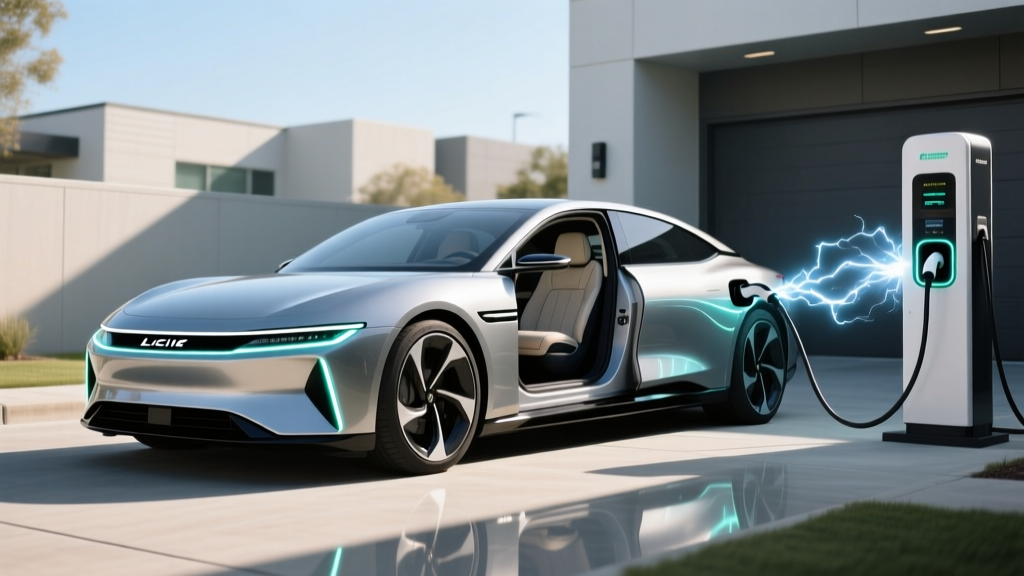
The Air's 900-volt battery architecture enables DC fast charging at up to 300 kW on the Touring, Grand Touring, and Sapphire trims (the Pure RWD tops out at 220 kW). At a compatible 350 kW charger — such as Electrify America's latest stations — the Grand Touring can add approximately 200 miles of range in 12 minutes under ideal conditions.
| Charging Level | Power | Miles Added Per Hour | Notes |
|---|---|---|---|
| Level 1 (120V) | 1.4 kW | ~4 mi/hr | Emergency/trickle only |
| Level 2 (240V, 48A) | 11.5 kW | ~38 mi/hr | Standard home charging |
| Level 2 (240V, 80A) | 19.2 kW | ~63 mi/hr | Requires hardwired 100A circuit |
| DC Fast (Pure RWD) | 220 kW peak | ~700 mi/hr (peak) | 10–80% in ~25 min |
| DC Fast (Touring/GT) | 300 kW peak | ~1,000 mi/hr (peak) | 10–80% in ~20 min |
Charging curve reality: The 300 kW peak rate is not sustained across the entire session. Like all EVs, the Air's charge rate tapers as state of charge increases. Expect peak rates between 10–40% SoC, with a significant taper beginning around 60% and a steep drop above 80%. This is normal behavior governed by battery management system (BMS) protocols to protect cell longevity. A full 10–80% session takes roughly 20 minutes at a capable charger, but a 10–95% session can stretch to 40+ minutes due to the taper.
The Air uses a CCS1 connector for DC fast charging. As of 2024, Lucid has not adopted the NACS (Tesla) connector, though an adapter for Tesla Supercharger access was announced. Home charging at the full 19.2 kW Level 2 rate requires a hardwired wall connector on a dedicated 100-amp circuit — a significant electrical upgrade for many homes. Most owners will install a 48-amp (11.5 kW) Level 2 charger, which still replenishes the Grand Touring's full battery in roughly 10 hours, easily covering overnight charging needs.
Performance, Drivetrain, and the Sapphire Anomaly
Even the entry-level Pure RWD delivers 430 hp and a 5.0-second 0–60 time — quicker than most gas-powered luxury sedans in its price range. The dual-motor Touring drops that to 3.4 seconds with 620 hp, while the Grand Touring's 819 hp achieves 3.0 seconds flat.
The Sapphire exists in a category of its own. With 1,234 hp from its tri-motor setup (one front, two rear), it hits 60 mph in 1.89 seconds — making it one of the fastest-accelerating production sedans ever built, rivaling hypercars at a fraction of the price. It also features track-oriented suspension tuning, carbon-ceramic brakes, and a dedicated Sprint mode. However, the Sapphire's 427-mile EPA range and 31 kWh/100mi efficiency reflect the cost of that performance.
All trims feature adaptive air suspension with adjustable ride height, torque vectoring on AWD models, and Lucid's regenerative braking system that supports one-pedal driving. The steering is precise but weighted toward comfort rather than the sharp feedback of a BMW M5 — a deliberate choice for the luxury GT market Lucid targets.
Interior, Cargo, and Technology
The Air's cabin is a study in minimalist luxury. A 34-inch curved glass cockpit display stretches across the dashboard, combining instrument cluster, infotainment, and navigation into a single panel. Below it, a retractable lower touchscreen handles climate and secondary controls, sliding away to reveal additional storage when not in use.
Passenger space: Rear legroom measures 37.6 inches — competitive with the Mercedes S-Class and significantly more than the Tesla Model S (35.4 in). The flat floor (no transmission tunnel) makes the middle rear seat genuinely usable for adults on shorter trips.
Cargo capacity: The trunk offers 22.1 cubic feet behind the rear seats — larger than most luxury sedans thanks to the Air's liftback design. The front trunk (frunk) adds approximately 3.5 cubic feet, enough for a charging cable bag and small duffel.
Driver assistance: Lucid's DreamDrive Pro system uses 32 sensors including LiDAR (on Touring and above) and offers adaptive cruise control, lane-keeping, automatic emergency braking, and highway assist. This is an SAE Level 2 system — the driver must remain attentive and keep hands on the wheel. It is not autonomous driving, and Lucid does not market it as such. The LiDAR-equipped trims offer strong object detection, but the system's highway lane-change execution and navigation-based speed adjustment lag behind Tesla's Autopilot/FSD in refinement, though Lucid has been improving DreamDrive through over-the-air updates.
Wireless Apple CarPlay and Android Auto are standard, along with a 21-speaker Surreal Sound Pro audio system (13 speakers on Pure). Over-the-air updates continue to add features post-purchase.
Pricing, Tax Credits, and Total Cost
| Trim | Base MSRP | Federal §30D Credit | Est. Out-of-Pocket (before state incentives) |
|---|---|---|---|
| Pure RWD | $69,900 | $0 (exceeds $55K sedan cap) | $69,900 |
| Touring | $77,900 | $0 | $77,900 |
| Grand Touring | $109,900 | $0 | $109,900 |
| Sapphire | $249,000 | $0 | $249,000 |
Destination charges add approximately $1,500. Popular options include the 21-inch wheels ($2,500–$4,500 depending on trim), Surreal Sound Pro audio upgrade, and Lucid's DreamDrive Pro package (standard on Touring and above, optional on Pure). A well-equipped Grand Touring with 21-inch wheels typically lands around $118,000–$122,000 before any state incentives.
Total cost of ownership: Despite the high purchase price, the Air's efficiency delivers meaningful fuel savings. At 26 kWh/100mi and $0.14/kWh average residential electricity, the Grand Touring costs roughly $3.64 per 100 miles to fuel at home. A comparable BMW 7 Series (22 mpg combined) at $3.80/gallon costs $17.27 per 100 miles — a difference of nearly $14 per 100 miles, or $2,100 over 15,000 annual miles. Over five years, fuel savings can offset $10,000+ of the purchase price gap versus a gas competitor.
Warranty and Long-Term Ownership
Lucid provides the following warranty coverage:
- Basic vehicle: 4 years / 50,000 miles
- Battery and powertrain: 8 years / 100,000 miles (whichever comes first)
- Battery capacity retention: Lucid warrants that the high-voltage battery will retain at least 70% of its original capacity over the 8-year/100,000-mile period
The 70% capacity retention threshold is industry-standard, matching Tesla, BMW, and Mercedes-Benz. Real-world degradation data for Lucid's NMC cells is still accumulating given the Air's 2021 launch, but early owner reports and telematics data suggest approximately 5–8% degradation over the first 50,000 miles under normal use patterns — consistent with well-managed NMC packs. Battery replacement cost, should it be needed out of warranty, is estimated at $15,000–$25,000 depending on the pack size, though this figure should decrease as cell costs continue declining.
Lucid's service network remains smaller than Tesla's or legacy luxury brands. The company operates approximately 20 service centers and employs mobile service vans in major metro areas. Owners in rural markets may face longer wait times for physical repairs, though OTA updates resolve many software-related issues remotely.
Pros, Cons, and Who Should Buy
- Class-leading EPA range (516 mi Grand Touring)
- Exceptional efficiency (26 kWh/100mi)
- 900V architecture enables 300 kW DC charging
- Spacious rear seat and large liftback cargo area
- Refined ride quality with adaptive air suspension
- Competitive pricing at Pure RWD trim level
- No federal tax credit eligibility (MSRP cap)
- Limited service center network vs. competitors
- DreamDrive ADAS trails Tesla/BMW in refinement
- Infotainment learning curve for new users
- 21-inch wheels significantly reduce range
- CCS-only (no native NACS) as of 2024
- Road-trip enthusiasts: The Grand Touring's 516-mile range and fast charging make it the best luxury EV for long-distance driving with minimal stops.
- Efficiency-focused luxury buyers: If you want the most miles per kWh in a premium package, the Air has no equal.
- Family sedan buyers: Genuine five-adult seating and 22+ cu ft of cargo make this a practical daily driver.
- Not ideal for: Buyers who need a robust dealer/service network in rural areas, those seeking the cheapest entry to luxury EVs (consider the Pure RWD carefully), or track-day regulars who should look at the Porsche Taycan or Tesla Model S Plaid for more established track support.
Frequently Asked Questions
What is the real-world range of the 2024 Lucid Air?
The Grand Touring's EPA-rated 516 miles translates to approximately 400–440 miles in real-world highway driving at 70–80 mph. In cold weather (below 32°F), expect 350–370 miles. The Pure RWD's 419-mile EPA rating yields roughly 340–360 miles highway. These figures still lead the luxury EV segment, but plan charging stops conservatively on winter road trips.
How fast does the 2024 Lucid Air charge at home and on the road?
On a DC fast charger rated at 350 kW, the Touring and Grand Touring can peak at 300 kW and charge from 10–80% in approximately 20 minutes. At home on a 48-amp Level 2 charger (11.5 kW), a full charge takes about 10 hours for the 112 kWh battery. The maximum Level 2 rate is 19.2 kW but requires a dedicated 100-amp circuit — a significant home electrical upgrade.
Does the 2024 Lucid Air qualify for the federal EV tax credit?
No. Under current IRS §30D rules, new electric sedans must have an MSRP at or below $55,000 to qualify for the $7,500 credit. Every Lucid Air trim exceeds this cap. Buyers should investigate state-level incentives and consult a tax professional for any applicable credits. Verify current rules at irs.gov.
Is the Lucid Air worth buying over the Tesla Model S or Mercedes EQS?
The Air Grand Touring offers more EPA range (516 vs. Model S's 402 mi and EQS 450's 390 mi) and better efficiency than either competitor. The Model S wins on charging network access (Supercharger) and software polish; the EQS wins on interior material luxury and dealer service network breadth. If range and efficiency are your top priorities, the Air is the strongest choice. If service accessibility or software ecosystem matter more, the alternatives have merits.
What is the biggest drawback of owning a Lucid Air?
The limited service network is the most commonly cited concern. With roughly 20 service centers nationally, owners outside major metro areas may face logistical challenges for physical repairs. Lucid's mobile service program mitigates this somewhat, and OTA updates handle many issues remotely, but it remains a consideration versus the extensive service footprints of Mercedes, BMW, or Tesla.
How does the Lucid Air handle in cold weather?
The Air's heat pump system (standard on all trims) helps preserve range and cabin heating efficiency in cold conditions. Expect 20–30% range reduction in sustained sub-freezing temperatures, consistent with industry norms for NMC batteries. Battery preconditioning is available when navigating to a DC fast charger, warming the pack for optimal charge speeds. Garage-kept vehicles in cold climates see less degradation impact.