The Kona Electric Lease Opportunity in Orange County
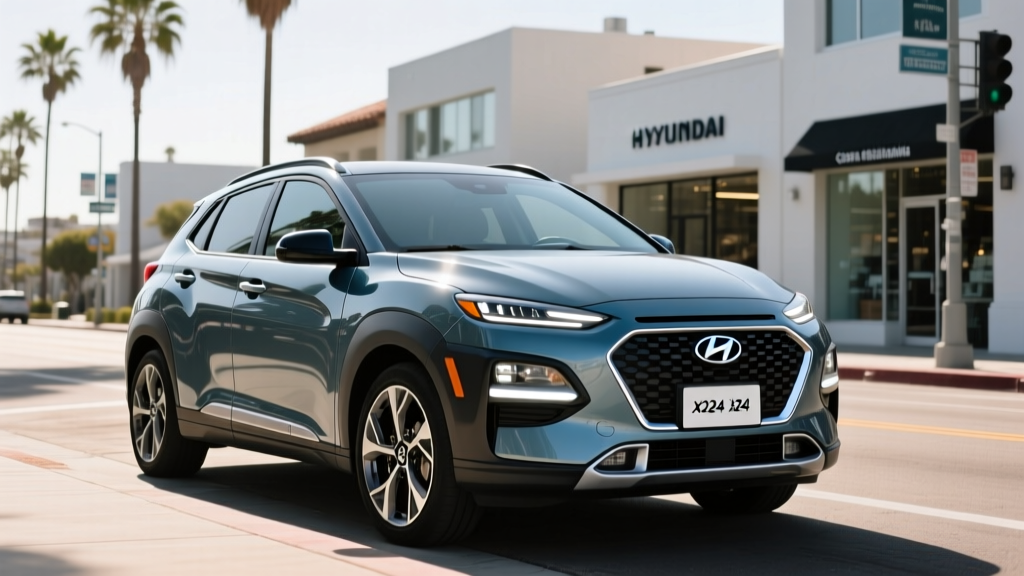
If you've been searching for a 2024 Hyundai Kona Electric for lease in Costa Mesa, you're looking at one of the more practical subcompact EVs on the market. The redesigned Kona Electric (SX2 generation) delivers 261 miles of EPA-rated range, a 64.8 kWh battery pack, and 201 horsepower — all in a package with an MSRP starting at $32,675. But the real question isn't the sticker price; it's what ownership actually costs over five years, especially in a coastal Southern California market where electricity rates, insurance premiums, and local incentives all factor into the equation.
Costa Mesa sits in the Southern California Edison (SCE) service territory, which means access to some of the better EV time-of-use (TOU) rates in the state — and proximity to one of the densest public charging networks in the country. Let's run the numbers on what it really costs to drive this vehicle, from the monthly lease payment to the long-term fuel and maintenance savings versus a comparable gas crossover.
| Spec | Value |
|---|---|
| EPA Range | 261 miles |
| Real-World Range (highway/mixed) | ~215–235 miles |
| Battery Capacity | 64.8 kWh (NMC chemistry) |
| Motor Output | 150 kW / 201 hp / 184 lb-ft torque |
| 0–60 mph | ~7.5 seconds |
| DC Fast Charge Peak | ~100 kW (10–80% in ~43 min) |
| Level 2 AC Charge Rate | 10.9 kW (~7 hours 10–100%) |
| MPGe (Combined) | 110 MPGe |
| Efficiency | 30 kWh/100 miles |
| Base MSRP (SE) | $32,675 |
| Battery/Powertrain Warranty | 10 yr / 100,000 mi |
Federal Tax Credit: Does the Kona Electric Qualify?
The federal EV tax credit under IRS §30D offers up to $7,500 for qualifying new clean vehicles. However, eligibility is not automatic — it depends on a stack of requirements that trip up many buyers.
- MSRP Cap: Vehicle must have an MSRP ≤ $55,000 for SUVs/wagons (the Kona Electric qualifies at $32,675–$41,075 depending on trim).
- Buyer Income Cap: Adjusted gross income must not exceed $150,000 (single), $225,000 (head of household), or $300,000 (married filing jointly).
- Final Assembly: Vehicle must undergo final assembly in North America. Note: The 2024 Kona Electric is assembled in South Korea, which disqualifies it from the purchase/lease purchase credit under current rules.
- Battery Sourcing: Critical minerals and battery component requirements phase in annually. Half the credit ($3,750) requires meeting critical-mineral thresholds; the other half requires battery-component thresholds.
- Point-of-Sale Transfer: Eligible buyers can transfer the credit to the dealer at purchase, reducing the sale price directly — but only if the vehicle qualifies.
Lease loophole: Here's where it gets interesting for Costa Mesa shoppers. Under the "commercial clean vehicle credit" (§45W), vehicles leased through a financing entity can qualify for a $7,500 credit that passes from the lessor to the lessee as a capitalized-cost reduction — regardless of where the vehicle was assembled. Many Hyundai dealers in Orange County structure their Kona Electric leases to take advantage of this, effectively lowering the lease payment. Always confirm with the dealer that the lease is structured as a "pass-through" of the commercial credit, as this is not guaranteed and depends on the lessor (typically Hyundai Motor Finance).
Five-Year Total Cost of Ownership
To understand the true economics of leasing or owning a Kona Electric in Costa Mesa, we modeled a 5-year/75,000-mile scenario using local utility rates, California insurance averages, and maintenance data from Hyundai's service schedule.
| Category | Kona Electric | Gas Crossover (e.g., Kia Seltos 2.5L) |
|---|---|---|
| Purchase/Lease (net of incentives) | ~$28,500* | ~$27,500 |
| Energy/Fuel (75,000 mi) | $3,375** | $8,440*** |
| Insurance (5 years) | $11,250 | $8,750 |
| Maintenance (5 years) | $1,200 | $3,800 |
| Depreciation (est.) | ~$14,200 | ~$10,800 |
| 5-Year Total | ~$58,525 | ~$59,290 |
*Assumes lease-credit pass-through of $7,500 applied. **Based on SCE TOU rate of $0.15/kWh avg, 30 kWh/100mi. ***Based on $4.65/gal, 28 MPG combined.
The numbers are close — and that's the honest story. The Kona Electric wins on energy and maintenance, but loses ground on insurance and depreciation. The lease structure and available incentives tip the balance in the EV's favor for most Costa Mesa drivers, especially those with home charging and access to off-peak electricity rates.
Charging vs. Gas: The Per-Mile Cost Reality
| Scenario | Kona Electric | Gas Crossover (28 MPG) |
|---|---|---|
| Home charging (SCE TOU off-peak, ~$0.13/kWh) | $0.039/mi | — |
| Home charging (SCE standard, ~$0.25/kWh) | $0.075/mi | — |
| Public DC fast charging (~$0.45/kWh avg) | $0.135/mi | — |
| Gasoline ($4.65/gal, Orange County avg) | — | $0.166/mi |
At home on a time-of-use plan, the Kona Electric costs roughly $0.04 to $0.08 per mile to "fuel" — compared to $0.17 per mile for a 28 MPG gas crossover at current Orange County gas prices. That's a 50–75% per-mile savings. The catch: this only holds if you charge at home. Exclusive reliance on public DC fast chargers erodes most of the cost advantage, as Electrify America and EVgo stations in the Costa Mesa/South Coast Metro area typically charge $0.38–$0.52 per kWh.
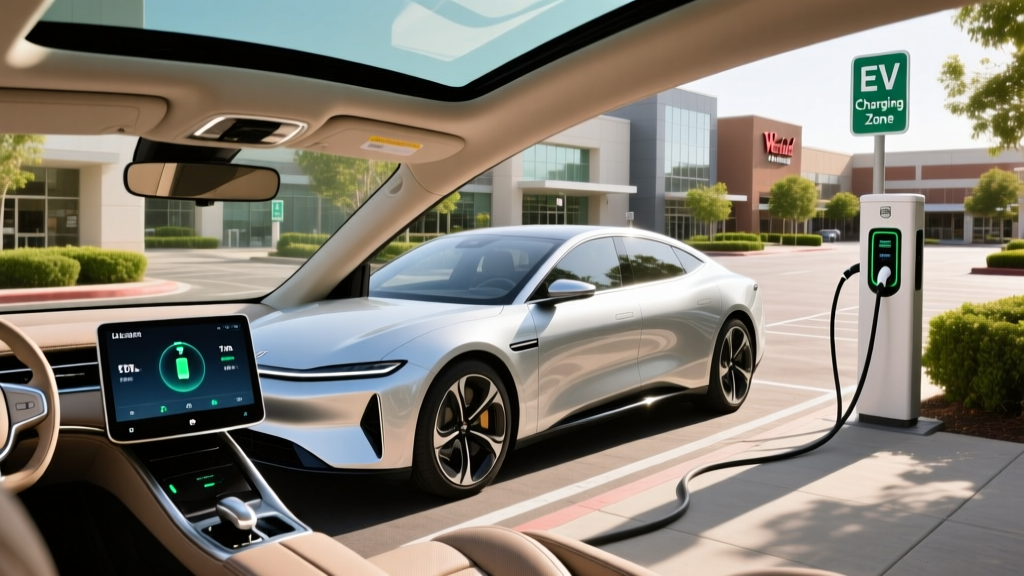
The Kona Electric's ~100 kW peak DC fast-charge rate means a 10–80% session takes approximately 43 minutes — slower than Hyundai's Ioniq 5 (which peaks at ~240 kW on 800V architecture). For road trips along the I-5 or PCH, plan your stops accordingly. For daily driving in Costa Mesa, overnight Level 2 home charging is more than sufficient.
Maintenance Savings: Where EVs Actually Shine
| Service Item | Kona Electric | Gas Crossover |
|---|---|---|
| Oil changes | $0 (none required) | ~$750 (15 changes @ $50) |
| Brake pads/rotors | ~$200 (regen extends life) | ~$900 (2–3 replacements) |
| Cabin air filter | ~$150 | ~$150 |
| Tire rotation | ~$200 | ~$200 |
| Coolant/flush | ~$100 | ~$250 |
| Transmission fluid | $0 (sealed reduction gear) | ~$200 |
| Tire replacement | ~$800 (EV-specific tires) | ~$600 |
| Total | ~$1,450 | ~$3,050 |
The Kona Electric eliminates oil changes entirely, and regenerative braking dramatically extends brake pad life — many EV owners report original brake pads lasting 80,000+ miles. The one area where EVs can cost more is tires: the instant torque and heavier curb weight (~3,800 lbs) accelerate tire wear slightly. Budget for EV-optimized tires like the Hankook iON evo or Michelin e.Primacy when replacement time comes.
Insurance Cost: The Uncomfortable Truth
EV insurance premiums run 15–30% higher than equivalent gas vehicles, and the Kona Electric is no exception. In Orange County, expect annual premiums in the $2,000–$2,500 range for a driver with a clean record — roughly $500 more per year than a gas subcompact crossover.
Why the premium? Insurers price based on repair-cost data, and EVs present several cost drivers:
- Battery replacement risk: Even minor underbody damage can total an EV if the battery pack is compromised.
- Specialized repair: High-voltage systems require certified technicians, and fewer shops are equipped for EV collision repair.
- Higher parts costs: EV-specific components (power electronics, thermal management) carry premium pricing.
- Total-loss frequency: Insurers are more likely to declare an EV a total loss after collision damage due to battery-safety protocols.
Shop around — companies like GEICO, State Farm, and specialty EV insurers like Lemonade have started offering more competitive EV rates. Bundling home/auto and maintaining a clean driving record can close the gap significantly.
Depreciation and Resale Value
EV depreciation has been steeper than gas vehicles in recent years, driven by rapid price cuts from Tesla, improving new-EV affordability, and consumer uncertainty about long-term battery health. The Kona Electric is estimated to retain roughly 45–50% of its value after five years — compared to 55–60% for a comparable gas crossover.
Several factors work in the Kona Electric's favor specifically:
- Hyundai's 10-year/100,000-mile battery warranty provides downstream buyer confidence.
- Hyundai's brand momentum in the EV space (Ioniq 5, Ioniq 6) has improved perception of the Kona Electric.
- NACS adapter access: Hyundai now provides Tesla Supercharger adapters, expanding the charging network and boosting long-term utility.
If you lease rather than purchase, depreciation becomes the lessor's problem — which is one reason leasing can be the smarter play for EVs during a period of rapid technology evolution and shifting market values.
California and Local Incentives for Costa Mesa Buyers
- Clean Vehicle Rebate Project (CVRP): California's $2,000 rebate for new EV purchases/leases — subject to funding availability and income caps. Check energy.ca.gov for current status.
- Southern California Edison (SCE) EV Rate Plan: SCE offers time-of-use rate plans (e.g., TOU-D-PRIME) that can reduce home charging costs to as low as $0.08–$0.13/kWh during off-peak hours (overnight).
- SCE Charge Ready Program: Rebates for residential Level 2 charger installation — up to $1,500 in some cases, depending on panel upgrade requirements.
- South Coast AQMD incentives: Occasional clean-vehicle incentive programs for Orange County residents; availability varies.
- CARAT / Clean Cars 4 All: Enhanced rebates for lower-income households replacing older gas vehicles — up to $9,500 in some cases when stacking programs.
These incentives stack with the federal lease-credit pass-through, potentially reducing the effective acquisition cost of a Kona Electric lease by $9,000–$11,000 for qualifying buyers.
Is the Kona Electric Lease Right for You?
- You have access to home or workplace Level 2 charging.
- Your daily commute is under 100 miles round-trip.
- You want to avoid long-term depreciation risk during a rapidly evolving EV market.
- You qualify for the lease-credit pass-through and local incentives.
- You value Hyundai's 10-year battery warranty and want a practical daily driver with modern ADAS features.
- You lack reliable home charging and your area has limited public infrastructure.
- You regularly drive 250+ miles in a single day without time for charging stops.
- Your insurance quotes come in significantly above average, eroding the fuel savings.
- You prefer the long-term flexibility of outright ownership in a period of uncertain EV resale values.
The 2024 Hyundai Kona Electric occupies a specific niche: it's a practical, efficient, well-equipped subcompact EV that makes the most financial sense when paired with home charging, local incentives, and a lease structure that captures the commercial credit pass-through. In a market like Costa Mesa — with mild weather, abundant charging, and favorable electricity rates — the math works. Just be sure to run your own numbers with a dealer who understands the lease-credit structure.
Frequently Asked Questions
How much does it really cost to own an EV over 5 years?
For the 2024 Kona Electric in Costa Mesa, our model shows a 5-year total cost of approximately $58,500 including purchase, energy, insurance, maintenance, and depreciation. This is comparable to or slightly lower than a gas crossover when incentives are applied — with the savings concentrated in fuel and maintenance categories.
Do I qualify for the federal EV tax credit on the Kona Electric?
For an outright purchase, the 2024 Kona Electric likely does NOT qualify due to its South Korean assembly (violating the North American final-assembly requirement). However, when leased through Hyundai Motor Finance, the commercial clean vehicle credit (§45W) can pass a $7,500 benefit to you as a capitalized-cost reduction regardless of assembly location. Confirm this structure with your dealer before signing.
How much do I save on fuel and maintenance vs. a gas car?
Based on 75,000 miles over five years in Costa Mesa, expect to save approximately $5,000 on energy (home charging on TOU rates vs. gasoline) and $1,600 on maintenance (no oil changes, reduced brake wear). Total operating savings: roughly $6,600 before accounting for higher insurance costs.
Are EVs more expensive to insure?
Yes — typically 15–30% more than comparable gas vehicles. For the Kona Electric in Orange County, expect an annual premium premium of ~$500 more than a gas crossover. The reasons include higher repair costs, battery-replacement risk, and a limited pool of certified EV repair shops. Shopping multiple insurers can narrow the gap.
How well do EVs hold their value?
EV depreciation has been steeper than gas vehicles in 2023–2025, with many models retaining 40–50% of value after five years vs. 55–65% for gas counterparts. The Kona Electric benefits from Hyundai's strong battery warranty and growing brand credibility in EVs, but leasing transfers the depreciation risk to the lessor — a significant advantage during this period of rapid EV market evolution.
What's the real-world range of the Kona Electric in Southern California?
With the EPA rating of 261 miles, expect 230–250 miles in Costa Mesa's mild climate during mixed driving. Highway-only driving at 70+ mph will yield around 215–235 miles. Cold-weather range loss is minimal in this region — you'll rarely see temperatures that significantly impact the battery.