Quick Answer: Is the 2024 Kia Niro EV Worth Buying in 2026?
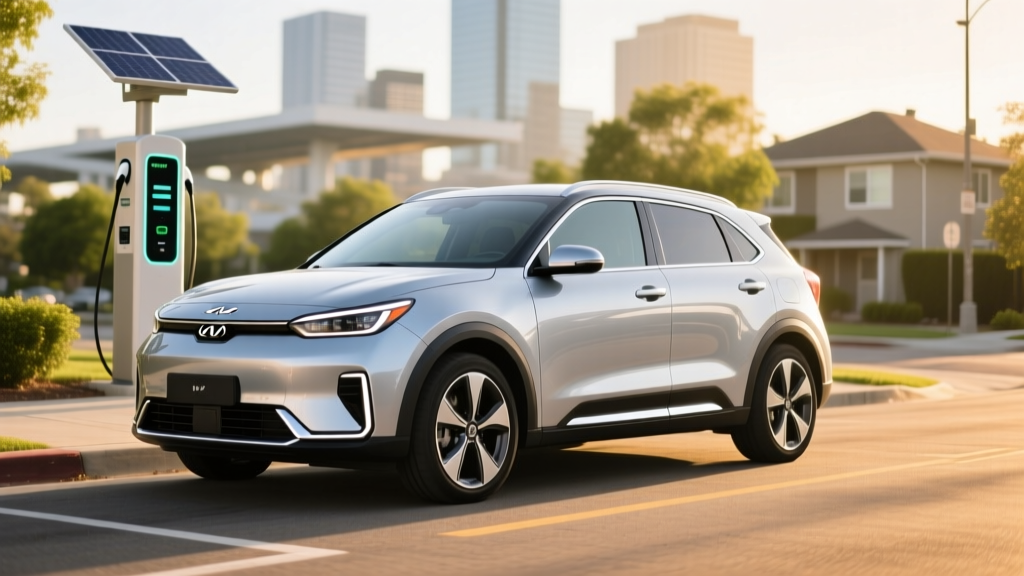
The 2024 Kia Niro EV delivers an EPA-estimated 239 miles of range from a 64.8 kWh battery, peaks at 85 kW DC fast charging (10–80% in roughly 45 minutes), and starts around $39,600 MSRP. In real-world mixed driving, expect 200–215 miles; in cold weather or sustained highway speeds, that drops to 170–190 miles. It qualifies for up to $3,750 of the federal §30D tax credit (subject to income, sourcing, and MSRP caps). If you can charge at home and your daily commute is under 100 miles round-trip, the Niro EV offers low running costs and strong warranty coverage. If you frequently road-trip 300+ miles or lack reliable home charging, the Niro Hybrid or a longer-range EV may serve you better.
2024 Kia Niro EV: Key Specifications at a Glance
| Specification | 2024 Kia Niro EV (Wind / Wave) |
|---|---|
| EPA Range | 239 miles |
| Battery (Usable) | 64.8 kWh, NMC chemistry |
| Motor Output | 201 hp / 291 lb-ft torque |
| 0–60 mph | ~7.8 seconds |
| DC Fast Charge Peak | 85 kW (CCS1) |
| 10–80% DCFC Time | ~45 minutes |
| Level 2 Charge Rate | 11 kW onboard charger |
| Level 2 10–100% Time | ~7 hours (240V / 48A) |
| Efficiency | 113 MPGe combined (29 kWh/100 mi) |
| Cargo Volume | 19.4 cu ft (rear seats up) / 52.8 cu ft (folded) |
| Base MSRP (Wind) | $39,600 |
| Base MSRP (Wave) | $44,100 |
| Battery Warranty | 10 years / 100,000 miles |
| Federal Tax Credit (§30D) | Up to $3,750 (sourcing-dependent) |
Source: fueleconomy.gov, Kia Motors America. Tax credit eligibility varies by buyer income, battery sourcing, and point-of-sale rules. Consult IRS §30D guidelines.
Real-World Range: What the EPA Sticker Doesn't Tell You
EPA Sticker: 239 miles
Real-World Expectation: 200–215 miles (mixed city/highway, moderate temps)
Highway-Heavy (70+ mph sustained): ~180–195 miles
Cold Weather (below 32°F): ~160–180 miles
The Niro EV's 64.8 kWh NMC battery delivers its best efficiency in city driving, where regenerative braking recaptures energy at every stop. On a 250-mile highway trip at 75 mph in 40°F weather with the heat running, you will likely arrive with roughly 15–20% state of charge remaining — enough buffer, but not a margin for detours.
Kia includes a heat pump on the 2024 Niro EV, which helps preserve range in cold climates compared to resistive cabin heating. However, NMC batteries inherently lose 20–30% of usable capacity in sub-freezing temperatures. If you live in the upper Midwest or Northeast, plan for 170 miles of practical winter range and charge more frequently.
The Niro EV does not support battery preconditioning for DC fast charging in the way that Hyundai's Ioniq 5 or Tesla vehicles do. This means cold-soaked batteries will charge noticeably slower at public DCFC stations in winter — potentially adding 15–20 minutes to a 10–80% session until the pack warms through use.
Charging Speed and Infrastructure: The 85 kW Reality
The Niro EV's peak DC fast-charge rate of 85 kW is modest by 2026 standards, where competitors like the Hyundai Ioniq 5 (240 kW) and Tesla Model Y (250 kW) charge significantly faster. Here is what charging actually looks like across levels:
| Charging Level | Power (kW) | Miles Added per Hour | Typical Use Case |
|---|---|---|---|
| Level 1 (120V household) | 1.4 kW | ~5 mi/hr | Overnight top-off, emergencies |
| Level 2 (240V home charger, 48A) | 11 kW | ~38 mi/hr | Daily home charging (full charge in ~7 hrs) |
| DC Fast Charge (peak) | 85 kW | ~240 mi/hr (at peak) | Road trips; 10–80% in ~45 min |
Charging curve reality: The 85 kW peak only holds between roughly 10–40% state of charge. From 40–60%, the rate tapers to approximately 60 kW, and from 60–80% it drops further to around 40 kW. Above 80%, charging slows dramatically to protect the battery — a session from 80–100% can take as long as the 10–80% portion. For road trips, plan to charge to 80% and move on; waiting for a full charge at a DCFC station is inefficient.
The 2024 Niro EV uses the CCS1 connector. As Kia transitions to NACS for newer models, CCS1 infrastructure remains widely available through Electrify America, EVgo, and ChargePoint networks, but the long-term trend favors NACS. Adapters are available, though they add a step at non-Tesla CCS stations and may slightly reduce peak charge rates.
2024 Kia Niro EV vs. Gas Niro vs. Niro Hybrid: Cost Comparison
For buyers cross-shopping the Niro lineup, the EV's economics depend heavily on your driving volume, electricity rates, and whether you can charge at home. Here is a 5-year ownership projection assuming 12,000 miles/year, $3.50/gallon gas, and $0.14/kWh electricity:
| Cost Factor (5 Years / 60,000 mi) | Niro EV (Wind) | Niro Hybrid (EX) | Niro Gas (LX) |
|---|---|---|---|
| Purchase Price (MSRP) | $39,600 | $29,490 | $27,490 |
| Est. Federal Tax Credit | −$3,750 | $0 | $0 |
| Effective Purchase Price | $35,850 | $29,490 | $27,490 |
| Fuel / Energy Cost (5 yr) | $2,520 | $4,200 | $6,300 |
| Maintenance (5 yr) | $1,200 | $2,800 | $3,200 |
| Insurance (5 yr est.) | $7,800 | $6,600 | $6,200 |
| 5-Year Total Cost | $47,370 | $43,090 | $43,190 |
Notes: EV fuel cost based on 29 kWh/100 mi × $0.14/kWh. Hybrid assumes 53 MPG combined; gas assumes 36 MPG combined. Maintenance for EV excludes oil changes, spark plugs, and transmission service. Insurance estimates are averages — EV premiums run 15–25% higher. State/local incentives not included. Actual costs vary by region and driving habits.
The Niro EV narrows the cost gap through dramatically lower fueling and maintenance expenses. Over five years, you save roughly $3,780 on energy and $2,000 on maintenance compared to the gas model. However, the higher purchase price, elevated insurance premiums, and faster depreciation (EVs are still adjusting in the resale market) mean the EV does not fully break even at 60,000 miles. At 100,000 miles or with cheaper home solar charging, the math tips further in the EV's favor.
Federal Tax Credit: What You Actually Qualify For
The 2024 Niro EV is eligible for a partial federal tax credit under IRS §30D. The exact amount depends on battery critical-mineral and component sourcing, which Kia adjusts over time. Current expectations:
- Maximum credit: $3,750 (partial — meets one of two sourcing requirements)
- MSRP cap: Vehicle MSRP must be ≤ $55,000 (Niro EV qualifies at both trims)
- Buyer income cap: AGI ≤ $150,000 (single) / $300,000 (joint filers)
- Point-of-sale transfer: Available — credit can be applied at the dealer to reduce the purchase price directly
- Battery sourcing: Kia sources from SK On; critical-mineral and component requirements shift annually — verify current-year status with your dealer
Always confirm eligibility with a tax professional and check IRS clean vehicle credit pages before purchasing. Rules change frequently.
Common Misconceptions About the Niro EV
| Myth | Fact |
|---|---|
| "239 miles means I can drive 239 miles before running out." | EPA range is a lab estimate. Real-world highway and cold-weather driving yield 170–215 miles. Always plan with a 15–20% buffer. |
| "I need a special electrical panel upgrade for home charging." | Most homes with a 200-amp panel can support a 48-amp Level 2 charger (11 kW) on a dedicated 60-amp circuit. Older homes with 100-amp panels may need a $1,500–$3,000 upgrade. Have a licensed electrician assess your panel before buying equipment. |
| "The battery will need replacing in 5 years." | Kia's 10-year/100,000-mile battery warranty covers capacity below 70%. NMC batteries in the Niro EV typically degrade 8–12% over 100,000 miles based on industry fleet data. Replacement is rarely needed within the warranty period. |
| "EVs cost more to insure, so the savings disappear." | Insurance is 15–25% higher for EVs, but fuel and maintenance savings of $5,000–$6,000 over 5 years usually exceed the insurance premium difference. |
| "I can road-trip anywhere with a Niro EV." | The 85 kW charge rate and 239-mile range mean road trips are doable but require more planning than a 300+ mile EV. Charging stops take ~45 minutes. Rural areas with sparse DCFC infrastructure remain a challenge. |
Who Should Buy the 2024 Kia Niro EV?
Decision Framework
Choose the Niro EV if:
- You have access to Level 2 home charging (garage or driveway with 240V outlet)
- Your daily commute is under 80 miles round-trip
- You want low maintenance and low per-mile energy costs
- You value Kia's 10-year/100,000-mile battery and powertrain warranty
- You qualify for the federal tax credit (income within caps)
- You primarily drive in moderate climates or can accept winter range reduction
Choose the Niro Hybrid instead if:
- You cannot install a home charger (apartment, street parking, no 240V access)
- You regularly drive 300+ miles between stops and don't want to plan DCFC routes
- Upfront cost is a primary concern (Hybrid starts ~$10,000 less)
- You live in an area with limited public charging infrastructure
Look at a longer-range EV (Ioniq 5, Model Y, EV6) if:
- You road-trip frequently and want 300+ mile range with 15–20 minute charge stops
- You need faster DC charging (150+ kW) for highway travel
- You need AWD (the Niro EV is front-wheel drive only)
Home Charging Setup: What First-Time EV Buyers Need to Know
Home charging is where EV ownership either shines or frustrates. The Niro EV's 11 kW onboard charger means a properly installed Level 2 home station delivers a full overnight charge in about 7 hours — more than enough for daily use.
| Item | Estimated Cost Range |
|---|---|
| Level 2 charger (40–48A, hardwired) | $400 – $700 |
| Electrician labor (run 60A circuit, install) | $600 – $2,000 |
| Permit / inspection | $50 – $200 |
| Electrical panel upgrade (if needed, 100A → 200A) | $1,500 – $3,000 |
| Total (no panel upgrade) | $1,050 – $2,900 |
| Total (with panel upgrade) | $2,550 – $5,900 |
Recommended Level 2 chargers for the Niro EV include the ChargePoint Home Flex (~$550, adjustable amperage) and the Emporia Vue (~$400, budget-friendly). Both support the J1772 connector the Niro EV uses for Level 2 charging. If you install a NACS-equipped home charger, you will need a NACS-to-J1772 adapter.
Frequently Asked Questions
Can the 2024 Kia Niro EV use Tesla Superchargers?
Not natively. The Niro EV uses the CCS1 connector for DC fast charging. As Kia adopts NACS on newer models, adapters will allow CCS vehicles to access Tesla Superchargers, but compatibility and charge-rate limitations vary by adapter. Check Kia's official guidance and Tesla's adapter compatibility list before relying on Supercharger access.
How long does the Niro EV battery last before replacement?
Kia warranties the battery for 10 years or 100,000 miles, covering capacity retention below 70%. Based on NMC degradation curves, most Niro EV batteries retain 85–90% capacity at 100,000 miles under normal use. Full battery replacement is uncommon within the warranty window and costs approximately $8,000–$12,000 if needed out of warranty.
Is the Niro EV good in snow and cold weather?
The front-wheel-drive layout is adequate with winter tires, but AWD is not available. The heat pump helps preserve range, but expect 20–30% range loss in sustained sub-freezing temperatures. The Niro EV lacks active battery preconditioning, so cold-weather DC fast charging will be slower until the pack warms through driving.
Does the Niro EV qualify for state incentives?
State incentives vary widely. Some states (Colorado, California, New York, among others) offer additional rebates of $1,000–$5,000 for new EV purchases. Check your state's energy office or fueleconomy.gov's incentive database for current programs. Utility companies may also offer off-peak charging rebates or discounted Level 2 charger installations.
What is the real cost per mile to drive the Niro EV?
At the U.S. average residential electricity rate of ~$0.14/kWh and the Niro EV's consumption of 29 kWh/100 miles, the cost is approximately $0.041 per mile. Compare this to the gas Niro at roughly $0.105 per mile (at $3.50/gallon and 36 MPG combined). That is a savings of about $0.064 per mile, or roughly $770 per year at 12,000 miles driven annually.
Should I buy the Wind or Wave trim?
The Wind trim ($39,600) includes heated front seats, a 10.25-inch infotainment screen, wireless Apple CarPlay/Android Auto, and the full suite of Kia Drive Wise ADAS features (Level 2 driver assistance — lane-keeping, adaptive cruise, blind-spot monitoring). The Wave trim ($44,100) adds a sunroof, ventilated front seats, heated steering wheel, premium Harman Kardon audio, and a power liftgate. For most buyers, the Wind trim covers daily needs. The Wave is worth it if you value comfort features in hot climates (ventilated seats) or want the premium audio system.