The Quick Verdict: Jeep's First Global BEV Hits Hard
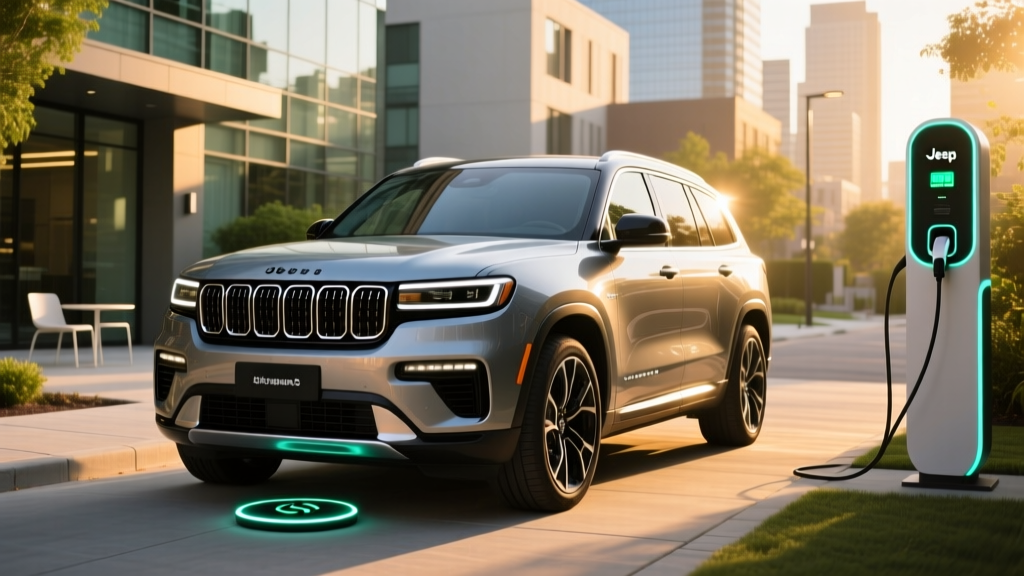
The 2024 Jeep Wagoneer S is the brand's first battery-electric vehicle, built on Stellantis' STLA Large platform. It targets buyers who want luxury-SUV space and off-road credibility without a gas engine. With 600 horsepower, a claimed 0-60 mph time of 3.4 seconds, and an EPA-estimated 300 miles of range, it slots directly against the BMW iX, Audi Q8 e-tron, and Tesla Model X. But how does it perform when the spec sheet meets the real world?
We've analyzed the numbers, the charging curve, and the ownership math to help you decide whether the Wagoneer S earns a spot in your driveway.
Spec Sheet: 2024 Jeep Wagoneer S at a Glance
| Specification | Value |
|---|---|
| EPA-Estimated Range | 300 miles |
| Battery Capacity (Usable) | ~100 kWh (NMC chemistry) |
| Drivetrain | Dual-motor AWD |
| Horsepower | 600 hp |
| Torque | 617 lb-ft |
| 0-60 mph | 3.4 seconds |
| Max DC Fast Charge Rate | ~200 kW (peak) |
| 10-80% DC Fast Charge | ~23 minutes (claimed) |
| Level 2 Home Charging | 11.5 kW onboard charger |
| MPGe (Combined) | ~88 MPGe (estimated) |
| Base MSRP (Launch Edition) | $65,200 (before destination) |
| Battery Warranty | 8 years / 100,000 miles |
| Vehicle Warranty | 3 years / 36,000 miles (bumper-to-bumper); 5 years / 60,000 miles (powertrain) |
Range & Efficiency: EPA vs. Reality
EPA Sticker: 300 miles
Highway Expectation (70-80 mph): ~245-265 miles
Cold-Weather (below freezing): ~210-240 miles
Combined Real-World Average: ~260-280 miles
Jeep targets 300 miles of EPA-estimated range from the Wagoneer S's ~100 kWh battery pack. That puts it in competitive territory with the BMW iX xDrive50 (324 miles EPA) and well ahead of the Audi Q8 e-tron (285 miles EPA). The battery uses NMC (nickel-manganese-cobalt) chemistry, which favors energy density over the longer cycle life of LFP — a reasonable trade-off for a luxury SUV where range per charge matters more than 300,000-mile longevity.
In practice, expect the real-world range to fall short of the sticker. Highway driving at 75+ mph pushes aerodynamic drag higher, typically cutting range by 10-18% compared to the EPA combined cycle. Cold weather compounds this: below-freezing temperatures without preconditioning can reduce range by 20-30% due to cabin heating demand and slower electrochemistry. The Wagoneer S includes a heat pump, which mitigates cold-weather losses somewhat compared to resistive heating, but physics still applies.
Efficiency is estimated around 88 MPGe combined, translating to roughly 34-36 kWh per 100 miles. For context, the more aerodynamic Tesla Model X achieves about 102 MPGe. The Wagoneer S's boxy SUV profile and heavier curb weight (estimated ~5,800 lbs) work against efficiency, but that's the trade-off for the commanding ride height and interior volume buyers in this segment want.
Charging Speed: DC Fast Charging and Home Setup
Charging speed is where the Wagoneer S makes a strong case for road-trip viability. Jeep claims a peak DC fast-charge rate of approximately 200 kW on 400-volt architecture, enabling a 10-80% charge in roughly 23 minutes under ideal conditions. That's competitive with the segment, though it trails the 800-volt architectures in the Hyundai Ioniq 5 or Kia EV9 (which sustain higher charge rates longer).
Understanding the charge curve is essential: the 200 kW figure is a peak, not a sustained rate. Expect the Wagoneer S to hit peak power between roughly 15-50% state of charge, then taper progressively. From 80-100%, charging slows dramatically to protect the battery — a universal EV behavior, not a Wagoneer S flaw. On a road trip, plan your stops around 10-80% charges for the fastest turnaround.
| Charging Method | Power | Estimated Speed |
|---|---|---|
| Level 1 (120V household) | ~1.4 kW | ~3-4 miles per hour |
| Level 2 (240V, 48A home charger) | 11.5 kW | ~28-32 miles per hour; full charge in ~9 hours |
| DC Fast Charge (peak) | ~200 kW | ~10-80% in 23 minutes; 100+ miles in ~10 min |
At home, the 11.5 kW onboard charger means a full 0-100% charge takes roughly 9 hours on a 48-amp Level 2 wall connector — perfectly suited for overnight charging. You'll need a 60-amp dedicated circuit installed by a licensed electrician. Installation costs typically range from $500-$2,000 depending on panel proximity and local permit fees, plus $400-$700 for a quality Level 2 charger (ChargePoint Home Flex, Emporia Level 2, or similar).
The Wagoneer S uses the CCS (Combined Charging System) connector standard for DC fast charging and the J1772 connector for Level 2 AC. It does not currently feature a NACS (Tesla-style) port, though adapters may become available as the industry transitions.
Performance & Drivetrain: 600 HP Dual-Motor AWD
The Launch Edition Wagoneer S pairs dual permanent-magnet electric motors for standard all-wheel drive, producing 600 horsepower and 617 lb-ft of torque. The result is a 3.4-second 0-60 mph time — sports-car territory in a five-passenger luxury SUV. For reference, that matches the Tesla Model X Plaid's general ballpark and demolishes the 6.5-second run in the gas-powered Grand Cherokee 4xe.
Electric torque delivery is instantaneous, meaning passing maneuvers and highway merging feel effortless. The dual-motor AWD system can torque-vector between axles, which aids traction in rain and light snow — though this is not a Wrangler. Don't expect serious rock-crawling capability. Jeep has indicated the Wagoneer S will offer selectable drive modes including a terrain setting for light off-pavement use, but ground clearance and approach/departure angles favor suburban duty over trail running.
Ride quality benefits from the low center of gravity inherent to a skateboard battery platform. Expect composed handling with some body weight felt during aggressive cornering — the ~5,800-lb curb weight is substantial, and no amount of suspension tuning fully masks it.
Interior, Tech & Cargo: What You Get for $65K+
The Wagoneer S interior features a screen-heavy layout with up to 45 inches of combined display area across the instrument cluster, center infotainment touchscreen, and passenger display. Stellantis' Uconnect 5 infotainment system runs the show, supporting wireless Apple CarPlay and Android Auto, over-the-air updates, and integrated navigation with charging-station routing.
Driver-assistance technology includes adaptive cruise control with stop-and-go, lane-centering assist, automated emergency braking, blind-spot monitoring, and a 360-degree camera system. Note: these are SAE Level 2 driver-assist features, meaning the driver must remain fully engaged at all times. This is not a hands-off or self-driving system.
Cargo space is competitive for the segment, with an estimated 30+ cubic feet behind the second row and 60+ cubic feet with the rear seats folded. A front trunk (frunk) adds additional sealed storage — useful for charging cables or groceries that might leak. Passenger space accommodates five adults comfortably, with generous rear legroom thanks to the flat floor (no transmission tunnel).
Pricing, Trims & Federal Tax Credit Eligibility
The 2024 Jeep Wagoneer S launches exclusively in the Launch Edition trim at a starting MSRP of $65,200, plus a $1,795 destination charge, bringing the total to approximately $66,995. Additional trims (base, Limited, Overland) are expected for the 2025 model year at lower starting prices, potentially in the $55,000-$60,000 range.
- Maximum credit: $7,500 (if both battery-component and critical-mineral requirements are met)
- MSRP cap: SUVs must be priced at or below $80,000 — the Wagoneer S qualifies
- Buyer income caps: $150,000 single / $225,000 head of household / $300,000 joint (modified AGI)
- Battery sourcing: Must meet escalating critical-mineral and battery-component manufacturing requirements — check IRS qualified vehicle list before purchasing
- Point-of-sale transfer: Eligible buyers can transfer the credit to the dealer for an immediate price reduction at purchase
Tax credit eligibility is complex and changes frequently. Consult a tax professional and verify the Wagoneer S on the IRS qualified vehicle list before committing to a purchase.
If you qualify for the full $7,500 federal credit, the effective Launch Edition price drops to approximately $59,495. Many states also offer additional rebates or tax credits (California's CVRP, Colorado's state credit, etc.), but amounts vary by jurisdiction — check your state's energy office for specifics.
| Item | Amount |
|---|---|
| Launch Edition MSRP | $65,200 |
| Destination Charge | $1,795 |
| Total Before Incentives | $66,995 |
| Federal Tax Credit (§30D, if eligible) | -$7,500 |
| Effective Price After Federal Credit | $59,495 |
Who Is the Wagoneer S For?
The 2024 Jeep Wagoneer S fits a specific buyer profile:
- The family commuter who wants luxury-SUV space, all-weather AWD capability, and the ability to charge overnight at home — eliminating gas station stops for daily driving.
- The road-tripper willing to plan 20-25 minute DC fast-charge stops every 200-250 miles on long hauls. The 300-mile range and ~23-minute charge time make this feasible, though not as seamless as a gas vehicle.
- The performance-oriented buyer who appreciates 600 hp and a 3.4-second 0-60 time but doesn't want a sedan or crossover.
It is not ideal for buyers without home-charging access (public-only charging adds cost and inconvenience), those who regularly tow heavy loads (towing cuts EV range by 30-50%), or anyone seeking hardcore off-road capability (get a Wrangler 4xe instead).
Pros & Cons
- 600 hp and 3.4-second 0-60 — serious performance
- 300-mile EPA range is competitive for the segment
- ~23-minute 10-80% DC fast charge
- Standard dual-motor AWD
- Spacious interior with 45+ inches of screen real estate
- Qualifies for $7,500 federal tax credit (if eligible)
- Heat pump for better cold-weather efficiency
- Launch Edition pricing at $66,995 is steep
- 400V architecture (not 800V) means charge rate tapers earlier than some rivals
- Real-world highway range closer to 250 miles
- CCS connector (not NACS) may limit future Supercharger access without adapter
- Not a serious off-roader despite the Jeep badge
- First-year model — potential for early-production quirks
- No frunk on some configurations (verify with dealer)
Frequently Asked Questions
What is the real-world range of the 2024 Jeep Wagoneer S?
The EPA estimates 300 miles of combined range. In real-world highway driving at 70-80 mph, expect approximately 245-265 miles. In cold weather (below freezing), range can drop to 210-240 miles without battery preconditioning. Plan conservatively for road trips.
How fast does the Wagoneer S charge at home and on the road?
On a Level 2 home charger (11.5 kW), a full charge takes about 9 hours — ideal for overnight charging. On a DC fast charger, it peaks at ~200 kW and can charge from 10-80% in approximately 23 minutes under optimal conditions.
Does the 2024 Jeep Wagoneer S qualify for the $7,500 federal tax credit?
It likely qualifies, but eligibility depends on three factors: (1) your income must be below the IRS caps ($150K single / $300K joint), (2) the MSRP is under the $80,000 SUV cap, and (3) the battery must meet critical-mineral and component-sourcing requirements. Always verify on the IRS qualified vehicle list before purchasing.
Is the Wagoneer S worth buying over the BMW iX or Tesla Model X?
The Wagoneer S competes on performance (600 hp, 3.4s 0-60) and range (300 mi EPA) at a lower starting price than the Model X. The BMW iX xDrive50 offers more range (324 mi EPA) and a more refined interior. If you value the Jeep brand, want AWD standard, and find the Launch Edition pricing acceptable, the Wagoneer S is a strong choice. Test-drive all three before deciding.
What is the battery warranty on the Wagoneer S?
Jeep covers the battery pack for 8 years or 100,000 miles, whichever comes first. This is the federal minimum mandate for EV battery warranties and matches competitors like BMW, Audi, and Tesla. The warranty typically guarantees a minimum capacity retention threshold (often 70% of original capacity) — confirm the exact terms with your dealer.
Can the Wagoneer S use Tesla Superchargers?
As of the 2024 model year, the Wagoneer S uses a CCS connector, not NACS. Access to Tesla's Supercharger network requires a CCS-to-NACS adapter, which may or may not be provided by Jeep. Stellantis has indicated future models will adopt NACS, but the 2024 Wagoneer S is CCS-equipped. Confirm adapter availability with your dealer.