Quick Verdict: Honda's First EV Plays It Safe and Practical
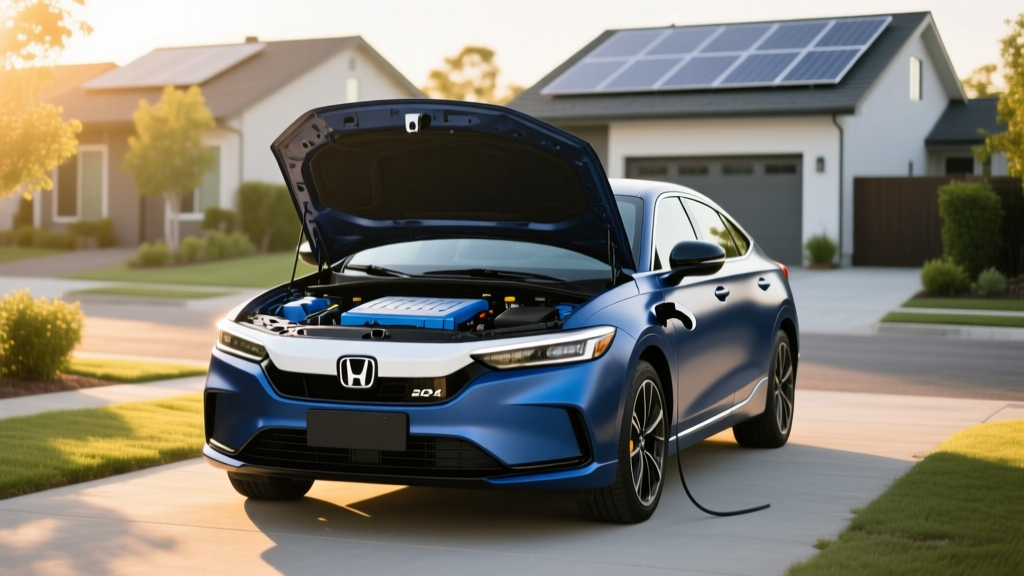
The 2024 Honda Prologue is the automaker's first mass-market battery-electric vehicle, and it shows — in both good and bad ways. Built on General Motors' Ultium platform (the same bones as the Chevrolet Blazer EV and Cadillac Lyriq), the Prologue delivers a competitive 296 miles of EPA-estimated range, spacious cabin, and straightforward infotainment. But it also inherits some Ultium quirks: a charge curve that tapers hard above 80%, and a starting price that lands well above the segment's value leaders.
For Honda loyalists ready to go electric without learning a new ecosystem, the Prologue is a comfortable bridge. For spec-shoppers cross-referencing the Hyundai Ioniq 5 or Tesla Model Y, the math gets more complicated — especially once you factor in tax credit eligibility and real-world highway efficiency.
Range and Efficiency: EPA Sticker vs. Real-World Reality
Real-World Expectation: ~250–270 miles on mixed highway driving; ~210–230 miles in sustained cold weather (below 32°F) or at sustained 80+ mph speeds
Efficiency: 99 MPGe combined (FWD) / 95 MPGe combined (AWD) — approximately 34–36 kWh per 100 miles
The front-wheel-drive EX and EX-L trims extract the most from the Prologue's 85 kWh usable battery pack, achieving 296 miles on the EPA cycle. Opt for the dual-motor AWD Touring trim and you lose about 15 miles, landing at 281 miles. These are respectable figures for a midsize two-row SUV, but context matters.
In real-world highway testing at 70–75 mph, expect to use roughly 36–38 kWh per 100 miles in the FWD model, which translates to about 225–240 miles before you'll want to find a charger. Cold weather compounds this: lithium-ion cells lose efficiency below freezing, and cabin heating (the Prologue uses a resistive heater, not a heat pump) draws significant energy. Plan for 20–30% range reduction in winter conditions.
The Prologue's efficiency of roughly 34 kWh/100mi (FWD) trails the Hyundai Ioniq 5's ~30 kWh/100mi but aligns closely with the Ford Mustang Mach-E and Chevrolet Blazer EV. It's a heavy vehicle — over 4,900 lbs curb weight — and that mass shows up at the charger and on the electricity bill.
Battery, Chemistry, and Charging Speed
The Prologue uses an 85 kWh (usable) lithium-ion battery pack with NMC (nickel-manganese-cobalt) chemistry, supplied by the GM-LG Ultium Cells joint venture. Unlike some competitors that have shifted to LFP (lithium iron phosphate) for lower trims, Honda keeps NMC across the lineup — offering higher energy density but requiring more careful state-of-charge management for long-term health.
| Charging Level | Power / Rate | Time / Speed | Notes |
|---|---|---|---|
| Level 1 (120V household) | ~1.4 kW | ~3–4 miles per hour | Emergency/top-up only; full charge in 60+ hours |
| Level 2 (240V home/public) | 11.5 kW (onboard charger) | ~29 miles per hour; 0–100% in ~9.5 hours | Requires 48-amp circuit; typical overnight fill |
| DC Fast Charge (CCS) | Peak 150 kW | 10–80% in ~32 minutes | Curve tapers significantly above 80%; ~190 kW on some stations briefly but not sustained |
The 150 kW peak DC fast-charge rate is the Prologue's most debated spec. In 2024, competitors like the Hyundai Ioniq 5 (peak 240 kW, 10–80% in ~18 minutes) and the Kia EV6 (peak 240 kW) significantly outpace it on paper. In practice, the Prologue sustains roughly 130–150 kW between 10% and 55% state of charge, then drops to ~80 kW through 70%, and falls below 50 kW past 80%. This taper is characteristic of the Ultium platform's conservative thermal management strategy — it protects long-term battery health but adds time to road trips.
On a 300-mile road trip with one DC fast-charge stop, plan for roughly 35–40 minutes plugged in (10–85%). That's 10–15 minutes longer than an Ioniq 5 or EV6 would need under similar conditions.
For home charging, the 11.5 kW onboard charger is competitive. On a properly installed 48-amp Level 2 circuit (NEMA 14-50 or hardwired wallbox), you'll recover roughly 29 miles of range per hour — enough to fully replenish overnight. Honda partnered with Electrify America to offer public charging access, and the Prologue uses the CCS1 connector standard. With the industry's shift to NACS (Tesla's connector), Honda has confirmed future models will adopt NACS, but the 2024 Prologue ships with CCS — adapters are available for Tesla Supercharger access at participating stations.
Performance and Drivetrain
| Trim | Drivetrain | Horsepower | Torque (lb-ft) | 0–60 mph |
|---|---|---|---|---|
| EX / EX-L (FWD) | Single motor, front wheels | 212 hp | 236 | ~8.0 seconds |
| Touring (AWD) | Dual motor, all wheels | 288 hp | 332 | ~6.0 seconds |
The FWD Prologue delivers adequate acceleration for commuting and merging but won't impress anyone coming from a turbocharged gas SUV. The 212-hp single-motor setup moves the Prologue's substantial mass competently, with linear torque delivery typical of EVs. The 8.0-second 0–60 time is a full second or two behind equivalently priced rivals.
The dual-motor AWD Touring transforms the character considerably. With 288 hp and 332 lb-ft of torque, the 6.0-second sprint to 60 mph feels genuinely quick, and the all-wheel-drive system provides confident traction in rain and light snow. The trade-off is 15 miles of EPA range and a higher price.
Ride quality leans comfortable rather than sporty — the Prologue absorbs bumps well and keeps cabin noise low at highway speeds. Steering is light and numb, which suits its family-SUV mission but disappoints anyone hoping for Honda's traditional engagement. Regenerative braking offers adjustable levels via steering-wheel paddles, though it doesn't quite achieve true one-pedal driving at its strongest setting.
Interior, Tech, and Cargo Space
Inside, the Prologue borrows heavily from GM's Ultium-era playbook while adding Honda's own trim materials and seat designs. The centerpiece is an 11.3-inch touchscreen infotainment system running Google Built-In (Google Maps, Google Assistant, Play Store apps). It's a departure from Honda's traditional in-house software, and the Google integration works well — voice commands are responsive, and native Google Maps navigation includes real-time charger routing with battery preconditioning.
The digital instrument cluster measures 11.0 inches and presents range, speed, and driver-assist information clearly. A head-up display is standard on the Touring trim. Wireless Apple CarPlay and Android Auto are standard across all trims, alongside a 9-speaker audio system (upgraded to 12 speakers on Touring with a Bose system).
| Measurement | Specification |
|---|---|
| Front legroom | 41.4 inches |
| Rear legroom | 38.3 inches |
| Cargo volume (behind 2nd row) | 25.2 cu ft |
| Cargo volume (2nd row folded) | 57.7 cu ft |
| Wheelbase | 121.8 inches |
| Towing capacity | Not rated for towing |
Passenger space is generous, particularly in the rear seat where the Ultium platform's flat floor creates excellent legroom and foot space. Two adults ride comfortably in back; three across is tight for long trips. Cargo capacity at 25.2 cu ft behind the second row trails the Tesla Model Y (30.2 cu ft) and Hyundai Ioniq 5 (27.2 cu ft) — and there is no front trunk (frunk), a missed opportunity given the Ultium platform's packaging flexibility.
Pricing, Trims, and Federal Tax Credit Eligibility
| Trim | MSRP (incl. destination) | Est. Federal Credit (§30D) | Effective Price (if eligible) |
|---|---|---|---|
| EX (FWD) | $47,400 | Up to $7,500 | ~$39,900 |
| EX-L (FWD) | $50,400 | Up to $7,500 | ~$42,900 |
| Touring (AWD) | $57,900 | Up to $7,500 | ~$50,400 |
The Prologue's pricing places it squarely in the premium end of the mainstream midsize EV SUV segment. The base EX starts at $47,400, which is several thousand dollars above a comparably equipped Hyundai Ioniq 5 SEL or Ford Mustang Mach-E Select.
Federal tax credit eligibility under IRS §30D is the critical variable. The Prologue qualifies for up to $7,500 in federal tax credits for eligible buyers, but multiple conditions apply:
- MSRP cap: SUVs must be at or below $80,000 — all Prologue trims qualify.
- Buyer income cap: Modified adjusted gross income must not exceed $150,000 (single), $225,000 (head of household), or $300,000 (joint filing).
- Battery sourcing: The vehicle must meet critical mineral and battery component requirements that phase in progressively each year. Honda has confirmed the Prologue meets these thresholds for the full $7,500 credit for the 2024 model year.
- Point-of-sale transfer: As of 2024, buyers can transfer the credit to the dealer at purchase, reducing the out-of-pocket price immediately rather than waiting to claim it on their tax return.
Always verify current eligibility on the fueleconomy.gov tax credit database and consult a tax professional, as sourcing rules tighten annually and individual tax liability affects whether you can use the full credit.
Warranty, Ownership Costs, and Safety
Honda backs the Prologue with a competitive warranty package:
- Limited vehicle warranty: 3 years / 36,000 miles
- Powertrain warranty: 5 years / 60,000 miles
- Battery pack warranty: 8 years / 100,000 miles (covers capacity loss below 70% of original)
- Complimentary maintenance: 2 years / 24,000 miles (scheduled service)
The 8-year/100,000-mile battery warranty is the federal minimum standard and matches most competitors. Honda guarantees the pack will retain at least 70% of its original capacity during that period. Based on Ultium platform data from GM's earlier deployments, degradation has been modest — roughly 5–8% loss over the first 50,000 miles — though long-term Prologue-specific data is still accumulating.
Insurance costs for the Prologue run approximately 15–25% higher than a comparably priced gas SUV, consistent with the EV segment average. Collision repair costs and battery replacement expense drive premiums. Get quotes before purchasing — the annual difference can be $400–$800 depending on your profile and state.
Safety technology includes Honda Sensing (the brand's ADAS suite) with adaptive cruise control, lane-keeping assist, automatic emergency braking, blind-spot monitoring, and rear cross-traffic alert. Note: this is a SAE Level 2 driver-assist system — the driver must remain fully engaged with hands on the wheel and eyes on the road at all times. It is not autonomous driving.
The Prologue earned strong marks in NHTSA testing, with a 5-star overall safety rating.
Pros, Cons, and Who Should Buy the Prologue
Pros
- Spacious cabin with excellent rear-seat legroom (38.3 in)
- Competitive 296-mile EPA range (FWD)
- Google Built-In infotainment is responsive and well-integrated
- Eligible for full $7,500 federal tax credit (subject to buyer eligibility)
- Comfortable ride quality and low cabin noise
- Honda dealer network for service and support
Cons
- DC fast-charging speed (150 kW peak, ~32 min 10–80%) trails key rivals
- No frunk (front trunk) despite EV platform
- Cargo space (25.2 cu ft) is below segment average
- Higher starting price than Ioniq 5, Mach-E, and Blazer EV
- No heat pump — resistive cabin heater hurts cold-weather range
- FWD model's 212 hp feels underwhelming for the price
Who Is the 2024 Honda Prologue For?
Choose the Prologue if: You're a current Honda owner who values dealer familiarity, you prioritize rear-seat space for family use, your daily commute is under 80 miles round-trip (keeping you well within real-world range), and you charge primarily at home overnight where the 11.5 kW Level 2 rate is perfectly adequate.
Look elsewhere if: You take frequent road trips longer than 250 miles (the charge speed will frustrate), you need maximum cargo capacity, you want the most range per dollar, or you live in a cold climate where the lack of a heat pump will cost you meaningful winter range.
How It Stacks Up Against Key Competitors
| Spec | Honda Prologue EX (FWD) | Hyundai Ioniq 5 SEL (RWD) | Ford Mustang Mach-E Select (RWD) |
|---|---|---|---|
| MSRP | $47,400 | $45,850 | $42,995 |
| EPA Range | 296 mi | 303 mi | 250 mi |
| Battery (usable) | 85 kWh (NMC) | 77.4 kWh (NMC) | 70 kWh (NMC) |
| Peak DC Charge | 150 kW | 240 kW | 150 kW |
| 10–80% DC Time | ~32 min | ~18 min | ~30 min |
| Horsepower | 212 hp | 168 hp | 266 hp |
| 0–60 mph | ~8.0 sec | ~7.4 sec | ~6.1 sec |
| Cargo (behind 2nd row) | 25.2 cu ft | 27.2 cu ft | 29.7 cu ft |
The Prologue's closest rival is the Hyundai Ioniq 5, which offers slightly more range, dramatically faster charging (240 kW peak on 800V architecture), and a lower starting price — but less rear-seat legroom and a more polarizing design. The Ford Mustang Mach-E delivers more cargo space and stronger base performance but sacrifices EPA range. The Chevrolet Blazer EV, which shares the Ultium platform, undercuts the Prologue on price but has faced software reliability issues in early production.
Frequently Asked Questions
What is the real-world range of the 2024 Honda Prologue?
While the EPA rates the FWD Prologue at 296 miles, real-world highway driving at 70–75 mph typically yields 250–270 miles. In cold weather (below 32°F), expect 210–230 miles due to battery efficiency loss and resistive cabin heating. City driving with regenerative braking can approach or slightly exceed the EPA figure.
How fast does the Prologue charge at home and on the road?
At home on a 240V Level 2 charger, the Prologue accepts up to 11.5 kW, adding about 29 miles of range per hour — a full charge takes roughly 9.5 hours. On DC fast chargers, it peaks at 150 kW, reaching 10–80% in approximately 32 minutes. The charge curve tapers substantially above 80%, so plan stops around the 80–85% mark for efficiency.
How much does the 2024 Honda Prologue cost after the federal tax credit?
If you qualify for the full $7,500 federal tax credit under IRS §30D and transfer it at point of sale, the effective price drops to approximately $39,900 for the EX, $42,900 for the EX-L, and $50,400 for the Touring. Eligibility depends on income limits ($150K single / $300K joint), MSRP caps (all trims qualify), and battery sourcing compliance. Verify your specific situation with a tax professional.
Does the 2024 Honda Prologue qualify for the federal EV tax credit?
Yes — the 2024 Prologue qualifies for up to $7,500 under §30D, provided the buyer meets income thresholds and the vehicle's battery components and critical minerals meet sourcing requirements (which Honda has confirmed for the 2024 model year). The credit can be transferred to the dealer at purchase for an immediate price reduction. Always confirm current eligibility at fueleconomy.gov and consult a tax advisor.
Is the Honda Prologue worth buying over the Hyundai Ioniq 5 or Tesla Model Y?
It depends on your priorities. The Ioniq 5 charges significantly faster (18 vs. 32 minutes, 10–80%) and costs slightly less, making it better for road-trippers. The Model Y offers more cargo space, a Supercharger network advantage, and a lower base price, though its interior quality and ride comfort are debated. The Prologue wins on rear-seat space, Honda dealer support, and a more conventional SUV driving experience. If home charging is your primary routine and you value cabin comfort over charging speed, the Prologue is a solid choice.
Does the Prologue have a frunk or towing capability?
No to both. The Prologue does not include a front trunk, which is a missed packaging opportunity on the Ultium platform. It is also not rated for towing — if you need to pull a trailer, look at the Ford Mustang Mach-E (up to 2,200 lbs with the GT) or the Rivian R1S for serious towing.
What connector does the Prologue use, and can it charge at Tesla Superchargers?
The 2024 Prologue uses the CCS1 connector. Honda has announced that future EVs will adopt the NACS (Tesla) connector, but for now, Prologue owners can access participating Tesla Superchargers using a NACS-to-CCS adapter (available from Tesla and third-party suppliers). Check Tesla's Supercharger map for stations open to non-Tesla vehicles.