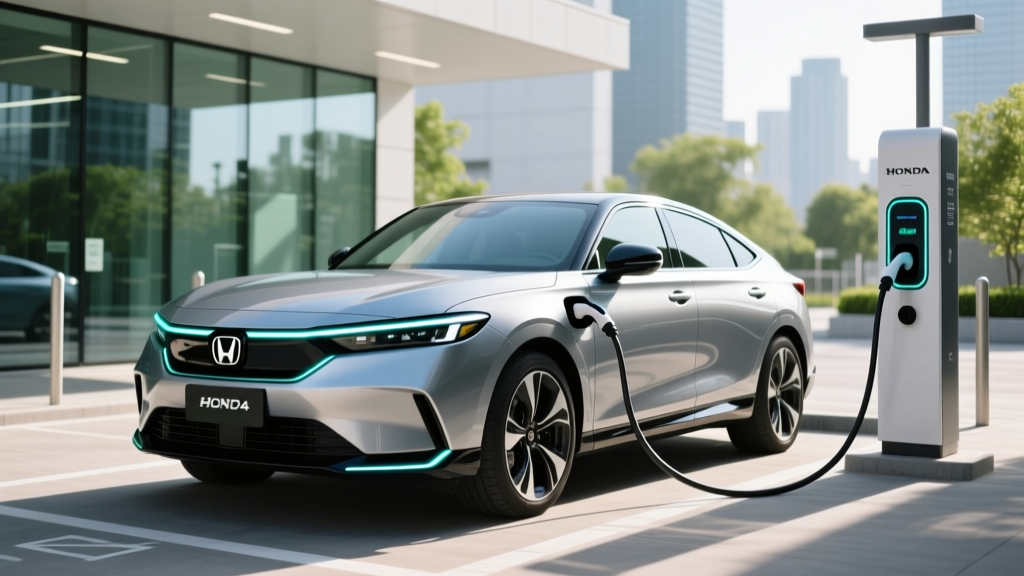
Honda's first mass-market electric SUV arrived as the 2024 Prologue, built on General Motors' Ultium platform through a partnership that gave Honda instant access to proven EV architecture. For buyers searching for competitive 2024 Honda Prologue lease deals, the SUV presents an interesting value proposition: midsize crossover space, competitive range, and access to the Super Cruise network — but with some trade-offs that shoppers should weigh carefully before signing.
Range and Efficiency: EPA Numbers vs Reality
EPA Estimated Range: 281 miles (FWD) / 273 miles (AWD)
Real-World Expectation: 240-260 miles highway driving at 70 mph; 200-220 miles in cold weather below 32°F
The Prologue's 85 kWh Ultium battery pack (NMC chemistry) delivers competitive range on paper. The front-wheel-drive EX and Touring trims achieve 281 miles EPA, while the dual-motor AWD Elite drops to 273 miles. Efficiency ratings land at 99 MPGe combined for FWD models and 95 MPGe for AWD, translating to roughly 34-36 kWh per 100 miles depending on trim and driving conditions.
In real-world testing, highway efficiency suffers more than city driving due to the Prologue's boxy aerodynamics and 4,600-pound curb weight. Expect 240-260 miles on long road trips at interstate speeds, with cold weather reducing that further to 200-220 miles when temperatures drop below freezing. The battery's active thermal management system helps mitigate extreme cold-weather losses, but physics still applies — plan charging stops accordingly.
For daily commuting and suburban driving, most owners will see 260-275 miles between charges, making the Prologue practical for week-long commutes without nightly charging if your round trip stays under 50 miles.
Charging Speed: DC Fast and Home Level 2
| Charging Type | Power | Time/Rate | Notes |
|---|---|---|---|
| DC Fast Charge (10-80%) | 150 kW peak | ~32 minutes | CCS connector; tapers significantly above 80% |
| Level 2 Home Charging | 11.5 kW | ~9.5 hours (0-100%) | Requires 48-amp circuit; ~25 miles per hour of charging |
| Level 1 (120V) | 1.4 kW | ~60+ hours (0-100%) | Emergency/trickle only; ~4 miles per hour |
The Prologue's 150 kW peak DC fast-charging capability is adequate but not class-leading. Competitors like the Hyundai Ioniq 5 and Kia EV6 can hit 240 kW and 235 kW respectively, cutting 10-80% times to under 20 minutes. Honda's 32-minute 10-80% charge time means longer road-trip stops, though still manageable with typical rest-break rhythms.
At home, the 11.5 kW onboard charger is competitive, adding about 25 miles of range per hour of charging. A full charge from empty takes roughly 9.5 hours on a properly installed Level 2 station. Installation requires a dedicated 48-amp, 240-volt circuit — budget $800-$2,000 for professional installation depending on your electrical panel's capacity and distance to the garage.
One advantage: the Prologue uses the CCS1 connector, which works with Electrify America, EVgo, and ChargePoint networks. Honda has also announced future NACS (Tesla Supercharger) compatibility via adapter, expanding long-term charging options.
Performance and Drivetrain
The Prologue offers two powertrain configurations:
- FWD (EX, Touring): 212 horsepower, 236 lb-ft torque, 0-60 mph in 7.4 seconds
- AWD (Elite): 288 horsepower, 333 lb-ft torque, 0-60 mph in 6.2 seconds
Neither variant sets performance benchmarks, but the AWD Elite's 6.2-second sprint feels adequately quick for highway merging and passing. The FWD models prioritize efficiency over acceleration, which suits most family-SUV use cases. Regenerative braking offers adjustable levels via steering-wheel paddles, though true one-pedal driving requires the strongest setting and still creeps at low speeds.
Ride quality leans comfortable rather than sporty, with compliant suspension tuning that absorbs road imperfections well. The low center of gravity from the floor-mounted battery pack reduces body roll compared to gas-powered equivalents, though the Prologue's weight is noticeable during aggressive cornering.
Pricing, Trims, and Tax Credit Eligibility
| Trim | MSRP | Drivetrain | Federal Credit Eligibility | Net Price (with credit) |
|---|---|---|---|---|
| EX | $47,400 | FWD | Yes (if income/MSRP rules met) | $39,900 |
| Touring | $51,400 | FWD | Yes (if income/MSRP rules met) | $43,900 |
| Elite | $55,900 | AWD | Yes (if income/MSRP rules met) | $48,400 |
The 2024 Prologue qualifies for the full $7,500 federal tax credit under IRS §30D, provided buyers meet income caps (AGI under $150,000 single / $300,000 married filing jointly) and the vehicle's MSRP stays under the $80,000 SUV cap. All three trims clear the MSRP threshold comfortably.
However, battery sourcing requirements add complexity. The Ultium battery pack must meet critical-mineral and battery-component sourcing thresholds that tighten annually. For 2024, Honda confirmed Prologue eligibility, but buyers should verify current-year status at IRS.gov before purchase, as rules evolve.
The credit can be transferred to the dealer at point of sale, reducing the purchase price directly rather than waiting for tax-season refund. This makes the effective starting price $39,900 for the EX trim — competitive with the Hyundai Ioniq 5 and Tesla Model Y.
Lease deals vary by region and dealer, but Honda Financial Services has offered promotional lease rates with residual values that make monthly payments attractive. Expect $399-$549/month for 36-month leases with $3,000-$4,000 down, depending on trim and local incentives. Always compare lease vs. purchase math — if you qualify for the full tax credit and plan to keep the vehicle 5+ years, buying often wins financially.
Interior Space, Tech, and Features
The Prologue's midsize dimensions translate to generous interior space:
- Cargo volume: 27.4 cu ft (rear seats up) / 57.7 cu ft (rear seats folded)
- Rear legroom: 38.6 inches
- Front legroom: 41.3 inches
These numbers compete favorably with the Toyota RAV4 and Honda CR-V, making the Prologue practical for families and weekend gear hauls. The flat floor (no transmission tunnel) enhances rear-seat comfort for three-across seating.
Technology highlights include:
- 11.3-inch touchscreen infotainment with wireless Apple CarPlay and Android Auto
- 11-inch digital driver display
- Google built-in (navigation, voice assistant, app store) on Touring and Elite trims
- Wireless phone charging
- Super Cruise hands-free driving on 400,000+ miles of compatible highways (Elite standard, Touring optional)
Super Cruise is the standout feature — a Level 2 driver-assistance system that allows hands-off driving on pre-mapped divided highways. Unlike Tesla's Autopilot, Super Cruise uses driver monitoring via infrared camera to ensure attention, and it works reliably on compatible routes. However, it's not autonomous driving — you must remain alert and ready to take over immediately.
Notable drawbacks include mediocre rear visibility (thick C-pillars), absence of a front trunk (frunk), and plasticky interior materials in some areas that don't match the premium price point. The regenerative braking paddle controls feel unintuitive compared to competitors' simpler toggle switches.
Warranty and Long-Term Ownership
Honda backs the Prologue with:
- Basic warranty: 3 years / 36,000 miles
- Powertrain warranty: 5 years / 60,000 miles
- Battery warranty: 8 years / 100,000 miles (covers defects and capacity loss below 70%)
The 8-year battery warranty matches industry standards and provides peace of mind for long-term ownership. Honda's Ultium partnership with GM means proven battery chemistry and manufacturing scale, though long-term degradation data for the Prologue specifically remains limited given its 2024 launch.
Insurance costs run 15-25% higher than comparable gas-powered Honda SUVs, reflecting EV repair costs and battery replacement risk. Shop quotes before purchase to avoid surprises.
Pros and Cons
Pros
- Competitive 281-mile EPA range (FWD)
- Generous interior and cargo space
- Super Cruise hands-free driving capability
- Qualifies for $7,500 federal tax credit
- Comfortable ride quality
- Access to GM's Ultium charging network partnerships
Cons
- 150 kW DC charging slower than Korean competitors
- No front trunk (frunk) for additional storage
- Interior materials don't match premium pricing
- Rear visibility hindered by thick pillars
- AWD performance variant still modest at 288 hp
- Regenerative braking controls unintuitive
Who Should Consider the Prologue?
The 2024 Honda Prologue suits buyers who:
- Want a mainstream-brand electric SUV with dealer support and familiar Honda service networks
- Prioritize interior space and comfort over performance or cutting-edge charging speed
- Value Super Cruise for frequent highway commuting on compatible routes
- Need competitive range for daily driving and occasional 200-250 mile road trips
- Qualify for the federal tax credit, bringing effective pricing under $40,000 for base trims
Look elsewhere if you need ultra-fast charging for frequent long road trips (Hyundai Ioniq 5, Kia EV6), maximum performance (Tesla Model Y Performance), or the lowest possible starting price (Chevrolet Equinox EV).
Frequently Asked Questions
What is the real-world range of the 2024 Honda Prologue?
Expect 240-260 miles on highway road trips at 70 mph, and 200-220 miles in cold weather below freezing. Daily commuting and city driving typically yield 260-275 miles between charges.
How fast does the Prologue charge at home and on road trips?
DC fast charging peaks at 150 kW, taking about 32 minutes for 10-80%. Home Level 2 charging at 11.5 kW adds roughly 25 miles per hour, with a full charge taking 9.5 hours.
Does the 2024 Prologue qualify for the $7,500 federal tax credit?
Yes, all trims qualify if you meet IRS income caps (under $150K single / $300K married) and the vehicle's MSRP stays under $80,000. Verify current eligibility at IRS.gov, as battery sourcing rules evolve annually.
Is the Prologue worth buying vs. the Hyundai Ioniq 5 or Tesla Model Y?
It depends on priorities. The Prologue wins on interior space, Super Cruise capability, and mainstream brand support. The Ioniq 5 and Model Y offer faster charging, better performance, and more advanced tech interfaces. Test-drive all three before deciding.
What are the biggest drawbacks of the Prologue?
Slower DC charging than competitors, no frunk, plasticky interior materials for the price point, and unintuitive regenerative braking controls. Rear visibility also suffers from thick C-pillars.
Can I use Tesla Superchargers with the Prologue?
Not natively — the Prologue uses CCS1 connectors. Honda has announced future NACS adapter compatibility, but as of 2024-2025, you'll rely on Electrify America, EVgo, ChargePoint, and other CCS networks.
For more details on Prologue specifications and current incentives, visit Honda's official Prologue page and check EPA efficiency data at fueleconomy.gov.