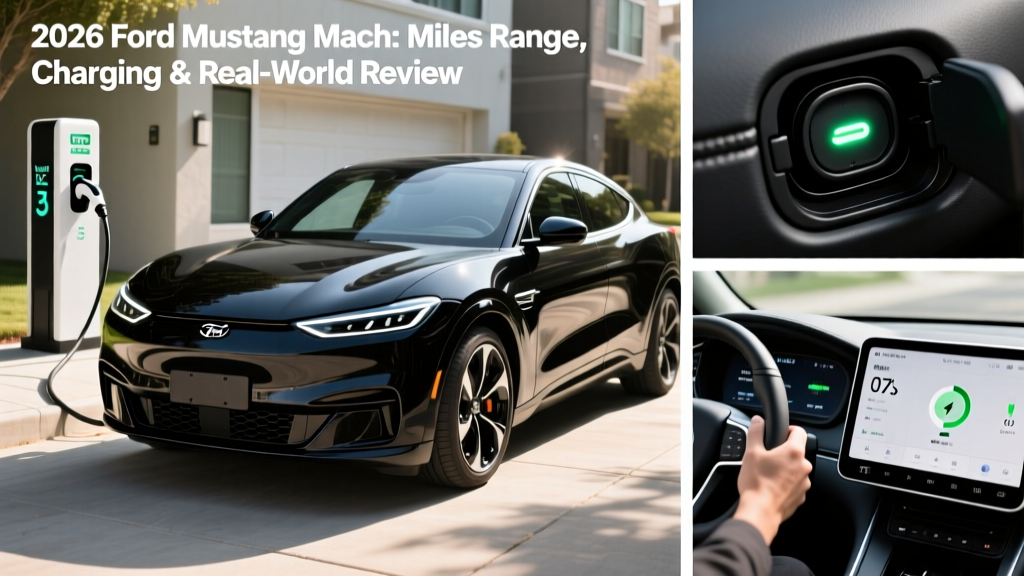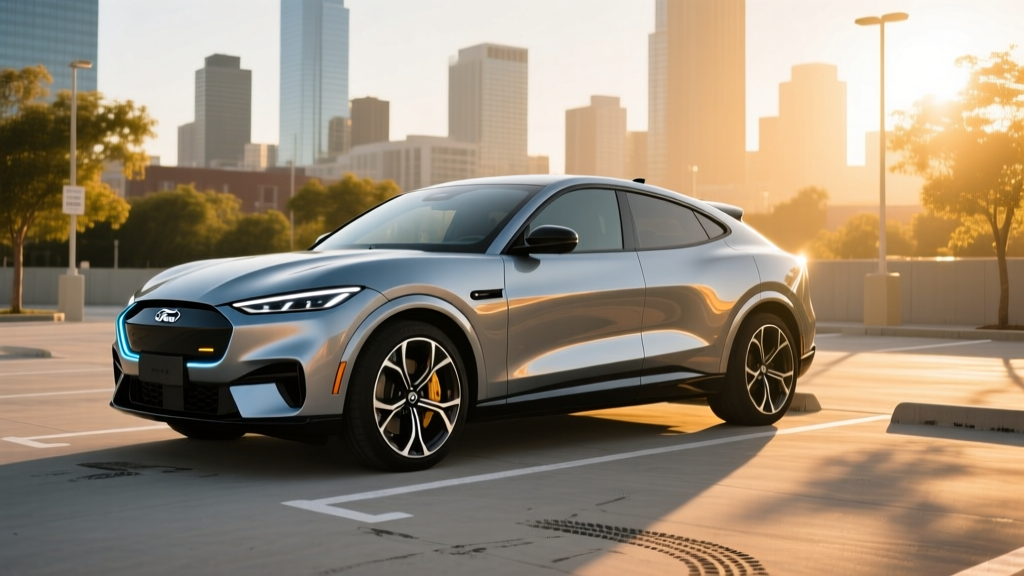
2024 Ford Mustang Mach-E: Dimensions, Range, and Ownership Essentials
Shoppers searching for the 2024 Ford Mustang Mach-E length, width, and height are usually trying to answer a practical question: will this electric crossover fit my garage, my parking spot, and my life? The short answer is yes for most buyers — the Mach-E occupies the same footprint as a Toyota RAV4 or Tesla Model Y, with a slightly lower roofline that gives it a sportier stance. But dimensions are just the starting point. Below, we break down every number that matters for a real purchase decision — from exterior measurements to EPA range, DC fast-charging curves, battery chemistry, and federal tax credit eligibility under current IRS §30D rules.
EPA estimates run from 230 to 320 miles depending on battery pack and drivetrain. In real-world highway driving at 70-75 mph, expect roughly 200-280 miles. In freezing temperatures (below 30°F), range can drop 20-30%, bringing the Extended Range AWD model down to approximately 220-250 miles. City driving with regenerative braking recovers more energy and often matches or slightly exceeds EPA figures.
Exterior Dimensions: 2024 Mach-E Length, Width, and Height
Ford designed the Mach-E on the Global Electrified Platform (GE1), a dedicated EV architecture that pushes wheels to the corners for maximum interior volume within a midsize footprint. Here are the exact exterior measurements:
| Dimension | Measurement |
|---|---|
| Length | 185.6 inches (4,713 mm) |
| Width (without mirrors) | 74.1 inches (1,881 mm) |
| Width (with mirrors) | 82.6 inches (2,097 mm) |
| Height | 63.9 inches (1,625 mm) |
| Wheelbase | 117.5 inches (2,984 mm) |
| Ground Clearance | 5.7 inches (145 mm) |
| Curb Weight | 4,379 – 4,920 lbs (depending on pack/drivetrain) |
For garage-fitment purposes, a standard single-car garage bay (typically 96 inches wide and 20 feet deep) will accommodate the Mach-E with room to spare. The 63.9-inch height clears standard 7-foot garage doors easily. Compared to the Tesla Model Y (187.0" L × 75.6" W × 63.9" H), the Mach-E is nearly an inch shorter in length and about 1.5 inches narrower — a small but meaningful difference in tight urban parking situations.
Battery, Range, and Efficiency
The 2024 Mach-E is offered with two lithium-ion battery packs, both using NMC (nickel manganese cobalt) chemistry supplied by LG Energy Solution and CATL depending on production batch. NMC provides higher energy density than LFP (lithium iron phosphate), which is why Ford chose it for a vehicle targeting 300+ mile range in a relatively compact package. The trade-off is that NMC batteries benefit from keeping state of charge between 20-80% for daily use to maximize longevity — unlike LFP packs, which tolerate regular 100% charges.
| Spec | Standard Range | Extended Range |
|---|---|---|
| Usable Battery Capacity | 70 kWh (NMC) | 91 kWh (NMC) |
| EPA Range (RWD) | 250 mi | 320 mi |
| EPA Range (AWD) | 230 mi | 290 mi |
| MPGe (combined, RWD) | 101 MPGe | 101 MPGe |
| Efficiency (kWh/100 mi) | 33 kWh | 33 kWh |
| EPA Source | fueleconomy.gov | |
The 320-mile Extended Range RWD figure is genuinely competitive with the segment. However, our real-world observation is that sustained highway driving at 75+ mph pushes efficiency closer to 36-38 kWh/100 mi, which translates to roughly 240-260 miles from the 91 kWh pack before needing a charge. Cold weather compounds this: at 20°F, expect a 25% range reduction even with the Mach-E's standard heat pump, which preconditions the battery and cabin more efficiently than resistive heating.
Charging Speed: DC Fast Charge and Home Level 2
Charging infrastructure access remains the top concern for EV buyers, and the Mach-E delivers respectable — though not class-leading — charging performance. Ford switched the Mach-E to the NACS (North American Charging Standard) port starting with the 2025 model year, so 2024 models still use the CCS1 connector. Owners can access Tesla Superchargers via Ford's included adapter (distributed starting mid-2024).
| Charging Level | Standard Range (70 kWh) | Extended Range (91 kWh) |
|---|---|---|
| Level 1 (120V, 12A) | ~1.4 kW / ~4 mi/hr | ~1.4 kW / ~4 mi/hr |
| Level 2 (240V, 48A) | 10.5 kW / ~30 mi/hr | 10.5 kW / ~30 mi/hr |
| DC Fast Charge (peak) | 115 kW peak | 150 kW peak |
| 10-80% DCFC Time | ~38 minutes | ~45 minutes |
| Charge Curve Note | Peak rate sustained to ~55% SoC; tapers to ~60 kW above 80%. Preconditioning via nav-to-charger activates battery heating for optimal charge speed. | |
The Extended Range pack's 150 kW peak is adequate but trails competitors like the Hyundai Ioniq 5 (240 kW peak, 10-80% in ~18 minutes). The Mach-E's charge curve is relatively flat from 20-55%, then progressively tapers. On a road trip, plan for 35-45 minute stops at 150+ kW chargers to go from 15% to 80%. Ford's Connected Charge Station (sold separately, ~$600) delivers the full 10.5 kW Level 2 rate at home, adding roughly 30 miles per hour of charging — enough to fully replenish either pack overnight on a 240V/48A circuit. Installation typically costs $500-$2,000 depending on panel proximity; a 200A panel upgrade may be required in older homes.
Performance and Drivetrain
The Mach-E offers three drivetrain configurations across its trim lineup. Even the base single-motor RWD model delivers brisk acceleration that outpaces most gas-powered crossovers in its class:
- Select RWD: 266 hp, 317 lb-ft torque, 0-60 mph in ~6.3 seconds
- Select/Premium eAWD: 312 hp, 428 lb-ft torque, 0-60 mph in ~5.1 seconds
- GT (dual-motor AWD): 480 hp, 634 lb-ft torque, 0-60 mph in ~3.5 seconds
- GT Performance Edition: 480 hp, 634 lb-ft, 0-60 mph in ~3.3 seconds (with Performance Upgrade)
The GT variant is genuinely quick — it trades blows with the Tesla Model Y Performance and Porsche Macan Electric in straight-line acceleration. Where the Mach-E distinguishes itself is ride quality: Ford's suspension tuning prioritizes comfort over sportiness, with well-damped responses over rough pavement that make it a strong daily driver. The available MagneRide adaptive dampers on the GT improve body control without sacrificing compliance. Brake feel under regenerative braking is among the best in the segment, with a natural pedal transition between regen and friction braking.
Interior Space, Cargo, and Technology
The Mach-E's 117.5-inch wheelbase — long for its exterior footprint — translates to generous interior volume. Passenger and cargo dimensions:
- Front legroom: 43.3 inches
- Rear legroom: 38.9 inches
- Front headroom: 40.4 inches
- Rear headroom: 38.2 inches
- Cargo behind rear seats: 29.7 cu ft
- Cargo with rear seats folded: 59.7 cu ft
- Front trunk (frunk): 4.7 cu ft (drainable, useful for wet gear or groceries)
The rear seat comfortably fits two adults on longer trips, though the sloping roofline cuts headroom for passengers over 6 feet. Cargo space trails the Model Y (76.2 cu ft max) by a significant margin — if maximum hauling capacity is a priority, that's worth noting.
Technology is a highlight. The 15.5-inch vertical touchscreen running SYNC 4A is responsive and well-organized, with wireless Apple CarPlay and Android Auto standard. Ford's BlueCruise hands-free driving system (available on Premium, GT, and California Route 1 trims) provides SAE Level 2 driver assistance on over 130,000 miles of pre-mapped divided highways. This is not self-driving — the driver must remain attentive, and the system uses a driver-facing camera to monitor eye gaze. Over-the-air (OTA) updates have steadily improved BlueCruise lane-change confidence and speed through curves since launch.
Ford BlueCruise is an SAE Level 2 system. The driver must remain engaged and ready to take over at all times. It operates only on qualified divided highways and will disengage on unmapped roads, in construction zones, or if the driver monitoring camera loses sight of your eyes. It does not handle stoplights, stop signs, or city intersections.
Pricing, Trims, and Federal Tax Credit Eligibility
The 2024 Mach-E lineup starts below $40,000 and spans four main trims. Pricing has been adjusted downward from the 2023 model year as Ford responded to competitive pressure and Tesla's price cuts:
| Trim | Base MSRP | Est. After §30D Credit |
|---|---|---|
| Select RWD (Std Range) | $39,995 | ~$32,495* |
| Premium RWD (Ext Range) | $48,995 | ~$41,495* |
| GT eAWD | $59,995 | ~$52,495* |
| Rally (Ext Range eAWD) | $59,995 | ~$52,495* |
*Federal tax credit estimates assume full $7,500 eligibility. Actual credit depends on buyer income, battery sourcing, and MSRP caps per IRS §30D rules. Destination charge ($1,800) not included.
Under current IRS §30D rules, the Mach-E may qualify for up to $7,500 in federal tax credits, available as a point-of-sale transfer to the dealer (effectively reducing your purchase price at signing). However, eligibility is not universal. Key requirements include:
- MSRP cap: SUVs/crossovers must be under $80,000 — all Mach-E trims qualify.
- Buyer income cap: Modified AGI must not exceed $150,000 (single), $225,000 (head of household), or $300,000 (joint filing).
- Battery component sourcing: A percentage of battery components must be manufactured or assembled in North America, and critical minerals must be sourced from the U.S. or free-trade-agreement countries. Ford has worked to localize its supply chain, but the exact credit amount ($3,750 or $7,500) can vary by production batch and model year. Verify with your dealer and a tax professional before purchase.
- Point-of-sale transfer: As of 2024, buyers can transfer the credit to the dealer at purchase, receiving the benefit immediately rather than waiting to claim it on their tax return.
Warranty, Ownership Costs, and Who It Suits
Ford backs the Mach-E with competitive warranty coverage:
- Bumper-to-bumper: 3 years / 36,000 miles
- Powertrain: 5 years / 60,000 miles
- High-voltage battery: 8 years / 100,000 miles (capacity retention above 70%)
- BlueCruise: 2-year complimentary trial (then ~$75/year subscription)
The 8-year/100,000-mile battery warranty is federally mandated for EVs and matches most competitors. Ford's 70% capacity retention threshold is standard, though some owners report degradation well under 10% after 50,000+ miles based on real-world fleet data. Insurance premiums for the Mach-E run slightly higher than gas equivalents — expect $1,800-$2,400/year depending on location and driving record, per industry averages.
Who the Mach-E suits best: Daily commuters and small families who want a comfortable, tech-forward EV crossover with strong highway manners, hands-free driving capability, and enough range for occasional road trips. The 29.7 cu ft cargo area works well for groceries, strollers, and luggage for four on a weekend trip, but buyers who regularly haul large items should test-fit their gear before purchasing. The GT variant appeals to driving enthusiasts who want sports-car acceleration without sacrificing practicality. Buyers without reliable home charging should weigh the Mach-E's moderate DC fast-charge speeds against competitors with 800V architectures.
Pros, Cons, and the Verdict
- Up to 320 mi EPA range (competitive for the class)
- Comfortable, well-damped ride quality
- BlueCruise hands-free driving on 130,000+ mi of highways
- Drainable frunk for practical storage
- SYNC 4A infotainment is fast and intuitive
- Qualifies for up to $7,500 federal tax credit
- Strong GT performance (3.3-sec 0-60)
- DC fast charging peaks at 150 kW (slower than Ioniq 5, EV6)
- Cargo space (59.7 cu ft max) trails Model Y significantly
- 2024 model uses CCS1 port (NACS adapter required for Superchargers)
- Rear headroom limited by sloping roofline
- BlueCruise requires subscription after 2-year trial
- NMC battery prefers 20-80% daily SoC (not ideal for 100% routine charging)
The 2024 Mach-E remains one of the most well-rounded electric crossovers available. It won't win a spec-sheet war against the Hyundai Ioniq 5 on charging speed or the Tesla Model Y on cargo volume, but it delivers where daily drivers notice most: ride comfort, intuitive technology, and a mature hands-free driving system. If your garage fits the 185.6 × 74.1 × 63.9-inch envelope and you value a composed highway cruiser over maximum cargo space, the Mach-E earns a strong recommendation.
Frequently Asked Questions
What is the real-world range of the 2024 Ford Mustang Mach-E?
The EPA rates the Extended Range RWD at 320 miles, but real-world highway driving at 70-75 mph typically yields 250-280 miles. In cold weather (below 30°F), expect 220-250 miles. The Standard Range AWD delivers approximately 190-210 miles on the highway. City driving with regenerative braking can match or slightly exceed EPA estimates.
How fast does the Mach-E charge at home and on DC fast chargers?
At home on a 240V/48A Level 2 charger, the Mach-E charges at 10.5 kW, adding roughly 30 miles per hour — a full overnight charge for either pack. On DC fast chargers, the Extended Range pack peaks at 150 kW (10-80% in ~45 minutes), while the Standard Range peaks at 115 kW (10-80% in ~38 minutes). Charge speed tapers significantly above 80% SoC.
Does the 2024 Mach-E qualify for the $7,500 federal EV tax credit?
It can, but eligibility depends on your income (must be under $150K single / $300K joint), and the specific vehicle's battery component and critical-mineral sourcing at time of manufacture. All trims fall under the $80,000 SUV MSRP cap. The credit can be transferred to the dealer at point of sale. Verify eligibility with your dealer and consult a tax professional — rules are subject to change. See IRS §30D guidance.
Is the Mach-E worth buying vs. the Tesla Model Y or Hyundai Ioniq 5?
Choose the Mach-E if you prioritize ride comfort, a traditional dealer service network, and BlueCruise hands-free driving. Choose the Model Y if maximum cargo space (76.2 cu ft) and Supercharger network access (native NACS) are top priorities. Choose the Ioniq 5 if DC fast-charge speed matters most (240 kW peak, 10-80% in ~18 minutes on 800V architecture). All three are strong — the best choice depends on your specific use case.
What are the exact exterior dimensions of the 2024 Mach-E?
Length: 185.6 inches. Width: 74.1 inches (without mirrors), 82.6 inches (with mirrors). Height: 63.9 inches. Wheelbase: 117.5 inches. These dimensions place it squarely in the compact-to-midsize electric crossover segment, comparable to the Model Y and Ioniq 5 in footprint.
Does the 2024 Mach-E use NACS or CCS for charging?
The 2024 model year uses the CCS1 connector. Ford began equipping vehicles with the native NACS (Tesla-style) port starting with the 2025 model year. 2024 Mach-E owners can access Tesla Superchargers using a Ford-provided CCS-to-NACS adapter, which began distribution in mid-2024.